
Opinions
11:01, 07-Jul-2018
Opinion: The economic and political truth behind Trump’s trade war
Updated
09:32, 10-Jul-2018
 ["china"]
Share







Copied
Editor's note: Remi Piet is a director at Americas Market Intelligence and co-leader of the firm’s Natural Resources and Infrastructure Practice. The article reflects the author's opinions, and not necessarily the views of CGTN.
President Trump imposed tariffs Friday on 34 billion US dollars' worth of Chinese products, leading to immediate retaliation from China with penalties of a similar amount.
This decision is, according to the US president, the first wave in a series of tariff hikes that could eventually impact as much as 550 billion US dollars' worth of trade, representing a staggering 3.8 percent of global trade.
These recent developments confirmed the perspective of a trade war between the United States and China that will negatively impact world growth and indirectly the fate of millions trying to pull out of poverty.
Traditional allies of the United States (Europe, Japan and Canada) are also facing similar trade disputes with Washington, further underlining the isolationism of a Trump administration determined to implement its populist agenda.
One should ponder the reasons for such belligerence from the US president and understand both its short- and long-term consequences.
Trump officially engages China to protect hardworking Americans from alleged unfair competition and reclaim industrial jobs in the United States. The encouraging results on the job market front with the creation of more than 200,000 jobs in June seems to confirm his choices.
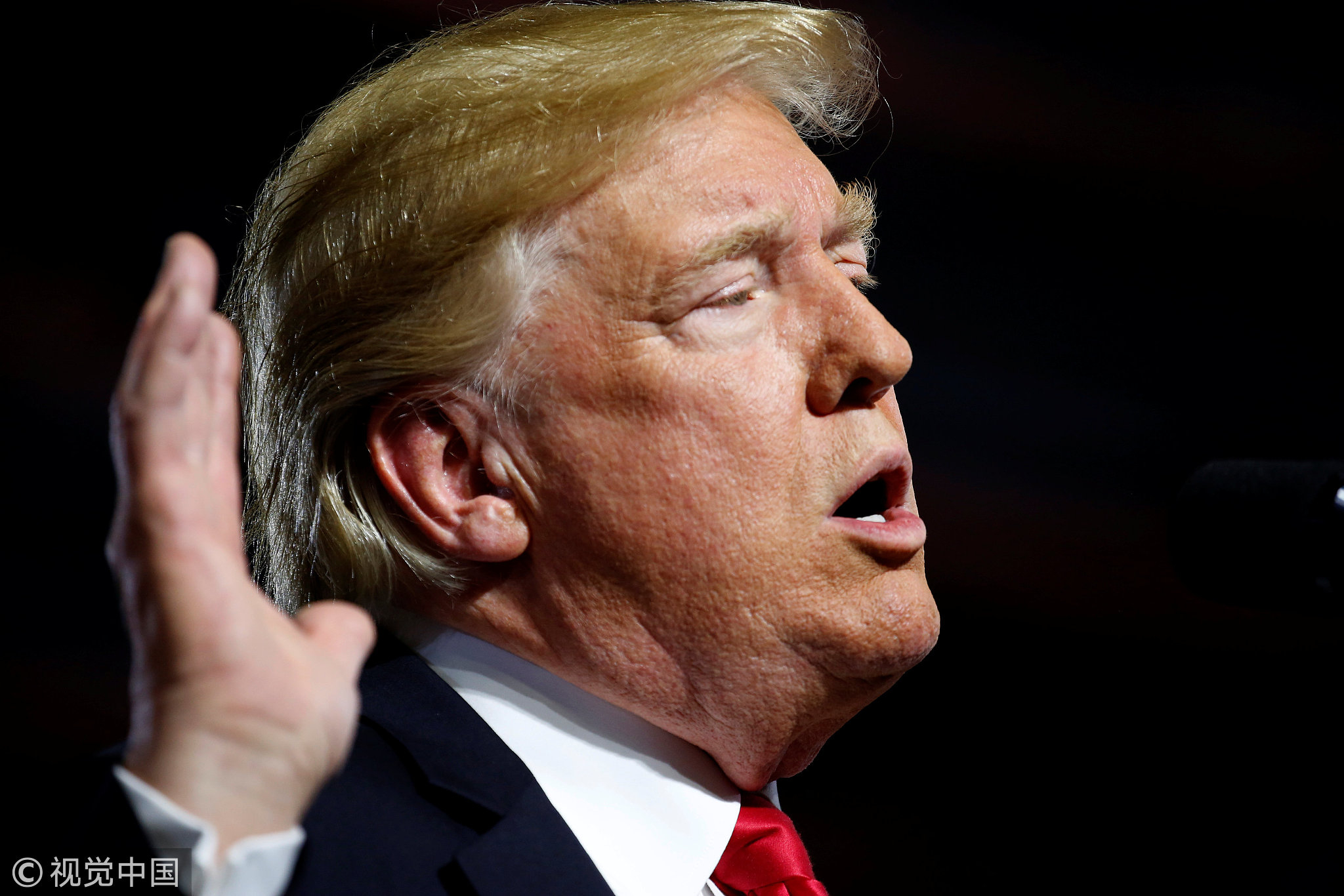
July 5, 2018: US President Donald Trump speaks during a Make America Great Again rally in Great Falls, Montana, US. /VCG Photo
July 5, 2018: US President Donald Trump speaks during a Make America Great Again rally in Great Falls, Montana, US. /VCG Photo
However, this encouraging number results from a biased and skewed perspective. First, these new jobs have much more to do with the accommodating monetary and fiscal policies first implemented by the Obama administration. The downside of such strategy is a national debt whose ceiling continues to be shattered at the expense of future generations.
Second, these new jobs are mostly entry-level jobs with very low salaries. American workers also continue to face the perspective of expensive health coverage and education costs as the structural ills of a US system, harming its most vulnerable citizens, are never addressed.
When Trump publicly states his policies aim to protect low and middle class Americans, the sham could not be more obvious. As tariffs increase on Chinese imports, so will product prices in supermarkets and the inputs for high-technology industries.
In the very short term, the real losers will be the American consumers. In the longer run, it will be America’s high-value companies who will lose their competitiveness with their Asian counterparts.
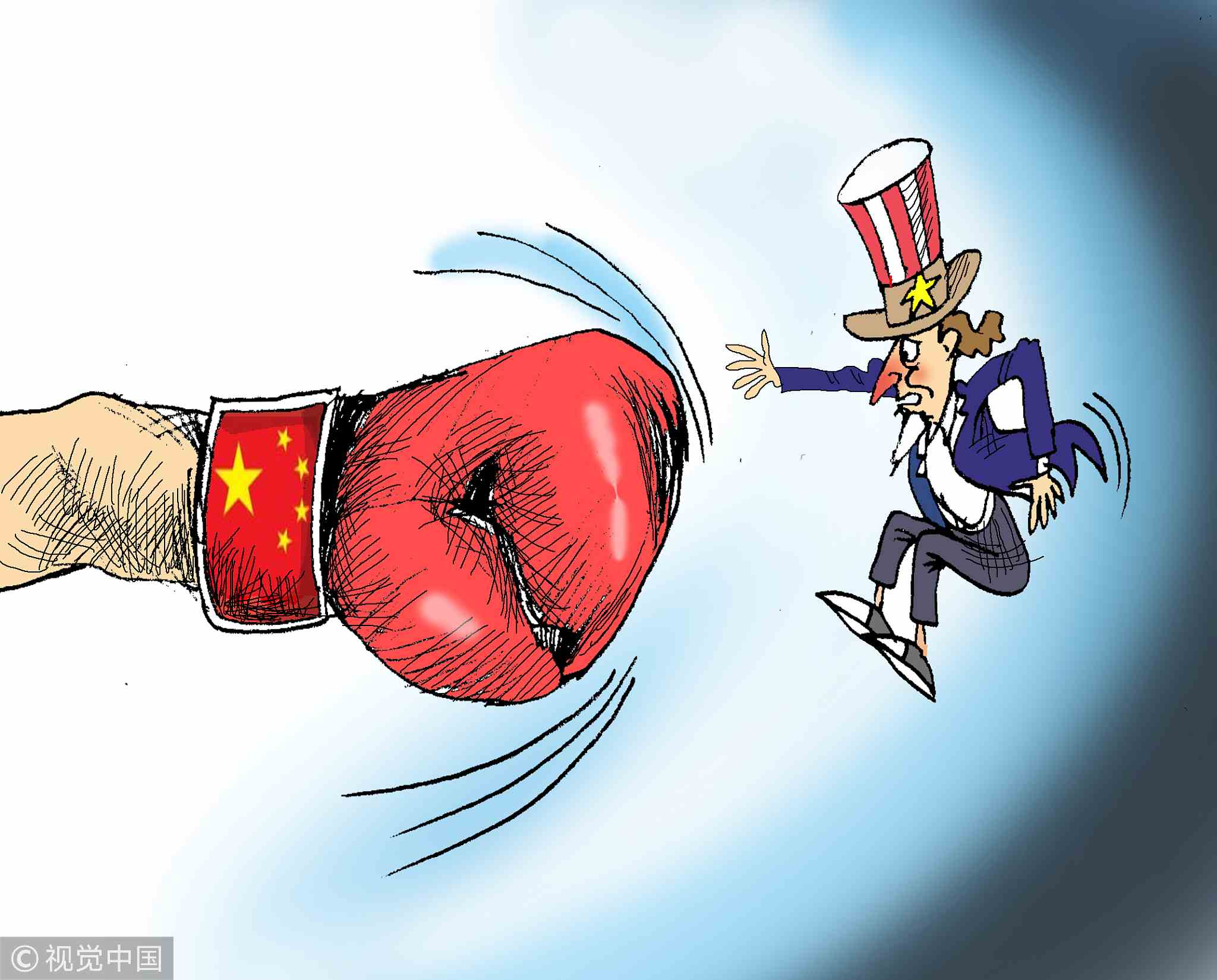
China’s tariff countermeasures against the US were officially implemented at 12:01 p.m. Beijing time on the July 6. / VCG Photo
China’s tariff countermeasures against the US were officially implemented at 12:01 p.m. Beijing time on the July 6. / VCG Photo
While a trade war will make American beef, motorcycles and bourbon more expensive in China, curbing Asian dietary and transportation habits, it will in return make components, automotive parts and steel more expensive for US companies, severely hampering the long-term prospects of the US economy in high-tech sectors.
So why is Trump launching a full-scale trade war with potential partners and traditional allies? His objective is not economic. It is political.
Short-term benefits will be eventually wiped out and replaced by structural long-term economic failure. But this will take a few years as it did in the 1930s.
This provides enough time for Trump to boast about the success of his short-term calculations ahead of sharply contested mid-term elections this fall. His populist and nationalistic tone will also continue to unite his electoral base in the hopes of re-election in 2020.
Unfortunately, the American public seems oblivious to the simple lessons of modern history. The US Congress had infamously adopted a series of tariffs in 1930 (the Smoot-Hawley tariffs) which brought the world economy to its knees and contributed to the rise of nationalism and the most atrocious war in history.
Trump is following the same path. Instead of building international consensus over pressing global matters such as climate change, migration and international security among others, the US president pursues his short-term political interests, much aided by the ignorance of a gullible electorate.