Cardiovascular surgeon Bright Ohene has spent the last eight years studying and practicing medicine in China but has also taken on a more unlikely job.
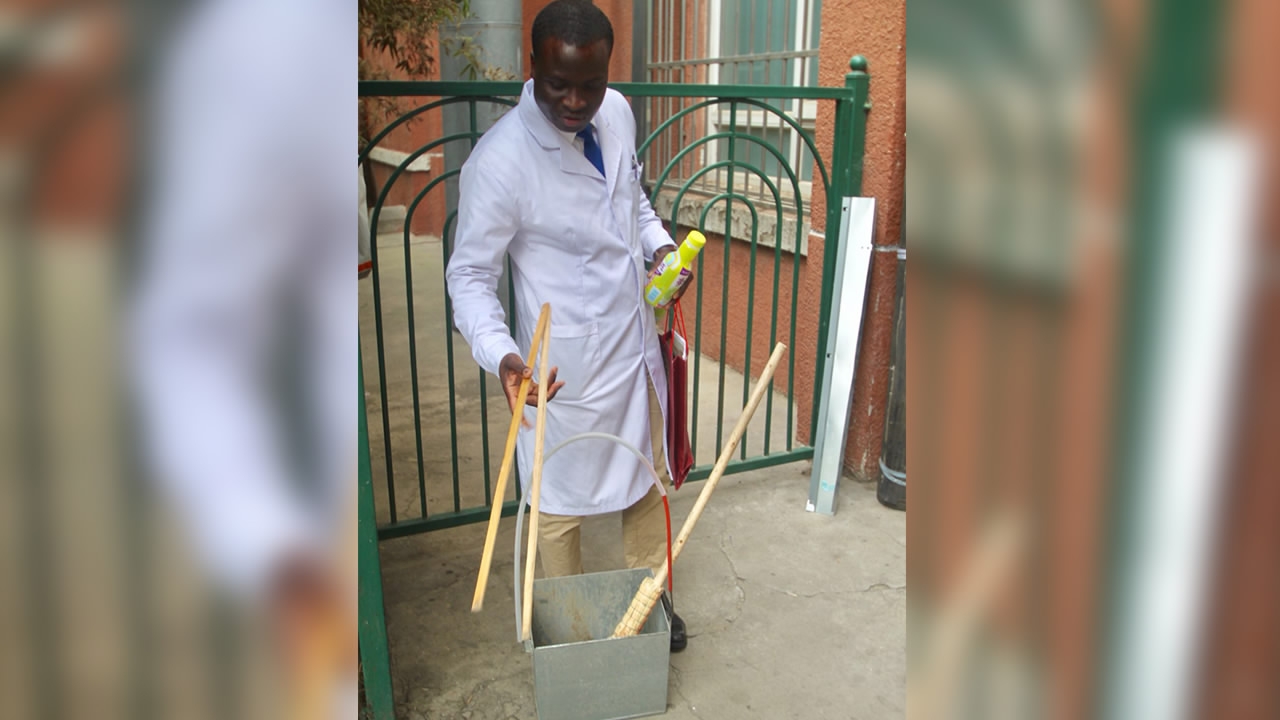
In between surgeries, Ohene is busy cleaning up cigarette butts left on the hospital grounds.
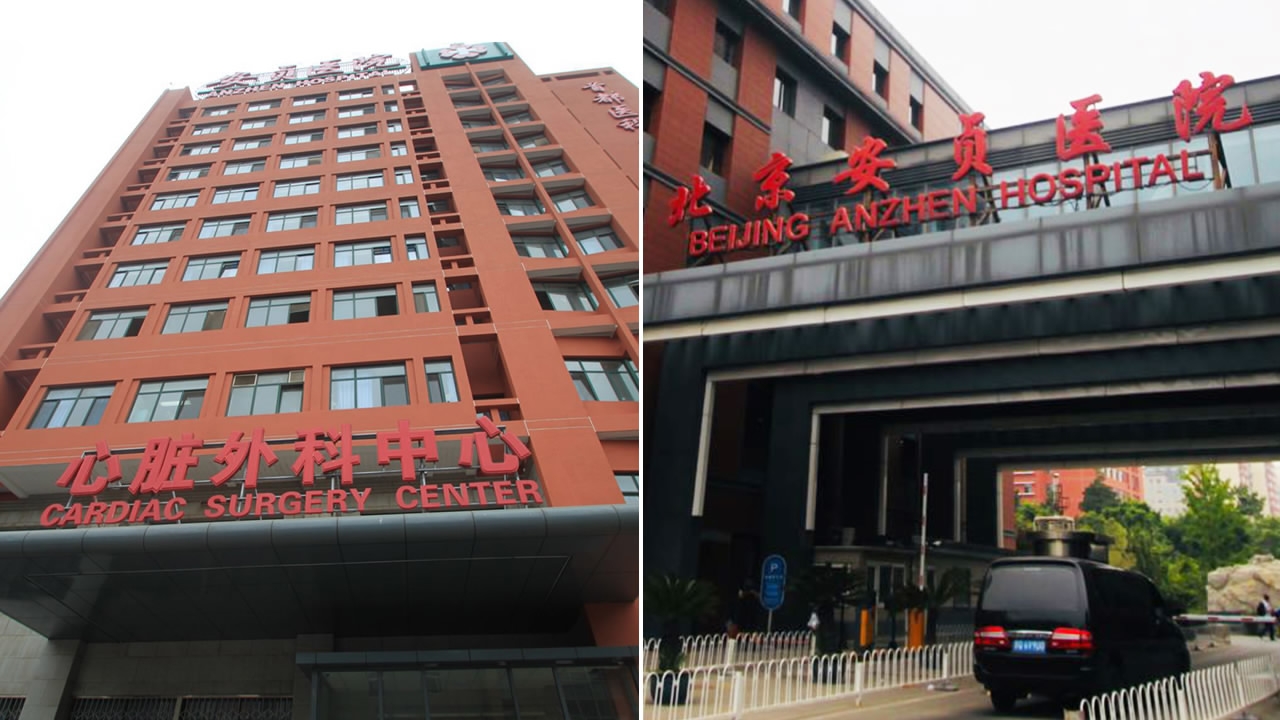
Beijing Anzhen Hospital's Cardiac Surgery Center (L) where Dr. Ohene works and the hospital's main entrance area where smoking is prohibited. /Ty Lawson
Beijing Anzhen Hospital's Cardiac Surgery Center (L) where Dr. Ohene works and the hospital's main entrance area where smoking is prohibited. /Ty Lawson
Dr. Ohene isn’t just trying to clean up litter on hospital grounds, he is using the cigarette butts collected every day to further research in the fight to combat smoking in China.
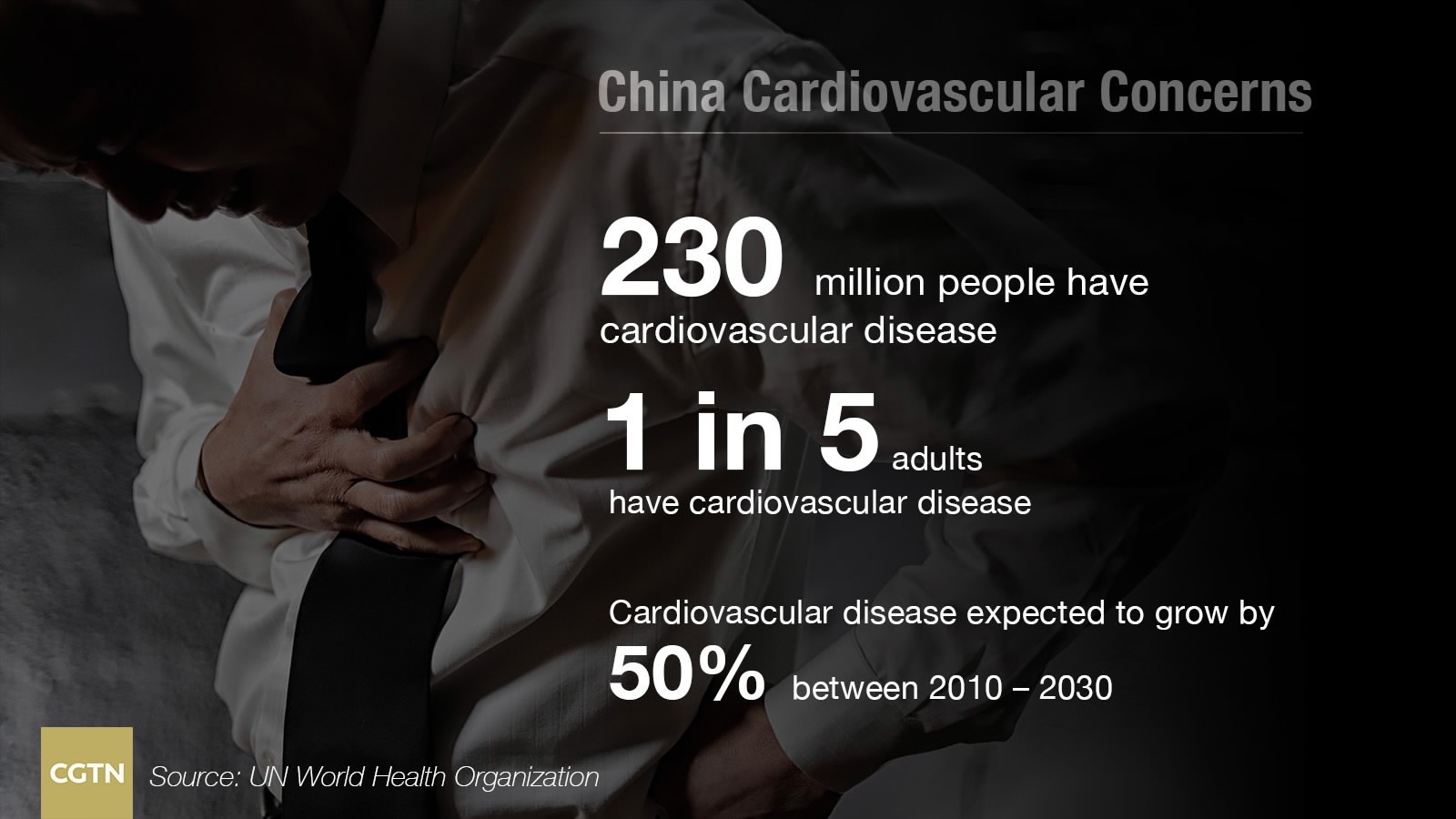
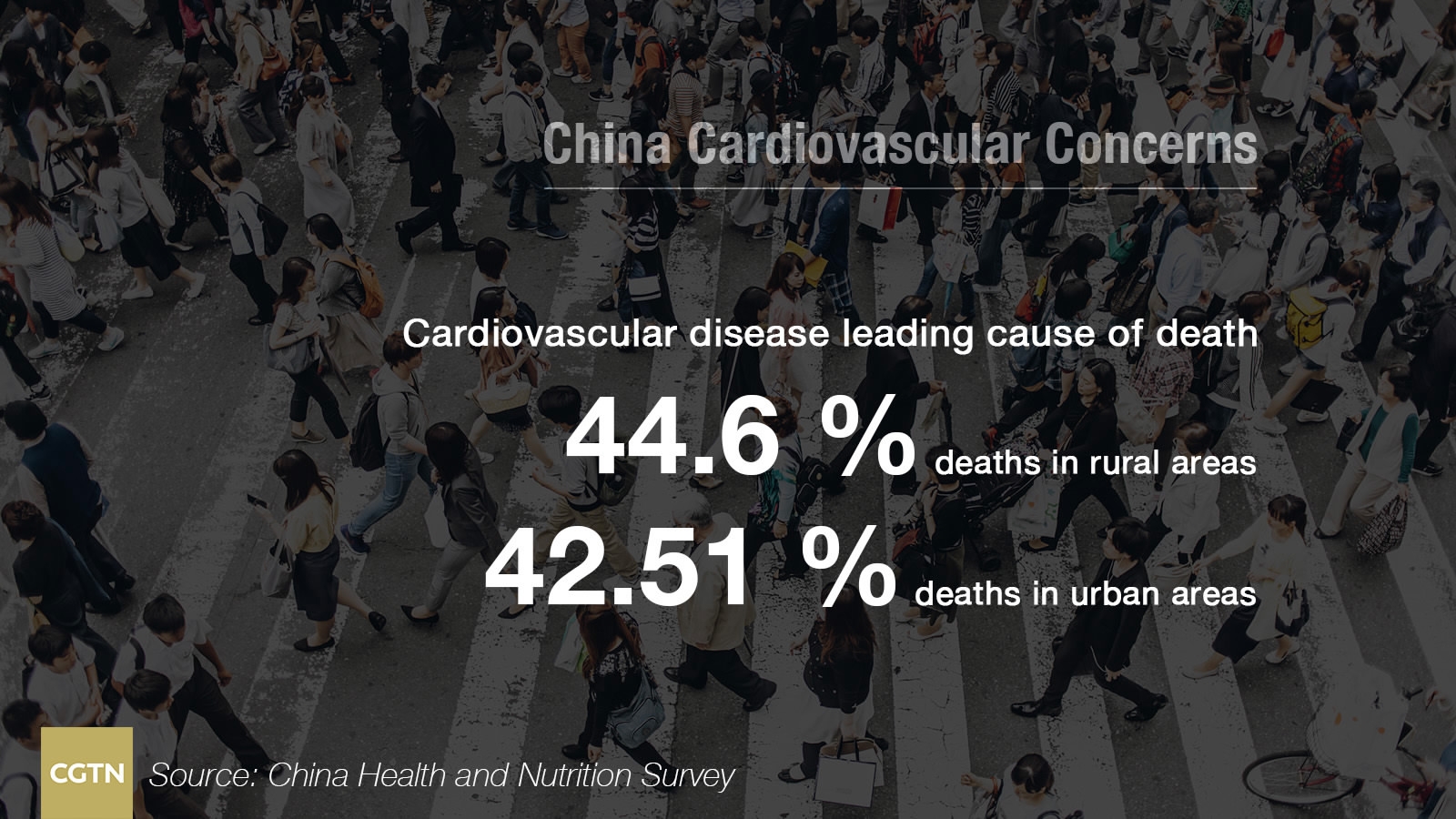
Cardiovascular diseases are the leading cause of death in China. The country’s rapid changes over the past 30 years have led to an epidemic of such diseases due to lifestyle changes, urbanization, and an accelerated aging process.
Researchers at the National Center for Cardiovascular Diseases in China have found that the incidence of these diseases will continue to increase well into the next decade.
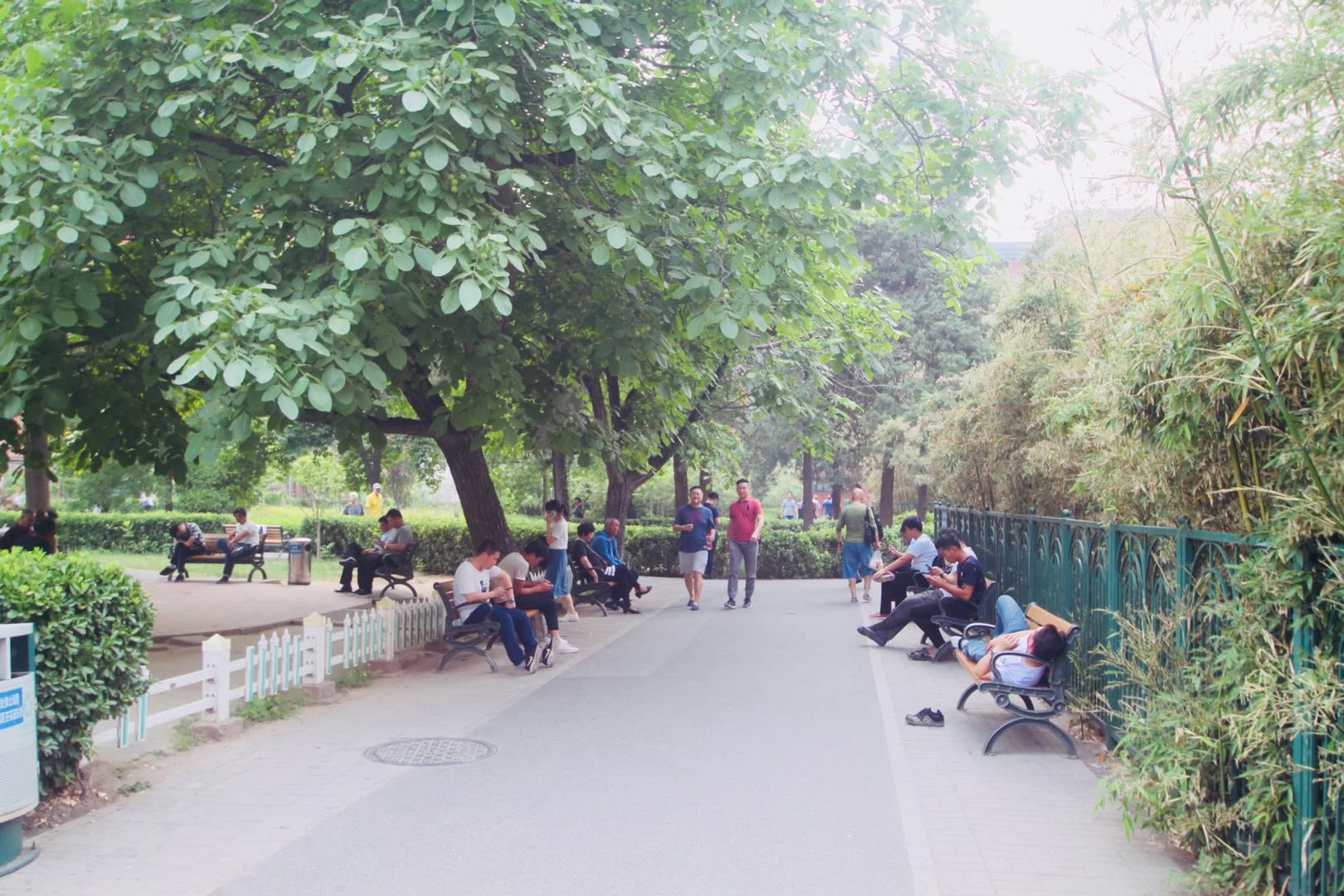
Beijing Anzhen Hospital grounds are filled with trees and pedestrian paths, where some patients and their relatives smoke. / Ty Lawson
Beijing Anzhen Hospital grounds are filled with trees and pedestrian paths, where some patients and their relatives smoke. / Ty Lawson
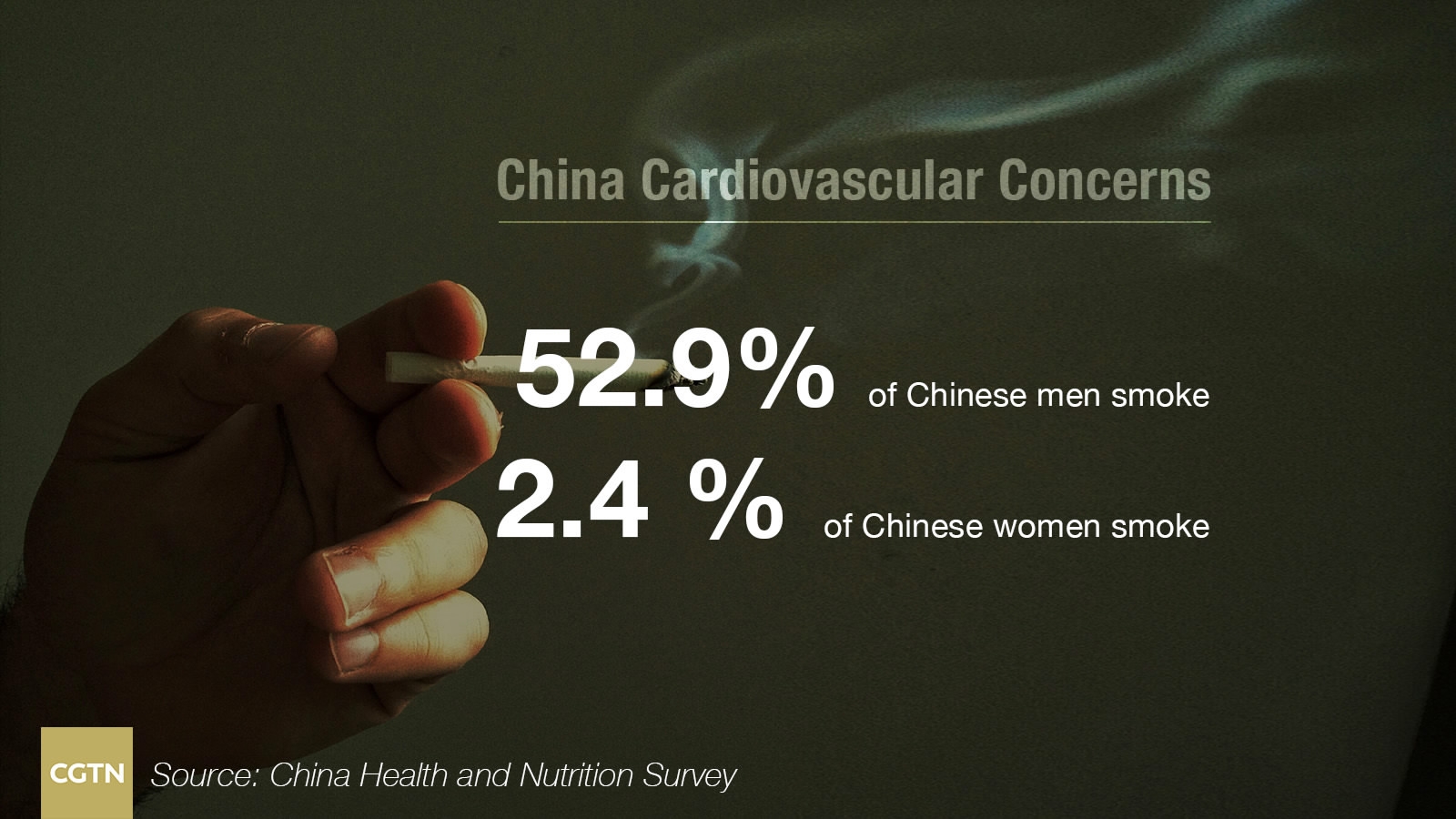
“I collect them every day with a clinician… What I do is (to) count to 50 and weigh them in a research lab. How heavy it is. Count 50, count 500, count 5,000 and then I weigh them to find an average for one cigarette,” he said. “Every day, you have about two to 2.5 kilograms of cigarettes, which is about 10,000 to 12,000 cigarettes smoked per day. That is really bad.”
Ohene leads a pretty hectic life as a surgeon and biomedical scientist doing a sub-specialty in hybrid cardiovascular medicine at Beijing Anzhen Hospital, an affiliate of Capital Medical University.
But despite his workload, the doctor is committed to stopping the rampant smoking on hospital grounds.
"If we want to control hospital-acquired infectious diseases, smoking is one of the ways to stop it," Dr. Ohene told CGTN Digital. "Once you reduce the number of those smoking in a hospital setting, the number of those spitting decreases."
He explained that smokers develop the habit of spitting, contributing to the spread of infectious agents through the air.
"There are so many factors to be taken into consideration when you look at smoking."
Because Beijing Anzhen Hospital is a referral clinic it is much more costly than local hospital treatment facilities leaving many patients in China to grapple with the soaring cost of healthcare like others all around the world.
“I have patients who can’t afford their care. You have people who are waiting months to get seen here," Dr. Ohene told CGTN Digital on Tuesday when we visited the hospital. "They're coming from provinces far away and it is very difficult. Some of them have to sell stuff.”
Clean sweep
Relentlessly, day after day in between surgeries, Dr. Ohene is roaming the hospital grounds picking up cigarette butts.
During our visit, he made his rounds while holding conversations with patients and weary family members smoking outside. While Dr. Ohene knows many of them see smoking as a relaxation mechanism, he offers them unsolicited medical advice about the dangers of the habit.
Some dismiss his comments by moving to a new location to continue smoking. But most take heed of Dr. Ohene's warning and put out their cigarette. All are shocked at the fact he speaks to them in fluent Chinese.
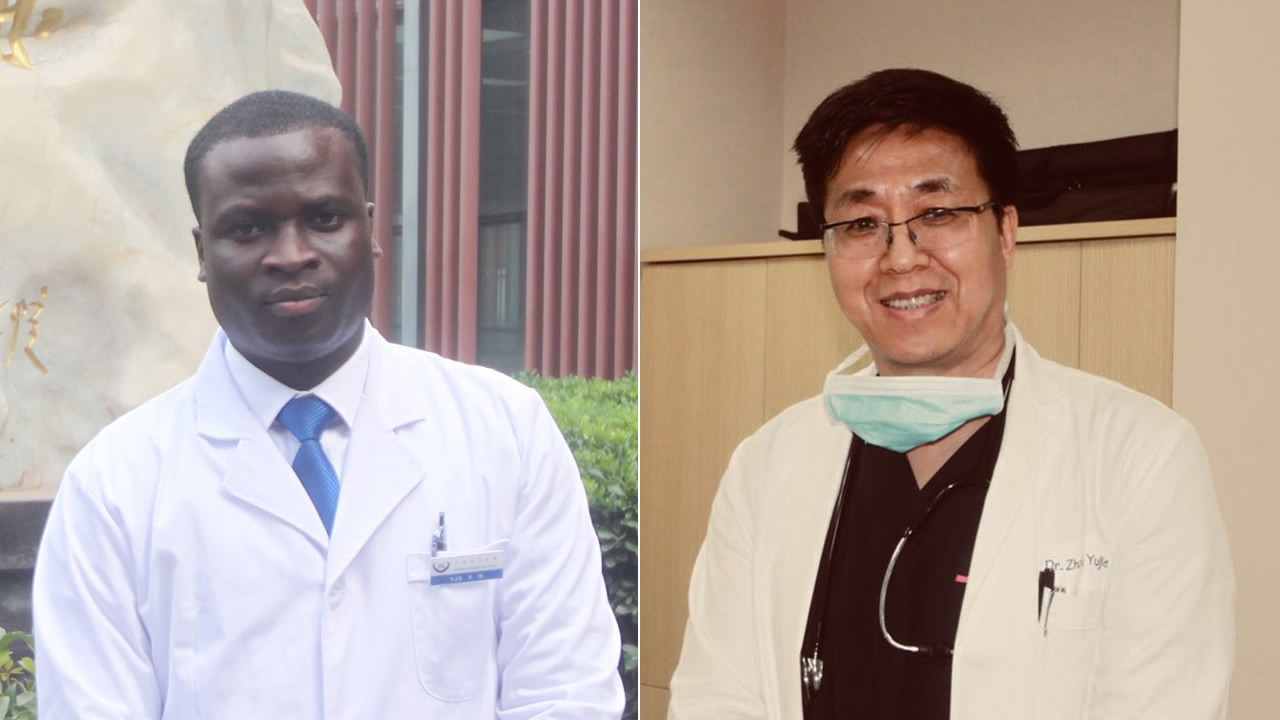
Dr. Bright Ohene (L), cardiac surgeon responsible for the push to stamp out smoking on the grounds of Beijing Anzhen Hospital. Dr. Zhou Yujie (R), vice president of Beijing Anzhen Hospital, supports Dr. Ohene to start the "White Coat Effect" anti-smoking initiative. / Ty Lawson
Dr. Bright Ohene (L), cardiac surgeon responsible for the push to stamp out smoking on the grounds of Beijing Anzhen Hospital. Dr. Zhou Yujie (R), vice president of Beijing Anzhen Hospital, supports Dr. Ohene to start the "White Coat Effect" anti-smoking initiative. / Ty Lawson
"I studied Chinese for twelve hours a day for about three months to master it," he said.
Firm but gentle, we witnessed Dr. Ohene debating and eventually persuading a patient dressed in hospital clothes and still wearing a medical bracelet to get rid of the cigarette.
He says sometimes he uses the family factor as part of his fight to curb smoking.
"I ask them, for the sake of your family is there something you want to give up? ... For your only daughter who is going to get married and you wish to be at the wedding. For your grandson who you will want to be there for who is not yet born," he said. "Would you think about them to give up a habit?"
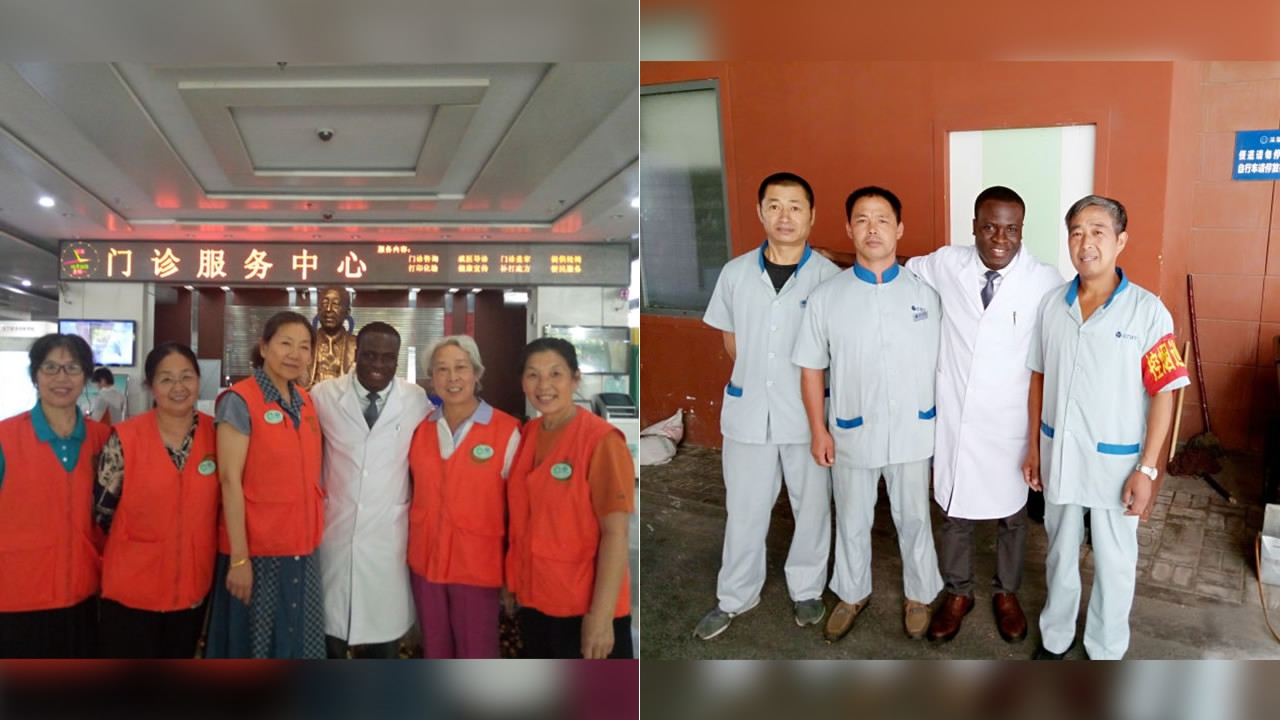
Dr. Ohene with retired doctors (L) who once worked at Beijing Anzhen Hospital but now volunteer in the fight against smoking. Dr. Ohene joins with the hospital's maintenance staff (R) to collect cigarette butts on the hospital grounds daily. / Ty Lawson
Dr. Ohene with retired doctors (L) who once worked at Beijing Anzhen Hospital but now volunteer in the fight against smoking. Dr. Ohene joins with the hospital's maintenance staff (R) to collect cigarette butts on the hospital grounds daily. / Ty Lawson
The 'white coat effect'
Dr. Ohene admits that one tool that helps his mission is "the white coat effect." He said when people see him in the white coat, they are much more receptive to his words than when he is not wearing his doctor's coat.
"We want to infiltrate their homes by making sure to recruit volunteers," Dr. Ohene said. "That's where I will implement the 'white coat effect' where high school students, college students, grad students, who wish to become a part of the program can get a white coat to volunteer."
Dr. Ohene said it takes a village to successfully end smoking on hospital grounds. He said even before implementing the 'white coat effect' the hospital's maintenance workers would help him with collecting the cigarette butts.
It takes a 'village'
Last year, Dr. Ohene proposed the idea to his superior, Professor Zhou Yu Jie. Professor Zhou is the vice president of Beijing Anzhen Hospital but also a world-renowned cardiovascular interventionist. Fortunately, the Beijing scholar was open to the idea and gave Ohene permission to pursue the initiative.
"I think this is needed in China with so many people smoking," Professor Zhou told CGTN Digital in between his packed schedule making rounds at the hospital.
Dr. Ohene's follow in a long tradition of such work happening at Beijing Anzhen Hospital, one of China's largest cardiac surgery centers. The hospital has a tradition of implementing programs to combat smoking dating back to its founder, Wu Yingkai, the father of China's thoracic and cardiovascular surgery.
Starting this summer, volunteers will be tasked with roaming the various floors of the hospital buildings, ensuring no one is illegally smoking inside the bathrooms. They will also be stationed on the hospital grounds to make sure smoking is only taking place in mandated areas and to also offer patients and their loved ones information about the dangers of smoking.
One of the volunteers we spoke to is 17-year-old Zhou Yanjun, who has been a fixture on the hospital grounds since she was young because her dad is a doctor there.
For her, volunteering is a personal mission. She said her grandfather smokes.
"When I was young I would talk to him about stopping, but I kind of gave up," Zhou told CGTN Digital. "I may ask him to join this program if he wants."
Zhou will spend her summer vacation donning a white coat discussing the factors of smoking to any and all who will listen.
"I think it is really nice for the hospital to reach out to patients in an active way," she said.
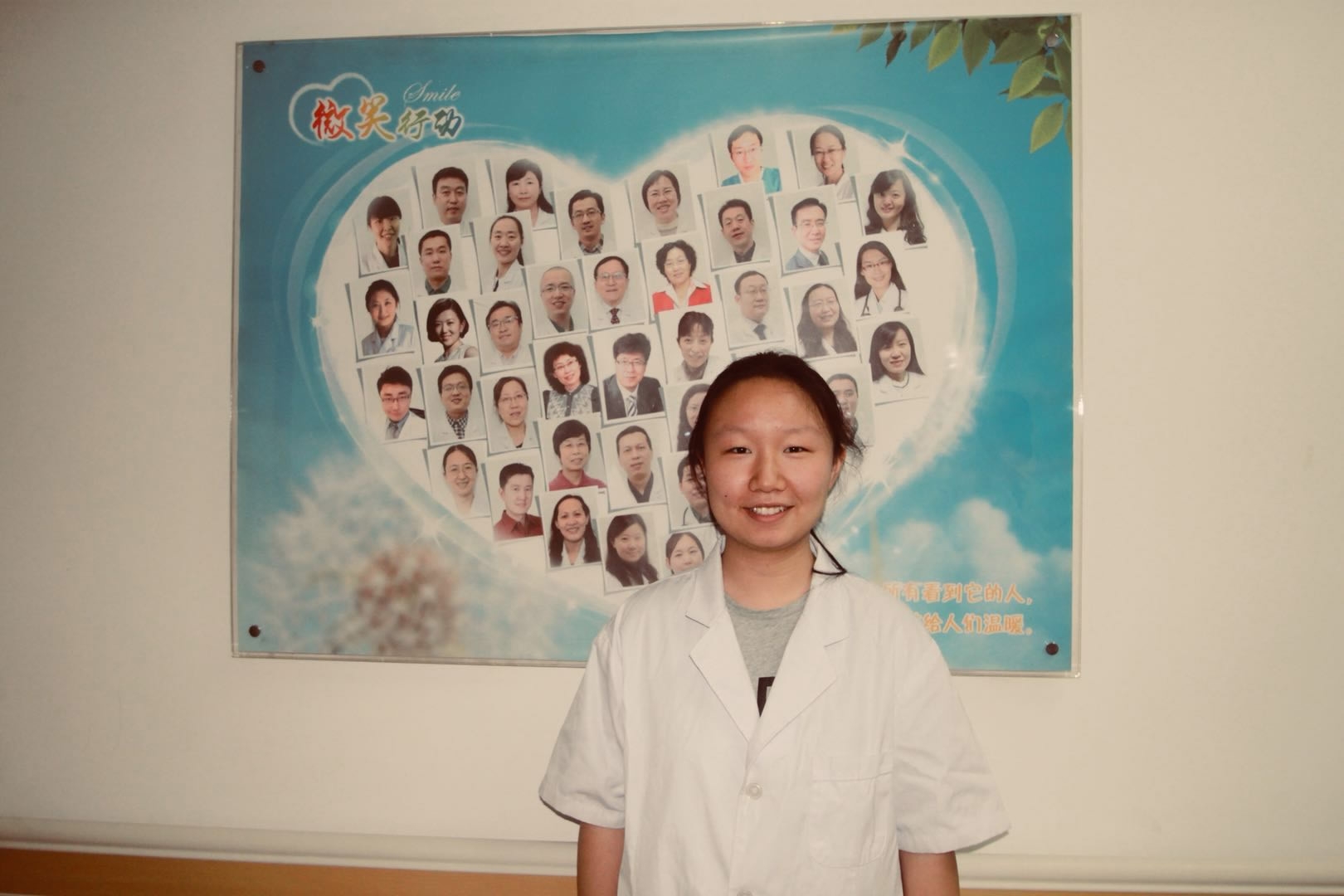
Lisa Zhou Yujun, 17, volunteers at Beijing Anzhen Hospital as part of the "White Coat Effect" initiative to help stamp out smoking in the hospital. /Ty Lawson
Lisa Zhou Yujun, 17, volunteers at Beijing Anzhen Hospital as part of the "White Coat Effect" initiative to help stamp out smoking in the hospital. /Ty Lawson
Generation next
Dr. Ohene is currently undergoing training for integrated cardiovascular medicine. This will allow him to treat complex heart and vessel-related diseases through needle prick incisions. He only has one more year of training left in China before heading back to his native country, Ghana.
“I am from Africa where healthcare is very expensive. I am actually interested in doing something that is preventive,” Dr. Ohene said. “You don’t actually have an ambulance in the alley waiting for people to jump off a cliff and save them if you can just build a wall around the cliff so that people don’t jump.”
Whether or not "The White Coat Effect" initiative will continue once he's gone remains a mystery, but one thing is for certain Dr. Ohene is hoping it sticks around.
“I think this can help my patients,” Dr. Ohene said. “I wish that they can continue doing this.”
(Cover photo: Dr. Bright Ohene demonstrating how he removes cigarette butts from Beijing Anzhen Hospital. /Ty Lawson)

 ["china"]