
Opinion
16:13, 04-May-2019
Venezuela is fireproofing for Sanchez's alliances
 ["china"]
Share







Copied
Editor's note: Nuno Rodriguez is a political scientist and analyst. The article reflects the author's opinion, and not necessarily the views of CGTN.
After winning the elections on April 28, Pedro Sanchez will have a complicated legislature. Even though the Socialist Party (PSOE) has 123 seats in parliament, they do not have enough power in the upper house to govern without alliances.
In this situation Sanchez's decision is to exercise government alone, negotiating each issue individually with different political forces. This strategy will lead Sanchez's government to narrow its ability to govern.
The first issue Sanchez will have to face is the relationship with Venezuela. In fact, both he and his party, have a long way walked in this complex matter.
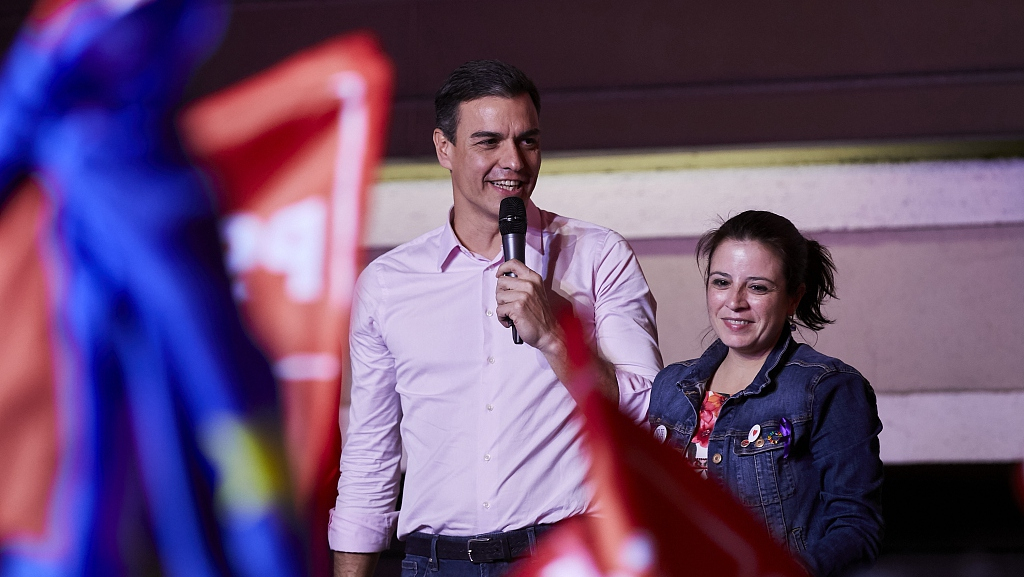
Pedro Sanchez, the prime minister of Spain, addresses supporters as they wave flags in the air outside of the PSOE (Spanish Socialist Workers Party) headquarters, Madrid, April 30, 2019. /VCG Photo
Pedro Sanchez, the prime minister of Spain, addresses supporters as they wave flags in the air outside of the PSOE (Spanish Socialist Workers Party) headquarters, Madrid, April 30, 2019. /VCG Photo
Rodriguez Zapatero, the former Spanish prime minister with PSOE, has done countless consulting and advisory work for Nicolas Maduro government. Zapatero has been in Venezuela more than 30 times in the last three years. According to him, he was working to prevent an escalation of violence that may lead Venezuela to a civil conflict that can spread throughout the continent.
Among the advisory tasks, Zapatero negotiated the release of political prisoners. It seems that consulting and advisory work is not done altruistically, since in recent months the former prime minister has been able to buy a luxury villa.
At the beginning of 2019, Zapatero flew in a plane of the state-owned company Petroleos de Venezuela (PDVSA) to this country. Juan Guaido's operation to overthrow President Maduro is underway.
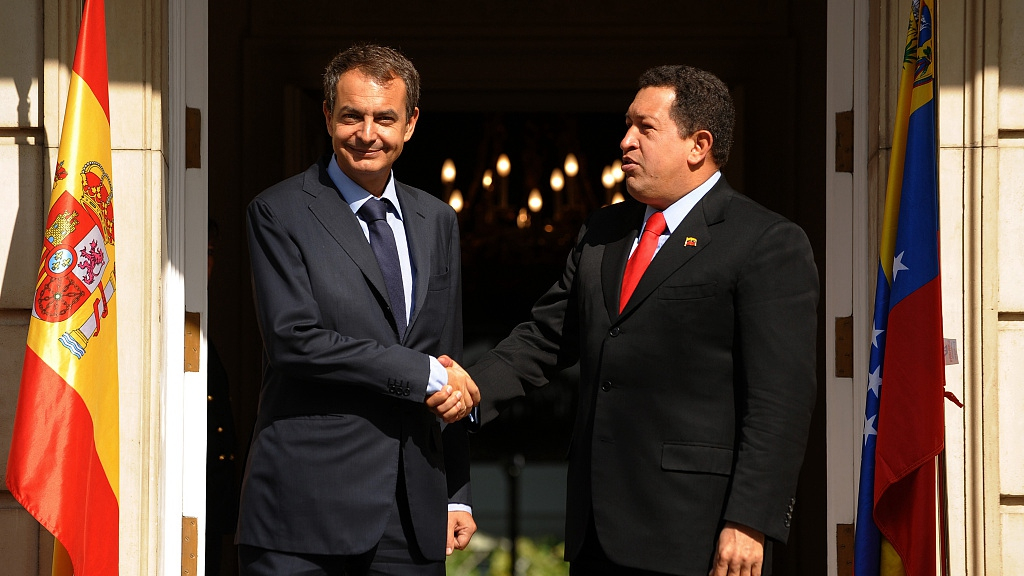
Then Spain's former prime minister Jose Luis Rodriguez Zapatero (L) greets Venezuela's then president Hugo Chavez upon his arrival, La Moncloa Palace, Madrid, Spain, September 11, 2009. /VCG Photo.
Then Spain's former prime minister Jose Luis Rodriguez Zapatero (L) greets Venezuela's then president Hugo Chavez upon his arrival, La Moncloa Palace, Madrid, Spain, September 11, 2009. /VCG Photo.
At this time the Sanchez government is distancing itself from Zapatero's actions by describing Zapatero's counseling tasks as individual issues.
As soon as Guaido came on the scene, the Sanchez government did not hesitate to recognize him as the legitimate president of Venezuela even before the EU had a clear and unanimous opinion on it.
The situation was confusing because Sanchez had risen to be the prime minister thanks to the support of leftist groups that defend Maduro as the legitimate president of Venezuela.
Even more, Pablo Iglesias, along with other Podemos party leaders, have carried out advisory work for Hugo Chavez government, as well as for Maduro's.
Pablo Iglesias has openly defended Chavez policies, and he has praised his ties to Chavez. More leftist party members that supported Sanchez have had friendly relations with both Chavez and Maduro.
Two days after April 28 elections, Pablo Iglesias leaked to the press alleged statements from Sanchez government members, statements that said that the Sanchez government regretted having recognized Guaido as president of Venezuela. But those leaks were immediately denied by Josep Borrell, Sanchez's foreign minister.
The situation is further complicated as one of the leaders opposed to Maduro has taken refuge in the Spanish embassy in Venezuela. Leopoldo Lopez entered the embassy with his family, fearing for his safety, but he has not requested political asylum yet.
Venezuelan Supreme Court issued an arrest warrant against him Thursday, forcing the Spanish authorities to defend the inviolability of the embassy.
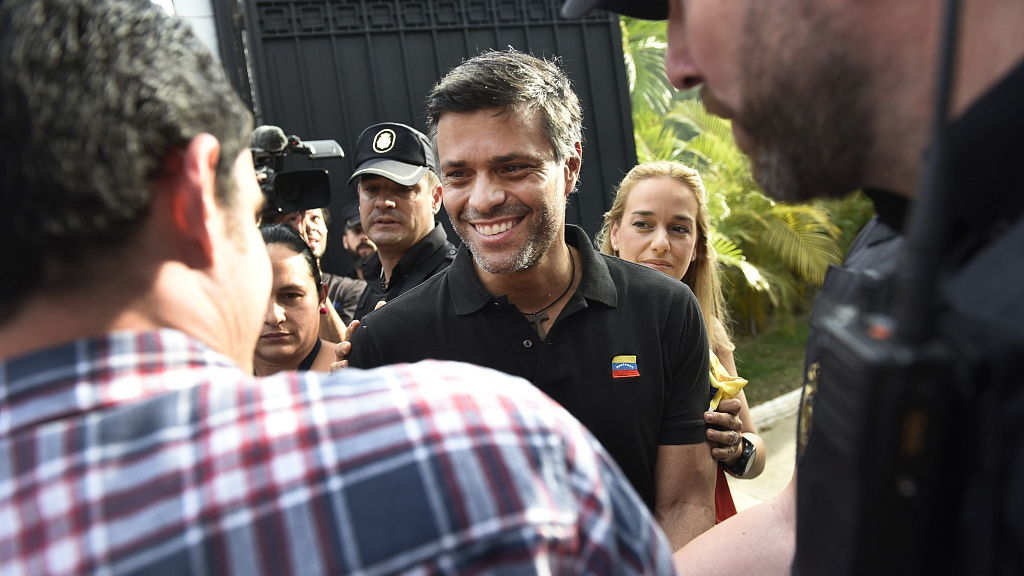
Opposition leader Leopoldo Lopez (C) speaks to members of the media outside of the Spanish ambassador's residence, Caracas, Venezuela, May 2, 2019. /VCG Photo
Opposition leader Leopoldo Lopez (C) speaks to members of the media outside of the Spanish ambassador's residence, Caracas, Venezuela, May 2, 2019. /VCG Photo
Spanish authorities have stated that under no circumstances will they hand over Leopoldo Lopez. The only commitment given by Josep Borrell is to narrow opposition leader political activity.
Venezuela is fireproofing for Sanchez's alliances. It is strange that defending Maduro overthrow was included in right-wing parties' political proposals at election campaign.
As a socialist, Sanchez is following conservative proposals defended by the Ciudadanos, the Partido Popular and the Vox. There is no political difference between those right-wings and PSOE proposals regarding Maduro's Venezuela.
Pedro Sanchez's government has an antagonistic position with his prospective partners in parliament in reference to Venezuela.
Apart from the relations of Zapatero and Iglesias, Venezuela gives shelter to many Basque terrorists sought by the Spanish justice courts. Sanchez will have to negotiate at parliament with parties defending those terrorists.
Sanchez's foreign policy can turn against him when he seeks agreements in national politics. The need for support to legislate will force Sanchez to take antagonistic positions in different issues in order to get support from different forces. Sooner or later the Sanchez government will be blocked by one of the parties that he won't be able to satisfy.
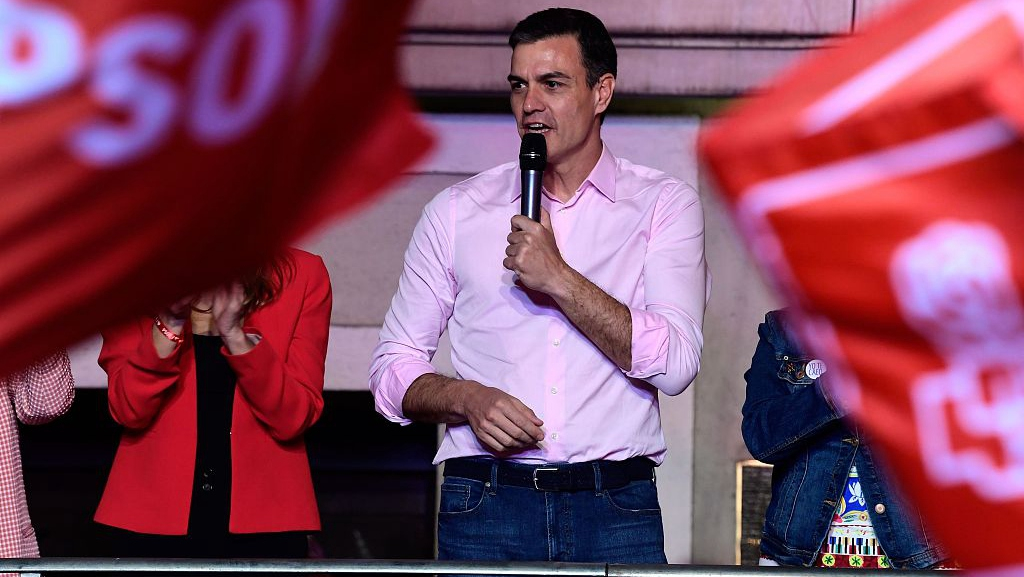
(Cover: Spanish Prime Minister Pedro Sanchez delivers a speech during an election night rally after Spain held general elections, Madrid, April 28, 2019. /VCG Photo)
(If you want to contribute and have specific expertise, please contact us at opinions@cgtn.com.)