
Politics
21:56, 24-Jun-2018
US high court poised to rule on Trump travel ban, other cases
 ["china"]
Share







Copied
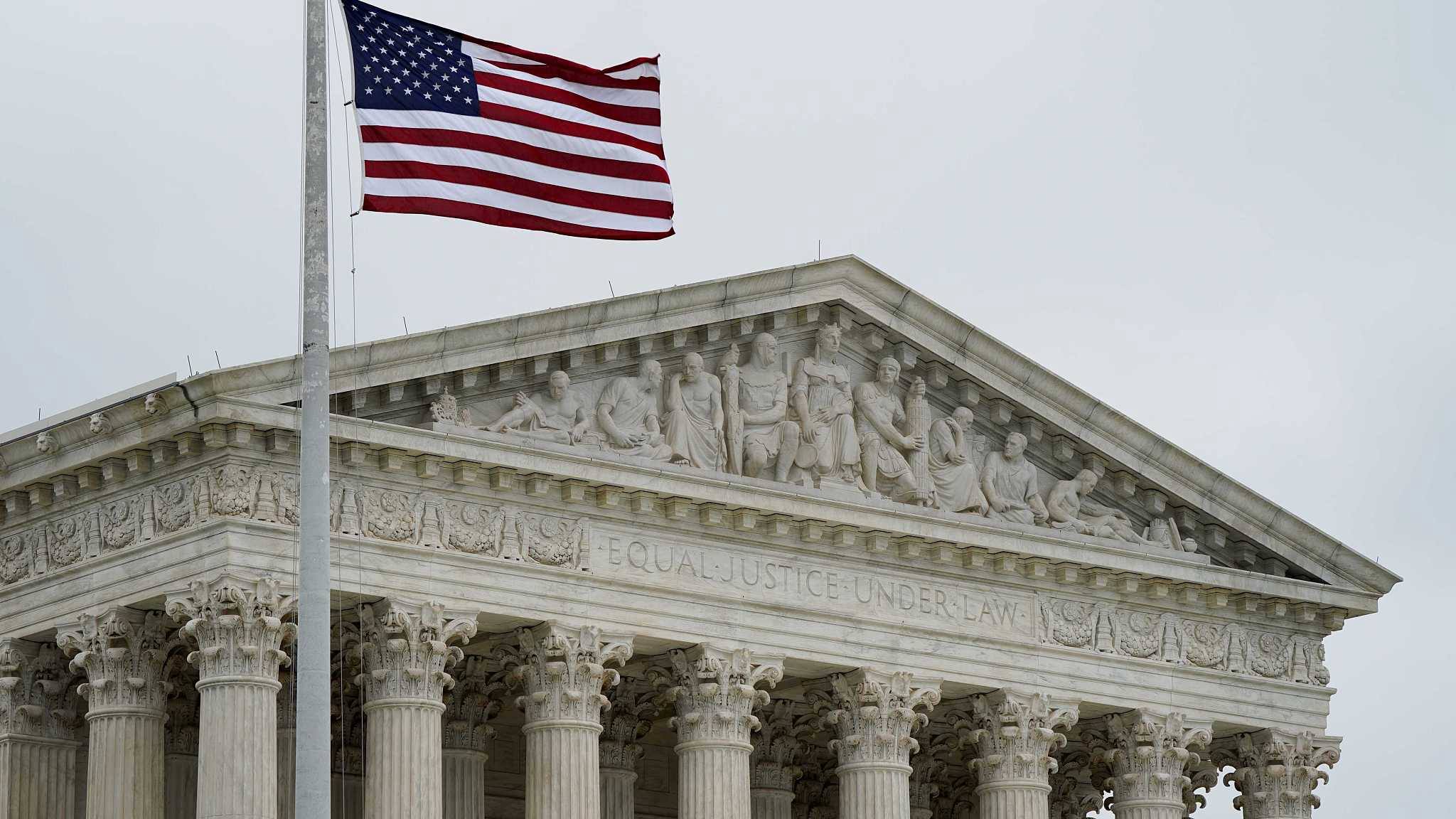
The US Supreme Court, winding down its nine-month term, will issue rulings this week in its few remaining cases including a major one on the legality of President Donald Trump's ban on people from five Muslim-majority nations entering the country.
The nine justices are due to decide other politically sensitive cases on whether non-union workers have to pay fees to unions representing certain public-sector workers such as police and teachers, and the legality of California regulations on clinics that steer women with unplanned pregnancies away from abortion.
The justices began their term in October and, as is their usual practice, aim to make all their rulings by the end of June, with more due on Monday. Six cases remain to be decided.
Travle ban case
The travel ban case was argued on April 25, with the court's conservative majority signalling support for Trump's policy in a significant test of presidential powers.
Trump has said the ban is needed to protect the US from attacks by Islamic militants. Conservative justices indicated an unwillingness to second-guess Trump on his national security rationale.

Demonstrators hold signs while protesting outside the US Supreme Court in Washington, DC, April 25, 2018. /VCG Photo
Demonstrators hold signs while protesting outside the US Supreme Court in Washington, DC, April 25, 2018. /VCG Photo
Lower courts had blocked the travel ban, the third version of a policy Trump first pursued a week after taking office last year, noting that the ban violated federal immigration law and the US Constitution's prohibition on the government favoring one religion over another.
The current ban, announced in September, prohibits entry into the US by most people from Iran, Libya, Somalia, Syria and Yemen.
Fees for non-union workers
In a significant case for organized labor, the court's conservatives indicated opposition during arguments on February 26 to so-called agency fees that some states require non-members to pay to public-sector unions.
Workers who decide not to join unions representing certain state and local employees must pay the fees in two dozen states in lieu of union dues to help cover the cost of non-political activities such as collective bargaining. The fees provide millions of dollars annually to these unions.
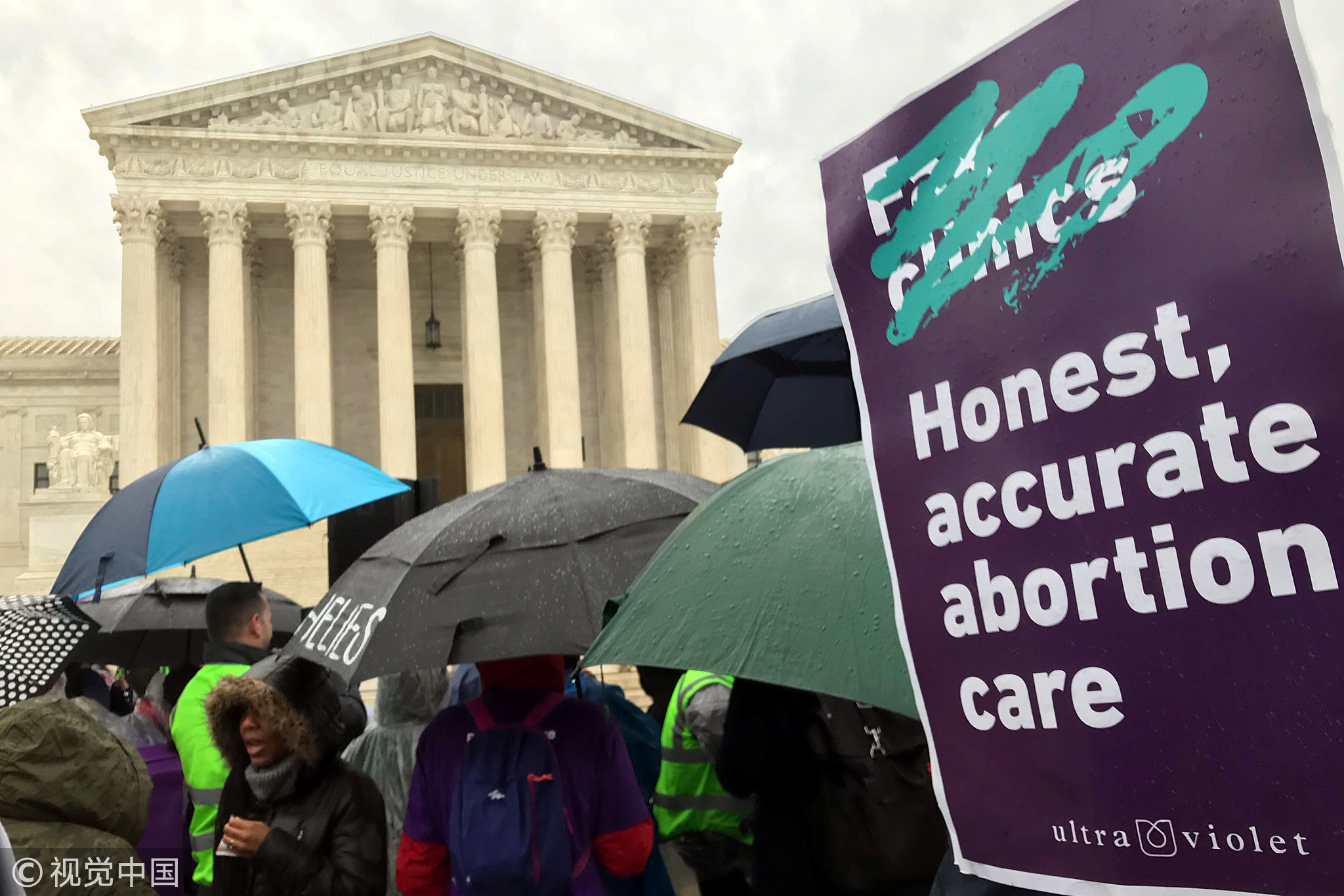
Supporters of a California law, requiring anti-abortion pregnancy centers to post signs notifying women of the availability of state-funded contraception and abortion, hold a rally in front of the US Supreme Court, March 20, 2018. /VCG Photo
Supporters of a California law, requiring anti-abortion pregnancy centers to post signs notifying women of the availability of state-funded contraception and abortion, hold a rally in front of the US Supreme Court, March 20, 2018. /VCG Photo
Doubts in California's law
The justices seemed skeptical during March 20 arguments toward California's law requiring Christian-based anti-abortion centers, known as crisis pregnancy centers, to post notices about the availability of state-subsidized abortions and birth control. The justices indicated that they would strike down at least part of the regulations.
(Cover: File photo of the US Supreme Court.)
Source(s): Reuters