
Culture
15:11, 29-May-2018
Could there be a formula for creating a global box office success?
 ["china"]
Share







Copied

With the underwhelming launch this weekend of “Solo”, the latest film in the “Star Wars” franchise, many are now wondering: If tent poles are no longer guaranteed blockbusters, is there a formula Hollywood and the rest of the world should consider?
CGTN Digital decided to take a look at some of the key elements of box office gold.
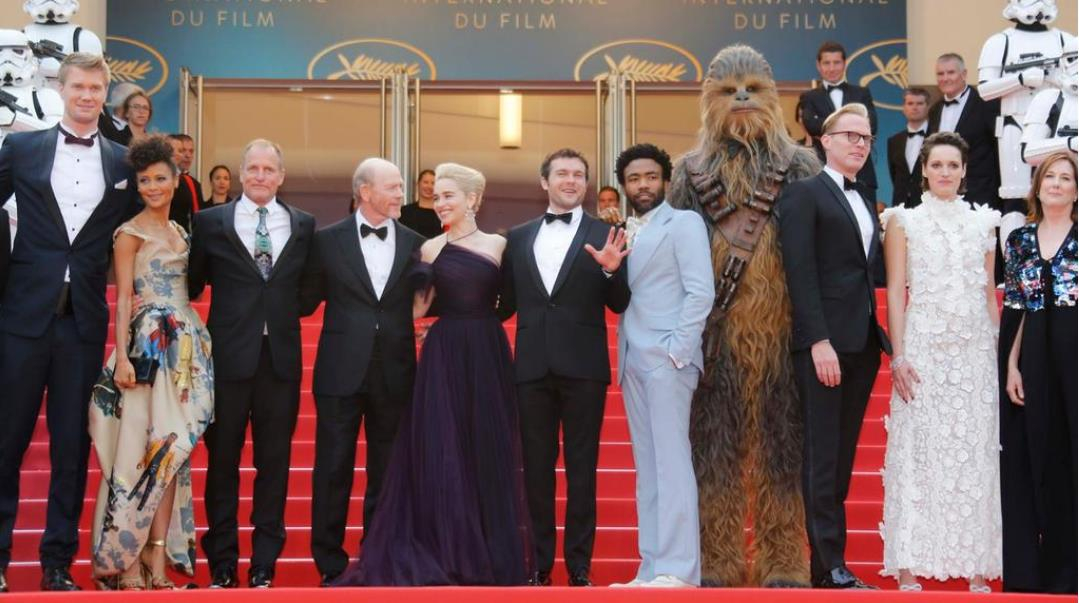
Cast and crew of the new "Solo: A Star Wars Story" at the Cannes Film Festival, where the film had its European premiere / Reuters
Cast and crew of the new "Solo: A Star Wars Story" at the Cannes Film Festival, where the film had its European premiere / Reuters
Story, story, story!
There are many elements that go into making a film; the costumes, the cinematography, the characters, the music, and the story. Why is the story fundamental to a film's box office success? It’s the building block of a film.
Think of it this way. Is a story so compelling audiences will pay to see? Are the lead roles strong enough to attract stars to want to play the role? What is the emotional hook an audience will relate too? All questions filmmakers around the world struggle with whether they are a first timer or an industry veteran.
Filmmaker Andrew Stanton, the designer and writer of the animated hit “Toy Story” and the writer and director of global blockbusters such as “A Bug’s Life”, “Finding Nemo”, and “WALL-E” gave a TED talk about the importance of story. In the talk titled "The Clues to a Great Story", Stanton offers insight into what drives a good story.
“Storytelling – is joke telling. It’s knowing your punchline, your ending, knowing that everything you're saying from the first sentence to the last, is leading to a singular goal and ideally confirming some truth,” he said. “That deepens our understandings of who we are as human beings. We all love stories.”
Once the script is in order, another key to box office success is knowing your audience.

Aamir Khan plays a wrestler in “Dangal” struck box office success at home in India and overseas here in China. / Reuters
Aamir Khan plays a wrestler in “Dangal” struck box office success at home in India and overseas here in China. / Reuters
A buyer’s market
Knowing your audience does not mean making a movie so culturally specific that only those from the film's place of origin would understand and appreciate it. A good example of cinema-going global and experiencing box office success is when the first “Star Wars” film was released in the 1970s. This was the first film to change the perception of how Hollywood studios engaged markets and how they overall made movies. “Star Wars” was the force behind modern day tent poles that created long-lasting fictional galaxies. It also changed the marketing and distribution models for releasing a film.
Up until now, that is the model most tent poles use around the world for global box office success. However, this past weekend, “Solo” proved that those models from a "long time ago in a galaxy far, far away" from the modern cinema are relics of the past.
The Indian film phenomenon “Dangal” is a great example of a modern-day film finding box office success abroad.
With its unprecedented 152 million US dollars and counting box office bonanza in China, “Dangal” has inspired a simultaneous outpouring of excitement, bewilderment, and outright disbelief in India’s film community. No Indian movie has ever earned so much money, so quickly, in a market outside India.
Diversity matters
According to an annual study from The University of California, Los Angeles, released in February, films whose casts more accurately reflect the racial makeup of the US and global populations perform better at the box office than their less diverse counterparts.
The study analyzed 2016 film and TV data comes as debates on race and gender dominate Hollywood, and led to a push by Academy of Motion Picture Arts and Sciences to diversify its membership.
“Our findings reveal that, regardless of race, audiences want to see diversity on the screen,” study co-author Ana-Christina Ramon said in a statement.
The study found that the median global box office for a film that consisted of 21 percent to 30 percent minority actors was 179.2 million US dollars. In contrast, films with less than a fifth of minority actors, a majority of the films studied, failed to gross a median of 40 million worldwide, the worst-performing segment.
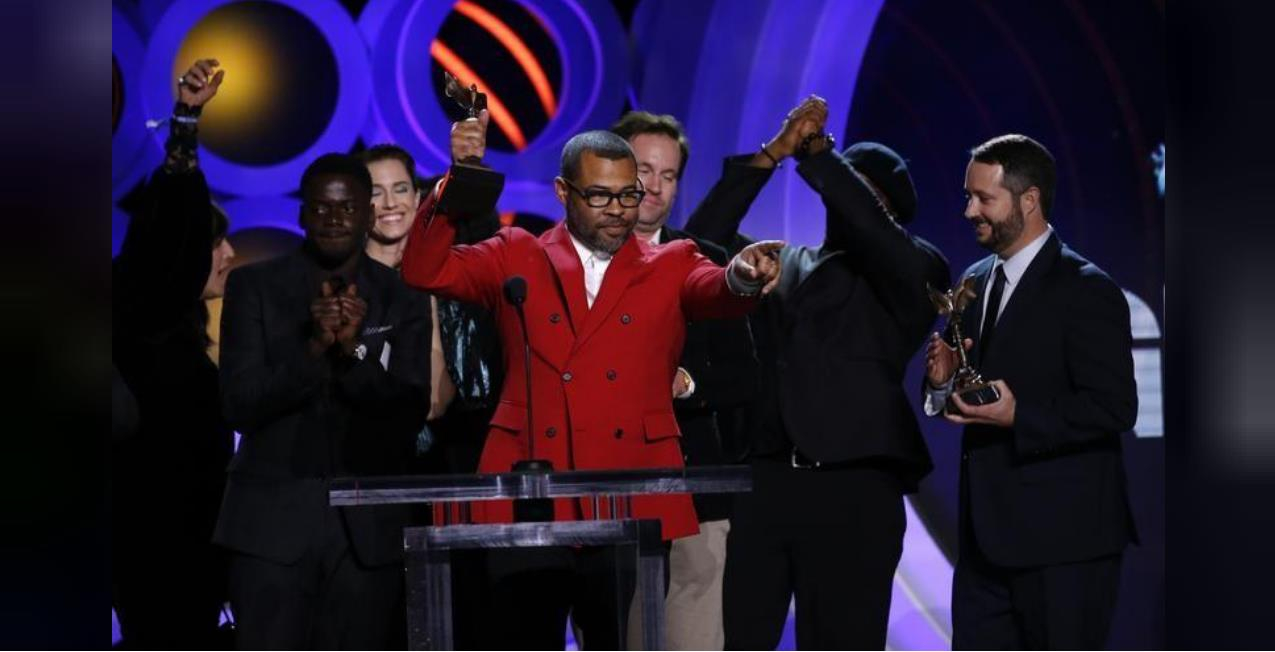
Producer and director Jordan Peele accepts the Best Feature Award accompanied by the cast of his film "Get Out" at 2018 Film Independent Spirit Awards, Santa Monica, California, US, March 3, 2018. / Reuters
Producer and director Jordan Peele accepts the Best Feature Award accompanied by the cast of his film "Get Out" at 2018 Film Independent Spirit Awards, Santa Monica, California, US, March 3, 2018. / Reuters
Universal language
“Dangal,” tells the true story of Mahavir Singh Phogat, a former amateur wrestler who, having been denied the chance to become an international champion, trains his daughters in wrestling to vicariously fulfill his dream.
Films like “Dangal” can find success abroad because it speaks a universal language that someone in China and Brazil understands and are able to appreciate – themes like family, love, and loss that translate regardless of language.
The low-budget comedy-thriller “Get Out” which explores racism in the US was made for 4.5 million US dollars but went out to earn a massive 252.4 billion dollars globally.
"Get Out" not only was a commercial success with a diverse cast, the film earned a number of awards including an Oscar for the best original screenplay. On the night he won, the film's writer and director Jordan Peele shared his concerns about making a box office winner.
“I stopped writing this movie about 20 times because I thought it was impossible. I thought it wasn’t going to work. I thought no one would ever make this movie," he said during his Oscars acceptance speech. "But I kept coming back to it because I knew if someone let me make this movie, that people would hear it and people would see it.”
(with input from the news agencies)
(Cover image: Film Reel. / Reuters)