
Opinion
15:30, 06-May-2019
Fishery cooperation in the South China Sea should be enhanced
 ["china"]
Share







Copied

Editor's note: Peng Nian is an assistant research fellow at National Institute for South China Sea Studies, China, as well as PhD of Hong Kong Baptist University. The article reflects the author's opinion, and not necessarily the views of CGTN.
Recently, Indonesia began sinking dozens of impounded foreign boats to deter illegal fishing in its waters, sparking concerns in the region that there would be renewed tensions in the South China Sea in the near future.
According to the Indonesian government, 51 foreign boats, mainly from Vietnam, Malaysia and China will be scuttled at several locations over the next two weeks. It is not the first time that Jakarta has taken such measures to deal with illegal fishing in the South China Sea. In fact, hundreds of captured foreign fishing-boats have been sunk after President Joko Widodo assumed the presidency in 2014.
The Indonesian senior officials, including Fisheries minister Susi Pudjiastuti, even claimed that the sinking of foreign fishing vessels is actually the most beautiful solution to fighting illegal fishing. Indonesia, therefore, is more likely to continue to take strong measures against illegal fisherman from its neighboring countries.
However, Indonesia's firm actions have prompted heavy criticism from its neighbors, especially the Vietnam which suffered most from Indonesia's fishery policy. Those nations accused Indonesia of creating new tensions in the South China Sea and were concerned about the serious consequences of Indonesia's tough stance on fishing disputes.
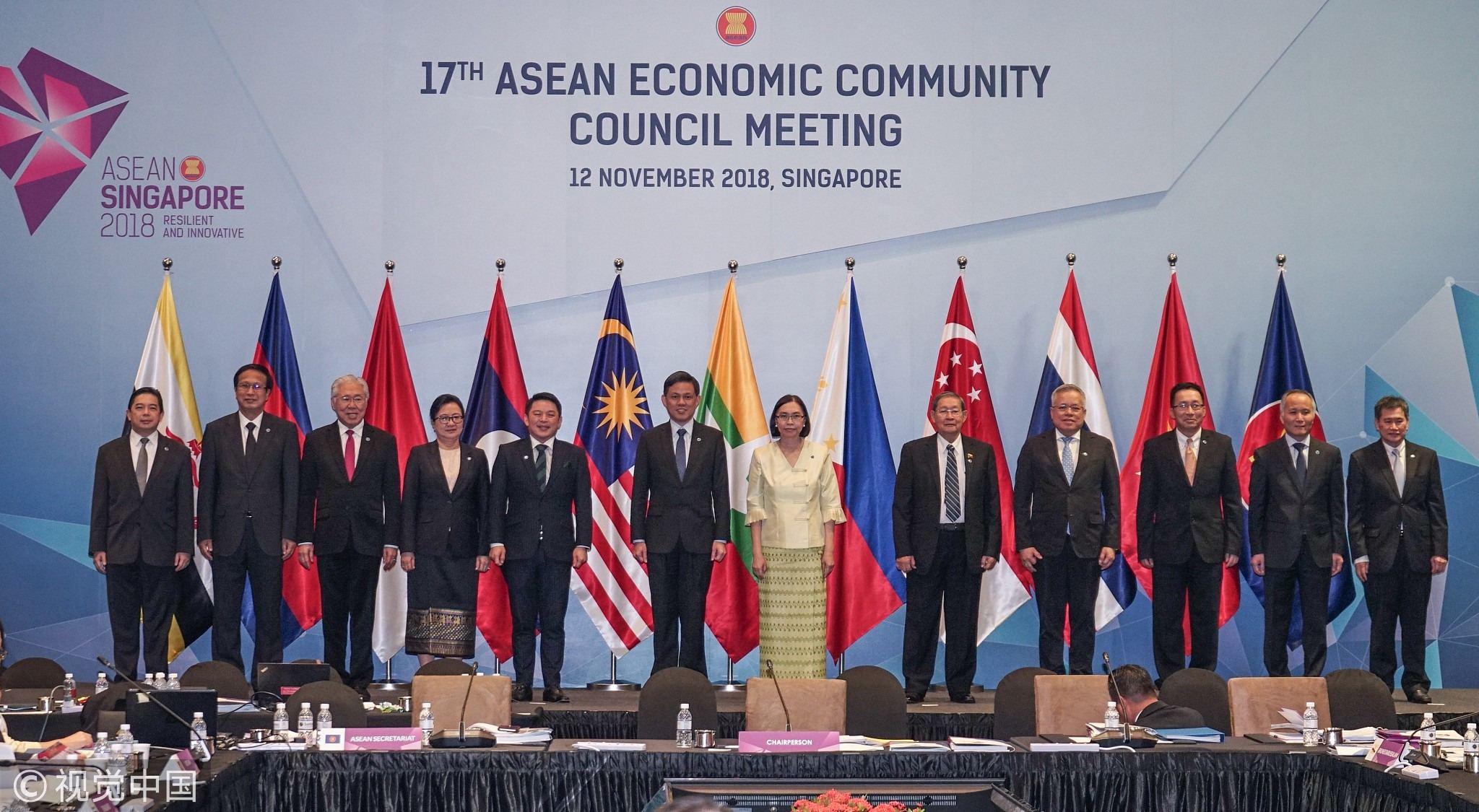
A group photo of the trade ministers of ASEAN countries during the 17th ASEAN Economic Community Council Meeting in Singapore, November 12, 2018. /VCG Photo
A group photo of the trade ministers of ASEAN countries during the 17th ASEAN Economic Community Council Meeting in Singapore, November 12, 2018. /VCG Photo
Given the fragile stability in the South China Sea, the fishing dispute would become a main source of the new turbulence in the region. For instance, a Vietnamese coastguard boat rammed an Indonesian naval vessel attempting to seize an illegal trawler in the South China Sea in the last week.
Due to the poor policy coordination on fishery cooperation as well as the lack of dispute management mechanism, China and the Association of Southeast Asian Nations (ASEAN) are likely to clash in the South China Sea in the near future. Such conflicts would not only hamper the maritime cooperation in the area of low sensitivity between China and ASEAN, the fishery cooperation is included, but also deteriorate the peace and stability in the South China Sea.
Given this, it is urgent for China and ASEAN to establish an effective mechanism to coordinate fisheries policy, and push forward the fishery cooperation. First of all, China and ASEAN states should work together to establish the technical committees with detailed principles and plans as soon as possible, in order to discuss and help formulate common fisheries policy, and enhance the maritime cooperation on conservation of fish resources and management of fisheries.
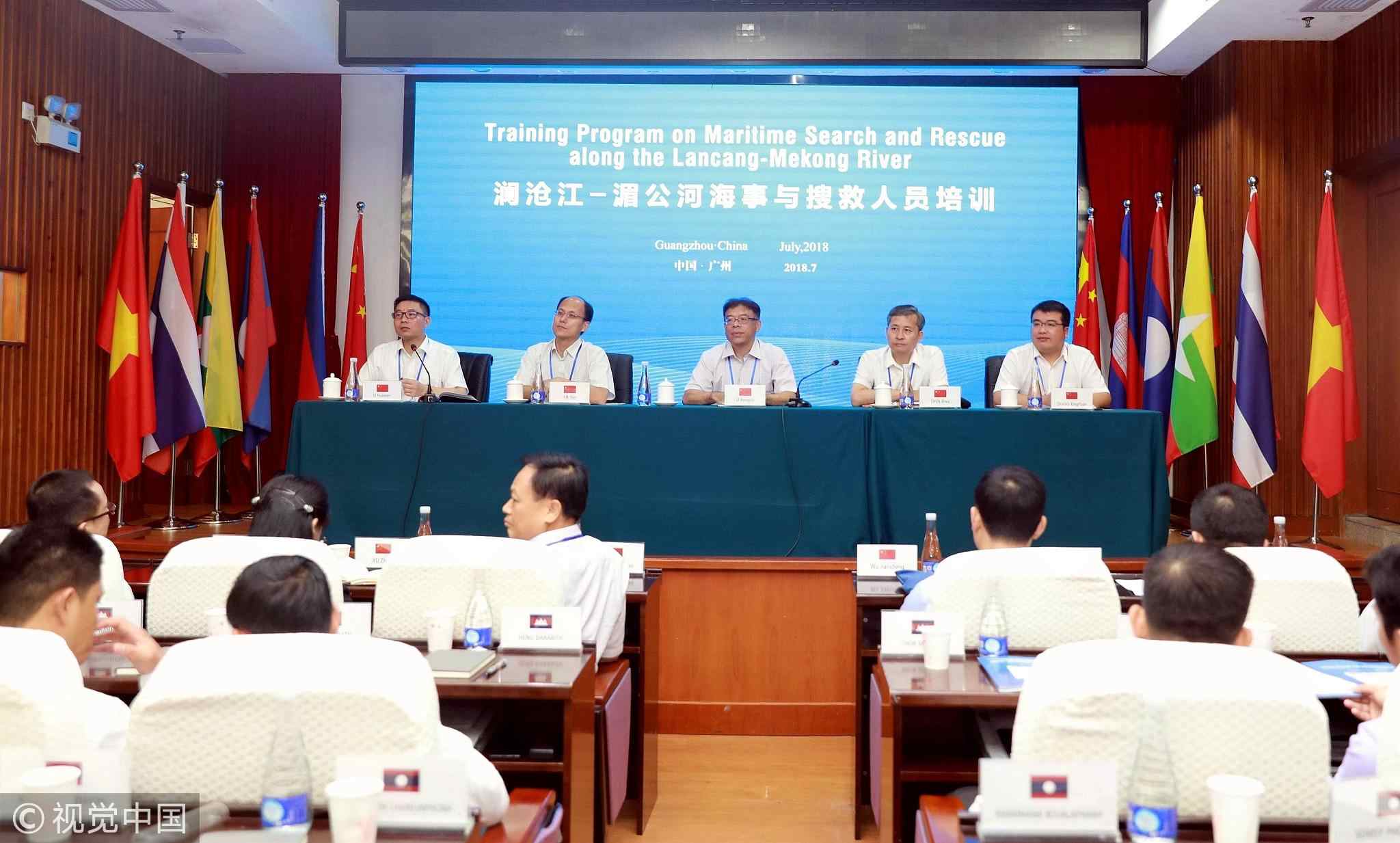
A training program on maritime search and rescue along the Lancang-Mekong River held in Guangzhou, China, July 3, 2018. /VCG Photo
A training program on maritime search and rescue along the Lancang-Mekong River held in Guangzhou, China, July 3, 2018. /VCG Photo
Both sides could collaborate in the area of the fishery law enforcement, such as the joint patrol on Mekong River, led by China, Laos, Myanmar and Thailand, so as to avoid the potential conflicts between the naval ships and fishing vessels. In the long term, the parties concerned could also establish a multilateral mechanism to solve the fishing dispute.
Second, China can provide more international public service such as scientific research and meteorology for the regional countries in the future. In fact, China has sent its marine rescue ship equipped with professional search-and-rescue teams to the Nansha Islands, for providing immediate maritime assistance when in urgent needs. China can also provide more training programs to the technical staff coming from Southeast Asian countries and thus to promote the development of the marine technology and ocean industry in the region.
Third, governments should support the frequent exchanges between scholars and experts of China and Southeast Asian countries, and encourage the joint research that can promote the economic development of the coastal states along the South China Sea and improve the ecological environment in the region.
(If you want to contribute and have specific expertise, please contact us at opinions@cgtn.com)