
North America
08:11, 01-May-2019
Trump, Democrats agree to spend 2 trillion USD on infrastructure
 ["china"]
Share







Copied
Democratic leaders said they reached agreement with President Donald Trump on Tuesday to pursue a 2-trillion-U.S.-dollar plan for improving America's creaking infrastructure, but deciding how to pay for the ambitious project could become a sticking point.
"We agreed on a number which was very, very good: 2 trillion U.S. dollars for infrastructure," Senate Minority Leader Chuck Schumer said, in a sign the feuding sides may be willing to work together on accomplishing a major bipartisan goal to upgrade the nation's roads, bridges, airports, rail lines, energy grid, waterways and broadband Internet access.
House Speaker Nancy Pelosi added that the lawmakers and Trump agreed to pursue a "big and bold" proposal, but that Democrats would be waiting eagerly to see the president's plans for how to pay for it.

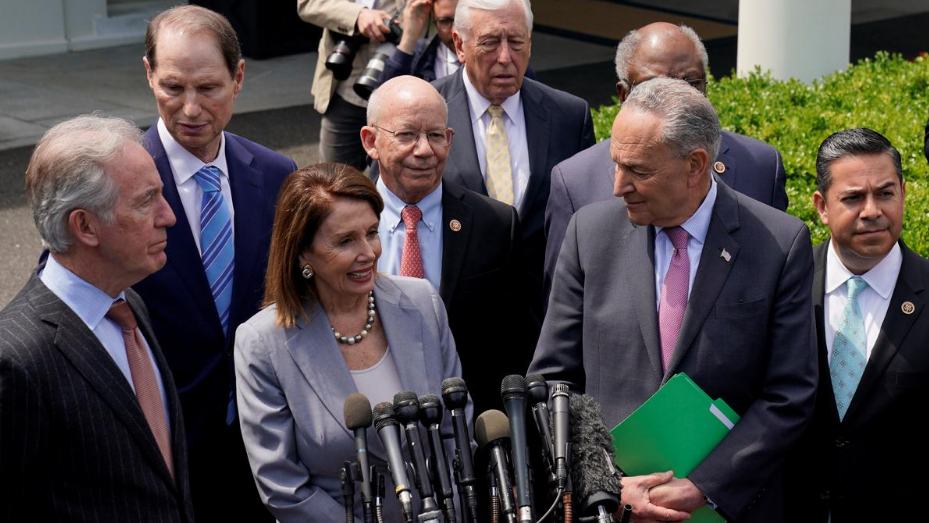
Senate Democratic Leader Chuck Schumer, U.S. House Speaker Nancy Pelosi and other congressional Democrats speak to reporters after their meeting on infrastructure with U.S. President Donald Trump at the White House in Washington, D.C., U.S., April 29, 2019. /Reuters Photo
Senate Democratic Leader Chuck Schumer, U.S. House Speaker Nancy Pelosi and other congressional Democrats speak to reporters after their meeting on infrastructure with U.S. President Donald Trump at the White House in Washington, D.C., U.S., April 29, 2019. /Reuters Photo
The group will meet again with the president in three weeks.
White House spokeswoman Sarah Sanders characterized the discussions as "excellent and productive" and said the meeting next month will address "specific proposals and financing methods."
But even before the talks concluded, a senior administration official cast doubt on the prospects of Democrats and the Republican president striking a deal.
"I hope the conversations go well today, but if they don't, it would not surprise me," acting White House chief of staff Mick Mulvaney told the Milken Institute Global Conference in California.
He said a major hurdle was the slow pace of approval for infrastructure projects, a process which must comply with a series of environmental regulations that Trump has often railed against.
"He's not interested in spending a trillion dollars now for something that's not going to get built until 2029," Mulvaney said.
Commitment to work on even the outlines of a bipartisan infrastructure plan, budgeted in 10-year chunks, marks a break in the clouds of political discord in Washington, but there was no guarantee the plan would advance in a divided Congress marred by gridlock.
The meeting was the first substantive huddle between Democrats and Trump since the 35-day shutdown beginning in December that stemmed from an impasse over funding the president's long-sought border wall.
It also follows the release of the special counsel's report that detailed Trump's attempts to stymie investigations into his presidency.
Source(s): AFP