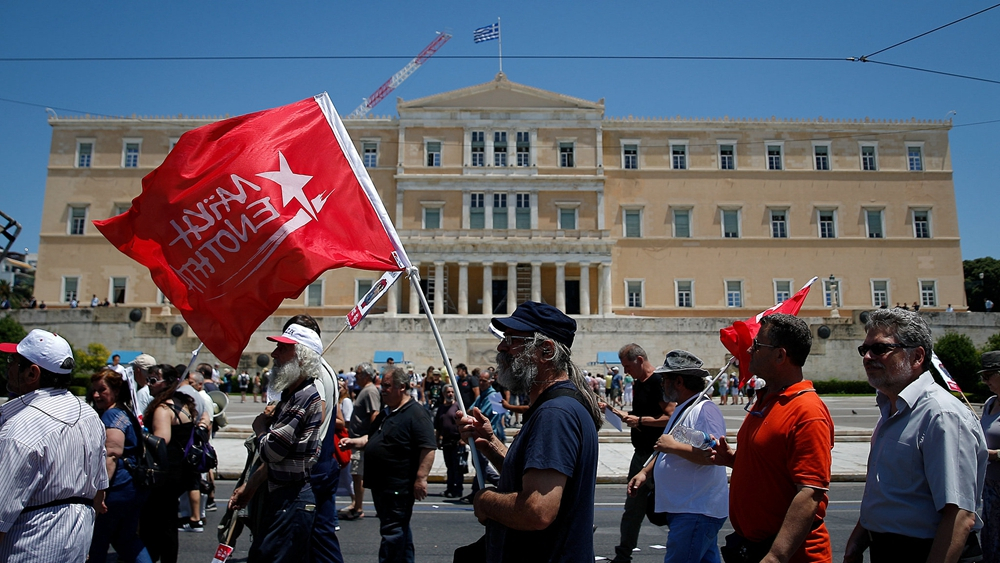
Eurozone ministers will on Thursday try to resolve their differences over the terms of Greece's departure from its massive bailout program, with splits over the degree of debt relief needed by cash-strapped Athens.
If successful, the talks will mark an important milestone for Europe nine years after Greece stunned the world with out-of-control debts and set the scene for three bailouts and a near collapse of the euro single currency.
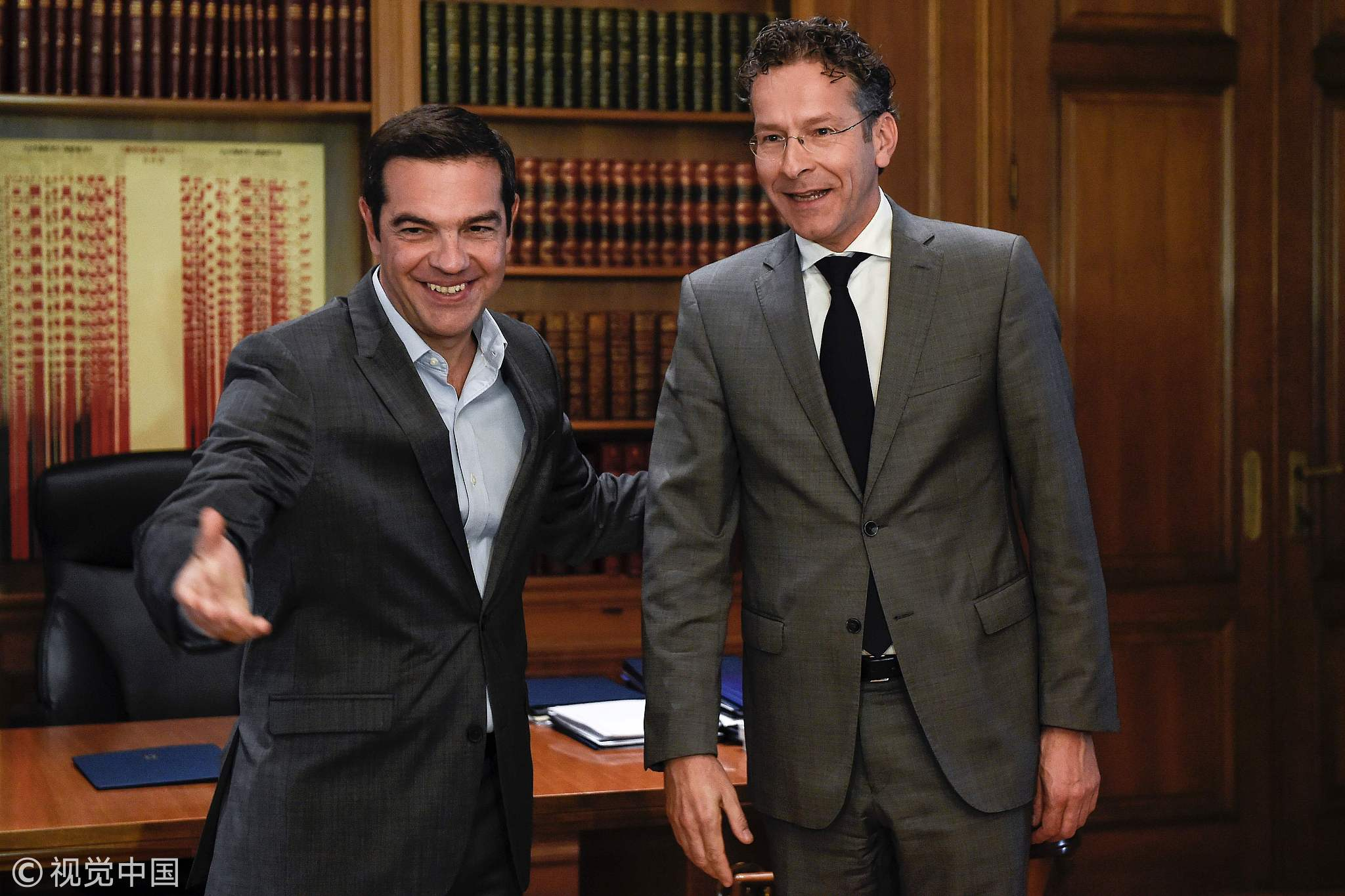
Greek Prime Minister Alexis Tsipras (L) greets Chair of the eurogroup finance ministers, Jeroen Dijsselbloem prior to their meeting in Tsipras' office in Athens, Greece, September 25, 2017. /VCG Photo
Greek Prime Minister Alexis Tsipras (L) greets Chair of the eurogroup finance ministers, Jeroen Dijsselbloem prior to their meeting in Tsipras' office in Athens, Greece, September 25, 2017. /VCG Photo
Finance ministers from the 19 Eurozone countries are seeking to agree debt relief and a sizeable cash cushion for Greece to reassure financial markets on the ability of Athens to stand on its own. "Tomorrow we are expecting a decision for the adjustment of Greece's debt which will mark the end of an ... ordeal for Greece, and the end of austerity," Greek Prime Minister Alexis Tsipras said in Athens on Wednesday.
"We are very close to the moment when we will reap the fruits of years of sacrifices and difficult efforts by the Greek people," he said.
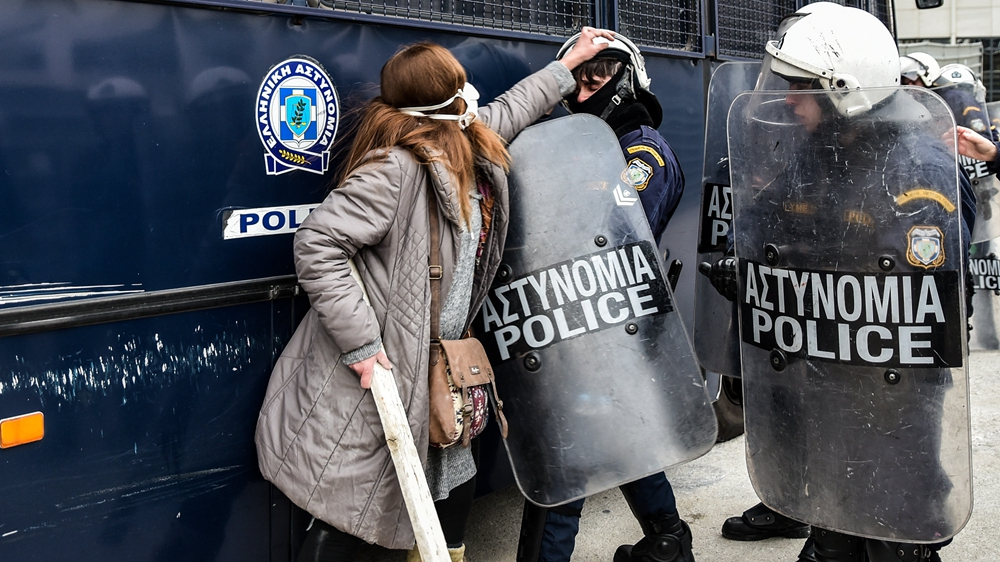
People protesting homes auctions clashed with police as they attempt to enter a court of appeals as foreclosures continue as part of reforms under Greece's bailout plans in Athens, Greece, Dec 20, 2017. /VCG Photo
People protesting homes auctions clashed with police as they attempt to enter a court of appeals as foreclosures continue as part of reforms under Greece's bailout plans in Athens, Greece, Dec 20, 2017. /VCG Photo
Greece's 86-billion-euro program was agreed in 2015 after six contentious months of negotiation and is set to end this summer, bringing the level of assistance received by Athens to 273 billion euros since 2010.
"If everything goes well we will have an exit of Greece from its program in August, this is very good news," a senior Eurozone official said ahead of the talks in Luxembourg. "A full exit package on Thursday is 70 to 80 percent likely," he added.
What may come next?
After the bailout, Athens will remain on a tight leash through post-program monitoring that officials said would be stricter for Greece than for Portugal, Ireland and Cyprus after their respective bailouts.
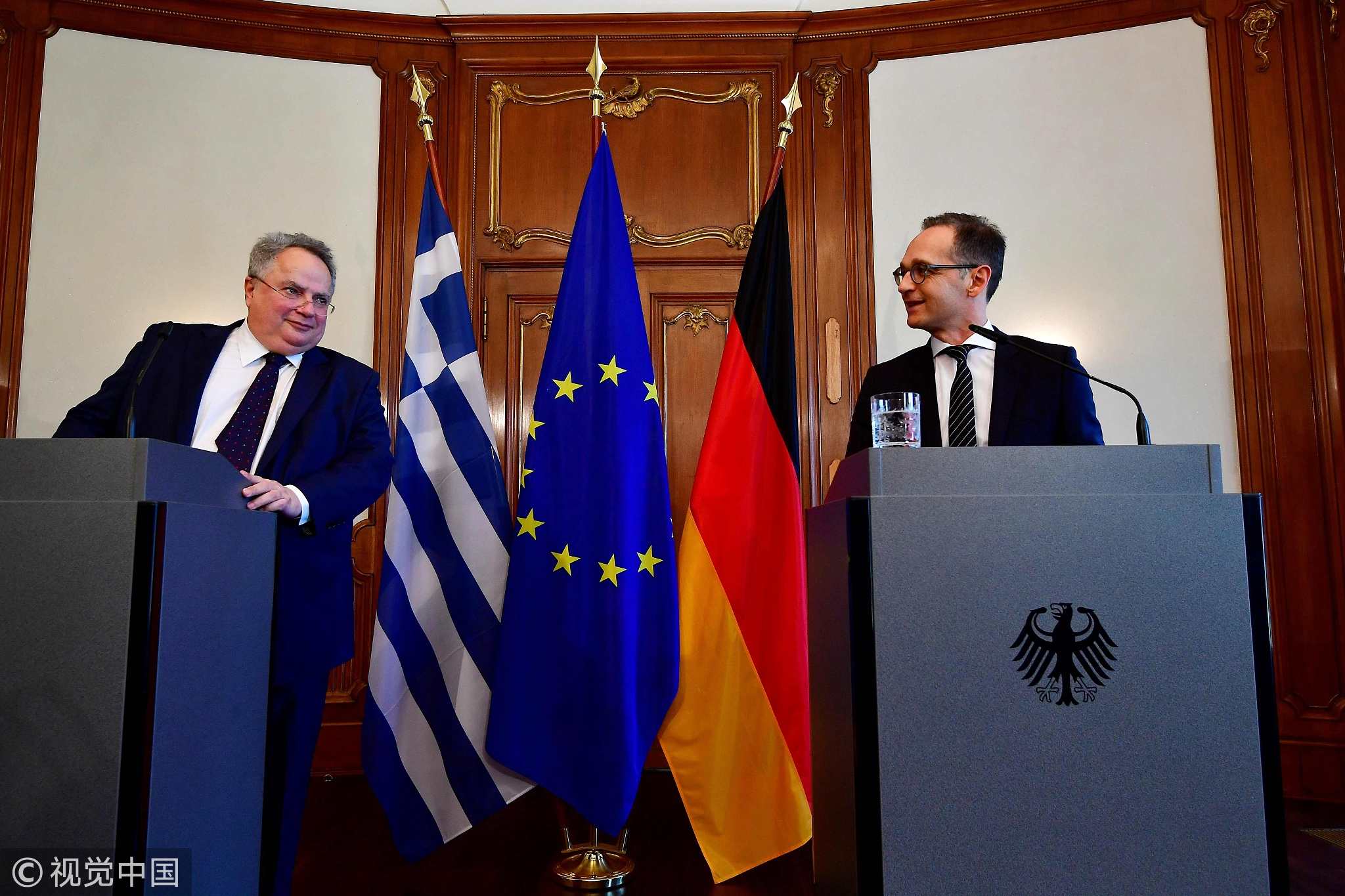
German Foreign Minister Heiko Maas and Greek Foreign Minister Nikos Kotzias (L) give a joint press conference following talks between the two officials in Berlin, Germany, May 29, 2018. /VCG Photo
German Foreign Minister Heiko Maas and Greek Foreign Minister Nikos Kotzias (L) give a joint press conference following talks between the two officials in Berlin, Germany, May 29, 2018. /VCG Photo
As ever in the Greek debt crisis, Germany is the most resistant to debt relief and has demanded that Athens be closely tracked on reform implementation after the program ends this summer.
Under German demands, Greece's debt relief in the short-term will be conditional on the continued implementation of reforms, which if successful could inject about one billion euros to the government's underfunded budget every year.
Stances of other parties
Opposite the hardliners, who also include the Netherlands and other northern Eurozone countries, are France and the European Central Bank, which argue that reduced debt is crucial in order for Greece to gain the trust of the markets.
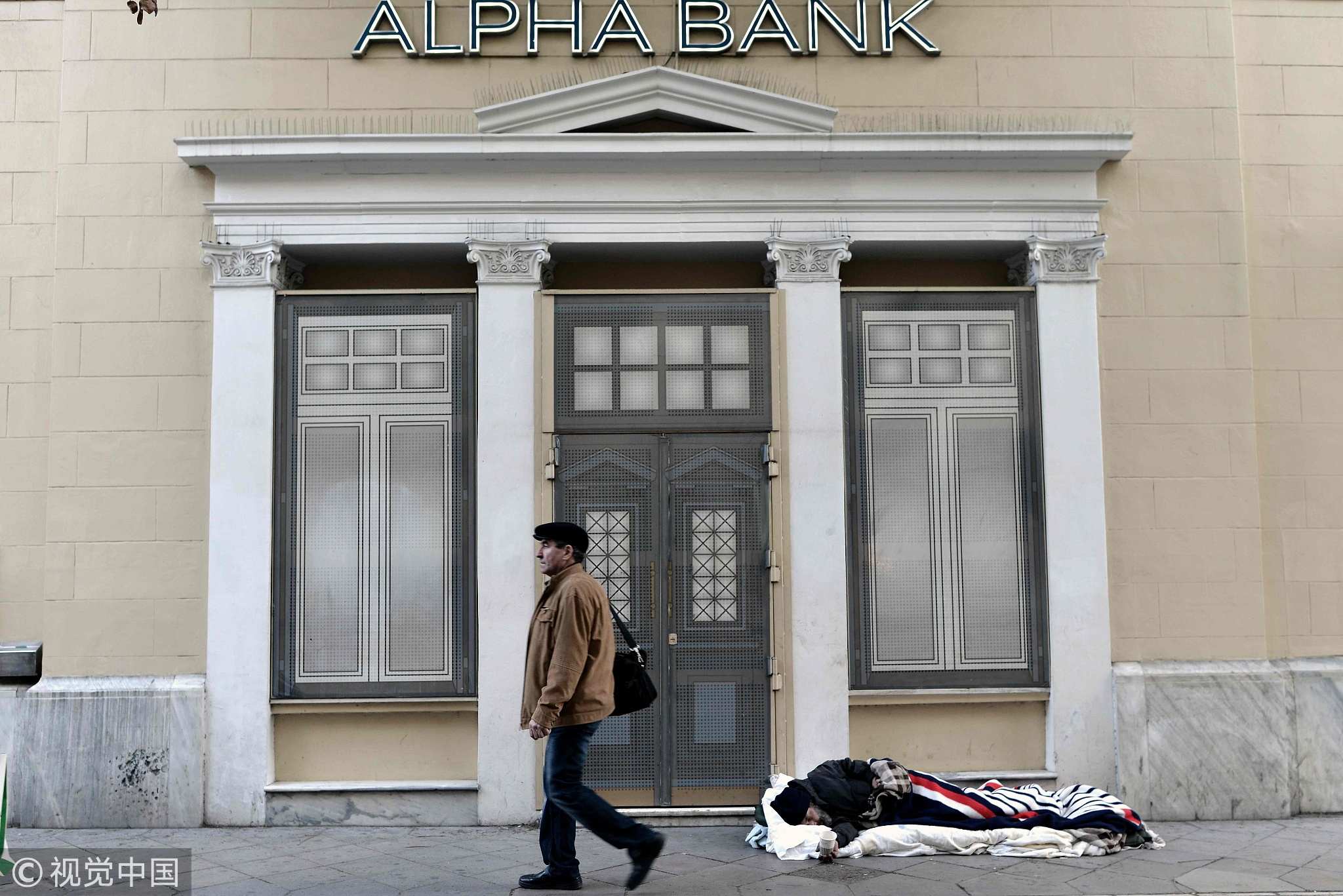
A man walks past a bank next to a homeless person sleeping on the pavement in central Athens, Greece, Feb 28, 2017. /VCG Photo
A man walks past a bank next to a homeless person sleeping on the pavement in central Athens, Greece, Feb 28, 2017. /VCG Photo
"Nobody should lose money of course," said EU Economic Affairs Commissioner Pierre Moscovici at a news briefing in Brussels on Wednesday. "But we should collectively find a way to alleviate the debt, either by extending the maturities of existing loans, or by buying back the most expensive ones," he said.
Also calling for deeper debt relief is the International Monetary Fund, whose tough-talking head Christine Lagarde will attend the talks.
Source(s): AFP

 ["china"]