
Politics
13:39, 05-Aug-2018
Global Political Calendar: Iran sanctions, Mali runoff, Turkey-US
Updated
13:41, 08-Aug-2018
 ["other"]
Share






Copied
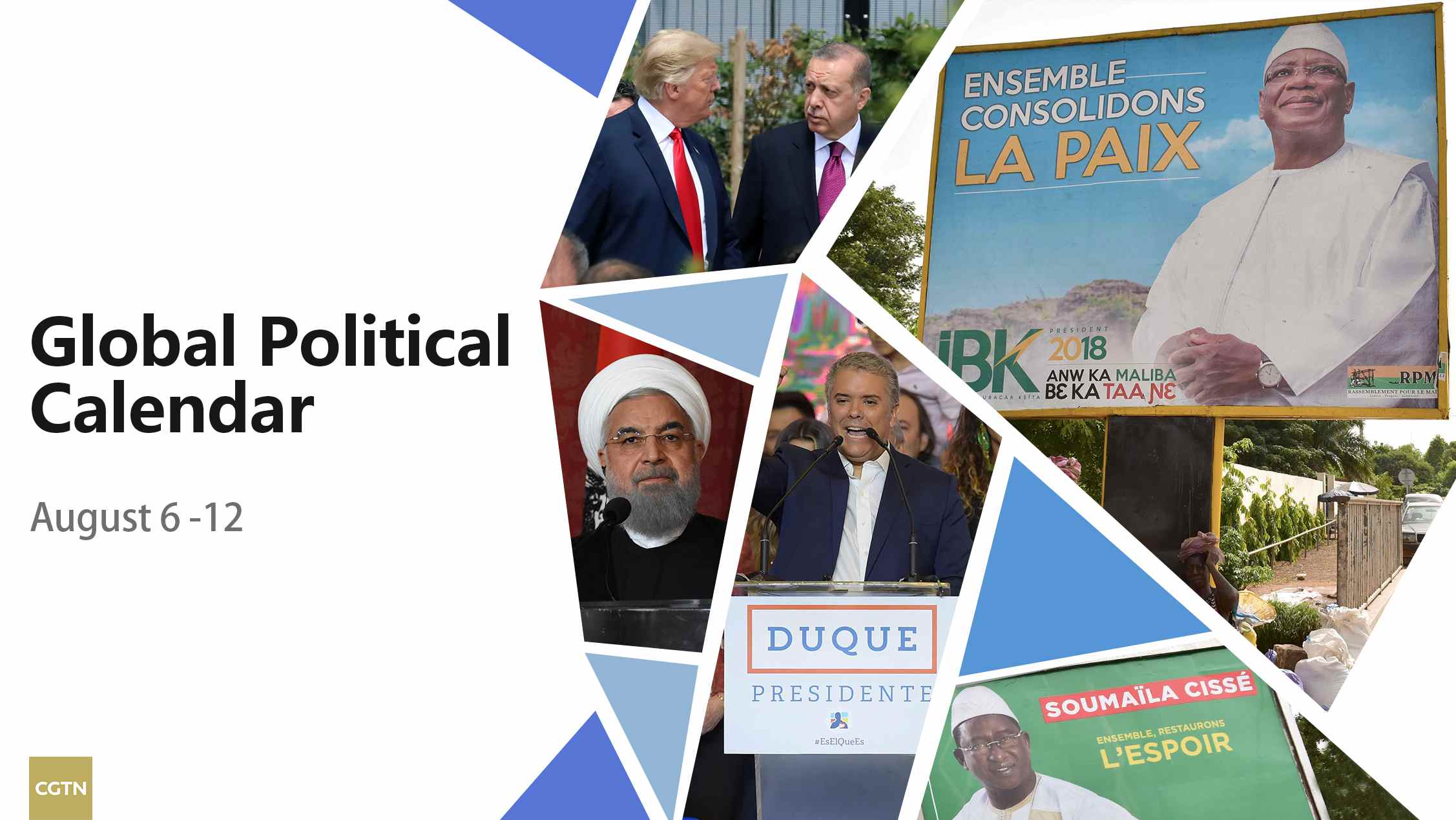
Iran will be hit by US sanctions, Malians are set to vote in a runoff presidential election, eyes are on escalating Turkey-US tensions, Colombia's youngest elected president gets to work, and trade talks between Washington and Tokyo begin.
Iran sanctions bite
The US is scheduled to reimpose the first of two tranches of sanctions on Iran on Monday, three months after pulling out of the Iran nuclear deal. The sanctions are designed to limit currency and metals transactions between Iran and other countries. It is the second set – scheduled to snap back on November 4 – which target Iran's oil industry. The return of sanctions, part of Donald Trump's "maximum pressure" campaign, comes days after the US president made a surprise offer to meet the Iranian leadership. The remaining signatories to the Iran nuclear deal continue to fight to save it – Iran on Friday said China was “pivotal” to salvaging the agreement.
Mali run-off election
Malians voted for a new president on July 29, but with no candidate winning an absolute majority the West African nation returns to the polls to choose between incumbent President Ibrahim Boubacar Keïta and rival Soumaïla Cisse. More than 600 polling stations were forced to close by armed assailants during the first round, and officials said there was violence at around a fifth. Islamic militants with links to Al Qaeda and ISIL operate in the vast desert that makes up most of the north of the country.
Turkey-US spat
Relations between Turkey and the US, NATO's two largest militaries, are deteriorating fast. A dispute over Turkey's imprisonment of a US pastor on terror charges brought matters to a head last week, resulting in tit-for-tat sanctions against government officials. The sides have clashed over their opposing approaches to Syria, Turkey's close ties with Russia and support for Iran, US threats to NATO, and the US refusal to extradite Fethullah Gulen, the alleged mastermind of the 2016 failed coup. Ankara and Washington will be looking to calm tensions this week.
Duque checks in
Ivan Duque will start work as Colombia's youngest-elected president on Tuesday, with the self-described "extreme centrist" vowing to overhaul the peace deal with FARC struck by his predecessor, President Juan Manuel Santos. Santos won a Nobel Peace Prize for the deal, but the terms proved divisive within Colombia and Duque made changing them his signature campaign issue. Also in Latin America, the running mate of Workers Party candidate for the Brazilian presidency Luis Inacio Lula da Silva will be named. Lula leads in the polls ahead of October's election but is currently in jail, so the VP pick could end up with the top job.
Day-by-day
Monday: The US reimposes the first tranche of sanctions on Tehran after pulling out of the Iran nuclear deal, Brazil's Workers Party names its vice-presidential candidate, and three months before the US midterm elections former Trump aide Paul Manafort's trial continues.
Tuesday: New Colombian president Ivan Duque takes office, and Mexican President-elect Andres Manuel Lopez Obrador opens a national dialogue on ending record violence fueled by drug cartels.
Wednesday: UN Secretary General Antonio Guterres meets Shinzo Abe, Japanese PM, in Tokyo, and it's the deadline for candidates to put their names forward for the Democratic Republic of Congo's presidential election.
Thursday: Trade talks between Japan and the US are due to take place in Washington, and UN chief Guterres is scheduled to take part in Nagasaki bombing memorial ceremonies.
Friday: The US publishes monthly consumer price index figures.
Saturday: Brazilian trade unions organize a day of strikes and protests against unemployment, and Imran Khan may take the oath of office as Pakistan's new prime minister – if not, he is likely to do so August 14, the country's independence day.
Sunday: A runoff vote in Mali's presidential election will see incumbent President Ibrahim Boubacar Keïta face Soumaïla Cisse.