
Opinion
16:12, 08-May-2019
Unification is about nationhood, not absorption
 ["china"]
Share







Copied
Editor's note: Wang Zhengxu is a political science professor at Fudan University. The article reflects the author's opinion, and not necessarily the views of CGTN.
Beijing's recently raised voice regarding the future unification of the Chinese mainland and Taiwan naturally invited concerns, debates and pushbacks.
From a systemic view, Beijing's act holds the potential to move the cross-Strait situation out of its current no-independence-no-unification limbo, and obtains a sense of direction.
For Beijing and the vast majority of the people living on the mainland, that there is a working government and a political system running the island is not an issue. Unification is a matter of nationhood. The Chinese nation remains incomplete with the two parts being separate.
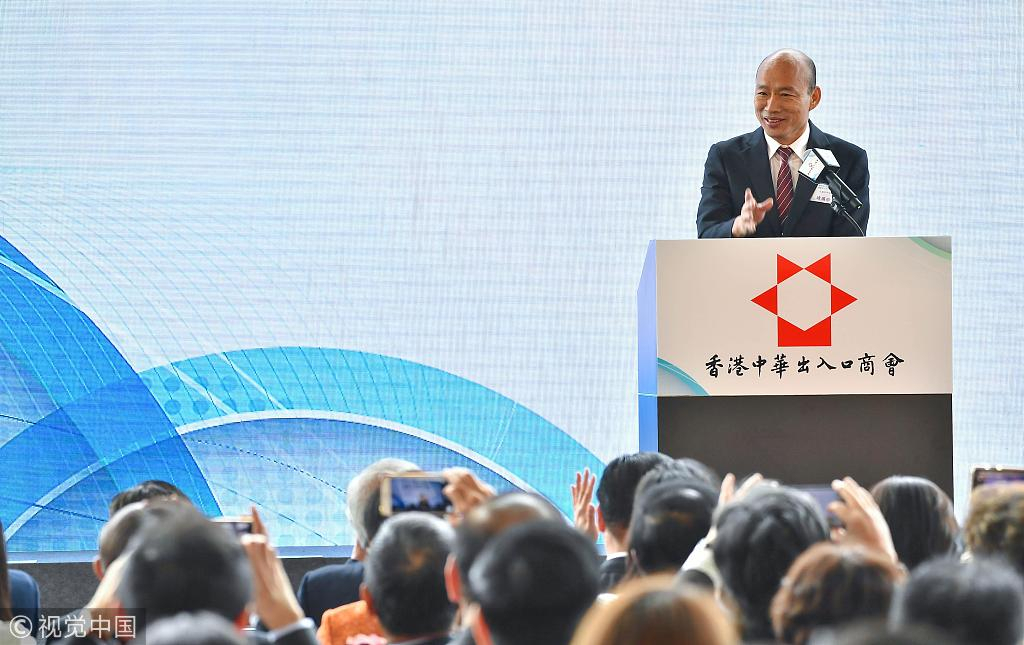
Han Kuo-yu, mayor of Kaohsiung, attends an activity during his stay in the Hong Kong Special Administrative Region, March 22, 2019. /VCG Photo
Han Kuo-yu, mayor of Kaohsiung, attends an activity during his stay in the Hong Kong Special Administrative Region, March 22, 2019. /VCG Photo
For those living on the island holding a sense of Chinese nationhood, they share the view of a unified Chineseness and Chinese nationhood. Many in the West and of the pro-independence Taiwan camp tend to forget or ignore this fact.
The pro-independence Democratic Progress Party in Taiwan drove a de-sinicizing political, educational and cultural policy during the last two decades, which fosters a growing Taiwanese identity and dissipates the sense of Chinese nationhood. However, their efforts turned out to be in vain.
The Taiwanese identity has always been a sub-national identity. The pro-independence camp's goal is to make it, or claim it to be, a national one.
Yet with the rise of the mainland in economic, military and business sense, the younger generation of people living in Taiwan might defy this attempt of de-sinicization, but instead assume an open stance regarding the issue of nationhood.
The late political scientist Hu Fu, of Academia Sinica, said a nation is the moral community of a people and urged the two sides to seek unification. We have to keep in mind Taiwan is an issue of the shared moral, historical, racial and cultural identity of the mainland and the island.
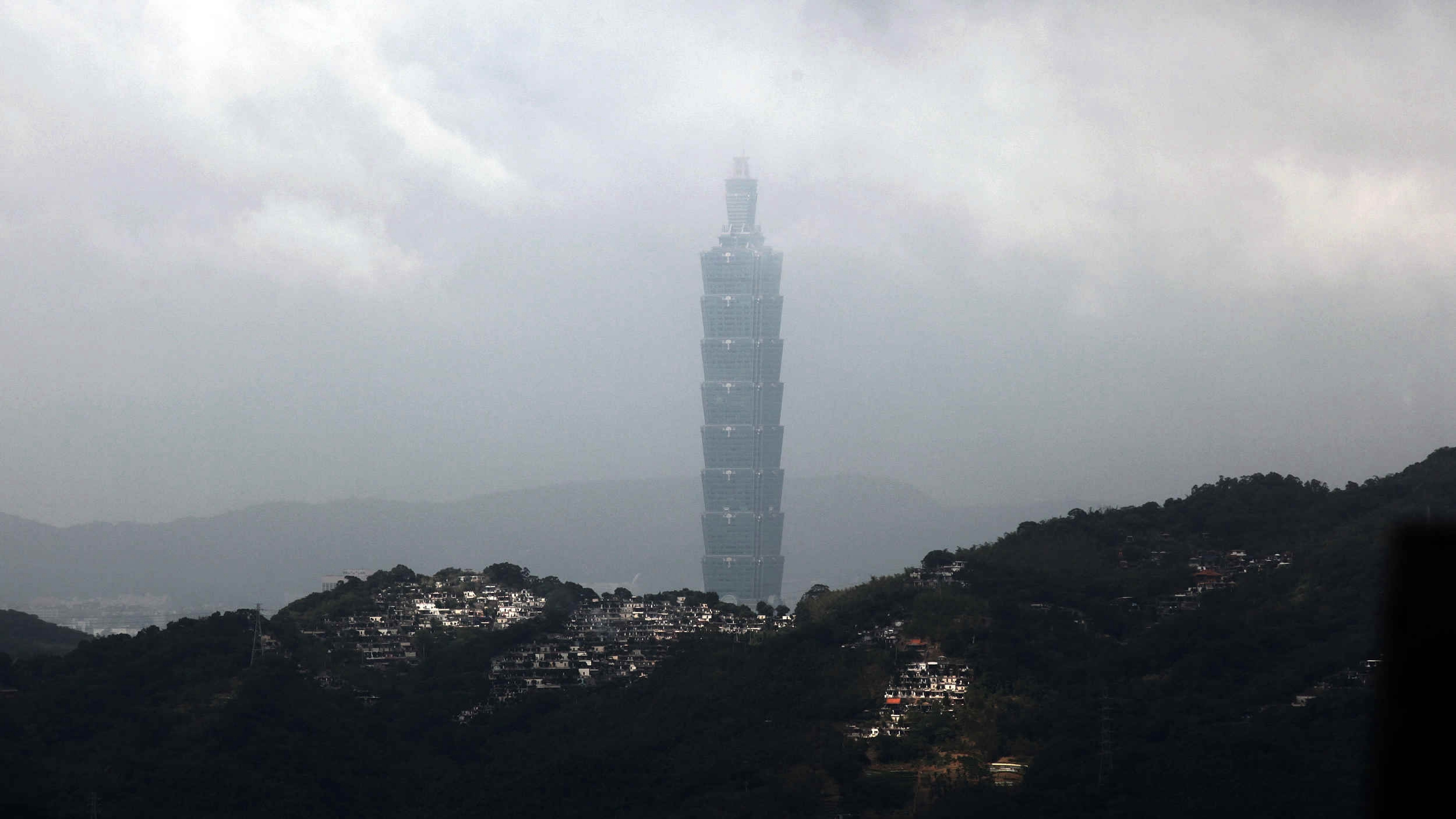
Taipei's landmark Taipei 101 tower. /VCG Photo
Taipei's landmark Taipei 101 tower. /VCG Photo
It is also incorrect to date 1979 as the onset of a unification effort. The first unification in the modern sense took place in 1945 when Taiwan was returned to China following the WWII defeat of Japan. The Chinese government in Nanjing at that time oversaw the process.
The current round of unification started then, including the Taipei-based regime's effort to "reclaim" the mainland throughout the 1960s and 1970s.
Unification, therefore, is the coming together of a separate nation. It is not, as some like to depict it, the annexation of the small part by the larger part, or the absorption of the former into the latter.
The transformation of the Chinese nation into modernity can only be complete with the unification of the nationhood. And the search of a modern state cannot be complete without that.
It is in this sense the mainland side now urges the two sides to move toward a formula of unification. Any other readings of the mainland's intention, such as taking it as Beijing's tactic to divert domestic attention from China-U.S. tension, would be erroneous.
Students majoring in politics are familiar with classic works by Rustow, Stepan and Linz, among others, which sees complete nationhood, with clearly-defined physical boundaries and identity, as a precondition of moves toward prosperity.
For good wishes of prosperity, therefore, the unification of the two parts should be a step towards a complete and secure Chinese nation, on top of which a bright future can then be contemplated.
(If you want to contribute and have specific expertise, please contact us at opinions@cgtn.com.)