
Business
14:40, 11-Jun-2018
Asia stocks shake off G7 jolt, US-DPRK summit awaited
 ["north america","other","North Korea"]
Share







Copied
Asia stocks shook off initial modest losses and edged up on Monday ahead of a historic summit between the US and the Democratic People's Republic of Korea (DPRK) that investors hope might pave the way to ending a nuclear stand-off on the Korean Peninsula.
Spreadbetters expected European stocks to follow their Asian peers higher, with Britain's FTSE rising 0.25 percent, Germany's DAX advancing 0.17 percent and France's CAC inching up 0.05 percent.
Stocks wobbled in early trade after US President Donald Trump raised fresh fears of a global trade war when he backed out of a joint Group of Seven communique over the weekend, in a blow to the group’s efforts to show a united front.
The S&P 500 futures ESc1 were 0.1 percent lower after dropping as much as 0.3 percent.
MSCI's broadest index of Asia-Pacific shares outside Japan slipped early but was last up 0.3 percent. Hong Kong's Hang Seng also gained 0.3 percent while the Shanghai Composite Index fell 0.5 percent.
KOSPI of the Republic of Korea (ROK) added 0.65 percent, and Japan's Nikkei climbed 0.55 percent.
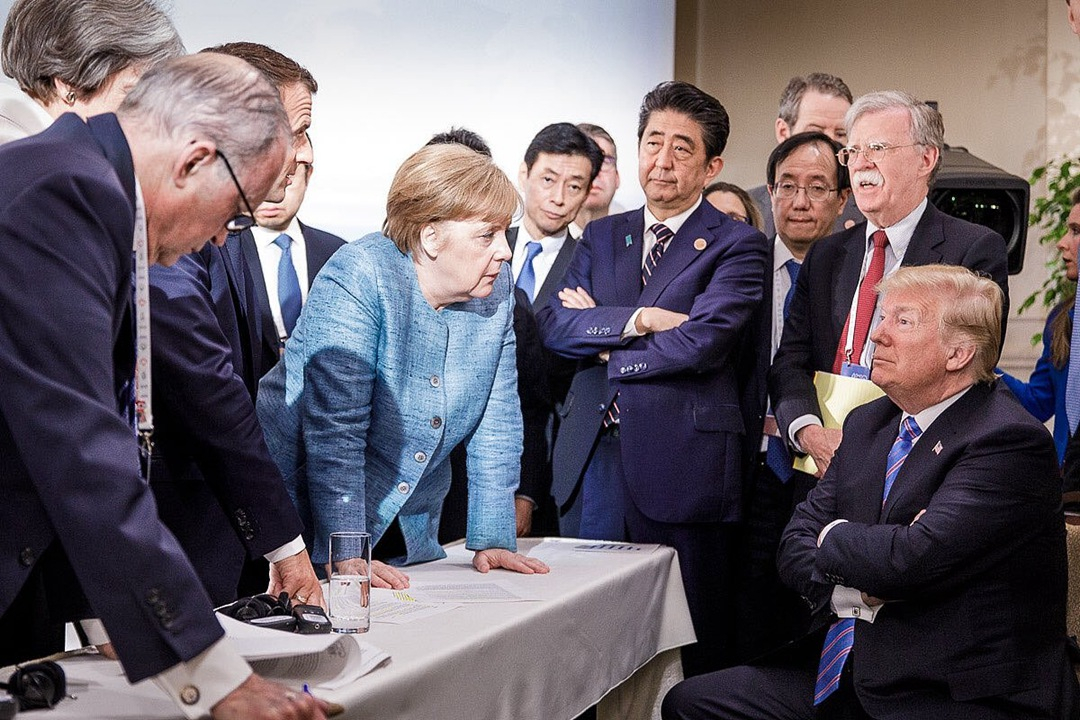
German Chancellor Angela Merkel speaks to US President Donald Trump during the second day of the G7 meeting in Charlevoix city of La Malbaie, Quebec, Canada, June 9, 2018. /VCG Photo
German Chancellor Angela Merkel speaks to US President Donald Trump during the second day of the G7 meeting in Charlevoix city of La Malbaie, Quebec, Canada, June 9, 2018. /VCG Photo
“What took place at the G7 weekend was within the scope of earlier expectations. And while the countries disagreed on trade, they did seem to show a unified front on the DPRK issue, so there is also a positive element from the G7 affecting risk sentiment,” said Masahiro Ichikawa, senior strategist at Sumitomo Mitsui Asset Management.
After the G7 meeting, the US president withdrew his support for its communique and blasted Canadian Prime Minister Justin Trudeau amid a spat over import tariffs.
“The G7 meeting in Canada reiterated the growing rift between Washington and its allies over free trade,” wrote Tai Hui, chief market strategist for Asia Pacific at J.P. Morgan Asset Management.
“Business confidence, and subsequently capital spending, is at risk if this tension continues through the summer,” he said, adding that meetings this week of the US Federal Reserve and the European Central Bank will be critical events.
Trump and DPRK leader Kim Jong Un will have an unprecedented meeting on Tuesday in Singapore, possibly laying the groundwork for ending a nuclear stand-off between the old foes.
Some analysts also raised the prospect of international sanctions against DPRK being lifted.
“There are many obstacles that will need to be overcome if a deal between the US and DPRK is to be agreed, not least a lack of trust between the two sides,” Gareth Leather, senior Asia economist at Capital Economics, wrote in a note to clients.
“Nevertheless, the improvement in ties between the US and DPRK has at least made the possibility of a deal, which sees economic sanctions on DPRK being lifted, seem a little less far-fetched.”
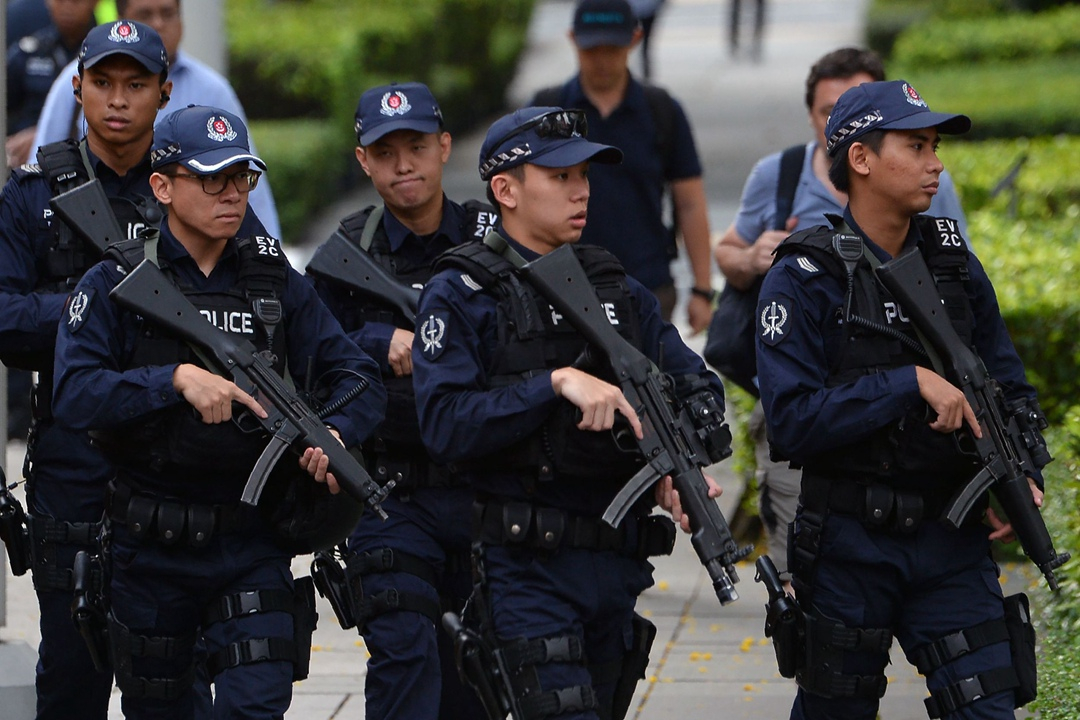
Armed police officers patrol outside the St. Regis hotel, where DPRK leader Kim Jong Un is staying, ahead of the US-North Korea summit in Singapore on June 11, 2018. /VCG Photo
Armed police officers patrol outside the St. Regis hotel, where DPRK leader Kim Jong Un is staying, ahead of the US-North Korea summit in Singapore on June 11, 2018. /VCG Photo
Investors also got prepared for a raft of other key events.
The Fed holds a two-day meeting starting on June 12, and it is widely expected to raise interest rates for the second time this year. The focus is on whether the central bank will hint at raising rates a total of four times in 2018.
The ECB meets on June 14, when it could signal intentions to start unwinding its massive bond purchasing program.
Also, the Bank of Japan on Friday concludes a two-day meeting at which it is widely expected to keep its loose monetary policy intact.
Source(s): Reuters