
Business
17:20, 18-May-2018
Road paves way to smoother trade between China and Russia
 ["china"]
Share







Copied
02:04
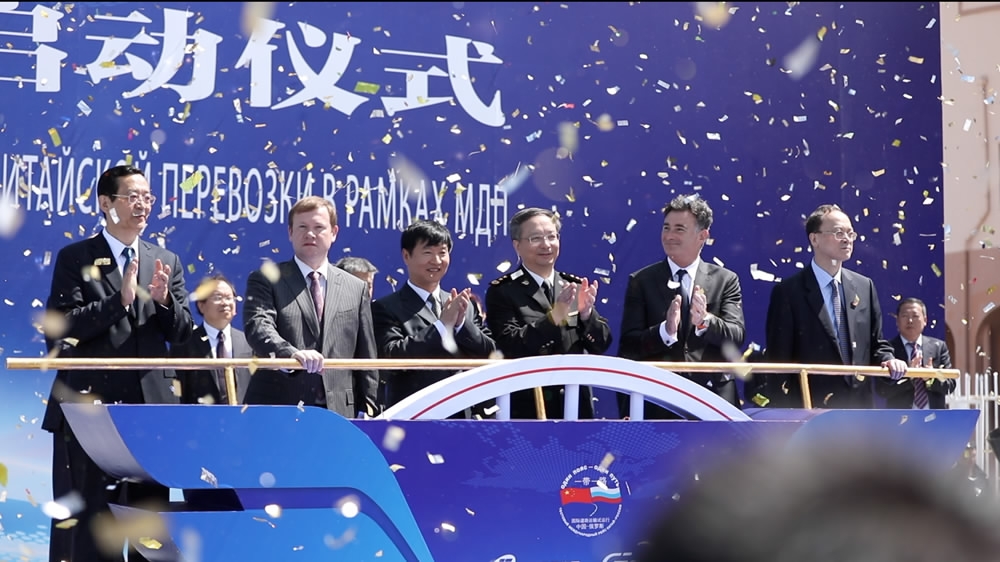
China
and Russia have started trial runs for a new road transport route that promises
to further boost ties between the two nations.
The 5,500-kilometer road transport
route from northeastern China’s port city of Dalian to Russia’s third-largest city of
Novosibirsk goes through 20 Chinese and Russian cities and border regions. The route is said to link the Asia Pacific and
Europe, and could help integrate the Belt and Road Initiative with Russia’s
Eurasian Economic Union.
Trade
volume between China and Russia stood at around 80 billion US dollars last year
— but the plan is to more than double that amount by 2020 to reach 200 billion
a year. The new Dalian-Novosibirsk route is expected to help achieve that goal.
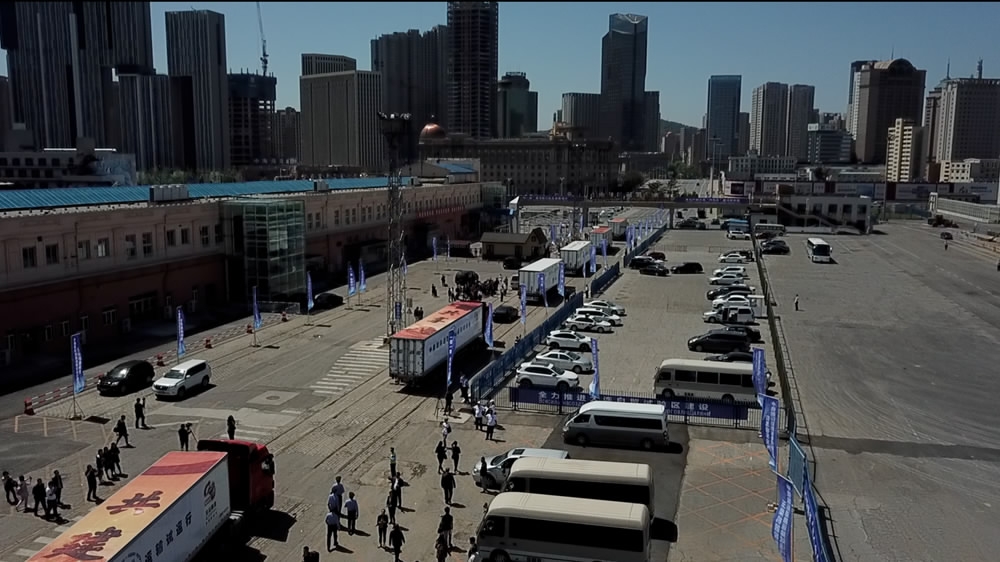
The first batch of trucks drive off from Dalian towards Novosibirsk./CGTN Photo
The first batch of trucks drive off from Dalian towards Novosibirsk./CGTN Photo
A select group of Chinese and Russian drivers are the first to drive on the new route, and they set off on their courses on Friday from Dalian. And the fleet includes five trucks and two passenger buses.
The new route implements the United Nations’ TIR system — which could cut custom clearance time up to 80 percent.
Umberto de Pretto, Secretary General of the International Road Transport Union (IRU), told CGTN that the goods will be sealed at the origin and only inspected at the final destination. He further explained that the goods could go through all the different borders without stopping the truck and without having to open the truck.

Umberto de Pretto [L], Secretary General of IRU speaks with CGTN reporter in Dalian.
Umberto de Pretto [L], Secretary General of IRU speaks with CGTN reporter in Dalian.
“Because it is sealed at the origin and will only be inspected at the final destination. So it’s a huge facilitation advantage for trucks and therefore, for trade,” Pretto explained.
The TIR is the only global cross-border freight system first created by IRU before being adapted as a United Nations Convention.
Once the first batch of trucks arrives, authorities will assess the trip and make adjustments if needed, before the road is finally opened.
3209km