
Business
16:19, 02-May-2018
While my guitar gently weeps: Was Gibson's bankruptcy caused by Chinese fakes?
 ["china"]
Share







Copied
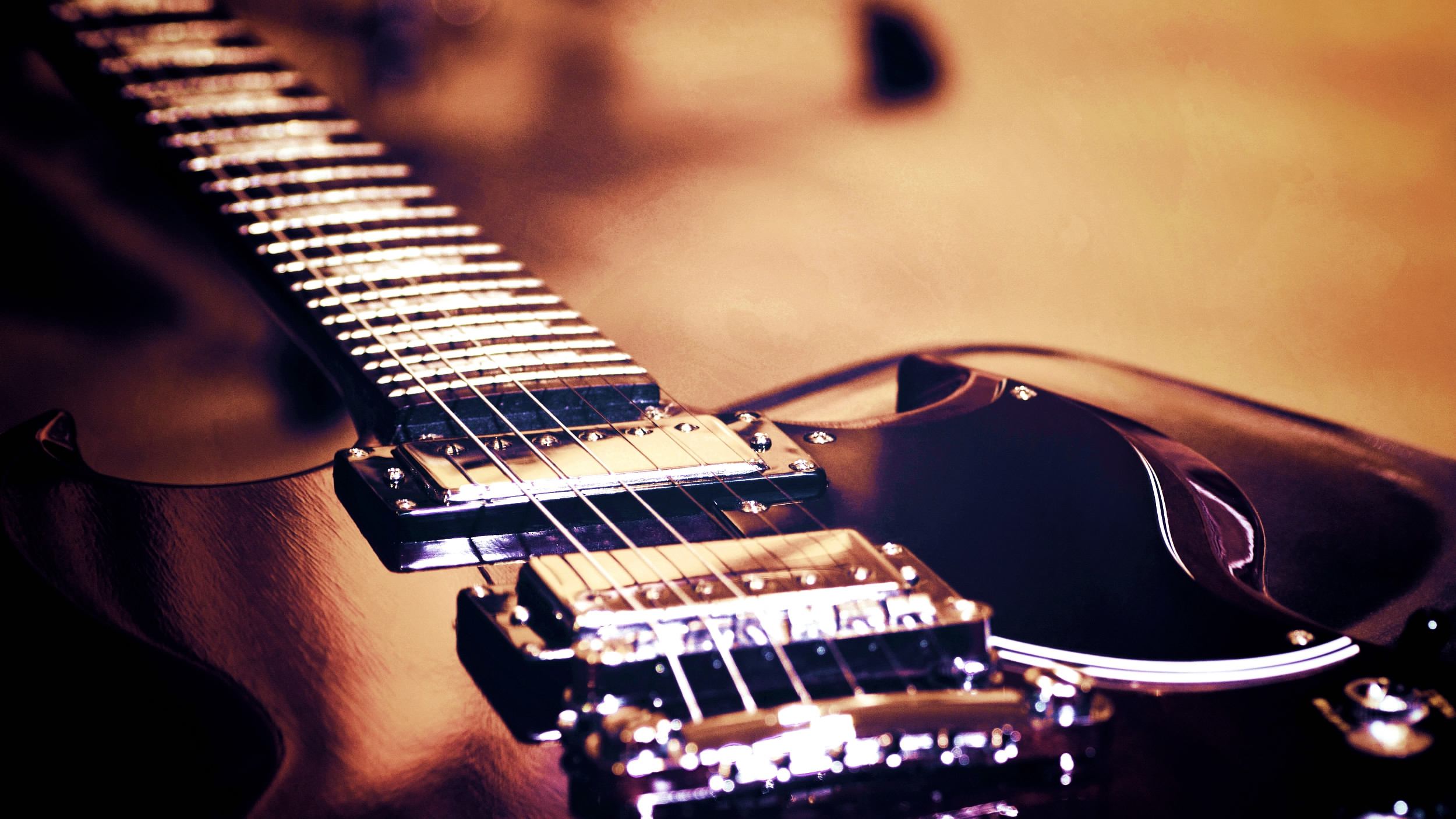
Legendary guitar maker Gibson, a brand synonymous with rock and roll, has filed for bankruptcy amid reports of debts as high as 500 million US dollars. But how much did Chinese counterfeits contribute to muting the strings of this century-old cultural icon?
The company filed for chapter 11 bankruptcy protection on Tuesday, releasing a statement that said it would continue designing and manufacturing guitar equipment while the business was restructured.
Ill-fated moves into electronic products such as headphones and self-tuning guitars turned off a lot of the brand’s long-term fans and led to losses of tens of millions of dollars, while the decline of electric guitar music – no guitar bands featured at this year’s Grammy Awards – has also been a factor.

Paul McCartney (R) with Les Paul, inventor of one of the most iconic guitars in rock and roll. /VCG Photo
Paul McCartney (R) with Les Paul, inventor of one of the most iconic guitars in rock and roll. /VCG Photo
Founded in 1894 in the US, models made under the Gibson label such as the Les Paul, the SG and the flying guitar shaped the sound of the 50s, 60s and 70s through artists like The Beatles, Led Zeppelin and The Rolling Stones.
For any budding guitarist looking to make a name for themselves in the blues, rock and roll or even punk, there were only two choices – a Gibson or its rival, the Fender.
The rise of the Chibson
However, sales have plummeted by a third in the past decade, with only one million Gibson guitars sold in 2017. While that slump coincided with a decline in rock music’s popularity, it also came at the same time as the rise of international e-commerce, particularly Alibaba.
The market for counterfeit Chinese Gibson guitars has grown so large that guitarists have coined a word for it – the “Chibson.”
It’s all too easy to find YouTube videos and blogs describing how to buy Chibson guitars from China via Alibaba – the real Gibson even posted a guide as far back as 2007 on how to tell a fake Les Paul from a real one.
At that time, Gibson’s then director of security Ric Olsen said “the majority of the Gibson counterfeits appear to originate on e-commerce sites based out of major cities in China such as Beijing and Shanghai… the major challenge is this China crisis.”
More than 10 years on, Alibaba’s international platform AliExpress still sells counterfeit Gibson Les Paul guitars to the US for prices of around 200 US dollars. Marketed as “Les Guitar,” “LP Guitar” or other similar names, the products on sale can be shipped to the US for free, and sell for barely five percent of the price of a real Les Paul, which retails for around 3,700 US dollars.
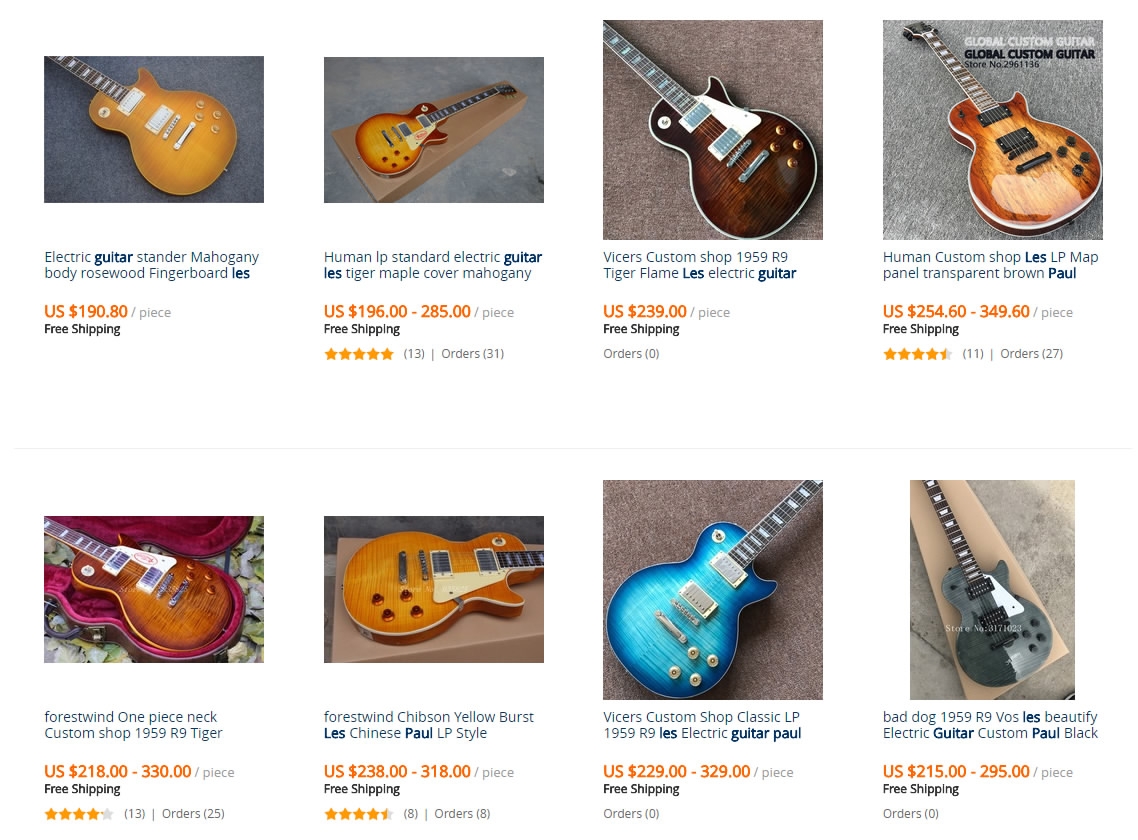
A selection of Les Paul "style" guitars on AliExpress. /Screenshot from AliExpress.com
A selection of Les Paul "style" guitars on AliExpress. /Screenshot from AliExpress.com
The Chibsons look the part, and some of them increasingly sound close to the real thing, based on reviews posted online.
In reaction to Gibson’s bankruptcy, several Twitter users blamed Chinese fakes, with @RockStrummer saying “I believe Gibson started having problems when Chinese made Les Pauls actually became quite good. I have a Chibson and a Gibson, both Les Pauls. Both credible guitars.”
Alibaba's fight against fakes
Alibaba has long struggled with counterfeit goods, with the company’s founder Jack Ma calling fake products “a cancer” in a speech made in the US last June, adding counterfeits, IP infringement and cheating would “make our site die.”
Ma has been accused of not taking fake goods seriously in the past – in 2015 he was quoted as saying at an Alibaba investment event that “fake products today are of better quality and better price than the real names.”
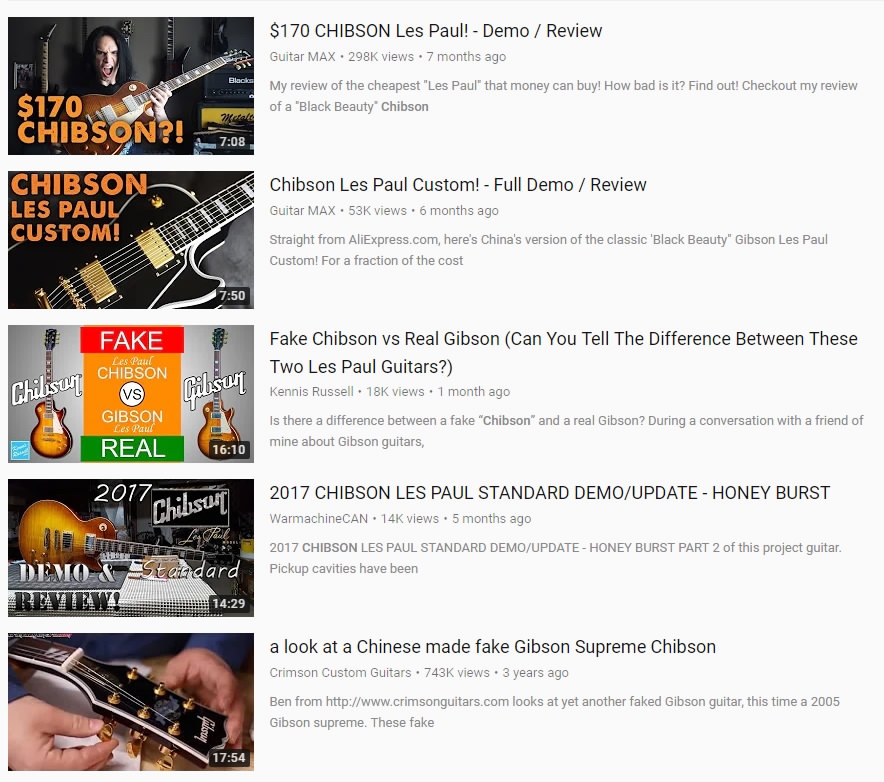
Video reviews of "Chibson" guitars on YouTube. /YouTube screenshot
Video reviews of "Chibson" guitars on YouTube. /YouTube screenshot
In January, the US Trade Representative put Alibaba and Taobao on a blacklist of websites “notorious” for selling counterfeit goods, saying “a high volume of infringing products reportedly continue to be offered for sale and sold on Taobao.com.”
Alibaba has dismissed the blacklist as unfair and not representative of its efforts to fight against fakes. China Daily reported last September that the company employs a team to check 100,000 products per year for fake goods, at a cost of 100 million yuan (15 million US dollars).
Alibaba and fellow e-commerce company JD.com are both stepping up the fight against fake goods by using blockchain technology, allowing customers to follow their purchase’s supply chain and ensuring its authenticity.
While Alibaba is striking down on fake goods, Chinese sellers are still able to use loopholes to get past rules on counterfeit goods, by producing copies without logos or referring to the original brand’s full name.
AliXBlog – a guide for overseas shoppers on using Alibaba’s services – tells readers that while many goods have been removed, “products inspired by famous brands may be sold legally as long as they don’t feature any distinctive signs.”