
Travel
14:13, 07-Aug-2018
Take a trip to NW China’s beautiful ‘nine-colored land’ – the Gannan Tibetan Autonomous Prefecture
Updated
13:37, 10-Aug-2018
 ["china"]
Share







Copied
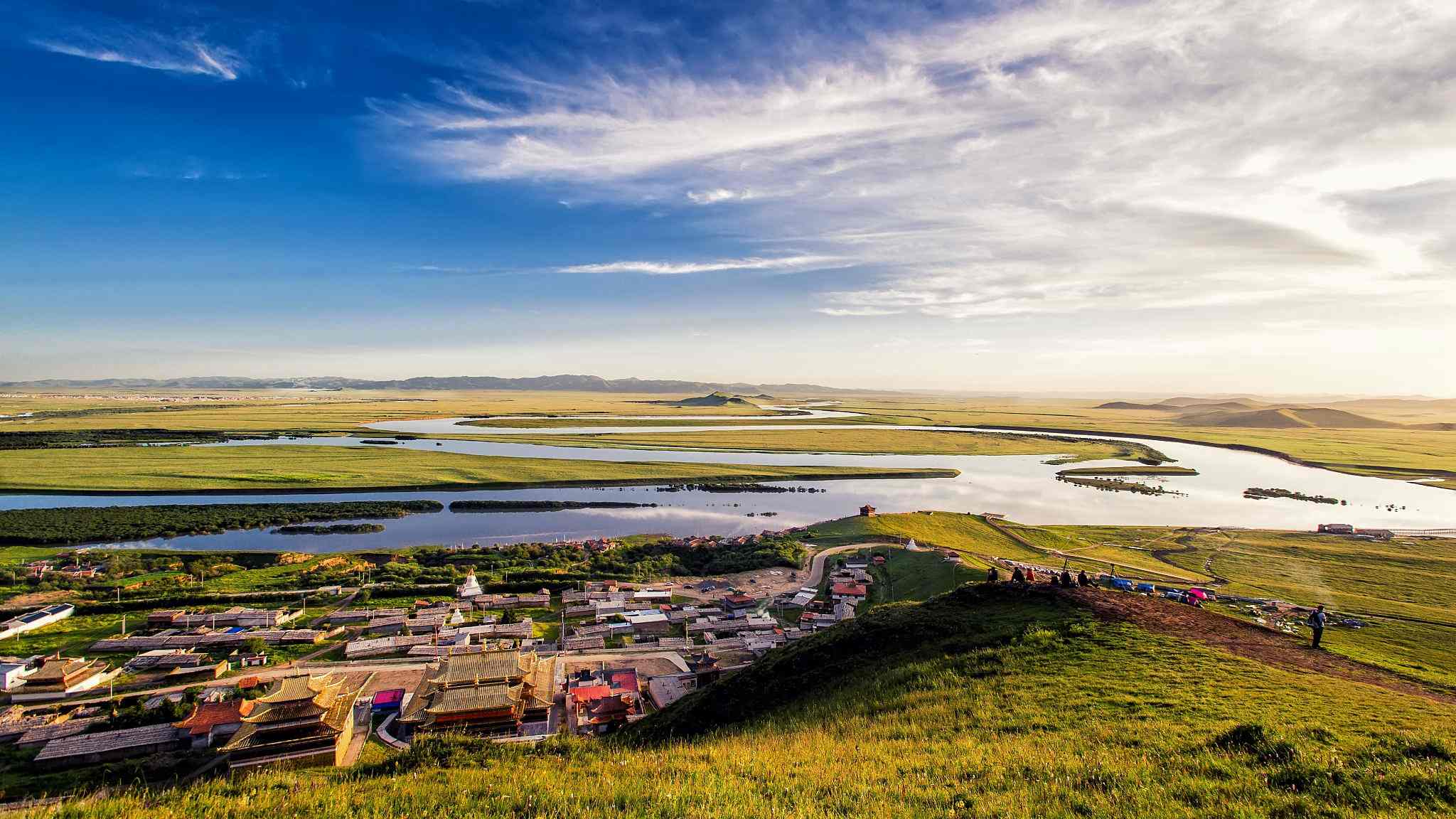
The region's mysterious ancient Silk Road roots, Buddhist relics, diverse landscape and various ethnic minority cultures have long made northwest China's Gansu Province one of the most desirable destinations for travelers. Yet few travelers are aware of the Gannan Tibetan Autonomous Prefecture, a hidden gem lying in the southeast of this slender province that stretches from east to west along the Hexi Corridor, a historical route that was part of the Silk Road.
Boasting all the representative features of the province, Gannan offers a great vacation that will be a treat for both the eyes and soul.
Located on the northeastern edge of the Qinghai-Tibet Plateau and ranging
from 1,100 to 4,900 meters above sea level, Gannan is the lowest of China's 10
Tibetan autonomous areas. With both the Yellow and Yangtze rivers passing
through the region, Gannan presents a variety of landscapes, including forests,
lakes, valleys, mountains and prairies.
At the junction of the Gansu, Qinghai and Sichuan provinces and with both the southern part of the Silk Road and the Tang-Tibet Ancient Road passing through it, the region possesses a unique culture that is a mixture of Tibetan, Han and other ethnic group cultures.
Feast for the eyes
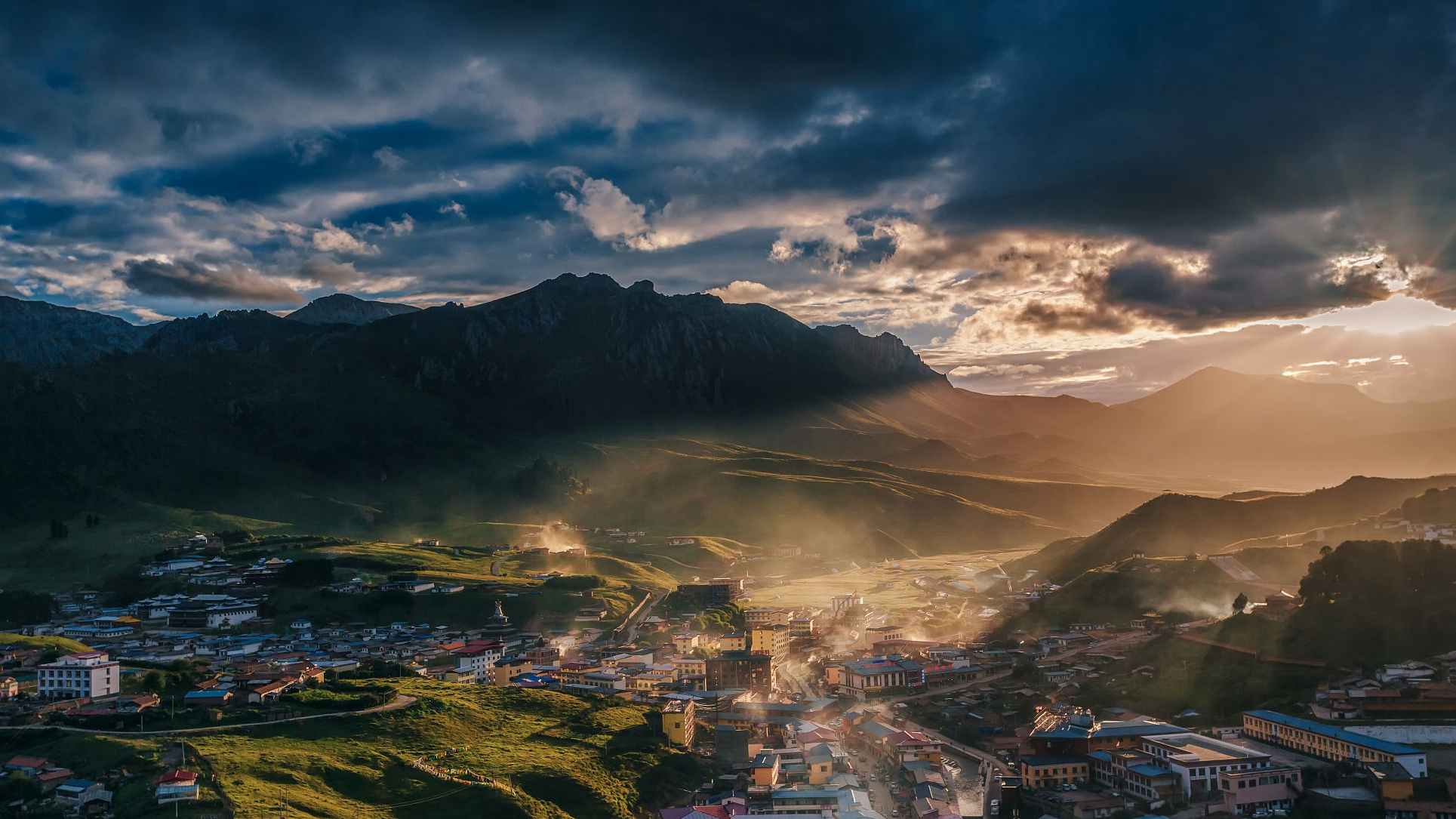
Due to the diversity of its natural scenery and architecture, Gannan is often referred to as "the nine-colored land" as reds, oranges, purples, blues and yellows can be seen in a single glance at the landscape.
The color yellow is a notable highlight as it represents the Yellow
River. China's "mother river," it runs across Gannan from its origins
in the Bayan Har mountains in a curved waterway that stretches more than 400
kilometers across the grand prairie of Maqu County, creating a unique splendor
widely known as the "the first bay of the Yellow River."
In the early morning and late afternoon, when the sun hangs on the edge of the horizon, the reflection of the soft sunshine turns the curved river into a bent silk ribbon - a breathtaking view that attracts many shutterbugs.
It is believed that the place was closely related to King Gesar, a hero-god in Tibetan culture. Legends about the king defending the area from demons have been passed down by locals for generations.
Spiritual heaven
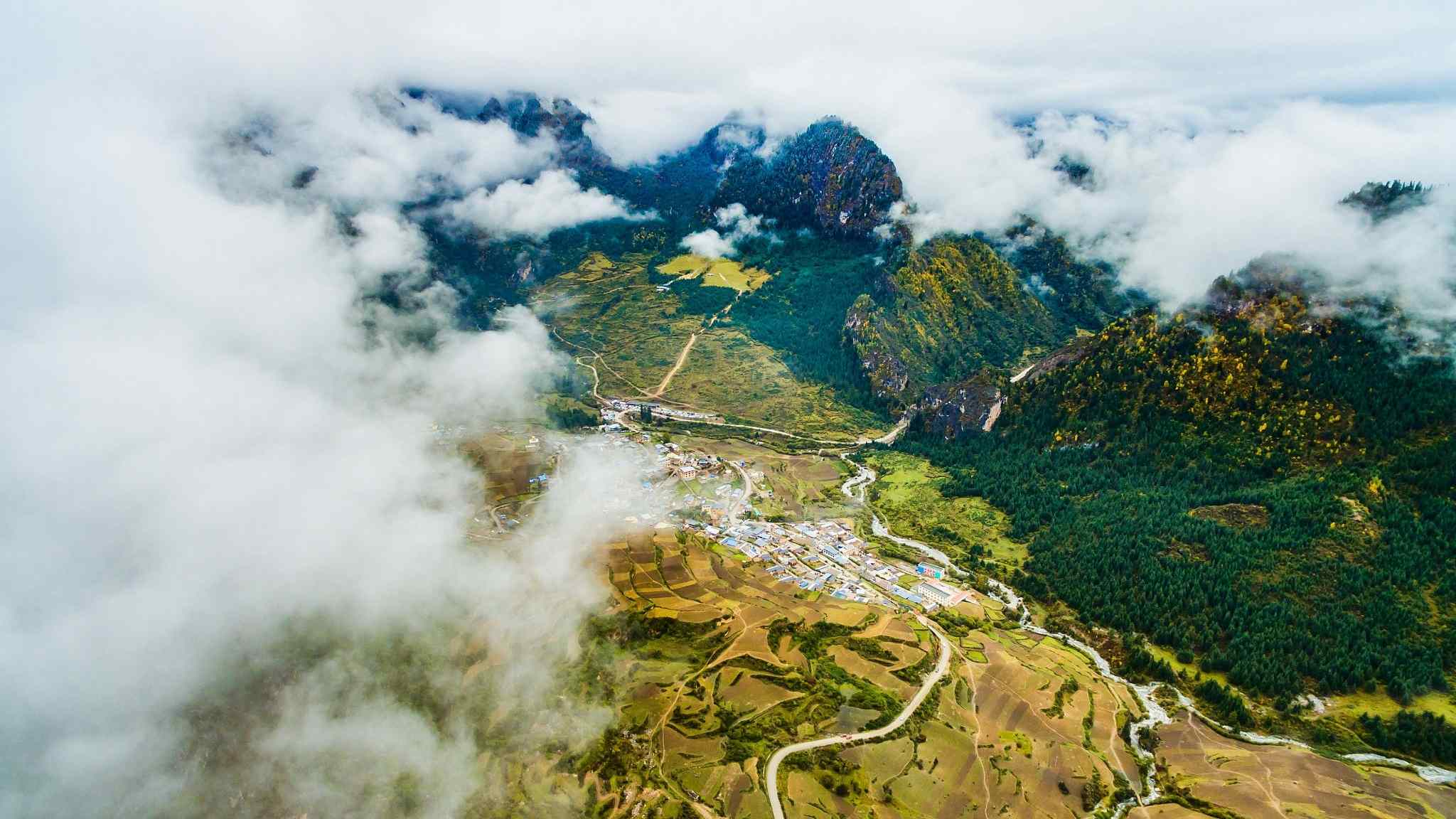
Located at the junction of three provinces, Gannan is home to 24 ethnic groups and a place where different cultures and art forms are exchanged and interact. The region has long been dubbed a place "to free the soul" and "the travel destination with most ethnic characteristics in China."
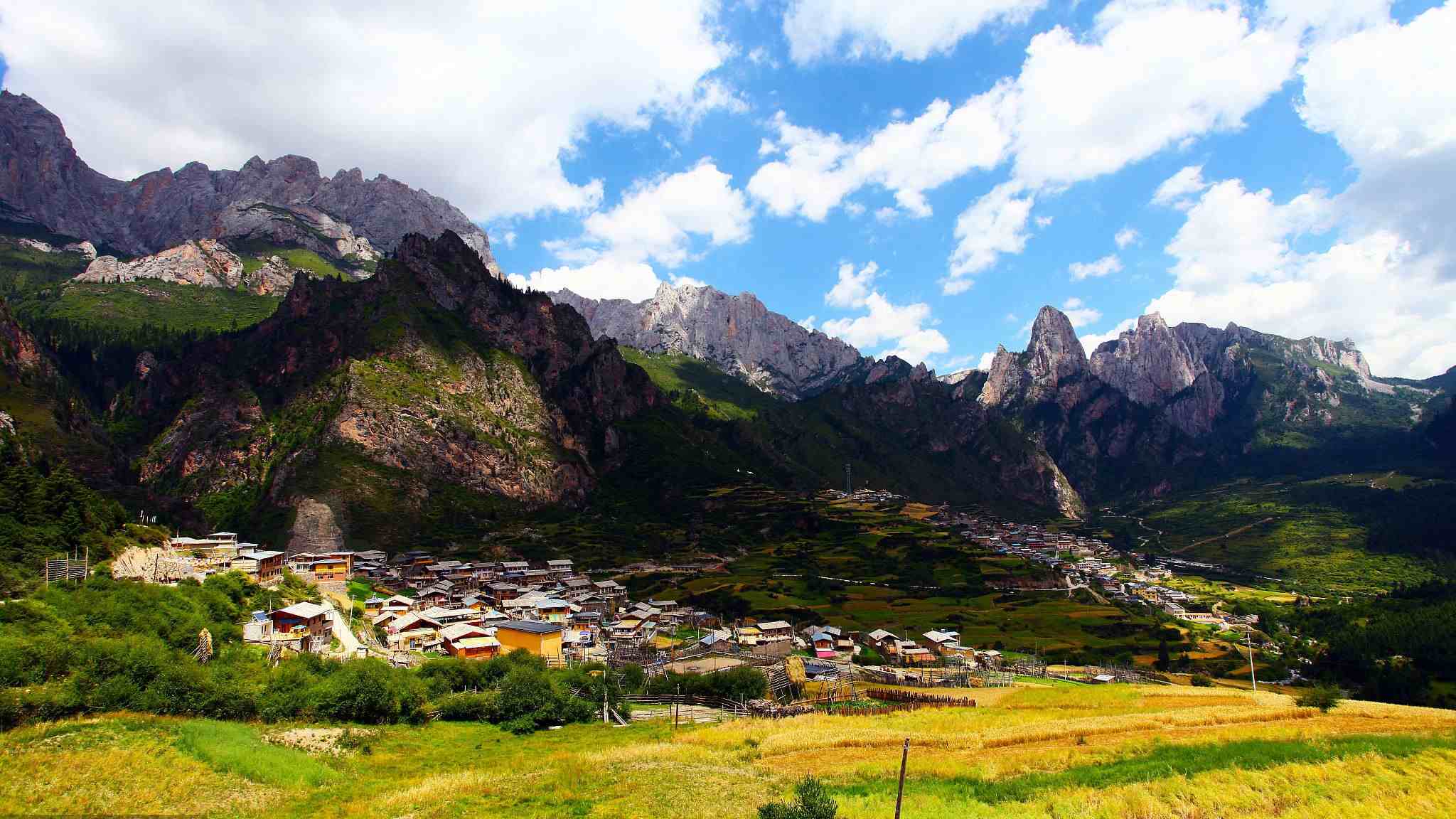
With more than 53 percent of the local population belonging to the Tibetan ethnic minority group, Tibetan Buddhism is prevalent in the region. More than 120 Tibetan Buddhist temples can be found here, including that celebrated Milarepa Buddha Pavilion that dates back to more than 240 years ago. The nine-story pavilion attracts visitors from home and abroad with its unique yet splendid architecture and beautiful paintings and statues that fill up the walls on each floor. The attraction is regarded one of the most divine places in the region.
Source(s): Global Times