
Business
15:07, 21-Aug-2018
Relocated Mozambicans benefit from giant bridge project
Updated
14:13, 24-Aug-2018
 ["china","africa"]
Share







Copied
02:55
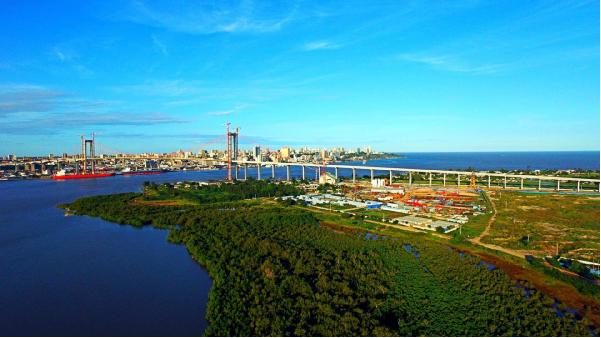
The southern African nation of Mozambique will soon embrace a historic change in its domestic infrastructure. The Chinese-built Maputo bridge and link roads will become the nation’s key international passageways linking its capital Maputo all the way southward to South Africa. Experts say this will also boost the country’s global trade and tourism growth.
At Uambalambate Primary School in the Moamba District of Maputo Province, students have been learning in the open air for the past two years, as a result of inadequate funding from the government. Their families, about 500 of them in total, were relocated from the capital Maputo to make space for the construction of a bridge.
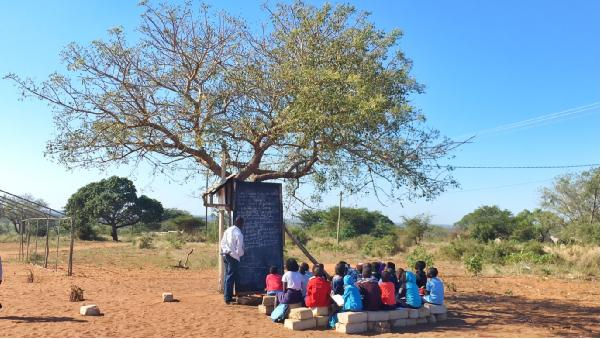
Students attend class under tree at Uambalambate Primary School in Maputo Province. /CGTN Photo
Students attend class under tree at Uambalambate Primary School in Maputo Province. /CGTN Photo
Zacarias Lova, the school’s headmaster, told CGTN, “No children can learn like that. They cannot focus on teaching. When the weather is bad, they cannot study. And there’s no way for them to have class when it rains.”
But these days are numbered. Nearby, new classrooms are taking shape. They’ve been donated by the China Road and Bridge Corporation (CRBC), the company behind the Maputo bridge project.
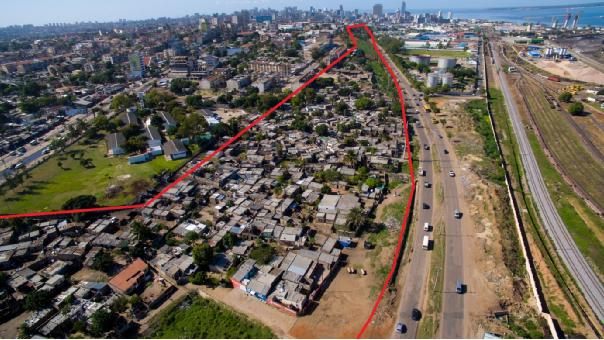
The area inside the red line was where the relocated families lived in suburban Maputo, capital of Mozambique. /CRBC Photo
The area inside the red line was where the relocated families lived in suburban Maputo, capital of Mozambique. /CRBC Photo
We followed one of the students, Silvia, to the community where all the relocated people live. The conditions are much better than where they used to stay, among rows of shanty houses in suburban Maputo. Her mother told CGTN that the family enjoys their life in the new home.
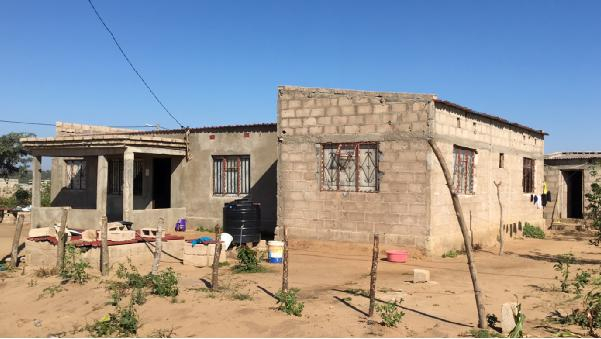
A typical residence in the relocated community. People here have an expanded living space and arable land. /CGTN Photo
A typical residence in the relocated community. People here have an expanded living space and arable land. /CGTN Photo
Silvia’s mother hopes the government will build a hospital nearby to treat illnesses, and set up a public transportation system so they can catch early trains to the city. But in the short term, she hopes her daughter will soon move into the new classroom and complete her education.
Some 30 kilometers away, workers are putting the final touches on the longest suspension bridge in Africa. Along with the link roads, the bridge directly connects Maputo to the border of South Africa. It’s expected to greatly boost cross-border trade and tourism.
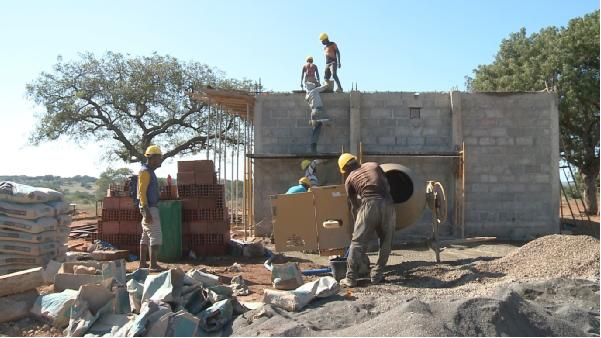
Construction work continues to build concrete-and-brick classrooms. The project is donated by CRBC. /CGTN Photo
Construction work continues to build concrete-and-brick classrooms. The project is donated by CRBC. /CGTN Photo
Bai Pengyu, general manager of CRBC’s Mozambique Office, told CGTN that they worker together with the local government to help relocate people. His office donated several facilities to improve local people’s living standards, such as a police station and a school, and also improved the water and power infrastructure.
Designed by the German consultancy firm Gauff Engineering, the construction of the 3 km Maputo bridge, officially known as the Maputo-Catembe Bridge, started in 2014. It links the capital city Maputo to the neighboring town of Catembe. The nine-hour drive around the bay to access Catembe has now reduced to four hours by using the bridge. The bridge is now among the 60 largest suspended bridges in the world.