
Opinions
09:33, 13-Sep-2018
China injects new impetus into building a NE Asian Economic Circle
Updated
08:32, 16-Sep-2018
 ["china"]
Share







Copied
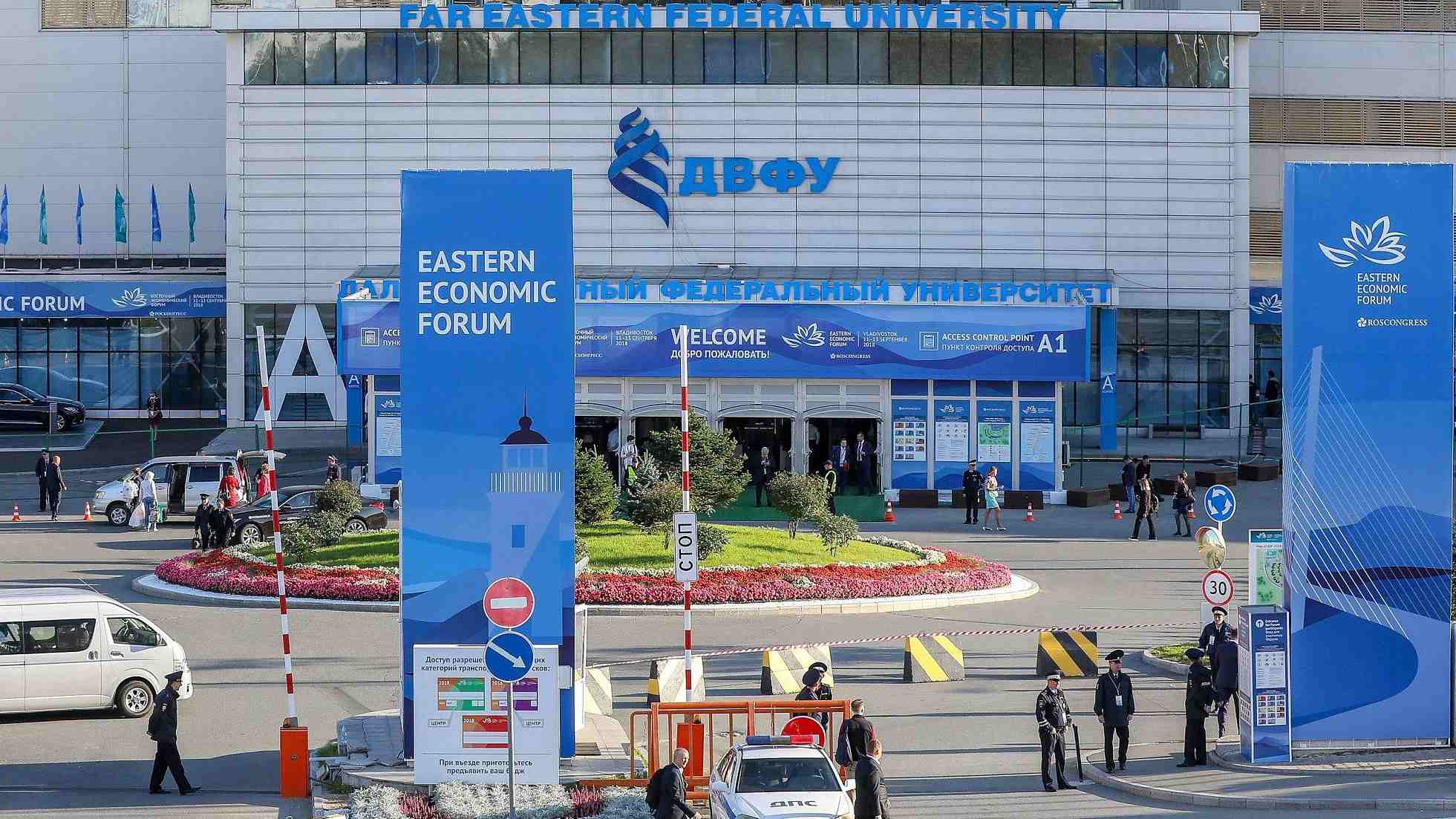
Editor's note: The following is an edited translation of a commentary from the Chinese-language "Commentaries on International Affairs."
Chinese President Xi Jinping delivered a speech on Wednesday at the fourth Eastern Economic Forum entitled "Sharing New Opportunities for the Development of the Far East and Creating a Bright New Future for Northeast Asia", proposing four points on promoting peace, stability, development and prosperity in the region amid newly arising situations.
He noted that countries in northeast Asia should build mutual trust to safeguard regional peace and tranquility, deepen cooperation to achieve mutually beneficial and win-win outcomes, learn from each other to consolidate their traditional friendship, and take a long-term perspective to realize integrated and coordinated development. This has laid out a new blueprint and injected new impetus into the establishment of the Northeast Asian Economic Circle, and the promotion of diversification and sustainable development of the region.
Northeast Asia includes China, Russia, Mongolia, Republic of Korea (ROK), DPRK (Democratic People's Republic of Korea) and Japan. Its combined population accounts for 23 percent of the world's total population, and the total economic output accounts for 19 percent of global output. The establishment of the Eastern Economic Forum in 2015 created a new platform for cooperation in northeast Asia.
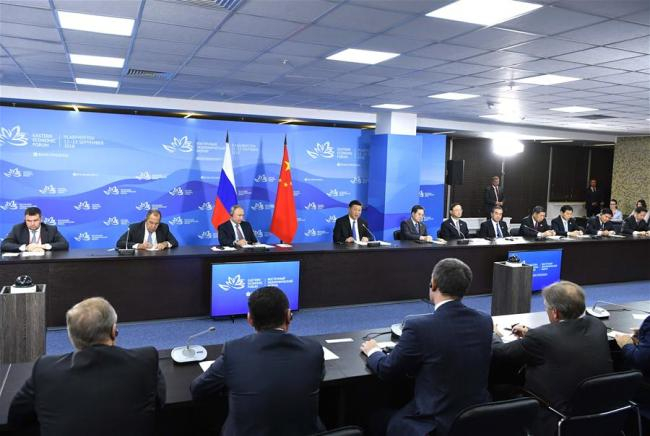
Chinese President Xi Jinping attends a round-table on Sino-Russian regional cooperation at the fourth Eastern Economic Forum, Vladivostok, Russia, September 11, 2018. /Xinhua News Agency
Chinese President Xi Jinping attends a round-table on Sino-Russian regional cooperation at the fourth Eastern Economic Forum, Vladivostok, Russia, September 11, 2018. /Xinhua News Agency
At present, northeast Asia has become one of the most promising regions in the world with the fastest economic growth. However, the rise of unilateralism and protectionism has created external resistance to deep cooperation in northeast Asia. Under such circumstances, it is a common aspiration of all countries in the region to reach consensus, build an open regional economy, and enhance the well-being of the people.
In his speech, President Xi Jinping proposed working together towards the common goal of building a Northeast Asian Economic Circle. In fact, the idea has a solid foundation. First of all, northeast Asia is rich in natural resources, and the Russian far east is also known as the only treasure trove in the world that has not been dug deeply. In addition, northeast Asia has world-leading scientific research capabilities: China, Russia, Japan and ROK are all major countries in science and technology.
At the same time, funds in the region are sufficient, and China's foreign investment has become an especially important engine for stimulating global foreign direct investment growth. The regional security situation, which has been continuously improving in recent years, has also provided a good guarantee for regional cooperation.
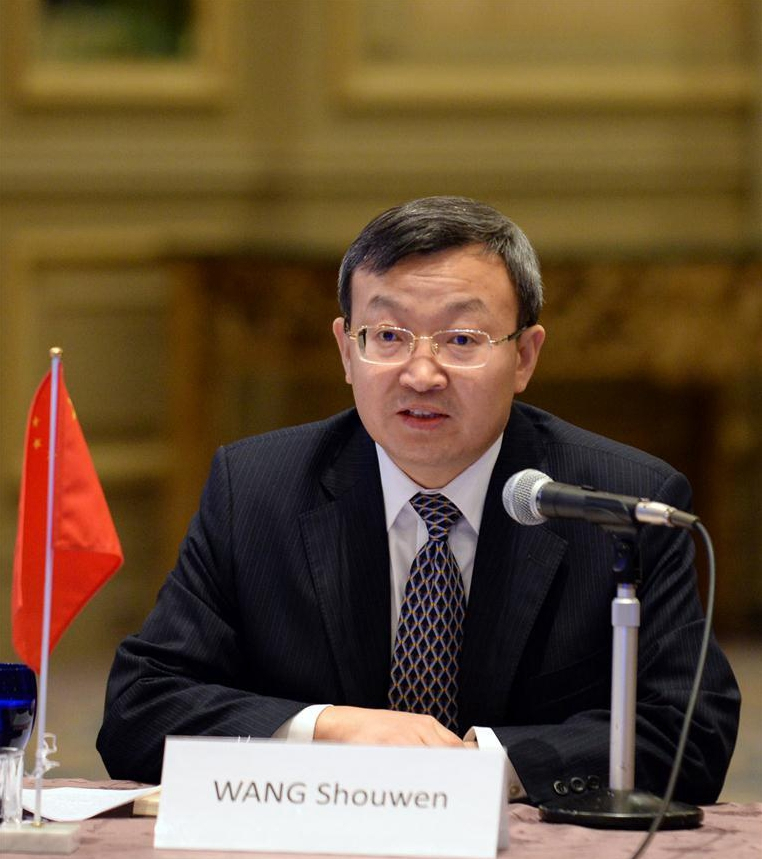
Wang Shouwen, Chinese vice minister of commerce, speaks during the 12th round of talks on a trilateral free trade agreement in Tokyo, Japan, April 13, 2017. /Xinhua News Agency
Wang Shouwen, Chinese vice minister of commerce, speaks during the 12th round of talks on a trilateral free trade agreement in Tokyo, Japan, April 13, 2017. /Xinhua News Agency
As President Xi Jinping said, "A harmonious, united and stable northeast Asia with mutual trust conforms to the interests of all countries and the expectations of the international community." "Countries in the region are fully capable and qualified to give full play to their respective advantages and carry out in-depth cooperation in various fields."
Then, how can the parties evolve deeper cooperation in this new situation?
President Xi Jinping proposed that the regional countries should actively align their development strategies, strengthen policy communication and coordination, improve cross-border infrastructure connectivity, promote trade and investment liberalization and facilitation, jointly build an open regional economy, and boost sub-regional cooperation to benefit the people in the region.
These recommendations are highly instructive, practical and realistic. The six countries in northeast Asia are neighbors, and the level of economic development is not much different. It is uniquely advantageous to carry out multilateral cooperation within a certain scope and sub-regional cooperation in adjacent areas. In terms of small multilateral and sub-regional cooperation mechanisms, northeast Asia already has a number of bilateral or multilateral cooperation frameworks.
The construction of the China-Russia-Mongolia Economic Corridor has achieved initial success, and negotiations on establishing the China-Japan-ROK Free Trade Area are accelerating. This has promoted the region's sustainable development and provided lessons for deepening cooperation.
More importantly, the Belt and Road Initiative is gradually gaining popularity in the hearts of the people of northeast Asia. Countries in the region have expressed their willingness to support and actively participate in the ambitious initiative.
President Xi Jinping has pointed out that China and Russia have been actively carrying out the alignment between the Belt and Road Initiative and the Eurasian Economic Union, and have already achieved initial gains. China is willing to work with all parties on this basis to align the development strategies.

Opening ceremony of the 5th China-Russia Expo in Yekaterinburg, Russia, July 10, 2018./VCG Photo
Opening ceremony of the 5th China-Russia Expo in Yekaterinburg, Russia, July 10, 2018./VCG Photo
China supports the Asian Infrastructure Investment Bank and the Silk Road Fund playing a greater role in providing financial support for major projects. This will undoubtedly bring more opportunities for the building of a Northeast Asian Economic Circle.
At present, the situation in northeast Asia is stabilizing and has a promising future. Notably, the Sino-Russian relationship has stepped into a new era of high level and great development, producing a major demonstration effect and giving impetus to the regional integration process in northeast Asia.
In the long run, an open Northeast Asian Economic Circle will not only create more benefits for the local people, but will also become an important force for safeguarding multilateralism and promoting the development of the international order in a more just and rational direction.
(If you want to contribute and have a specific expertise, please contact us at opinions@cgtn.com)