
Tech & Sci
20:47, 29-Apr-2018
Chinese venture capitalists bullish on future deal momentum
 ["china"]
Share







Copied
03:03

China’s tech industry has placed itself on the world map – and if there is anything to go by, presently, three of five of the world’s highest valued start-ups are from the country.
According to CB Insights – a tech market intelligence platform that analyzes data points on venture capital, startups and partnerships – Didi Chuxing, the Chinese ride-hailing behemoth; Xiaomi, a Chinese electronics and software company; and Meituan Dianping, a combination of Groupon and Yelp, come in second, third and fourth place respectively.
Industry players CGTN spoke to at the "Cross-Border Venture Summit" of the Global Mobile Internet Conference (GMIC) in Beijing expect investment deals backed by venture capital to continue in the near future.
On this count, Kuantai Yeh, partner with Qiming Venture Partners, a China-based capital firm, said this is because investors are getting their payback, and “they are pouring more money into China.”
Yeh is bullish in the artificial intelligence (AI) and big data area.
“I think that’s the fundamental technology that’s driving the productivity of every area so I am putting money in AI into the medical field, autonomous driving, and software – that fills all other industries.”
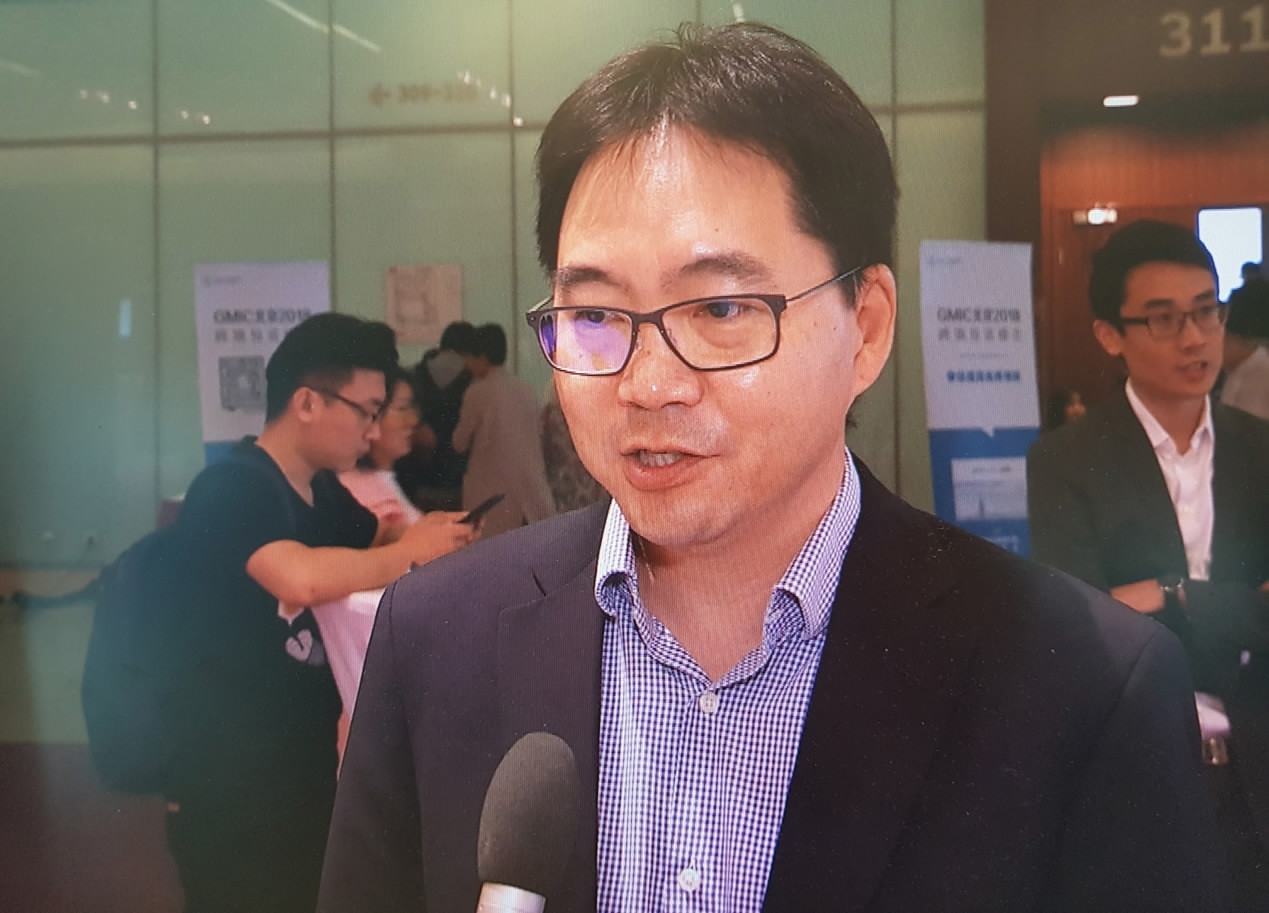
While Kuantai Yeh from Qiming Venture Partners agrees valuations overall do seem bubbly, he said valuations can be driven higher – if one is in the right business with the right technology. /CGTN Photo
While Kuantai Yeh from Qiming Venture Partners agrees valuations overall do seem bubbly, he said valuations can be driven higher – if one is in the right business with the right technology. /CGTN Photo
All eyes (and money) on AI
Meanwhile, Jason Zhao, a partner at KPCB China, an investment advisory company that focuses on digital, green tech and life science opportunities, said he is interested to see how entrepreneurs leverage on data from AI.
“The US has a lot of openness in terms of the private sector, [while] China has a lot of open data from the government and Chinese companies… and just the volume of data we can collect is huge. So that’s an opportunity that exists only in China,” he said.
With the ability to process this data, Zhao sees the enterprise sector “pacing up” to that of the consumer sector.
Zhao, too, expects deals backed by venture capital to continue.
“There have been a lot of exits recently for Chinese companies – a lot of IPOs on Wall Street – so there will be continued interest especially from Chinese investors to continue to fund Chinese companies,” he said.
“I think having more capital is a great opportunity for entrepreneurs, and regardless of how successful the companies are, I think the consumer wins – by having more choices from startups that are available.”
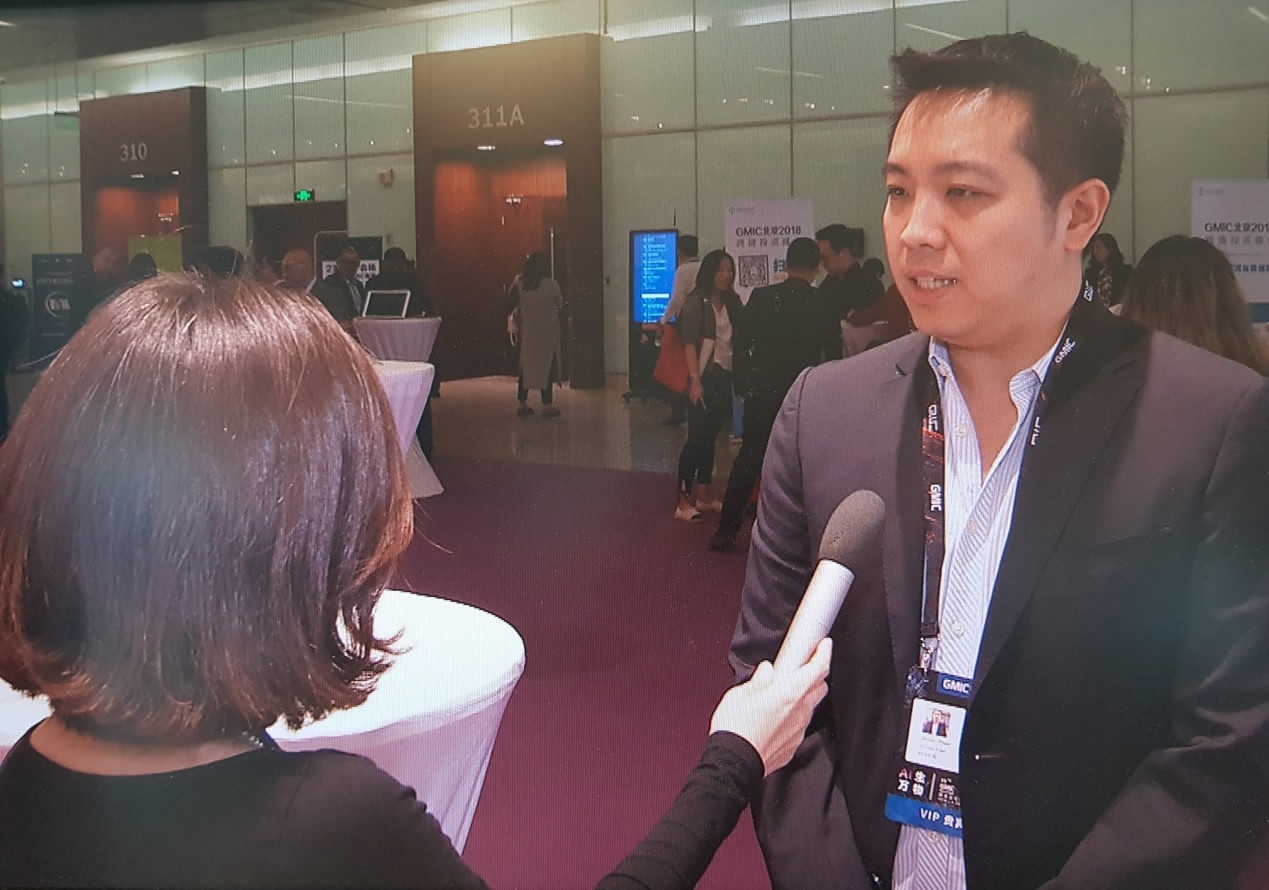
Jason Zhao from KPCB China said he would like to see Chinese companies take a bigger role as a leader, and not just “one of the players” in the global marketplace. /CGTN Photo
Jason Zhao from KPCB China said he would like to see Chinese companies take a bigger role as a leader, and not just “one of the players” in the global marketplace. /CGTN Photo
The biggest risk for Zhao is the ability for China to sustain the momentum – as competition becomes fiercer.
“Having huge capital isn’t enough”
William Bao Bean, managing director of Chinaccelerator, another leading startup accelerator in China, holds that having money alone is not enough.
“You need to have technology and use that as a differentiator. Right now you have big players like Alibaba, Tencent, and Baidu… but market shares are changing rapidly as players come up with technology advantage,” he said.
William cited Didi (which just bought Uber China)’s recent fall in market share in Shanghai, with the entry of a new player.
He also pointed out the risk of a country having too much capital.
“The [Chinese] government is putting in 250 billion US dollars every year into venture capital firms to help support the economy. What that’s doing is it’s creating a massive flood of money to the point where money is a weapon here.”
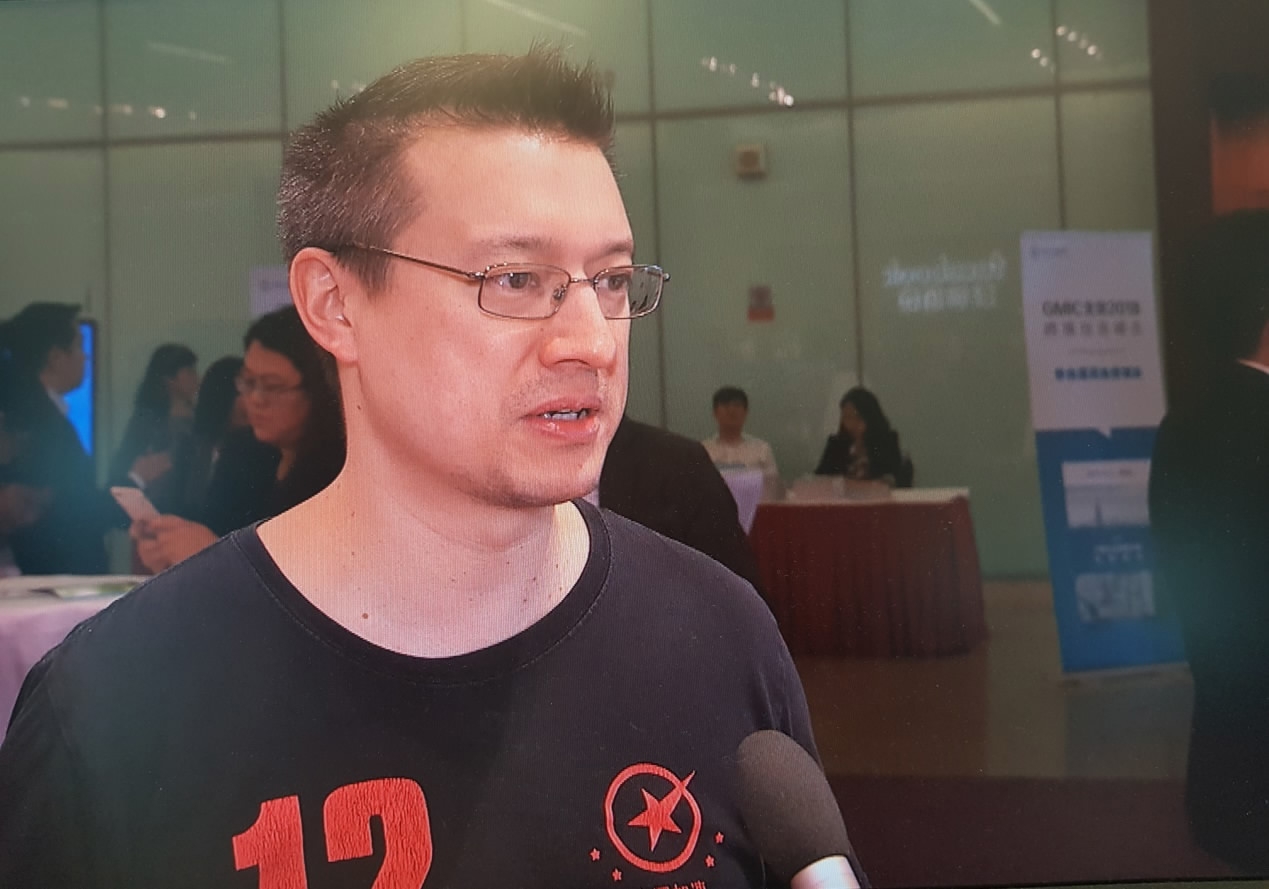
William Bao Bean from Chinaccelerator said China is the most competitive market in the world, and one will lose out if one is not leveraging on AI and machine learning to personalize its services. /CGTN Photo
William Bao Bean from Chinaccelerator said China is the most competitive market in the world, and one will lose out if one is not leveraging on AI and machine learning to personalize its services. /CGTN Photo
And it’s this “weapon” of having too much money that enables also bad companies to be funded – alongside the good ones.
The ultimate effect of that is a talent shortage. “It makes it even harder for the good companies to get ahead because they are fighting for talent. There’s a huge talent shortage in China, and we’re going across the world to bring AI experts here,” William said.
“Not-enough talent is a risk; too much money is driving that risk because everybody has so much money.”