
Opinion
10:22, 08-May-2019
Ramaphosa's angels and demons will guide him
 ["china"]
Share







Copied
Editor's note: Wendyl Martin is a South African journalist on a media exchange in China. He is a participant in this year's China Africa Press Center. He is a news editor in Cape Town, South Africa. The article reflects the author's opinion, and not necessarily the views of CGTN.
As millions of South Africans head to the polls on May 8, for the sixth elections since the end of apartheid, it is a given that sitting president Cyril Ramaphosa will be inaugurated in the nation's administrative capital Pretoria later this month.
An activist and trade unionist turned politician, then businessman, then statesman, Ramaphosa's angels, and demons will guide him.
Ramaphosa's challenges in leading the country 25 years after apartheid are many: electricity shortages, sporadic spurts of xenophobia targeted at foreign business owners, slow land reform in giving black citizens access to land ownership and the highest income inequality in the world.
His Curriculum vitae (CV) is impressive; it's mostly filled with achievements and experiences that will help him. There are a few thorns though, which the opposition benches will use when it is convenient.
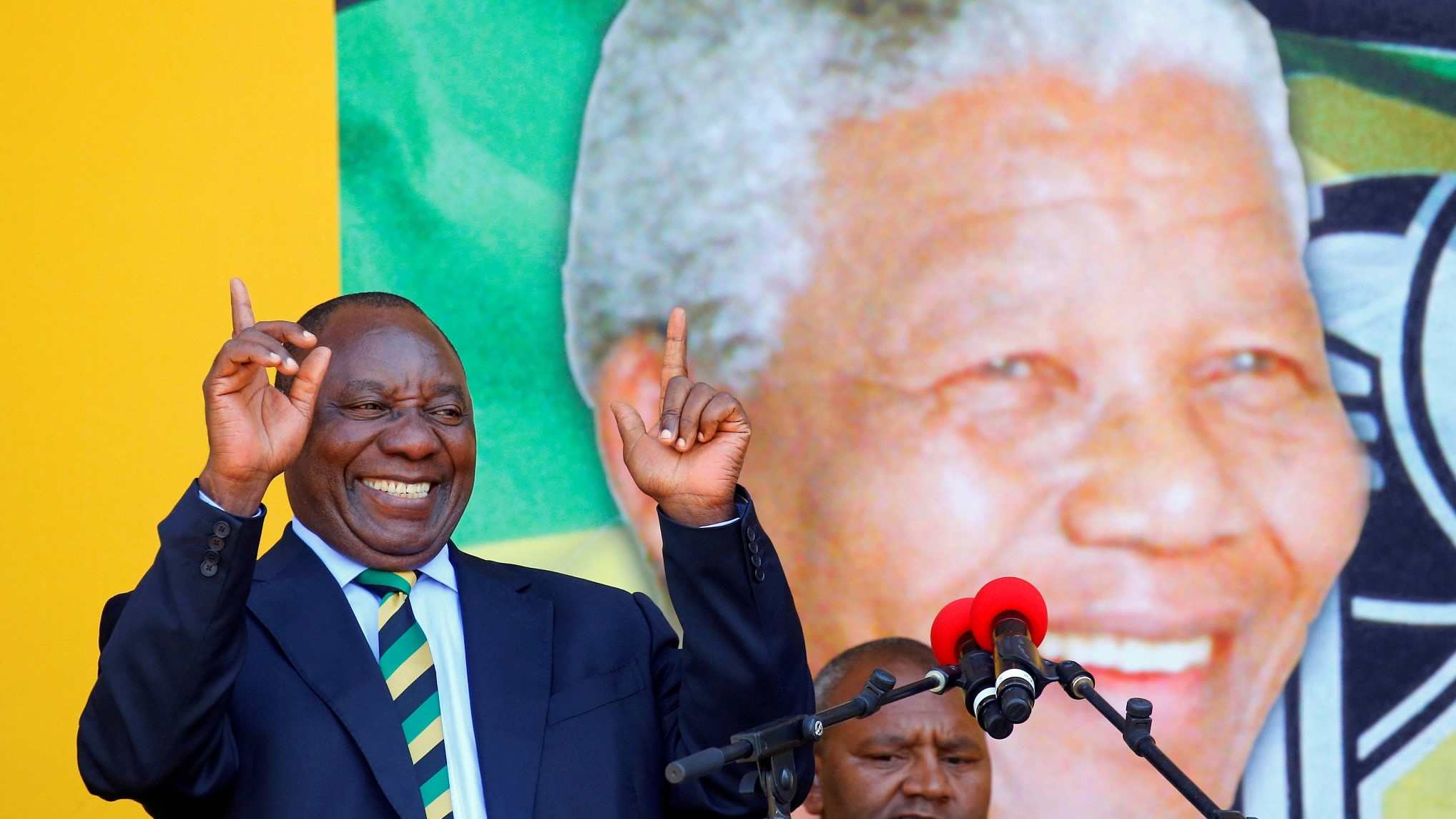
South African Deputy President Cyril Ramaphosa addresses a rally to commemorate Nelson Mandela's centenary year in Cape Town, South Africa, February 11, 2018. /VCG Photo
South African Deputy President Cyril Ramaphosa addresses a rally to commemorate Nelson Mandela's centenary year in Cape Town, South Africa, February 11, 2018. /VCG Photo
The CV is as varied as drafting legislation to owning McDonald's in South Africa (which he subsequently sold in 2016 before turning to full-time politics).
Ramaphosa has been president of the Republic of South Africa for over a year and did not come to this office via an election. Instead, he was sworn in as president shortly after Jacob Zuma resigned on the evening of February 14, 2018; which some South Africans jokingly referred to as a Valentine's Day gift.
This speaks to another challenge for Ramaphosa, leading a ruling party that can be divided and that can create political power vacuums between internal party leadership changes. Ramaphosa was elected president of the African National Congress (ANC) at its elective conference December 2017, while Zuma was president of the Republic.
This pattern appeared a decade before.
This is the second time in post-apartheid South Africa that a sitting president has resigned before the end of a term. Thabo Mbeki left the presidential office of the country in September 2008, following Jacob Zuma's successful election as president of the ANC in December 2007.
Since Ramaphosa took the presidential seat last year, his man-of-the-people PR campaign came thick and fast. Social media posts of the president taking selfies in economy class-flights and third class train rides went viral, along with the president's call for citizens take daily, early morning walks him. Smiling pictures of Ramaphosa were everywhere. "Thuma mina," people called this new spirit after the president quoted this phrase in parliament, a phrase which translates to "send me" from Nguni languages.
He went straight to work; Ramaphosa spent part of the year on investment roadshows, taking the begging bowl from London to New Delhi, all while having to answer for the relationship between a company (African Global Operations) being investigated for corruption and his son, a donation received from this company for his 2017 campaign for president of the ANC.
There is also a demon that will haunt him, from before his time as president – the Marikana massacre of August 2012 in which police killed 34 mineworkers of the Lonmin mine with gunfire.
At the time, Ramaphosa was a non-executive director of Lonmin and had sent emails asking for action to be taken to make arrests. A commission of inquiry later absolved him and others, and he has made public apologies for his role.
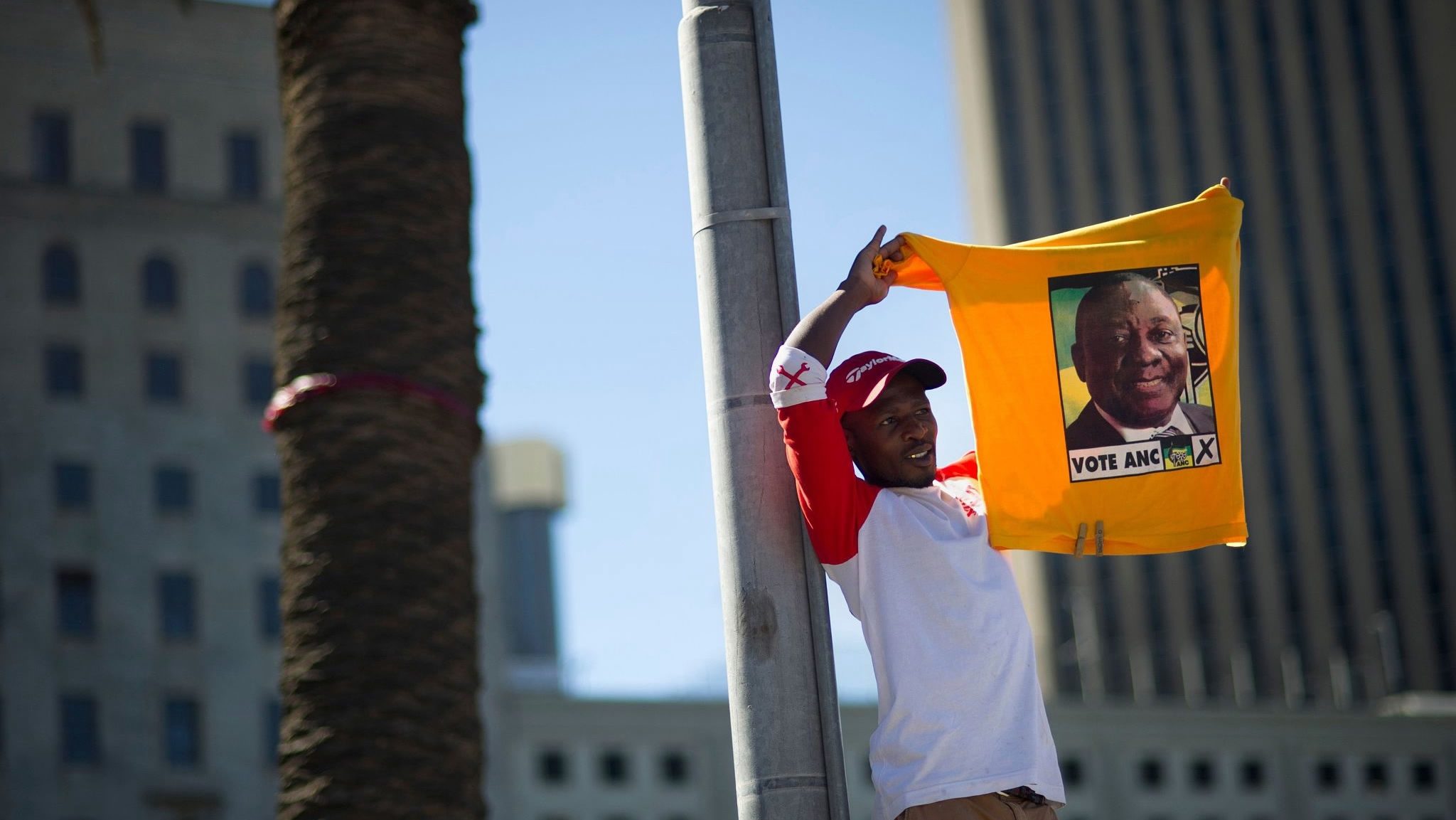
A supporter of South Africa's ruling ANC holds up a shirt featuring Cyril Ramaphosa during a rally in Cape Town, South Africa, February 11, 2018. /VCG Photo
A supporter of South Africa's ruling ANC holds up a shirt featuring Cyril Ramaphosa during a rally in Cape Town, South Africa, February 11, 2018. /VCG Photo
Now a major opposition party, the Economic Freedom Fighters (EFF) was formed off the back of this incident. This party is expected to show growth at these polls. The party, which previously campaigned for the victim's families and the injured miners, have been less vocal about the incident since Ramaphosa's time in office. Its leader, Julius Malema could have or still could pull this card at any time.
There's a bright star in his corner. Not many will understand the Constitution of the Republic of South Africa, as well as he can; a constitution that is globally-renowned for its liberal values and the entrenchment of equality.
Ramaphosa was one of the architects of this document, as chairperson of the constituent assembly which birthed it.
History also shows that Ramaphosa had the faith and blessing of the country's first post-apartheid president, Nelson Mandela.
When Mandela appeared from a balcony over-looking Cape Town's Grand Parade after his release in February 1990, Ramaphosa was at his side.
Ramaphosa's vision and response to this faith is well summed in a CNN interview last year.
"My campaign to become a leader of the ANC was pivoted on two things: Renewing the ANC and taking back to the values they were espoused and subscribed to by Nelson Mandela, Oliver Tambo and many other leaders," he said.
(If you want to contribute and have specific expertise, please contact us at opinions@cgtn.com.)