
Opinions
09:29, 04-Oct-2018
Independent innovation the main driving force for China's sustainable development
Updated
09:12, 07-Oct-2018
 ["china"]
Share







Copied
Editor's note: The article is an edited translation of a commentary from the Chinese-language "Commentaries on International Affairs" and originally published on CRI.
"If one can be innovative for a day, he should keep it up day by day, and constantly push for new frontiers" – this ancient Chinese wisdom is often quoted by Chinese leaders when talking about innovation. For thousands of years, China has been marked by indigenous innovation, which serves as the inspiration and motivator for its people to seek new development and progress.
Historically, ancient China led the world in astronomy, time keeping, sea navigation, mathematics and military strategy, on top of the most notable "four great inventions," namely paper making, the compass, gunpowder and printing techniques. In modern times, however, China began to lag behind in science and technology development due to colonial aggression and a decline in the economy.
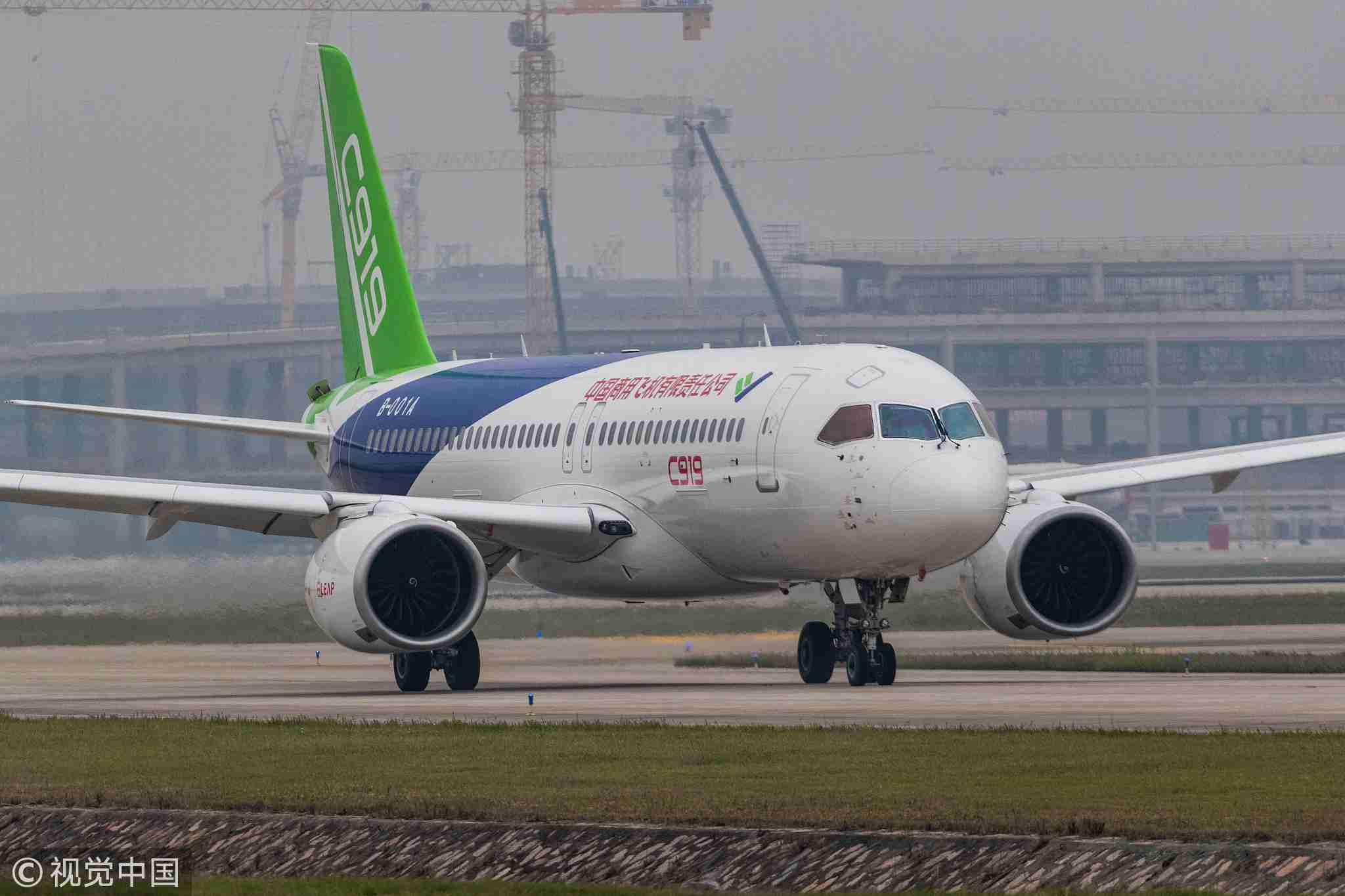
The C919 is China's first self-developed large passenger plane. /VCG Photo
The C919 is China's first self-developed large passenger plane. /VCG Photo
After the founding of the People's Republic of China in 1949, China developed and tested its own atomic and hydrogen bombs and launched its first artificial satellites in the 1960s and 1970s against a harsh international situation, including economic and technological blockades by Western countries.
Ever since its reform and opening up 40 years ago, China's innovative spirit has been further enhanced.
In recent years, for instance, guided by the strategy of seeking innovation-driven development, there has been a series of explosive scientific and technological advancements, including the 500-meter Aperture Spherical Radio Telescope, or FAST, the world's largest single-dish radio telescope based in Guizhou; the dark matter detection satellite, "Wukong," which was inspired by the name of the Monkey King from the Chinese classic, "Journey to the West"; and the world's first quantum satellite, Micius, named after a fifth-century B.C. Chinese philosopher and scientist.
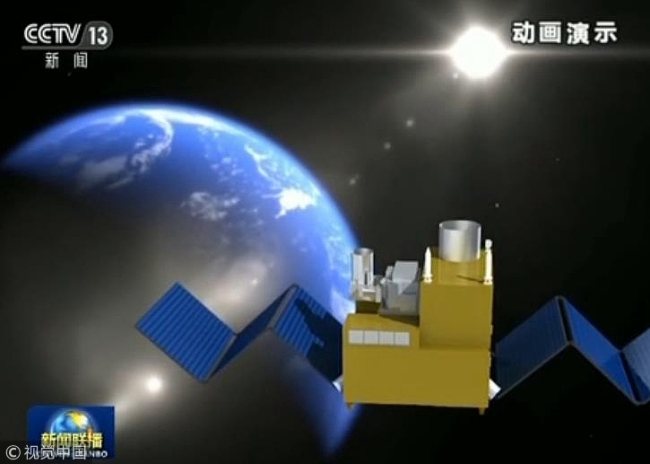
An illustration of the world's first quantum satellite "Micius". /VCG Photo
An illustration of the world's first quantum satellite "Micius". /VCG Photo
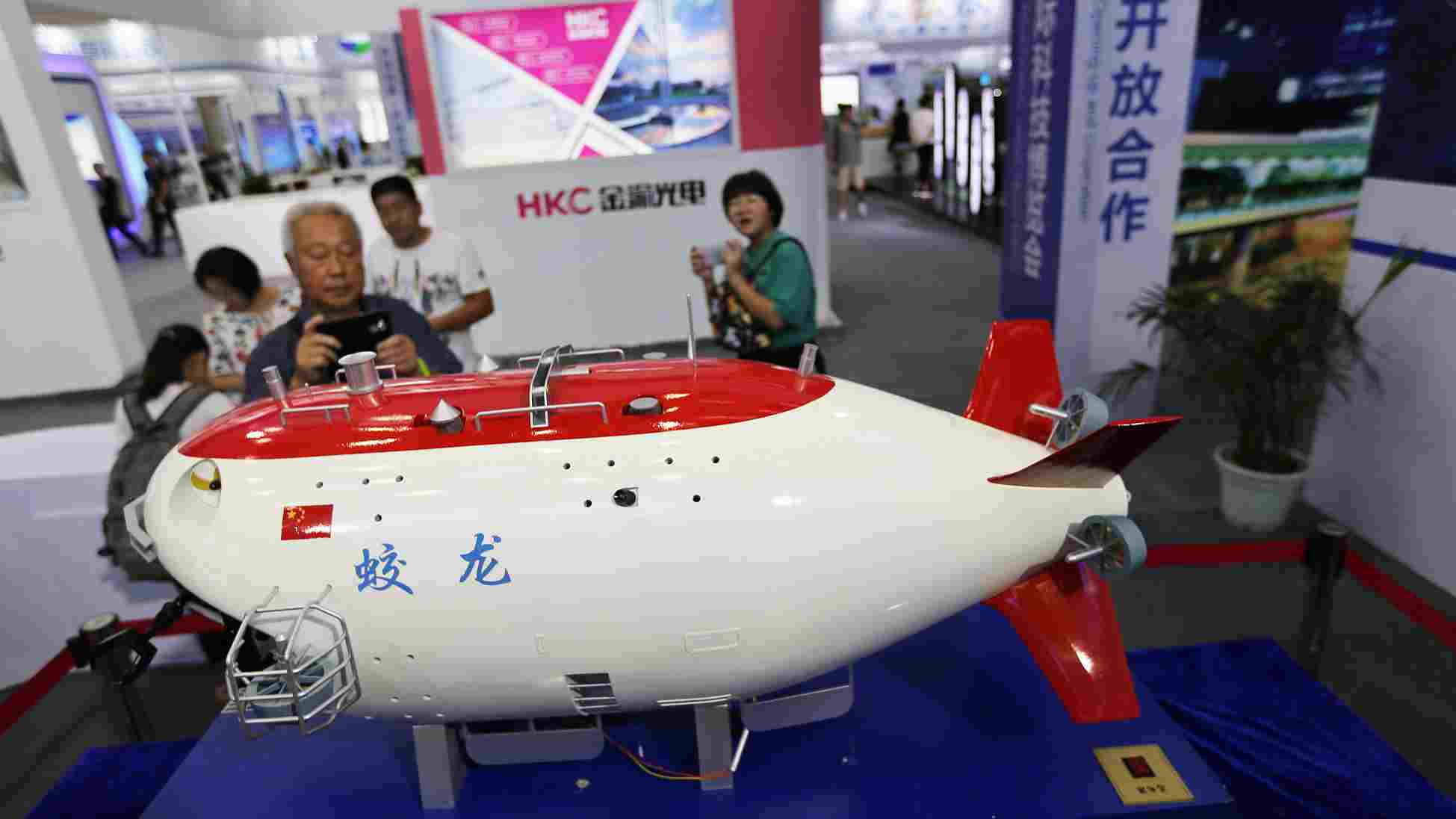
China's new achievements also include Jiaolong deep-sea submersible; the C919, China's first self-developed large passenger plane; world-leading technology developments in high-speed rail, plus an extensive national high-speed railway network; the successful collection of samples of combustible ice from below the South China Sea, and the development of high-yield saline soil rice. Alipay and WeChat have created a cashless environment for transactions and consumption in China.
Technological improvements contributed 57.5 percent to China's economic growth in 2017 – close to the target of 60 percent set by the government by 2020. Chinese researchers made 1.38 million invention patent applications in 2017, a 14.2-percent increase year-on-year.
Spending on research and development (R&D) also grew faster in 2017 – rising by 11.6 percent year-on-year to 1.75 trillion yuan (about 280 billion US dollars), accounting for 2.12 percent of China's GDP last year.
The amount of scientific papers tabled by Chinese scientists has ranked second in the world for nine consecutive years. China is among the top 20 most-innovative economies in the annual Global Innovation Index (GII) ranking published in July by Cornell University and the World Intellectual Property Organization. Switzerland retained its top place this year, followed by the Netherlands and Sweden. China climbed to 17th from 22nd place last year.
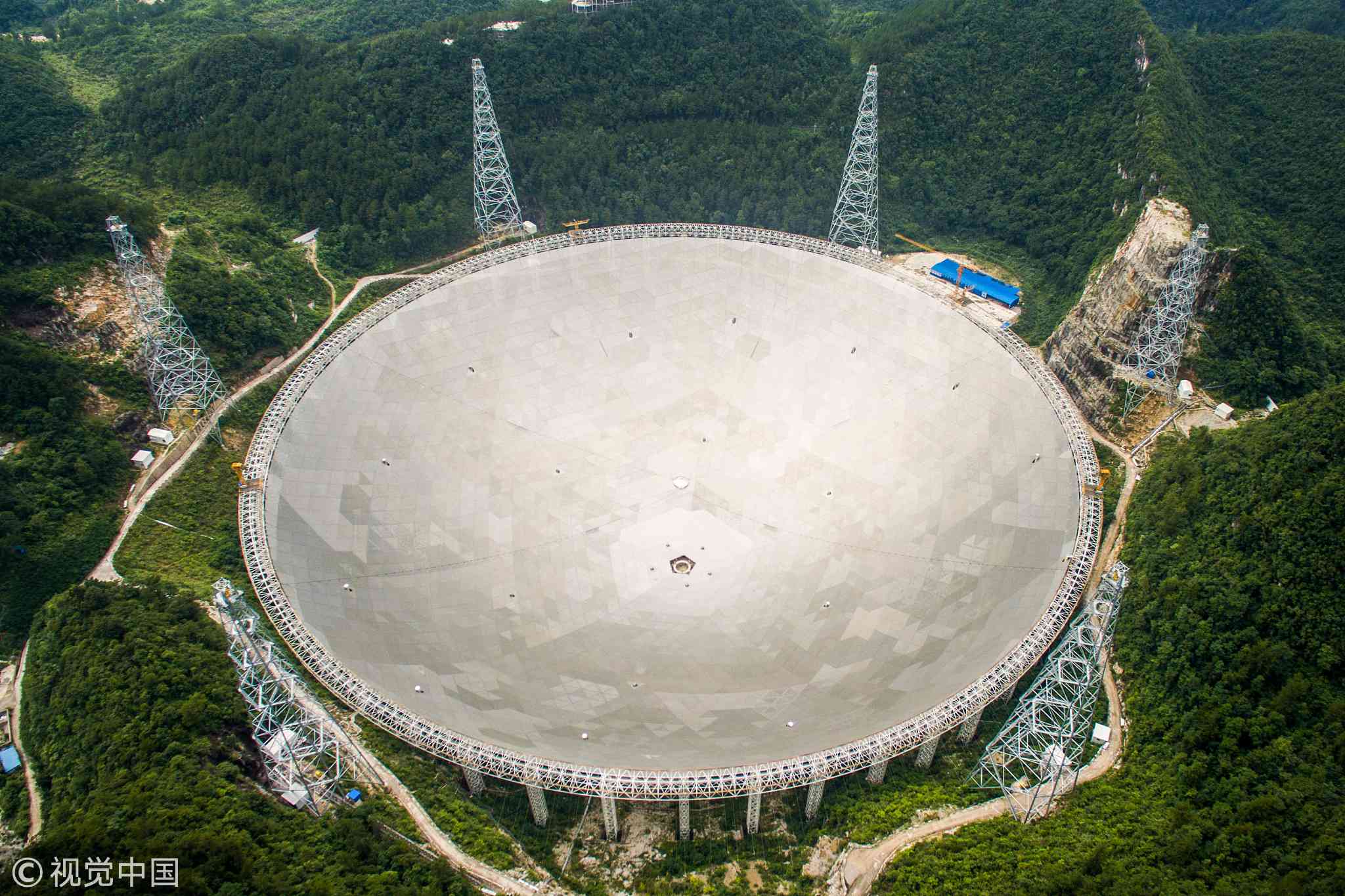
China's 500-meter Aperture Spherical Radio Telescope (FAST), the world's largest single-dish radio telescope, based in Guizhou. /VCG Photo
China's 500-meter Aperture Spherical Radio Telescope (FAST), the world's largest single-dish radio telescope, based in Guizhou. /VCG Photo
Klaus Schwab, founder and executive chair of the World Economic Forum, recently said that future competition will not be based on the ability to produce with low costs, but rather, determined by being first in adapting to and adopting new innovative products and services. He believes that China will certainly take the lead in this regard.
The US National Science Foundation has also issued a report saying China is next only to the United States in R&D. China's R&D expenditures are now close to the total amount spent among all the countries in the European Union combined.
In practice, China has relied on independent innovation in pursuit of new breakthroughs in science and technology that will support economic development. The strengthened national economy will, in turn, make the funding of major sci-tech projects possible.
The government, companies and institutes have joined hands in making sure that the advancement in sci-tech innovation feeds into industrial development and improves people's lives.
One typical example is China's Beidou satellite navigation system. The system used to rely on imports for its chips, modules and software. Now, its key components are all domestically made. The same products have been exported to over 80 countries and regions.
Despite leading the world in many industries, China still relies heavily on imports for jet engines and chips. The level of economic development and technological advancement is also imbalanced domestically. World-leading science journal "Nature" has an index to evaluate the output of basic research by nations or institutes.
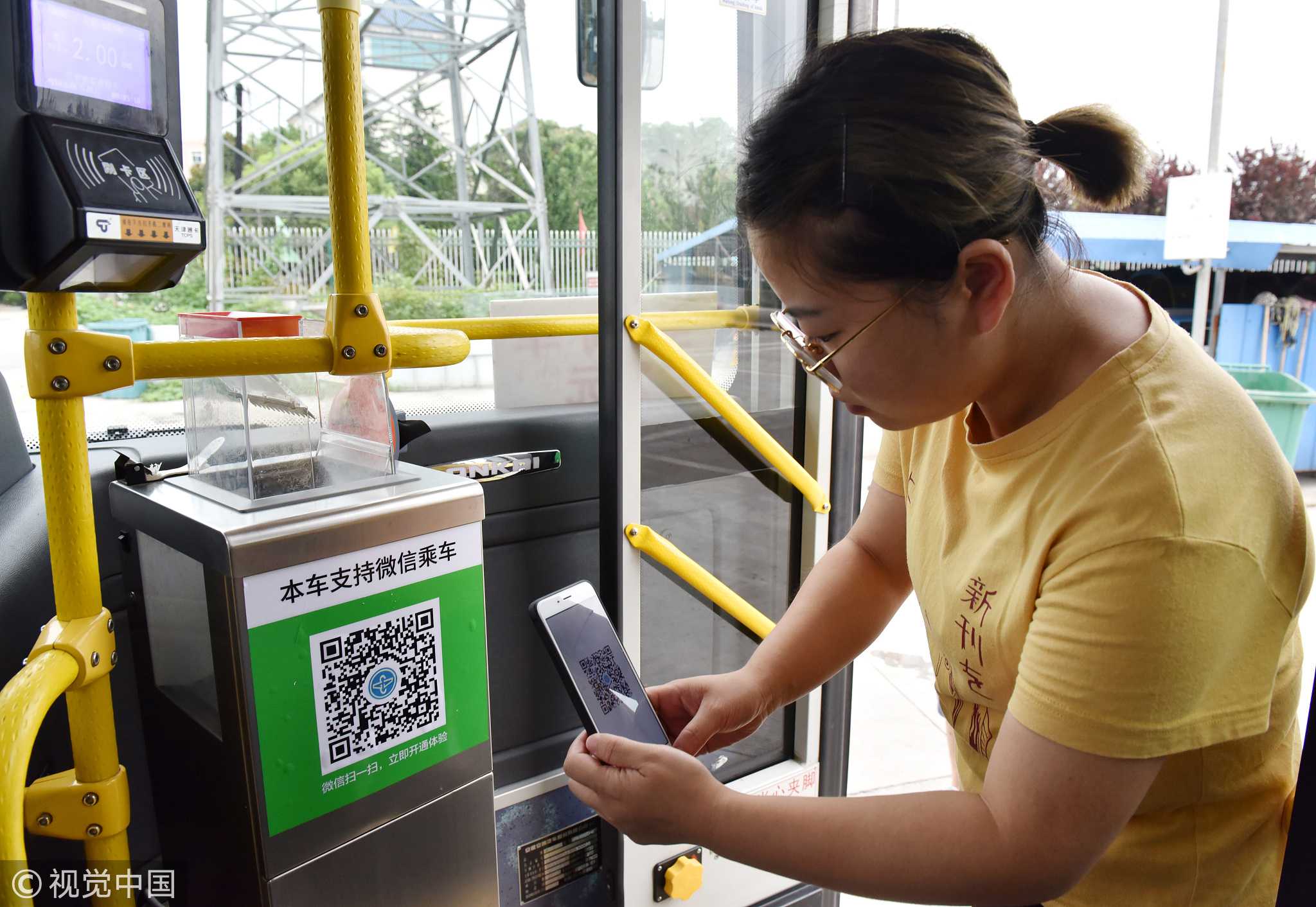
Mobile payment on a bus in Wuhu, Anhui province, June 28, 2018. /VCG Photo
Mobile payment on a bus in Wuhu, Anhui province, June 28, 2018. /VCG Photo
Since 2012, China has ranked second, but reaching only half of the level of the United States, indicating there is still great potential in innovation.
In this increasingly globalized world, no nation can solve all its innovation problems by itself. While pursuing independent innovation, China is also willing to work closely with other countries to advance science and technology for a better future.
This May, Chinese President Xi Jinping called on leading Chinese scientists to unwaveringly carry out independent innovation and integrate into the global innovation network. He also said in a congratulatory letter to the opening of the World Artificial Intelligence Conference in Shanghai last month that China is ready to work with other countries in the field of AI to jointly promote development, safeguard security and share results.
(If you want to contribute and have specific expertise, please contact us at opinions@cgtn.com.)