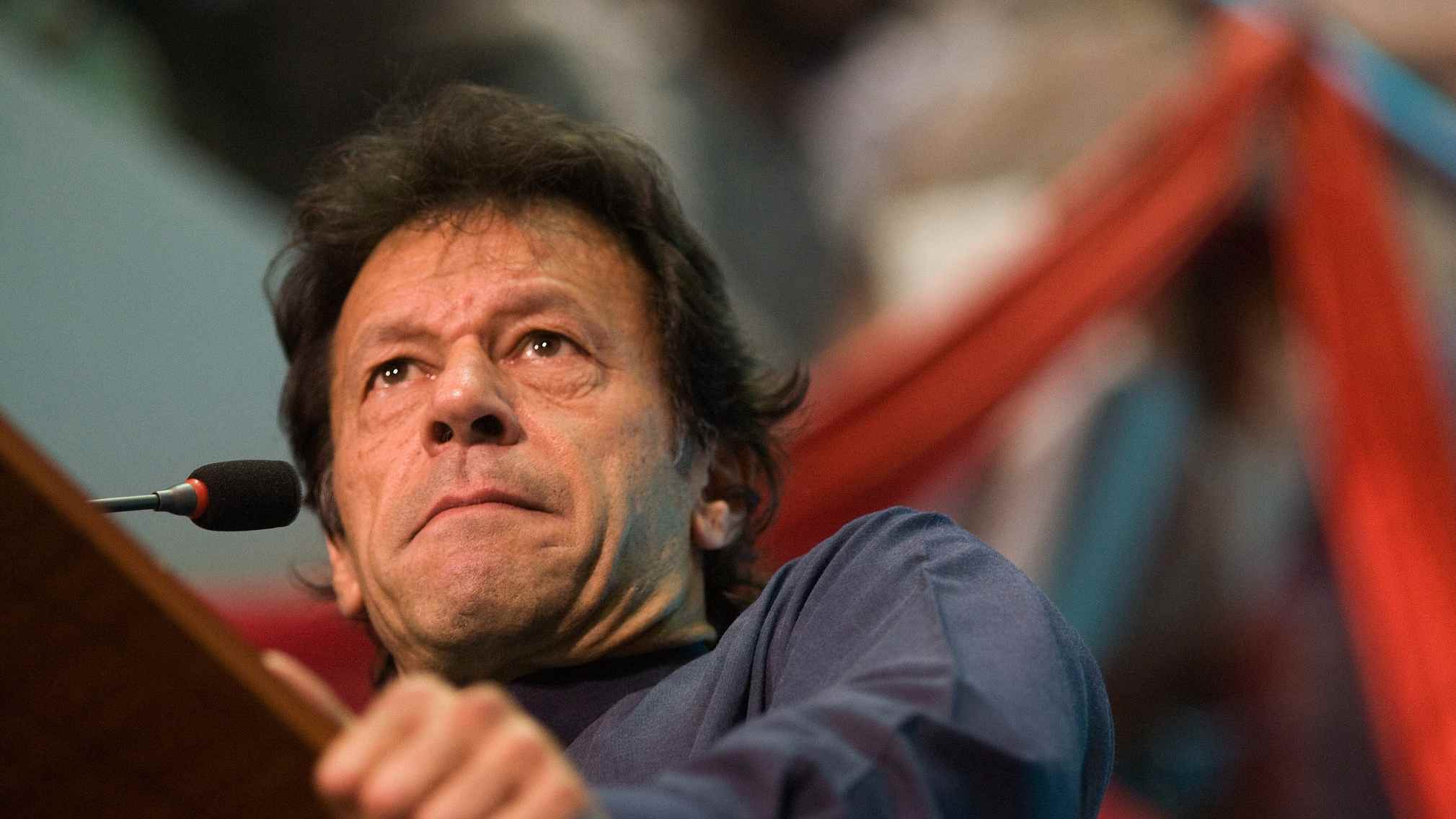
Imran Khan was voted in as Pakistan's new prime minister on Friday over two decades after forming his own political party. After taking the oath of office on Saturday, the former cricketer will sit down to a long list of challenges.
Khan's Pakistan Tehreek-e-Insaf (PTI) party won the most seats in the July 25 elections, but not enough for a majority. The PTI now has enough support in the National Assembly to form a government, and 65-year-old Khan has promised to build a "new Pakistan."
So what are Pakistan's main challenges, and how does Khan plan to address them?
Read more:
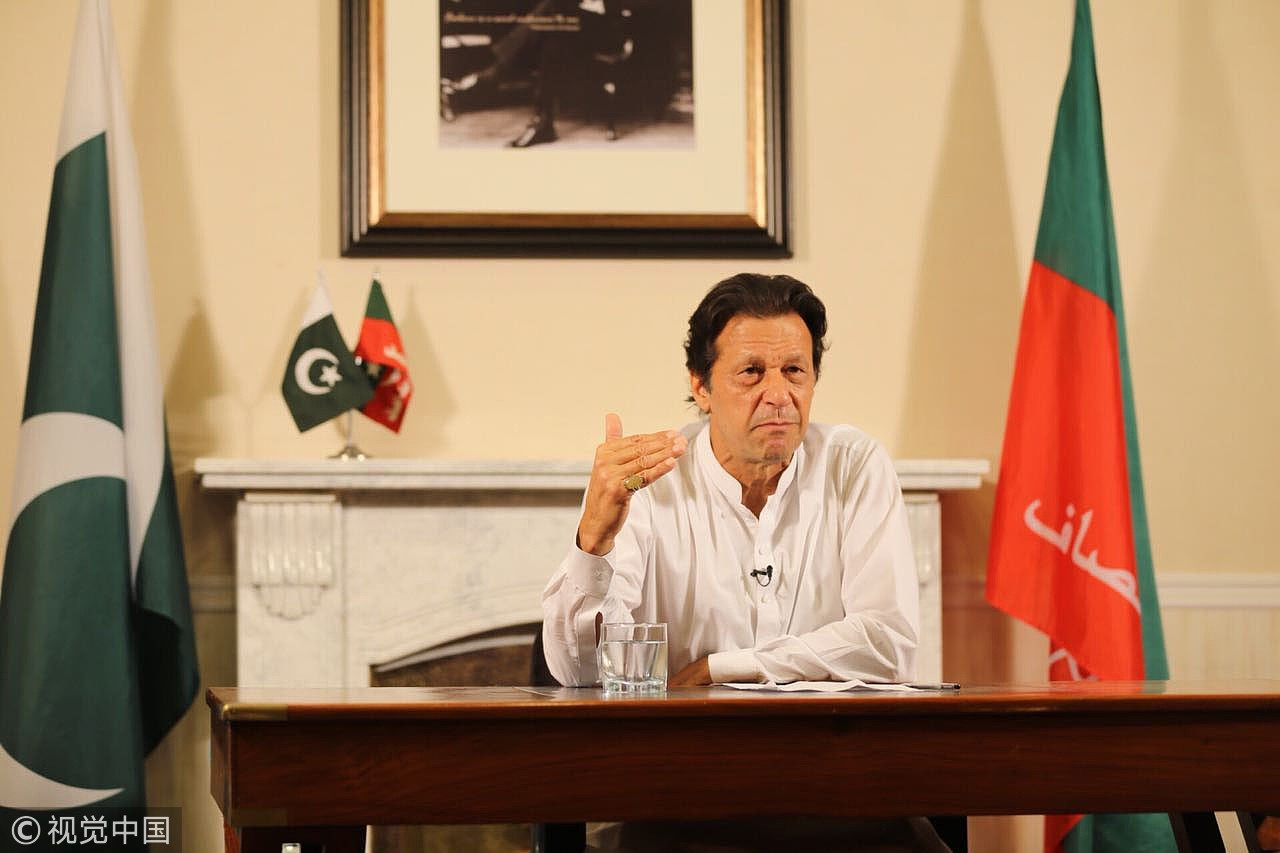
Imran Khan, head of the Pakistan Tehreek-e-Insaf (PTI), addresses the nation after the general elections results are announced in Islamabad, Pakistan, on July 26, 2018. /VCG Photo
Imran Khan, head of the Pakistan Tehreek-e-Insaf (PTI), addresses the nation after the general elections results are announced in Islamabad, Pakistan, on July 26, 2018. /VCG Photo
Balance of payments
Khan tweeted on August 14 that Pakistan faces a "grave economic crisis, due to corruption and cronyism." Pakistan's budget deficit has grown from 4 percent to 10 percent of GDP over the past five years, and foreign exchange reserves are dwindling – it faces a serious balance of payments problem. Fitch Ratings has warned there is "limited time" to act, and likely finance minister Asad Umar has said 12 billion US dollars is needed to fill the gap. Khan is considering a loan from the International Monetary Fund or other countries, and is keen to boost remittances from overseas Pakistanis and improve the business environment.
What's Khan said? "Pakistan is facing the biggest economic challenge in the country's history."
Welfare and poverty
Khan made an array of promises on welfare and anti-poverty measures in the PTI manifesto – from creating 10 million jobs and building 5 million low-cost homes to establishing an "Islamic welfare state." The plan requires big public spending on health and education – and significant outlays could be tricky at present given the balance of payments issue, despite the economy growing rapidly. He has promised to reform state-owned enterprises and the tax system.
What's Khan said? "Our whole focus is on human development. Nations are not recognized by how their elite live; rather it is recognized by how it treats and lifts its poor."

Supporters of Imran Khan, head of the Pakistan Tehreek-e-Insaf (PTI), watch exit poll results on a television in Lahore, Pakistan, on Wednesday, July 25, 2018. /VCG Photo
Supporters of Imran Khan, head of the Pakistan Tehreek-e-Insaf (PTI), watch exit poll results on a television in Lahore, Pakistan, on Wednesday, July 25, 2018. /VCG Photo
Corruption crackdown
Tackling corruption was the centerpiece of Khan's election campaign, and he has identified graft as a source of Pakistan's economic problems. He has spoken out against dynastic politicians and vowed to push "clean" candidates. An independent police force, broad judicial reforms, and a zero tolerance approach to corruption which includes making the National Accountability Bureau "autonomous" are among his plans.
What's Khan said? "I will introduce a new system to combat corruption, which is the biggest menace in the country, after coming into power."
Overseas investment
The Pakistani economy would be greatly aided by an increase in foreign capital and tourism, but money from overseas has been slow to arrive in recent years. Khan argues his anti-graft campaign and a clean government will improve the country's image abroad and lead to increased investment. His international profile may also be helpful.
What's Khan said? "Our biggest asset is our overseas Pakistanis and we want to make an environment where they feel they will be able to invest here. Corruption has been the biggest deterrent here."
Water and power
Pakistan is on the verge of a water crisis, according to the International Monetary Fund, and suffers regular power outages. Official estimates suggest that by 2025 the country will have less than 500 cubic meters available per person – the scarcity threshold rate is 1,000 cubic meters per person.
What's Khan said? Water preservation, via the building of Bhasha Dam and recycling, is a priority.
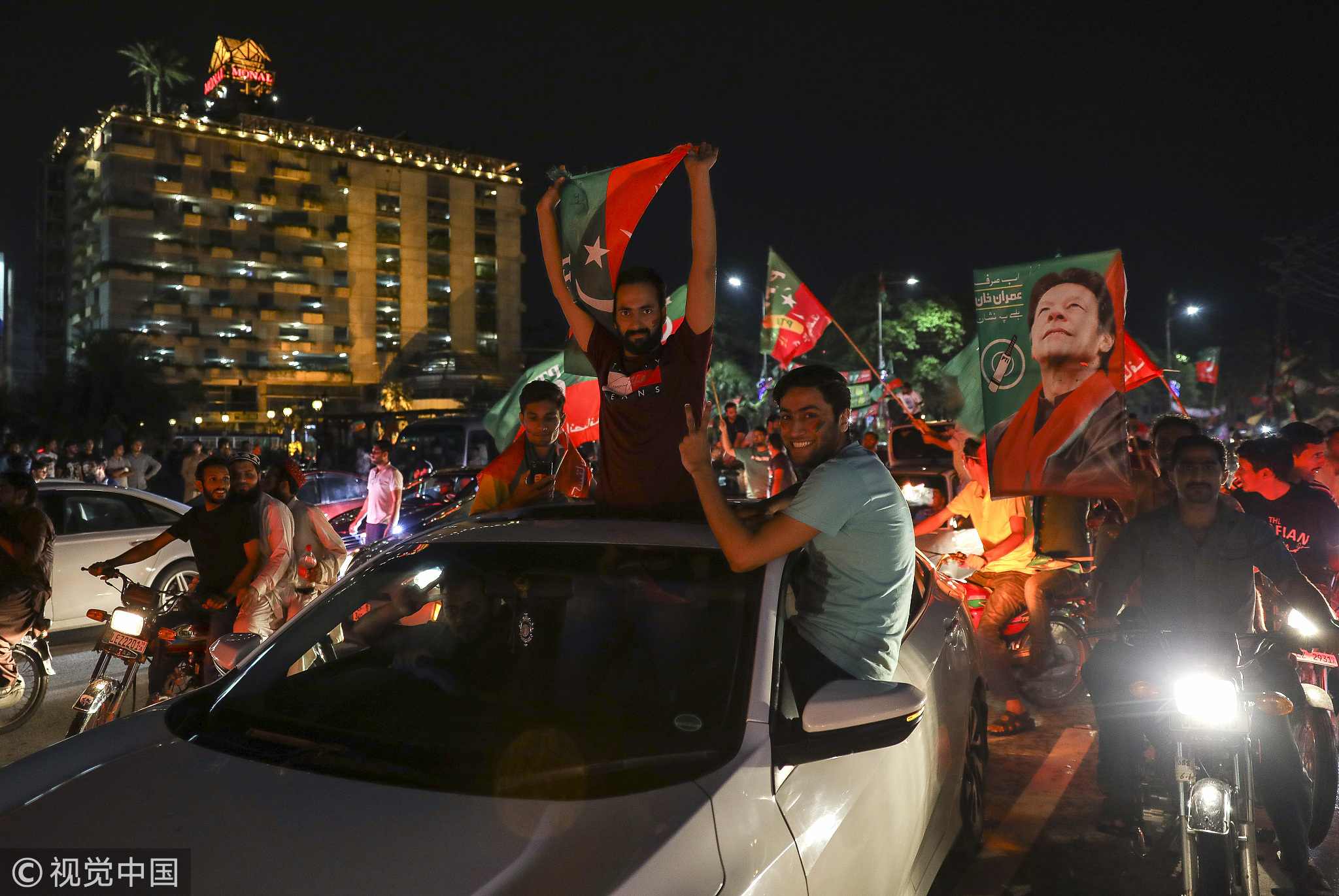
Supporters of Imran Khan, head of the Pakistan Tehreek-e-Insaf (PTI), wave flags while celebrating on a street in Lahore, Pakistan, on Wednesday, July 25, 2018. /VCG Photo
Supporters of Imran Khan, head of the Pakistan Tehreek-e-Insaf (PTI), wave flags while celebrating on a street in Lahore, Pakistan, on Wednesday, July 25, 2018. /VCG Photo
India
Pakistan and India have long-running disputes, and Khan was not slow to take a hard rhetorical line on the campaign trail – he even accused India of casting him as a Bollywood villain. His cricketing history may help him build relations, if he wishes to – he was a superstar in India's dominant sport for two decades and Indian legends are expected at his inauguration.
What's Khan said? "If India comes and takes one step towards us, we will take two steps toward them."
United States
Khan last week called for more "trustworthy" relations with the United States, and regularly spoke out against Washington on the campaign trail. US President Donald Trump sparked anger in January by accusing Pakistan of playing a "double game" on fighting terrorism, and suspended security aid to the country.
What's Khan said? "As far as America is concerned, we want to work on a policy that is mutually beneficial. Not a one way relationship. There needs to be balance."
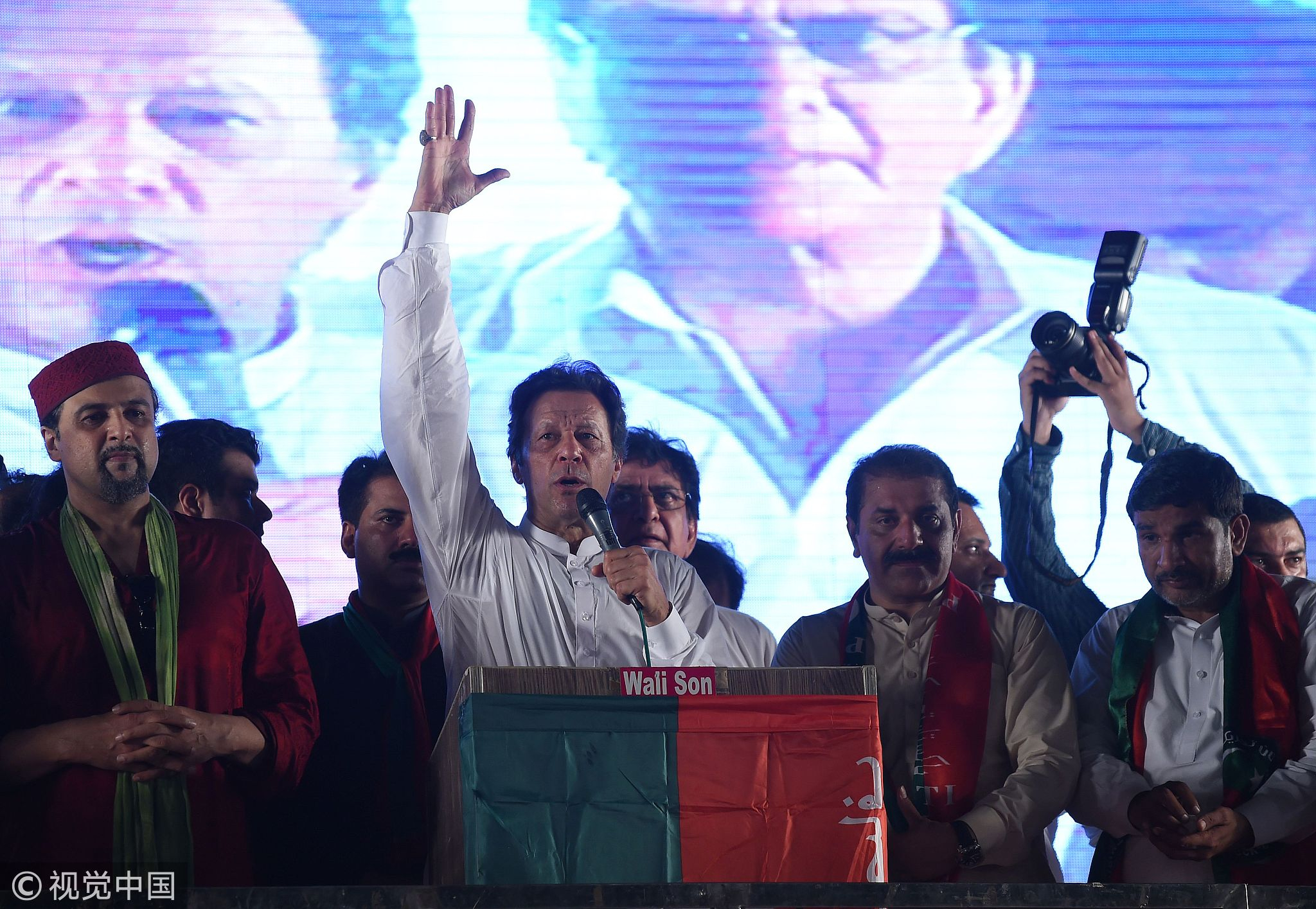
Pakistani cricket star-turned-politician and head of the Pakistan Tehreek-e-Insaf (PTI) Imran Khan (C) gestures as he delivers a speech during a campaign meeting ahead of the general election in Lahore on July 23, 2018. /VCG Photo
Pakistani cricket star-turned-politician and head of the Pakistan Tehreek-e-Insaf (PTI) Imran Khan (C) gestures as he delivers a speech during a campaign meeting ahead of the general election in Lahore on July 23, 2018. /VCG Photo
Afghanistan
Efforts to improve Pakistan's relations with neighbor Afghanistan are already under way, and Khan is keen to accelerate the process and push for stability in the neighboring country through "viable political engagements."
What's Khan promised? "The people of Afghanistan need peace, and Pakistan wants peace in Afghanistan. We want to work in every possible way to ensure peace in Afghanistan. I would love an open border system like the EU with Afghanistan."

 ["china"]