
Opinions
08:22, 06-Oct-2018
Opinion: Striving for a better future shared by all
Updated
07:54, 09-Oct-2018
 ["china"]
Share







Copied
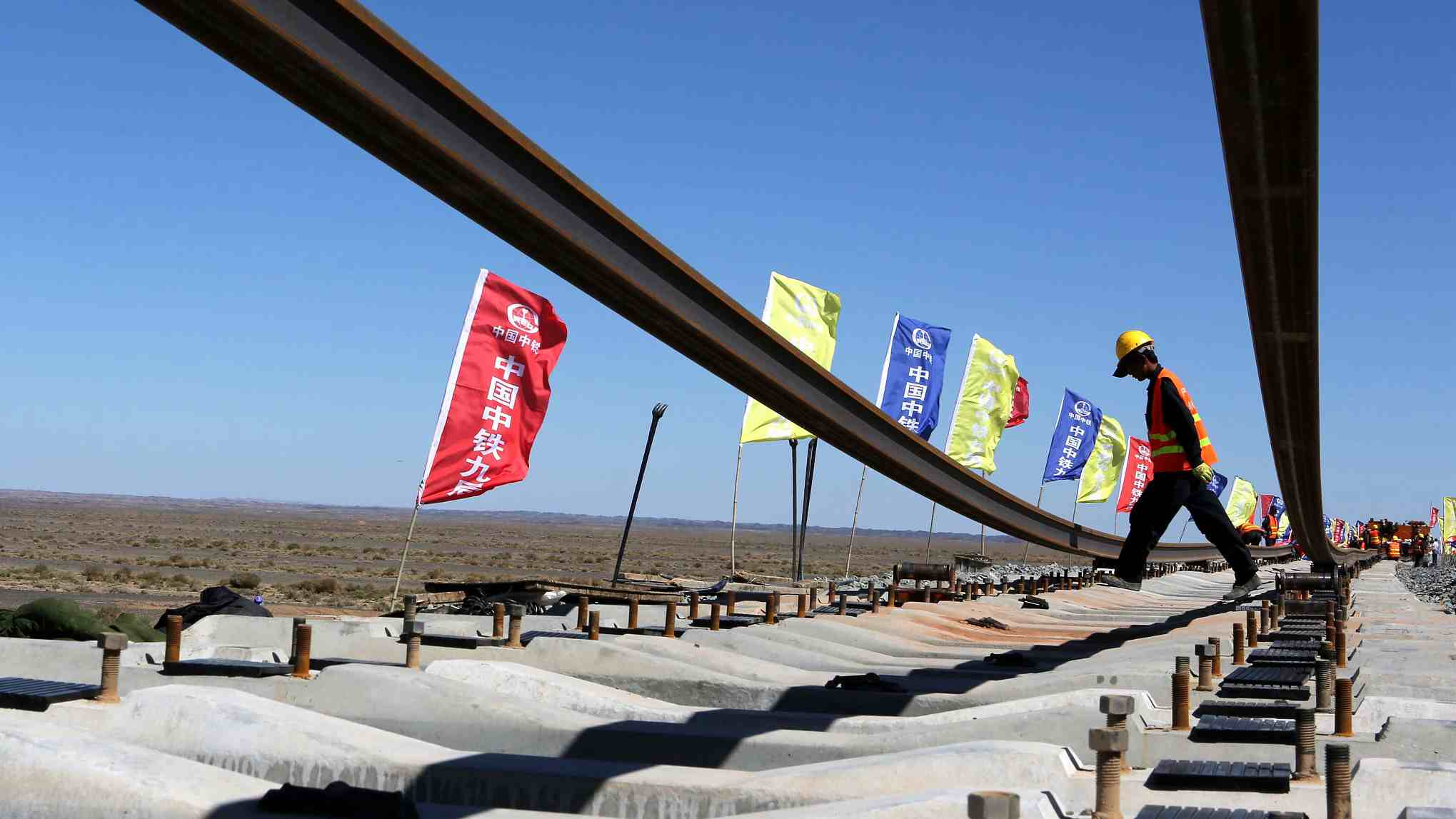
Editor's note: The following is an edited translation of a commentary from the Chinese-language "Commentaries on International Affairs."
At the recent UN General Assembly, United Nations Secretary-General Antonio Guterres urged world leaders to commit to cooperation in order to find solutions for global problems, in accordance with the theme of this year's General Assembly, "Global Leadership and Shared Responsibilities for Peaceful, Equitable, and Sustainable Societies".
By contrast, US President Donald Trump used his opportunity to speak at the General Assembly to push forward his "America First" policy, saying that America has chosen independence over globalization, a stance that provoked criticism from many world leaders, including some of America's traditional allies.
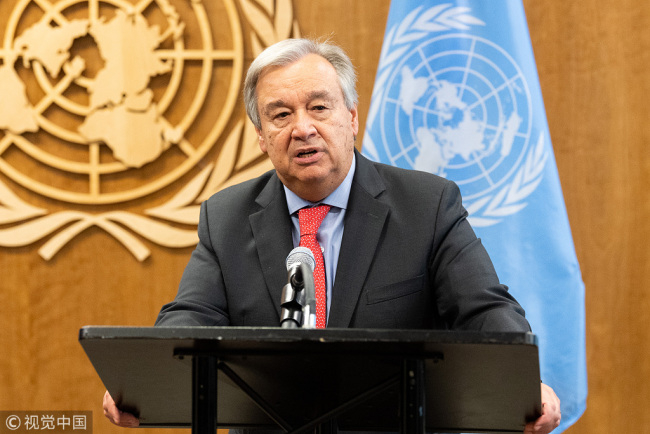
UN Secretary-General Antonio Guterres speaks at the United Nations in New York City, New York, September 23, 2018. /VCG Photo
UN Secretary-General Antonio Guterres speaks at the United Nations in New York City, New York, September 23, 2018. /VCG Photo
In recent years, some developed countries have leaned increasingly towards isolationism and unilateralism, posing challenges to international cooperation and global governance. This is why China's defense of multilateralism has won increasing support from the international community.
During an interview with China Radio International two years ago, American scholar Robert Kuhn praised the Belt and Road Initiative (BRI) put forth by China's President Xi Jinping in 2013, calling it an important contribution to global development.
Hungary's Foreign Minister Peter Szijjarto said it was creating a new world order, because whereas in the past capital flowed from West to East looking for cheap labor, more and more capital from China is now flowing West along with high-quality technology.
He welcomed China's infrastructure investments in his country, and the links they provide with neighboring countries that are boosting economic growth in the region.
And Michele Geraci, economic development undersecretary of Italy's new government, is leading "Task Force China", in an effort to explore opportunities for cooperation with China, particularly in Belt and Road projects and in Africa.
Since its launch five years ago, the BRI has delivered significant economic benefits for its participants. The American think tank The Brookings Institution published a report in September that showed China's development projects were paving the way towards inclusive growth.
Having evaluated the impact of some 4,300 of China's development projects in 138 countries, the research concluded that they yield significant economic growth dividends for the host countries. On average, a doubling of official development assistance from China produced a 0.4-percentage-point increase in economic growth two years after the funding was approved.
The report also said that while many aid agencies and development banks claim they are focused on providing inclusive growth, this has not translated into concrete changes on the ground.
China, on the other hand, has launched economic development projects that target rural and remote areas within low- and middle-income countries that have historically suffered from neglect or discrimination.
It has also introduced its own successful model of connecting less developed land-locked regions with relatively developed coastal areas to help reduce spatial inequalities.
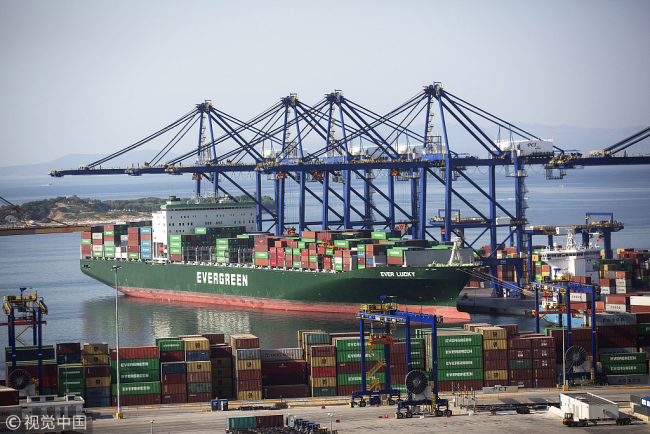
Piraeus Port, the largest Greek seaport and one of the biggest in the Mediterranean Sea, is an important project between China and Greece under the BRI. /VCG Photo
Piraeus Port, the largest Greek seaport and one of the biggest in the Mediterranean Sea, is an important project between China and Greece under the BRI. /VCG Photo
Inspired by the BRI, the United States, the European Union, and some other advanced economies are drafting their own regional connectivity plans. These are often presented in the press as an effort to counter China's expanding global influence.
But China welcomes these new initiatives, as they send a positive signal about the importance of promoting economic cooperation between countries and building a more open world economy.
Two years ago in Hangzhou, China's President Xi Jinping made the commitment that China's opening is an invitation to the world. It is not pursuing the goal of building its own sphere of influence. Rather, it is supporting mutually beneficial development around the world.
Forty years after Deng Xiaoping launched reform and opening-up policies, China has remained determined to blaze new trails for the global community to work together for shared prosperity.
Source(s): China Plus