
Opinions
11:06, 30-May-2018
The Heat: China becomes economic fulcrum of the world
 ["china"]
Share







Copied

This year marks the 40th anniversary of China’s economic reform and opening-up. As the country's development in the last four decades has pulled 800 million people out of poverty, the world is expecting another round of economic revolution.
“I want to tell everyone here that the door of China’s opening-up will not close, only open wider and wider,” said Chinese President Xi Jinping at the 2018 Boao Forum for Asia amid anxiety over Western protectionism led by the United States.
With German Chancellor Angela Merkel and Indian Prime Minister Narendra Modi visiting China in recent days, “There is growing recognition worldwide that China is becoming, as it were, the economic fulcrum of the world,” said Martin Jacques, a senior fellow at the Department of Politics and International Studies at Cambridge University, at the panel discussion with CGTN’s The Heat.
He said China’s economic miracle was rooted in a shift in thinking toward socialism and emphasizing a more pragmatic way of making progress.
“This unleashed an enormous intellectual energy in the country,” said Jacques.
Despite the positive outlook and planning for greater achievements in the next few decades, Perry Wong, the Managing Director of Research at the economic think tank Milken Institute, said that in the long term, China still faces the challenges of meeting the needs of domestic consumers and transforming its manufacturing-dependent economic industries to innovation-driven ones.
01:32
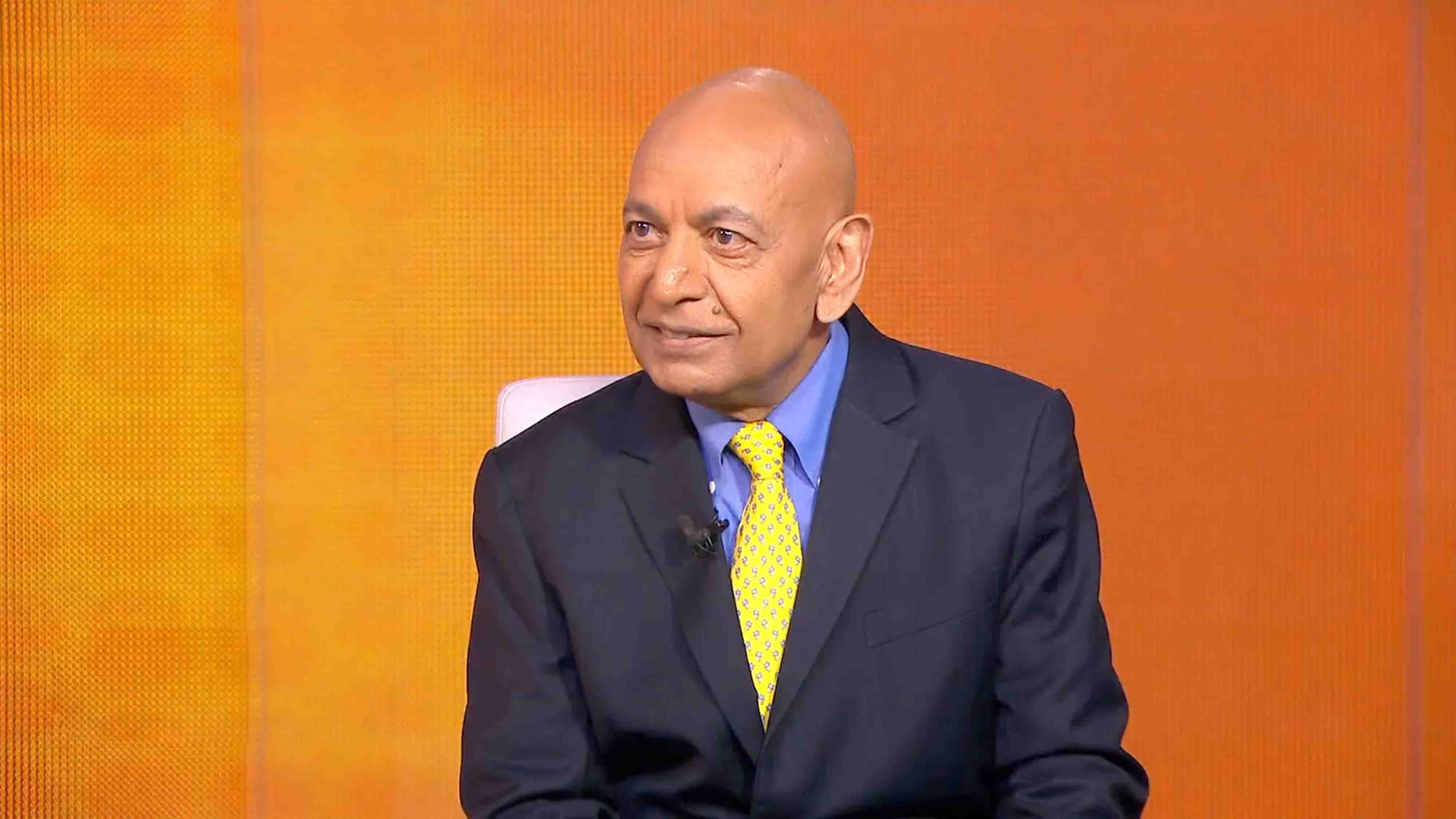
On top of every other economic issue, including trade, “the key issue is not about deficit or surplus; to me, [it] is the Chinese consumers,” said Wong. “And you are talking about 1.4 billion people [getting a] very good price for what they pay for.”
Anil Gupta, chairman of the China-India Institute in Washington, said that it could depend on how much China would decide to finance the capital goods that would boost productivity in the long run and market goods that consumers would need right away.
“Naturally, if the investment is to slow down, then that would also mean that the GDP, because it has been so heavily driven, would slow down faster,” he said, so the Chinese government needed to figure out what balance it wanted first and then what governmental interventions it would want to have.
On the issue of intellectual property rights, Pingkang Yu, the chief economist with Changjiang Pension Insurance Company, believed that China has been progressing and is promising in becoming a leading country in innovation.
He noted that all the pirated software, which was common in China 20 years ago, is completely gone now, signaling China’s rising awareness of protecting intellectual property rights.
“Domestically in the past couple of decades, China has always had something to learn, to copy. That’s what we call the ‘latecomer advantage.’ It had always had the experience to borrow from the West, but now we have gotten to the stage that…further rise of the economy has to rely on domestic creation and innovation,” Yu said.
Although acknowledging past progress, Gupta said that what the US and international community is concerned about now is that China’s intellectual property protection is only limited to domestic companies instead of foreign ones.
“There is a fundamental focus on, let’s say, nurturing helping Chinese companies at…the expense of multinational companies,” he said.
The Heat with Anand Naidoo is a 30-minute political talk show on CGTN. It airs weekdays at 7:00 a.m. BJT and 7:00 p.m. Eastern in the United States.