00:43
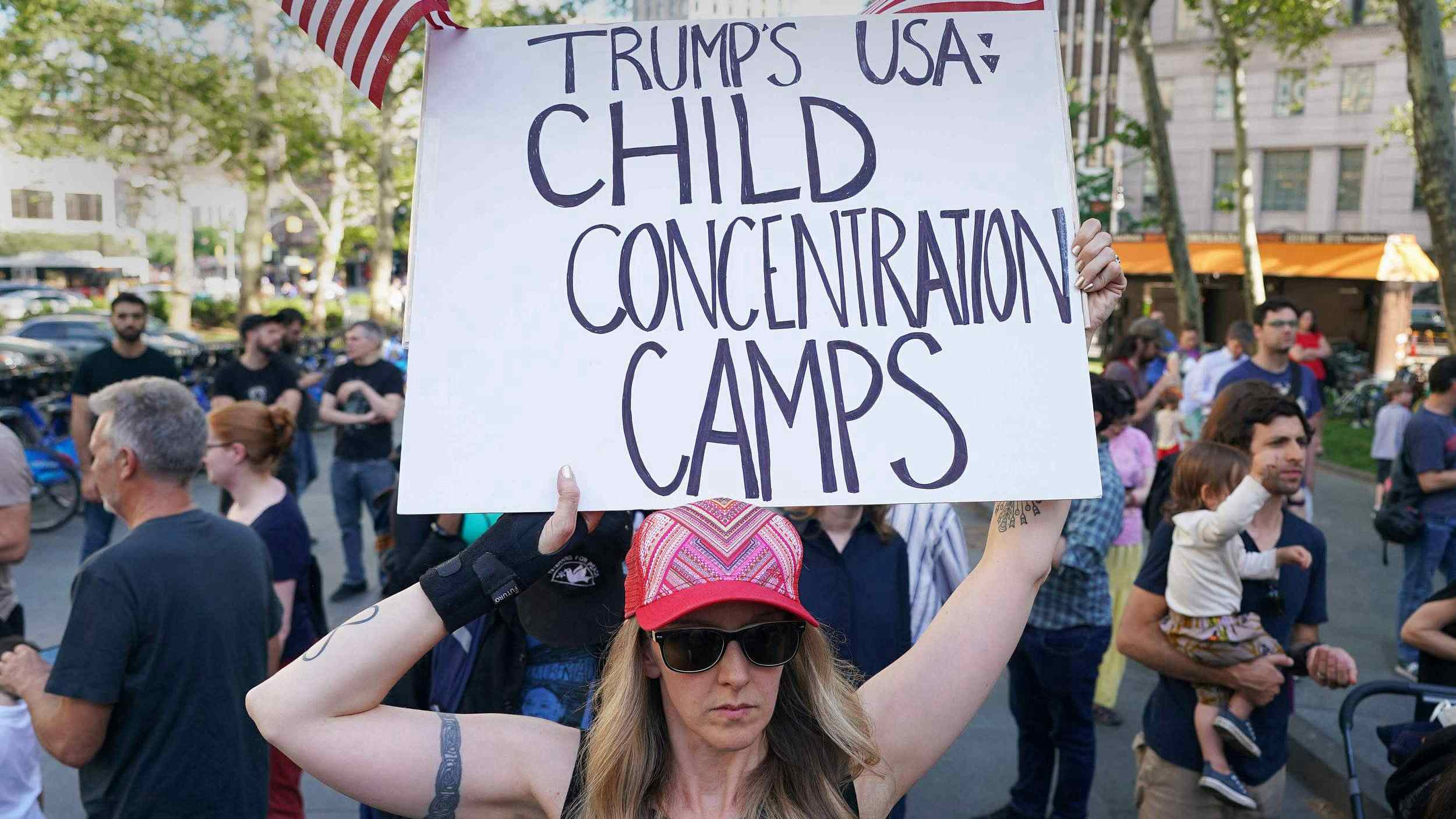
The US is facing a nearly-universal backlash internationally over the detention of migrant children in cage-like facilities after separating them from their parents under US President Donald Trump’s “zero tolerance” border policy.
The latest to join the growing voices of criticism is Philip Alston, the UN special rapporteur on extreme poverty and human rights, who on Thursday slammed the “lack of compassion” for the poor in the US, warning the situation poses an imminent threat to democracy in the country.
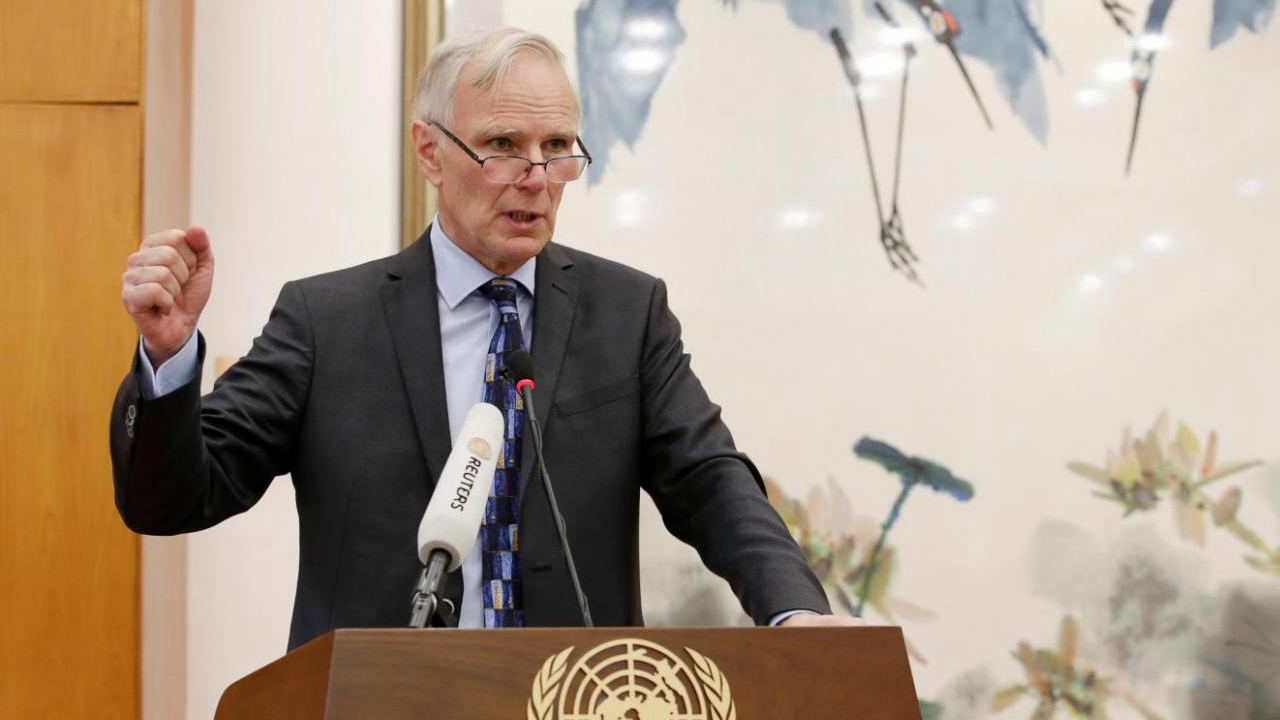
Philip Alston, the UN's special rapporteur on extreme poverty and human rights, attends a news conference in Beijing, China, August 23, 2016. /VCG Photo
Philip Alston, the UN's special rapporteur on extreme poverty and human rights, attends a news conference in Beijing, China, August 23, 2016. /VCG Photo
Speaking on the sidelines of the 38th session of the UN Human Rights Council in Geneva, the top UN expert on extreme poverty stressed that poor people in the US are seeing their rights “increasingly ignored” as he criticized the “contemptful” and “cruel” US policies towards the poor, which he said were disenfranchising millions.
Alston, an Australian-born international law scholar and human rights practitioner who also teaches law at New York University School of Law, said the poor in the US are becoming increasingly "invisible in the political process" as the US policies for the impoverished reflect a "complete lack of compassion."
Abhorrent attitude
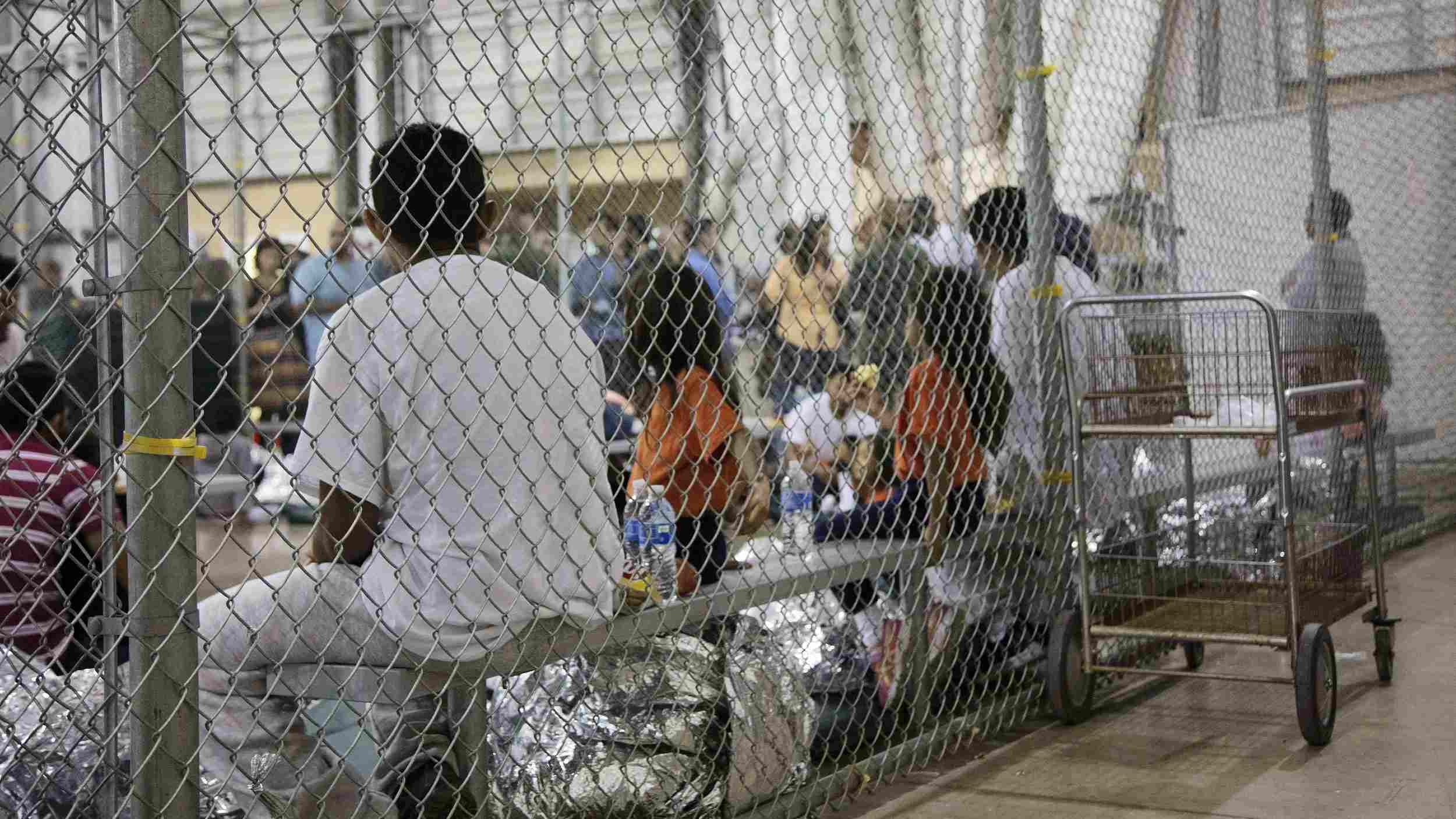
This US Customs and Border Protection photo shows detained immigrants at the Central Processing Center in McAllen, Texas, US, on June 17, 2018. /VCG Photo
This US Customs and Border Protection photo shows detained immigrants at the Central Processing Center in McAllen, Texas, US, on June 17, 2018. /VCG Photo
Alston emphasized that the reported separation of migrant families on the US-Mexico border that drew global outrage reflected the same “contempt” shown for the poor across the US.
He felt that in the US, particularly under the current Trump establishment, the poor along with both legal and illegal immigrants are increasingly being viewed as “losers.”
"But what they have really lost is their humanity, [and their right] to be treated with the basic decency that international human rights standards demand," the rights practitioner said.
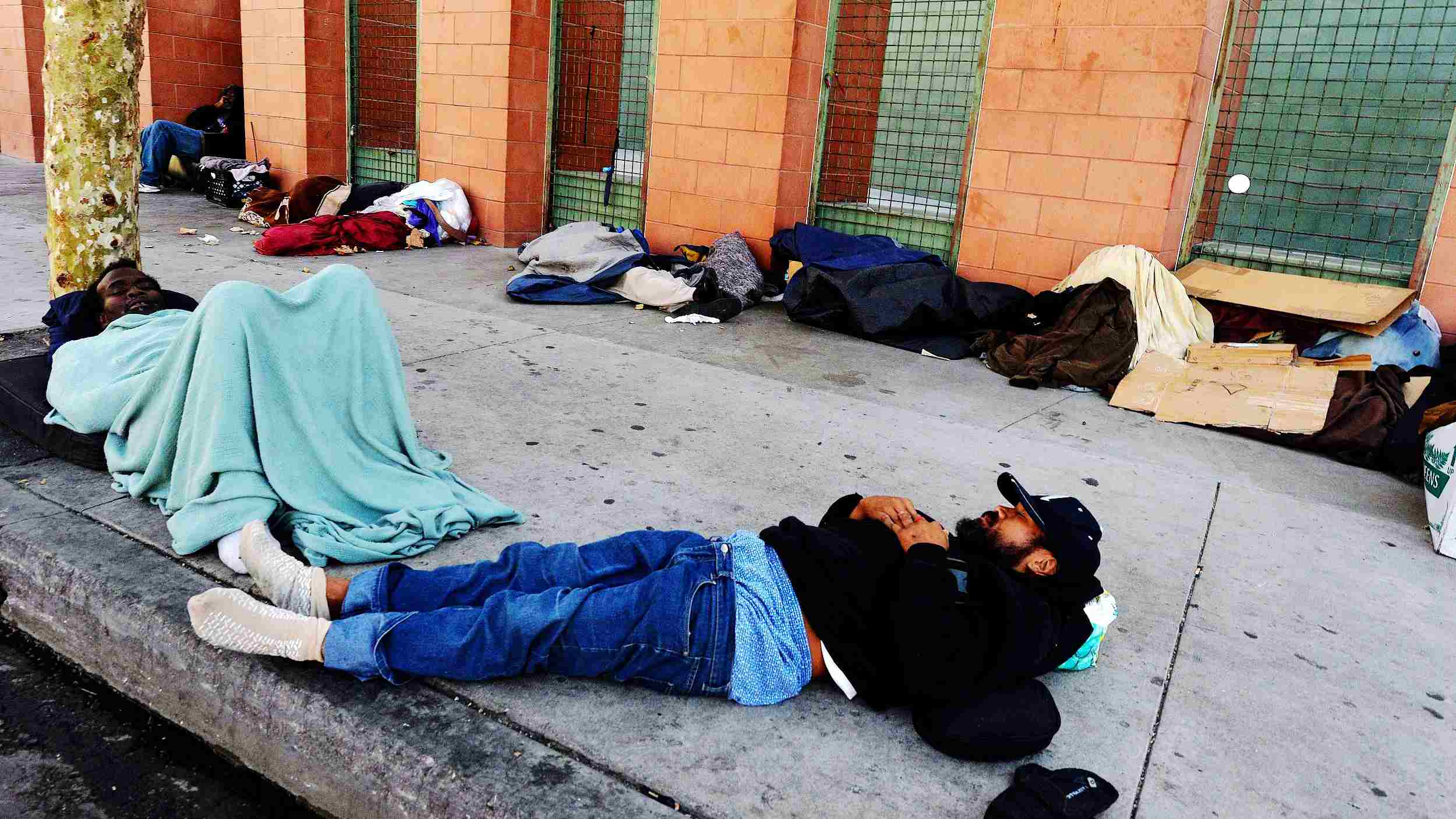
Homeless people sleep on the street in the Skid Row area of Los Angeles, California, September 22, 2014. /VCG Photo
Homeless people sleep on the street in the Skid Row area of Los Angeles, California, September 22, 2014. /VCG Photo
Alston also cautioned that an abhorrent attitude towards foreigners and immigrants could easily lead to a similar outlook for other vulnerable and underprivileged sections of society.
"I think once you have departed from that basic commitment to minimum humane standards, it doesn't usually stop at the borders," he said, describing the latest developments as "deeply troubling."
Increasing inequality
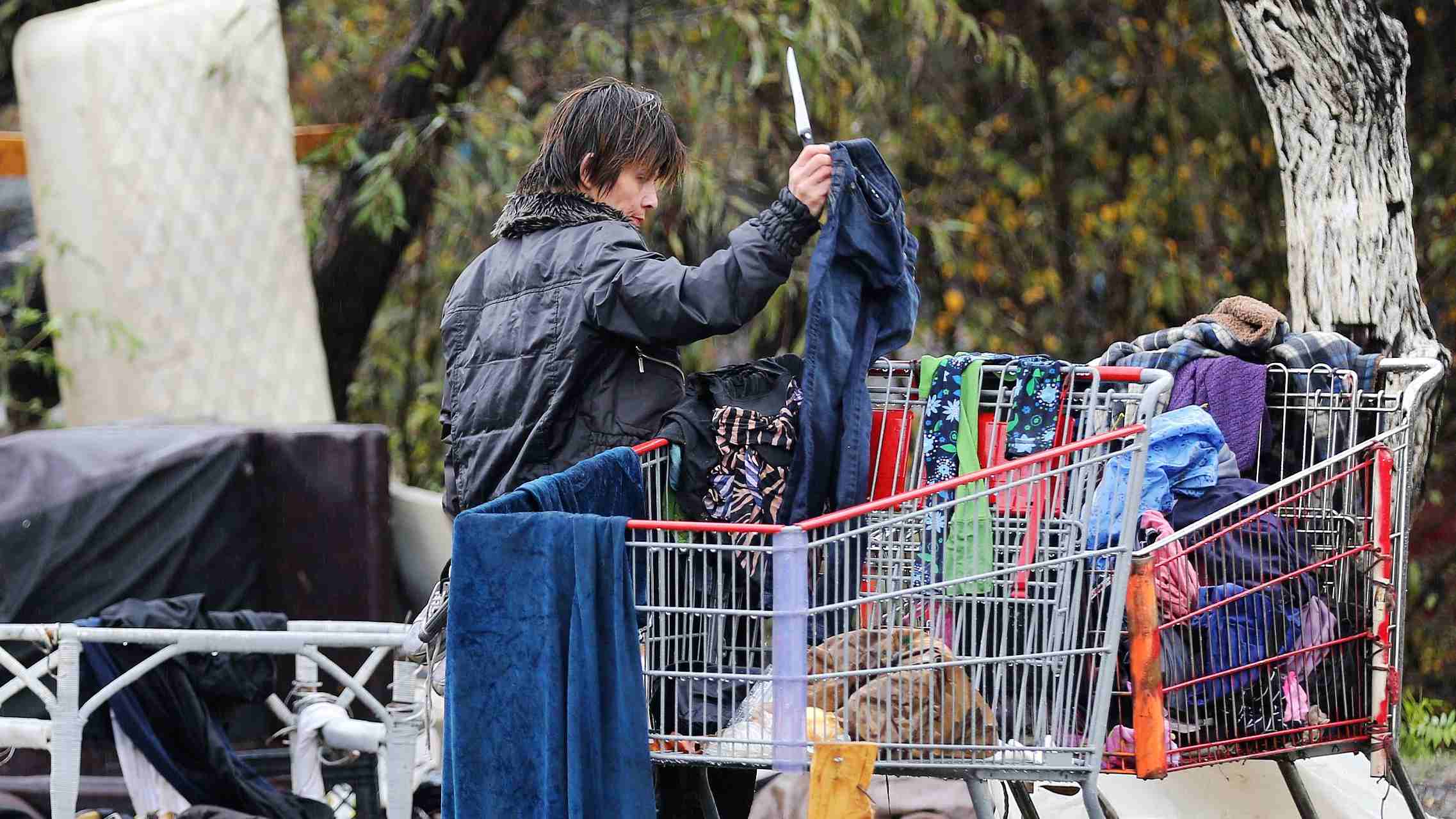
A homeless woman sifts through a shopping cart at the Silicon Valley encampment known as "The Jungle" in San Jose, US, on December 3, 2014. /VCG Photo
A homeless woman sifts through a shopping cart at the Silicon Valley encampment known as "The Jungle" in San Jose, US, on December 3, 2014. /VCG Photo
The UN expert claimed that “inequality is rapidly getting worse” in the US, warning that the situation threatens the notion of democracy.
According to the latest available statistics, from 2016, some 40 million Americans live in poverty, 18.5 million live in extreme poverty, and more than five million live in "Third World" conditions, he said.
In a report published earlier this month, Alston is highly critical of the US policies that punish and imprison people who cannot afford to pay bills or fines, weakening their chances of finding or holding a job, housing and stability, and fuelling a vicious cycle of poverty and desperation.
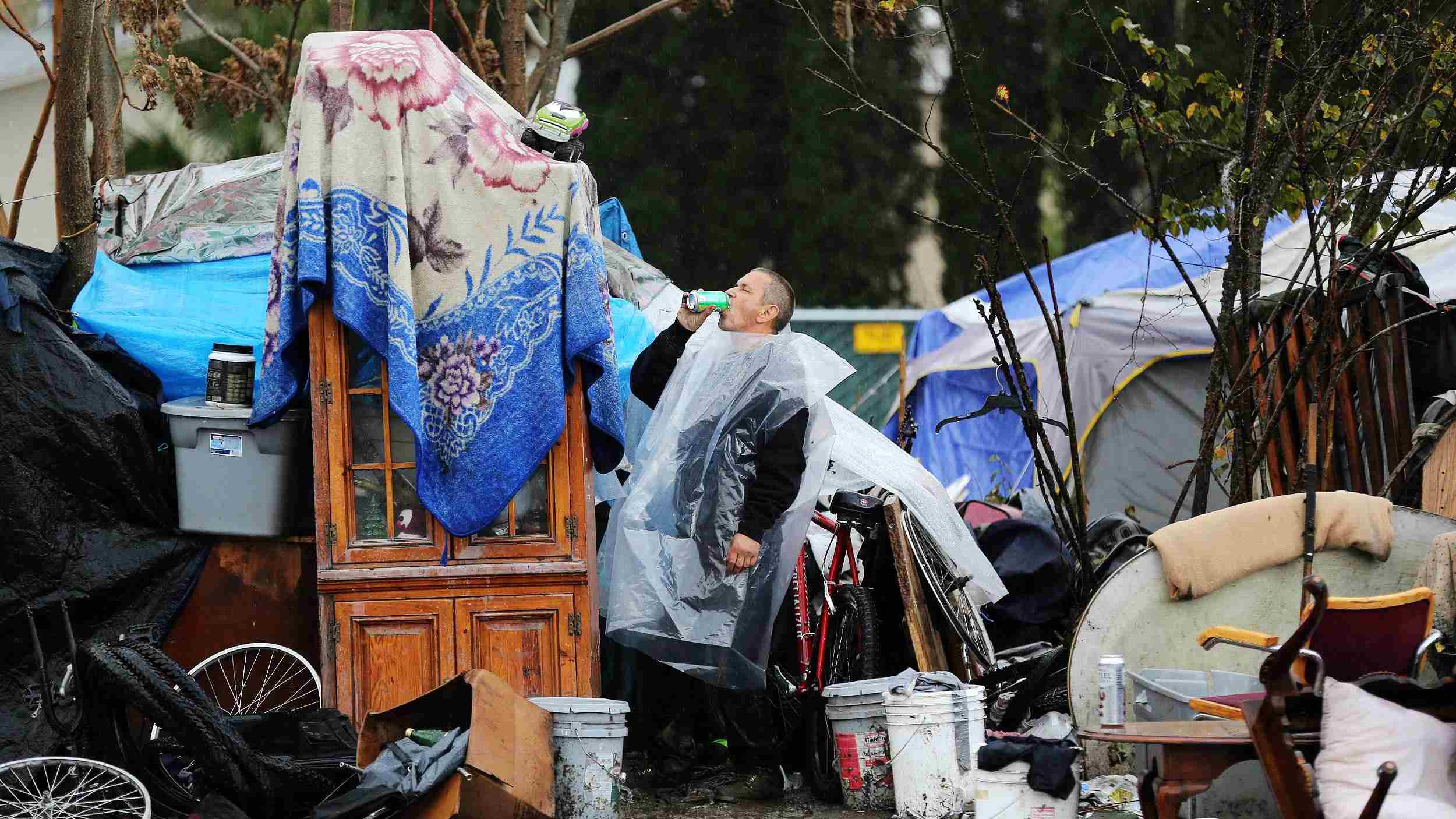
A man gulps down a drink at the Silicon Valley homeless encampment known as "The Jungle" in San Jose, US, on December 3, 2014. /VCG Photo
A man gulps down a drink at the Silicon Valley homeless encampment known as "The Jungle" in San Jose, US, on December 3, 2014. /VCG Photo
"Mass incarceration is used to make social problems temporarily invisible and to create the mirage of something having been done," he said in the report.
"It is difficult to imagine a more self-defeating strategy," the report said. The "extreme inequality" such policies maintain and fuel pose "a threat not just to economic efficiency but to the well-being of American democracy," it warned.
Alston will present his report to the rights council on Friday, just days after the
US withdrew from the body.
Logistical headache
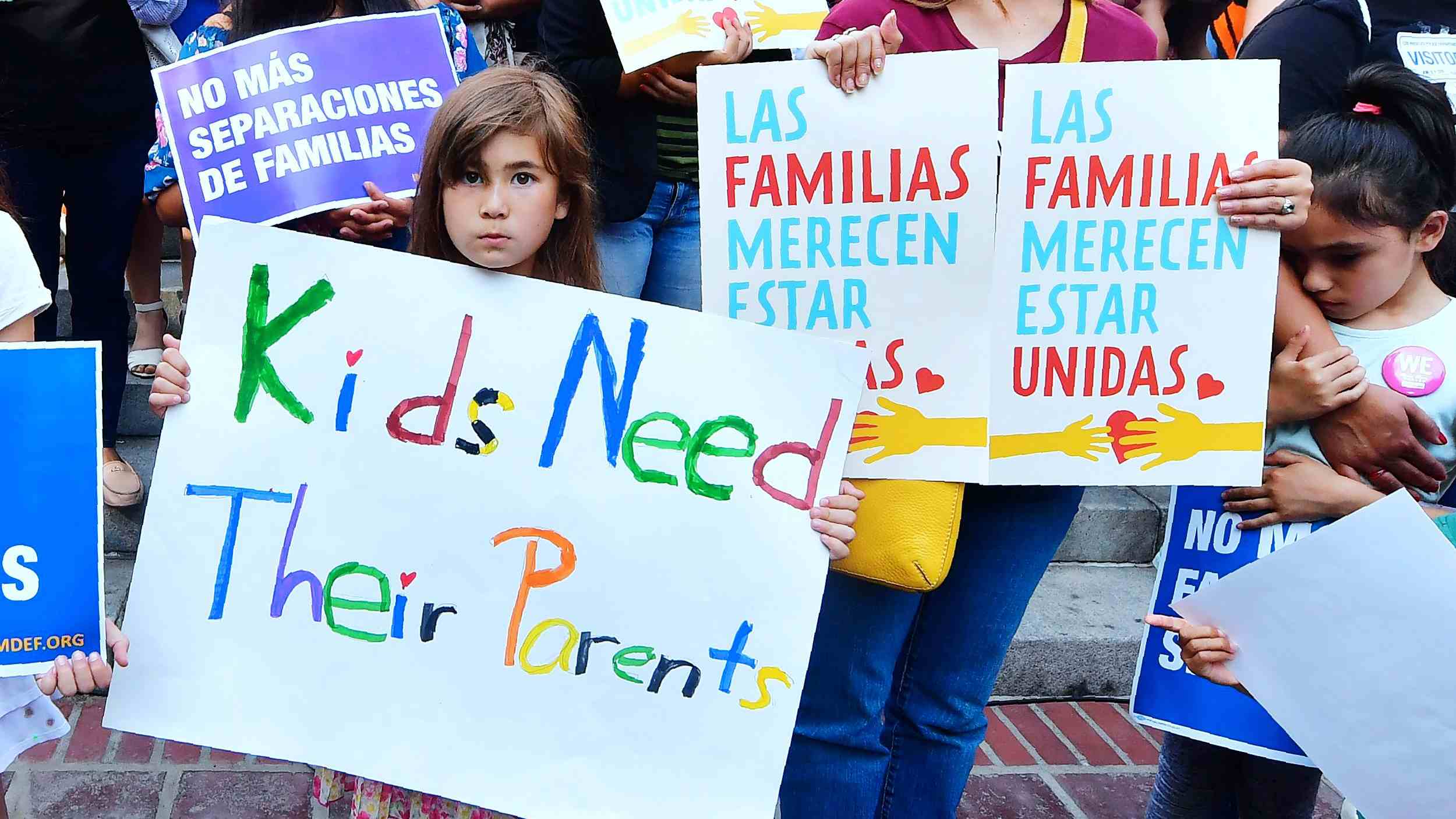
People gather for a rally organized by local families, their supporters and civil rights organizations on the steps of City Hall in Los Angeles, California on June 7, 2018, to protest the federal government's enforcement policy to seperate children from their parents trying to cross the US-Mexico border illegally. /VCG Photo
People gather for a rally organized by local families, their supporters and civil rights organizations on the steps of City Hall in Los Angeles, California on June 7, 2018, to protest the federal government's enforcement policy to seperate children from their parents trying to cross the US-Mexico border illegally. /VCG Photo
Under mounting political pressure
Trump signed an executive order on Wednesday reversing his administration’s policy of splitting migrant families at the border while allowing them to be detained together for the duration of their criminal and immigration cases.
However, questions still remain about how this new policy would be implemented as there are only three temporary family immigration detention facilities in the US as of now, according to a Reuters report.
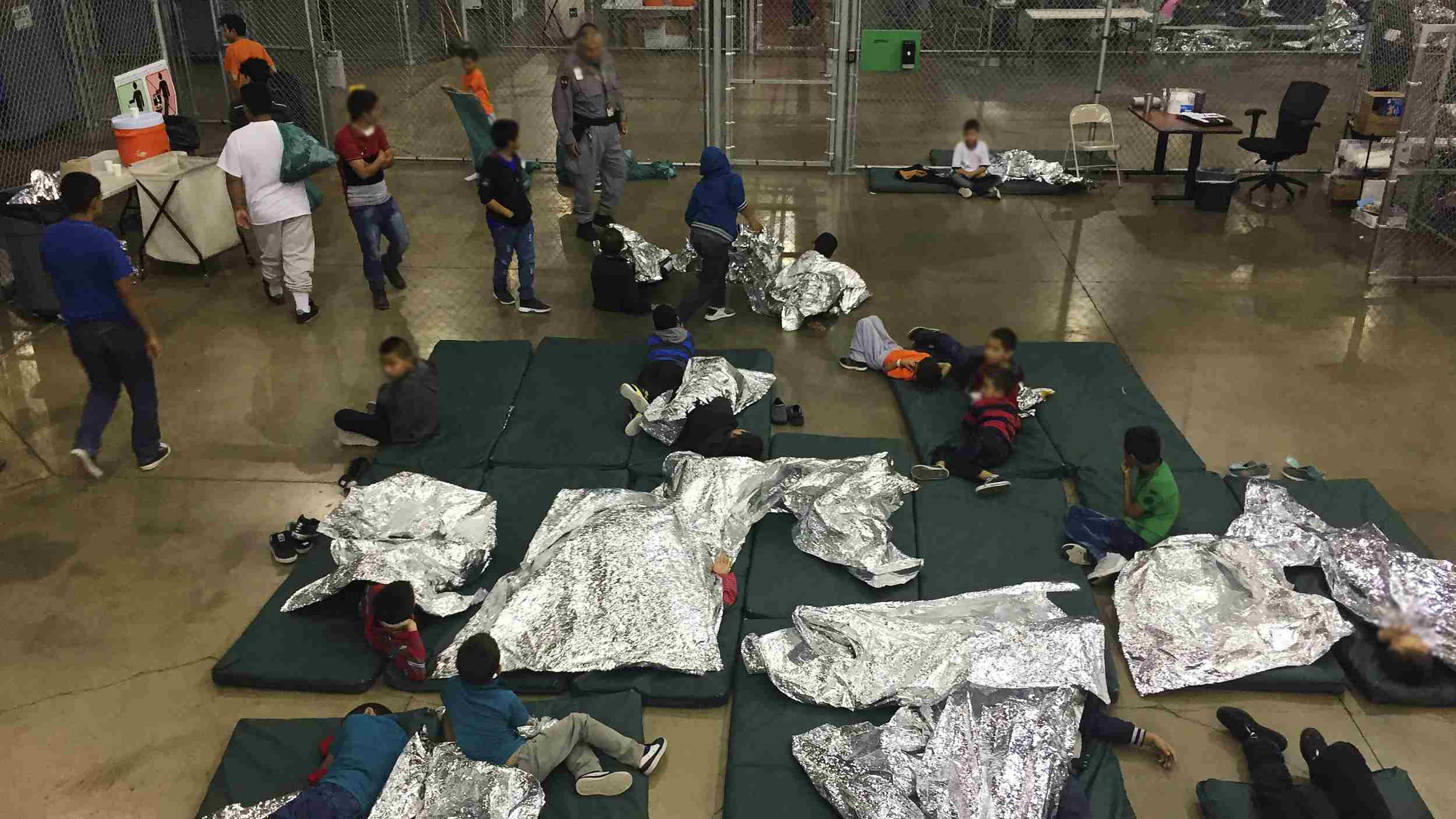
This US Customs and Border Protection photo shows detained immigrants at the Central Processing Center in McAllen, Texas, US, on June 17, 2018. /VCG Photo
This US Customs and Border Protection photo shows detained immigrants at the Central Processing Center in McAllen, Texas, US, on June 17, 2018. /VCG Photo
Immigrant families are currently housed in facilities in Pennsylvania and Texas that have a total capacity of about 3,300 beds, according to Immigration and Customs Enforcement (ICE). Those are already at 79 percent capacity, ICE said.
Also the criminal and immigration proceedings usually take months or even years to complete. Holding families indefinitely could create a new logistical headache for the Trump administration.
Trump’s executive order is also not clear about the fate of more than 2,300 children already separated from their families
US mayors protest
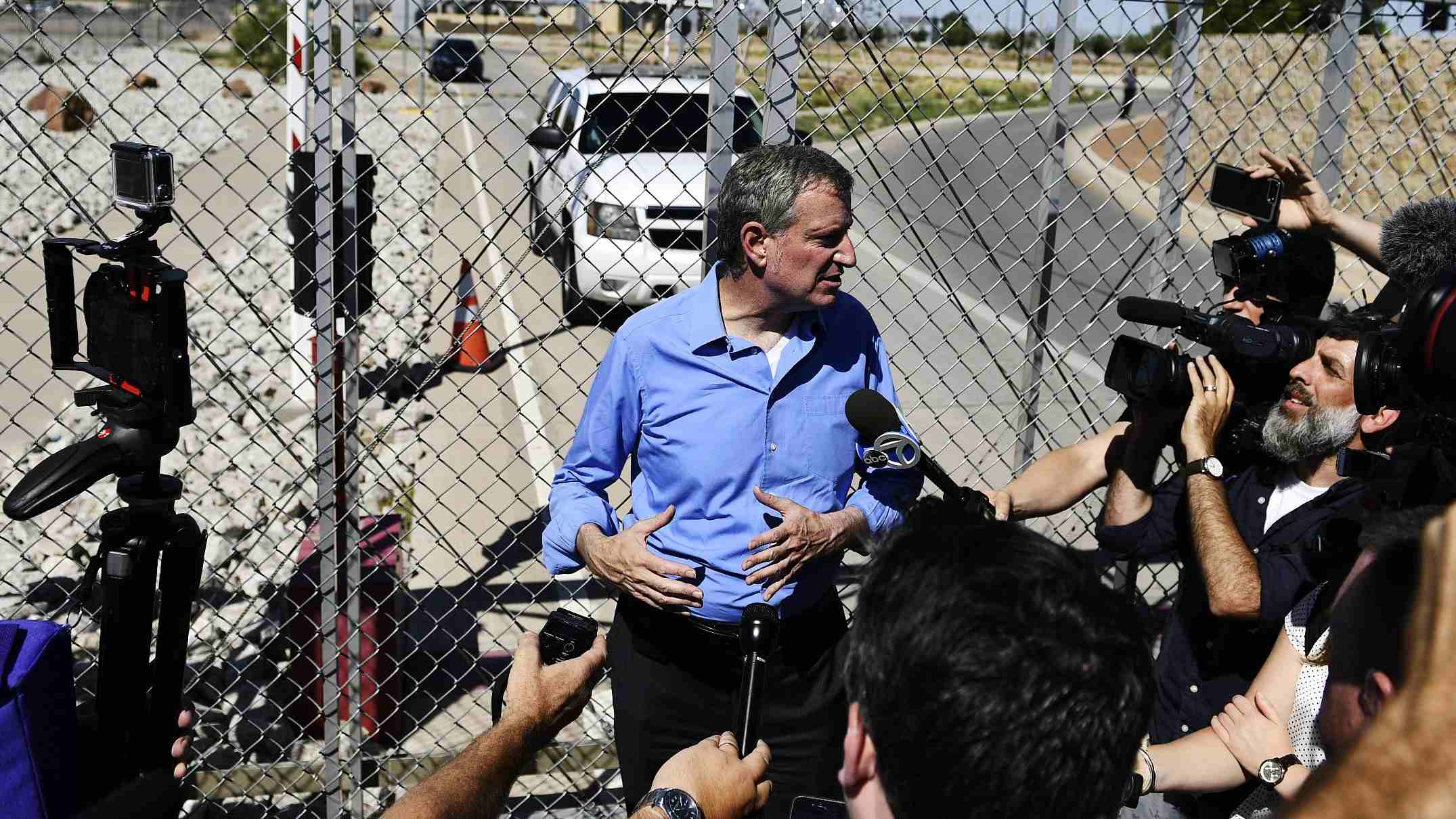
New York mayor Bill de Blasio speaks to reporters after trying to enter the border crossing at the Tornillo Port of Entry near El Paso, Texas, on June 21, 2018 during a protest rally by several American mayors against the US administration's family separation policy. /VCG Photo
New York mayor Bill de Blasio speaks to reporters after trying to enter the border crossing at the Tornillo Port of Entry near El Paso, Texas, on June 21, 2018 during a protest rally by several American mayors against the US administration's family separation policy. /VCG Photo
On Thursday, a bipartisan group of American mayors rallied outside a migrant children's shelter in Texas on Thursday to denounce a lack of transparency in the family separation crisis and demand that thousands of children be swiftly reunited with their parents.
New York's Bill de Blasio and Los Angeles' Eric Garcetti were among several dozen mayors from across the US who gathered at the border port of Tornillo.
"The families are not reunified, we don't know when they'll be, we're gonna fight for that," said de Blasio – who a day earlier declared himself "shocked to learn" that a single center in Harlem had received 239 separated children without the knowledge of city authorities.
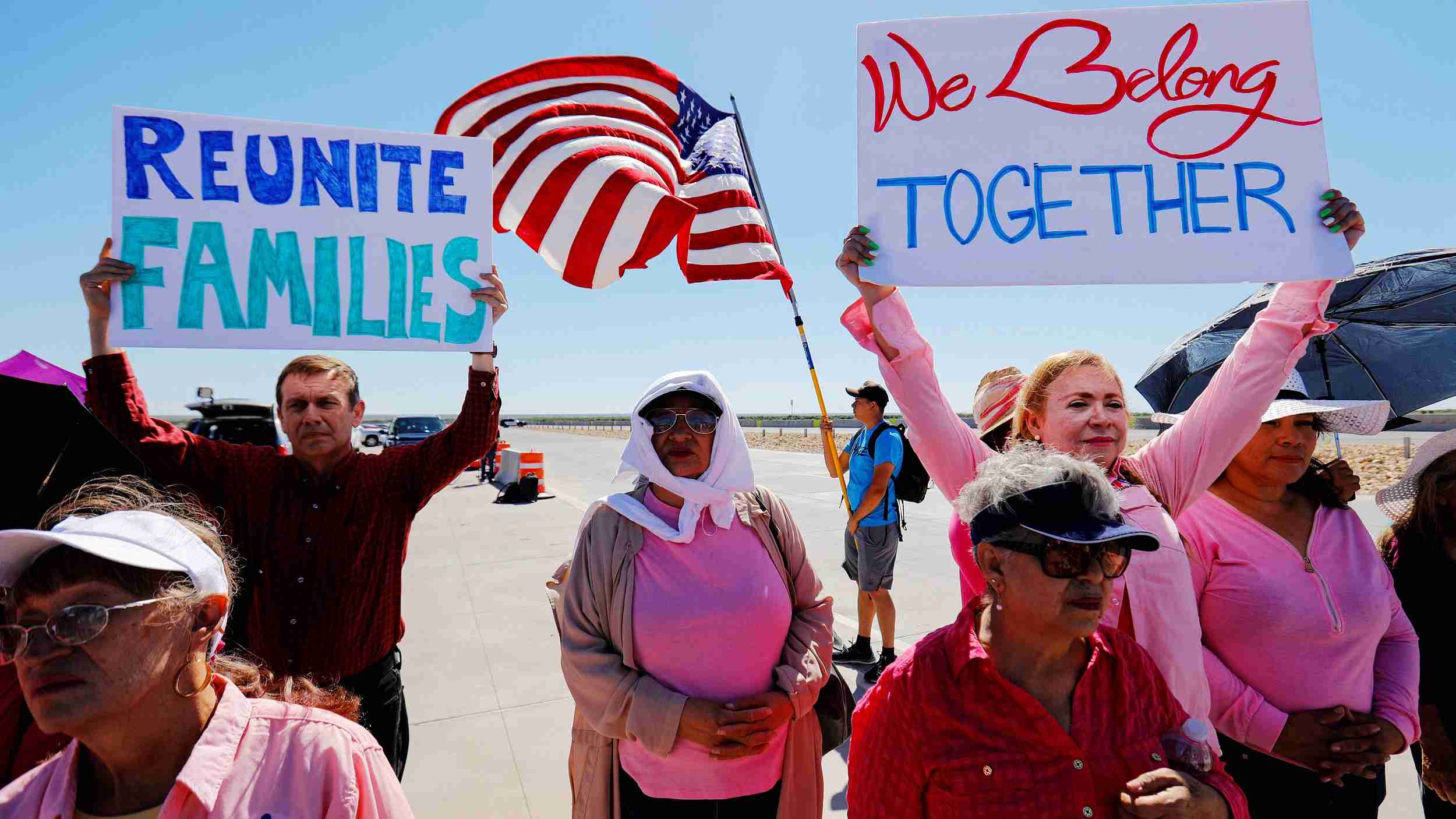
A small group of demonstrators protest outside of the children's tent encampment built to deal with the Trump administrations "zero tolerance" policy in Tornillo, Texas, US, on June 21, 2018. /VCG Photo
A small group of demonstrators protest outside of the children's tent encampment built to deal with the Trump administrations "zero tolerance" policy in Tornillo, Texas, US, on June 21, 2018. /VCG Photo
"Think how broken that is that our government didn't even tell us that was happening," de Blasio told the gathering in Tornillo.
The mayors joined in accusing federal authorities of providing little to no information about children sent to their cities – or how and when they will be reunited with their families.
(With input from agencies)
(Cover Photo: People attend a rally protesting the separation of children from their families while crossing the US border illegally on June 14, 2018 in New York. /VCG Photo)

 ["north america"]