
Space
11:15, 08-Oct-2018
NASA probe on brink of solar system detects cosmic ray increase
Updated
10:16, 11-Oct-2018
 ["china"]
Share







Copied

American space agency NASA's probe, on a way to interstellar space, detected an increase in cosmic rays that originated outside the solar system, according to NASA's Jet Propulsion Lab.
Voyager 2, launched in 1977, is about 17.7 billion kilometers from Earth, more than 118 times the distance from Earth to the Sun. And it will become the second human-made object, after Voyager 1, to enter interstellar space after it exits the heliosphere.
A cosmic ray instrument on the probe had measured about a five-percent increase in the rate of cosmic rays since late August, compared to early August. Another instrument on it also detected a similar increase in higher-energy cosmic rays, fast-moving particles that originate outside the solar system.
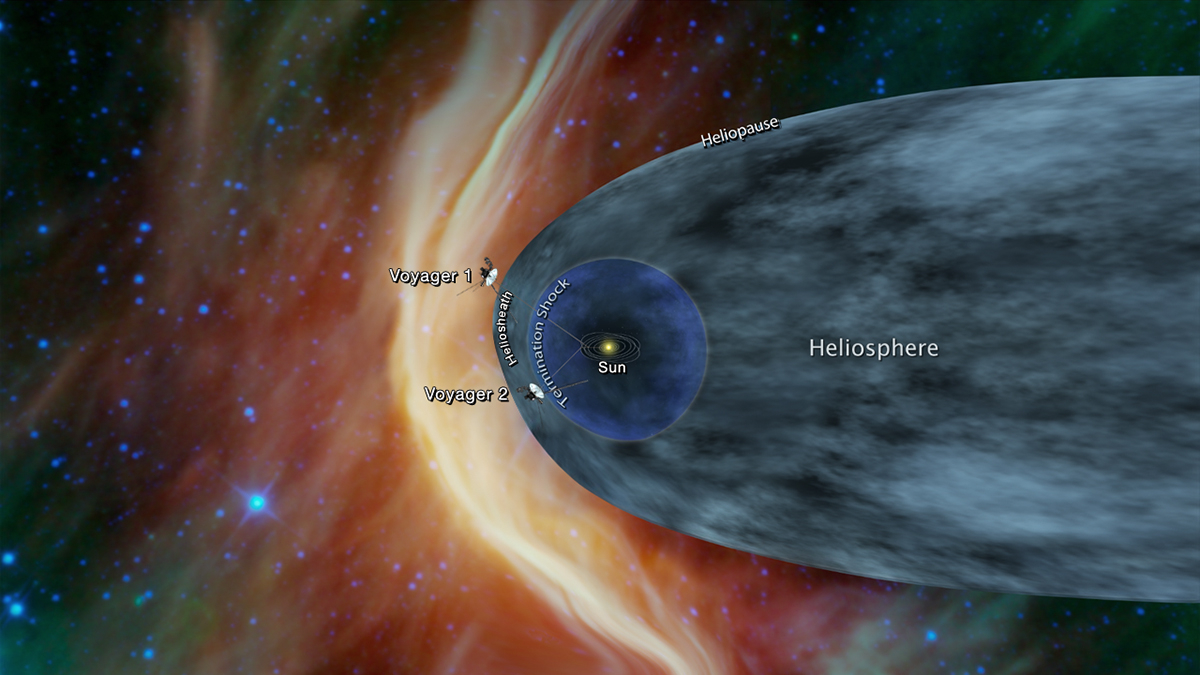
The position of the Voyager 1 and Voyager 2 probes relative to the heliosphere, a protective bubble created by the Sun that extends well past the orbit of Pluto. /NASA Photo
The position of the Voyager 1 and Voyager 2 probes relative to the heliosphere, a protective bubble created by the Sun that extends well past the orbit of Pluto. /NASA Photo
Some of these cosmic rays are blocked by the heliosphere, so mission planners expect that Voyager 2 will measure an increase in the rate of cosmic rays as it approaches and crosses the boundary of the heliosphere, according to NASA's recent statement.
In May 2012, Voyager 1 experienced an increase in the rate of cosmic rays approximately three months before Voyager 1 crossed the heliopause and entered interstellar space.
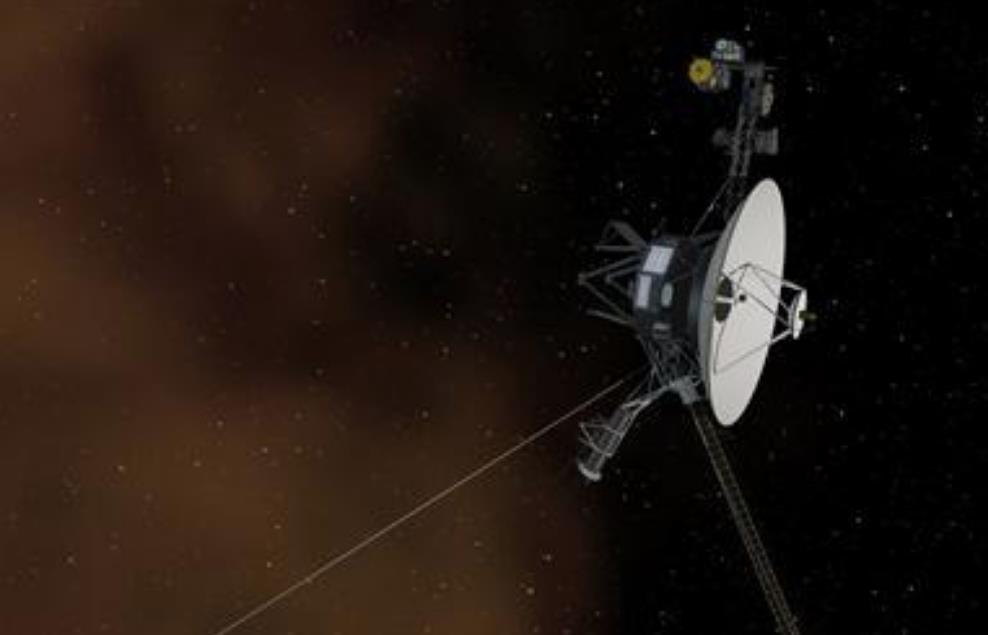
The artist's concept depicts NASA's Voyager 1 spacecraft entering interstellar space. /Reuters Photo
The artist's concept depicts NASA's Voyager 1 spacecraft entering interstellar space. /Reuters Photo
However, the increase in cosmic rays is not a definitive sign that the probe is about to cross the heliopause.
Voyager 2 is in a different location in the "heliosheath" or the outer region of the heliosphere than Voyager 1 had been, and possible differences in these locations point to the fact that Voyager 2 may experience a different exit timeline than Voyager 1, partly because the heliopause moves inward and outward during the Sun's 11-year activity cycle.
(Cover: VCG Photo)
Source(s): Xinhua News Agency