
Tech & Sci
13:33, 28-May-2018
UNEP-BCCI join hands for 'zero-waste' cricket matches in India
 ["other","India"]
Share







Copied
Board of Control for Cricket in India (BCCI) has initiated efforts to stamp out waste generated during cricket matches.
BCCI and United Nations Environment Programme (UNEP) on Sunday signed an agreement to implement zero waste concept or “green protocol” to prevent waste from cricket stadiums, which are eventually dumped at landfills. More than 6.5 tons of garbage – mostly single-use plastic cups and water bottles – pile up at the end of each cricket match.
“This is a major step in spreading the message of environmental conservation. We will help make cricket green and sensitize spectators towards minimizing waste generation during matches,” BCCI acting secretary Amitabh Choudhary said.
BCCI, along with Vivo, a Chinese technology company and sponsor of Indian Premier League (IPL), and Coca-Cola have already started awareness campaigns, urging cricket fans to curb single-use plastic cups and bottles.
The partnership with UN environment will also focus on phasing out single-use plastic across stadiums in the country. Erik Solheim, head of the UNEP, highlighted that environment and sports are more closely connected than people think.
“If we don’t have a healthy environment, then sports will not thrive. I am delighted that UN Environment is partnering with the BCCI to use the power of cricket to inspire action for a cleaner environment.”
Trial on for reducing waste in selected stadiums
The concept of 5Rs – to refuse, reduce, reuse, recycle and rot – was introduced during four matches played at Holkar Stadium in Indore and Chinnaswamy Stadium in Bengaluru last month.
The stadiums with a capacity of more than 30,000 to 40,000 generate the unmanageable amount of waste during the IPL season, filling the landfills to the brim. Waste management firms, municipalities, and non-profits for the first time assessed and created a blueprint to segregate waste at the stadiums.
Hasiru Dala Innovations handled waste generated from the selected food stands catering to nearly 8,000 fans at Chinnaswamy Stadium. The organization reported around seven tons of garbage generated during 10 IPL matches held in May.
“We adopted two-pronged strategy—to reduce waste generation and maximize waste segregation at the stadium,” Shekar Prabhakar, managing director and founder of Hasiru Dala Innovations, told CGTN. Efforts were also made to ensure food trucks and stalls reduced packaging materials for food.
Plans are also afoot to allow the sale of only those products inside the stadiums that have bio-degradable packaging.
The non-profits also aimed at changing the behavior of the people to ensure fans dump waste into the specified bin. Prabhakar maintained judicious segregation of waste from sports stadium might generate livelihood options for local communities.
A similar approach for waste management was also adopted during four matches played at Holkar Stadium. Authorities are in the process of auditing the waste to ascertain volume and types of waste.
The audit will help in formulating a strategy to tackle “single-use plastic generated and chart a course to implement a waste management system,” BCCI maintained.
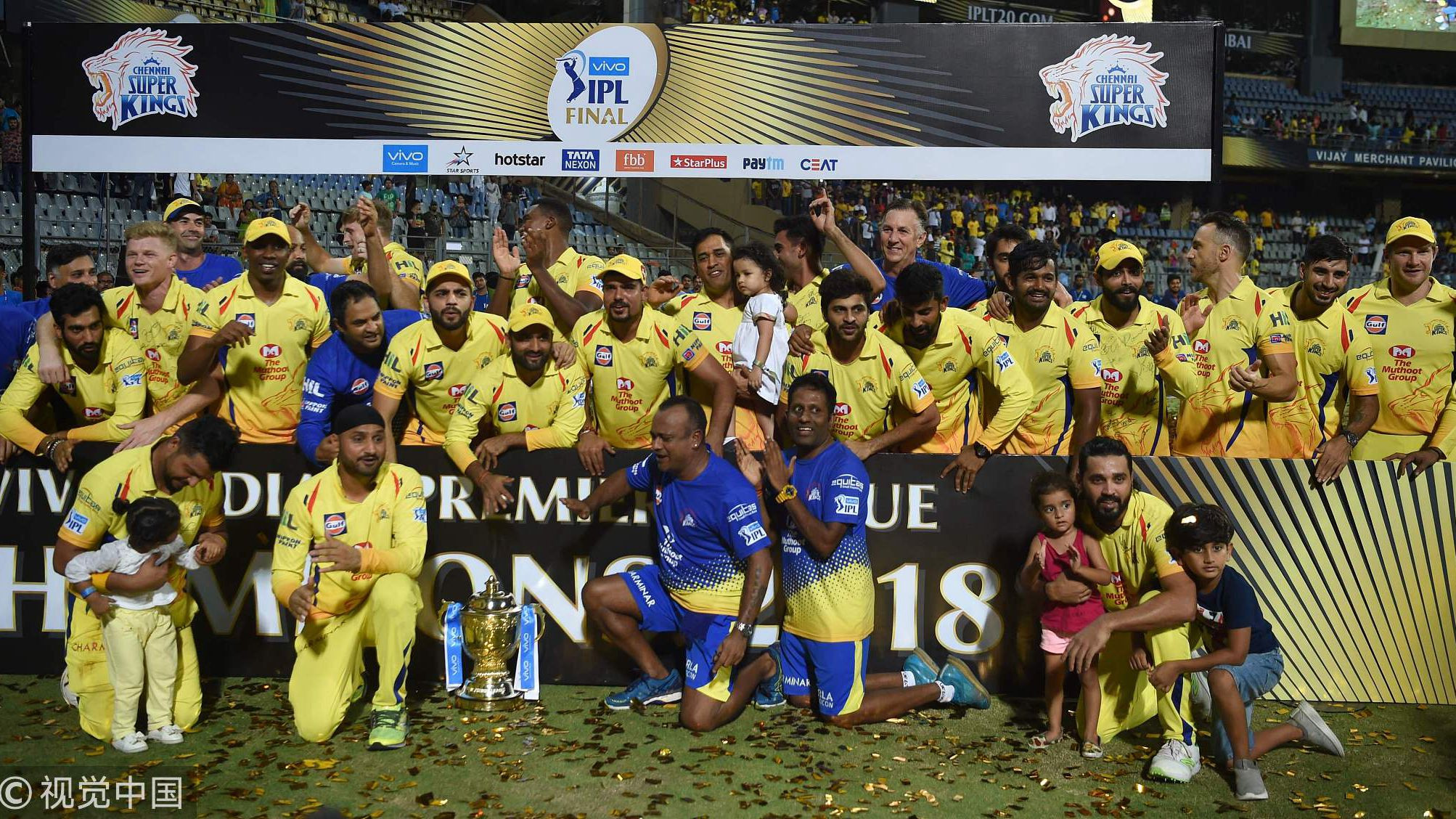
[Top Image: Chennai Super Kings team poses after winning the 2018 Indian Premier League (IPL) Twenty20 cricket tournament at the Wankhede stadium in Mumbai on May 27, 2018.]