
Latin America
16:14, 29-May-2019
Brazil to send gang leaders to federal prisons after massacre: minister
 ["china"]
Share







Copied
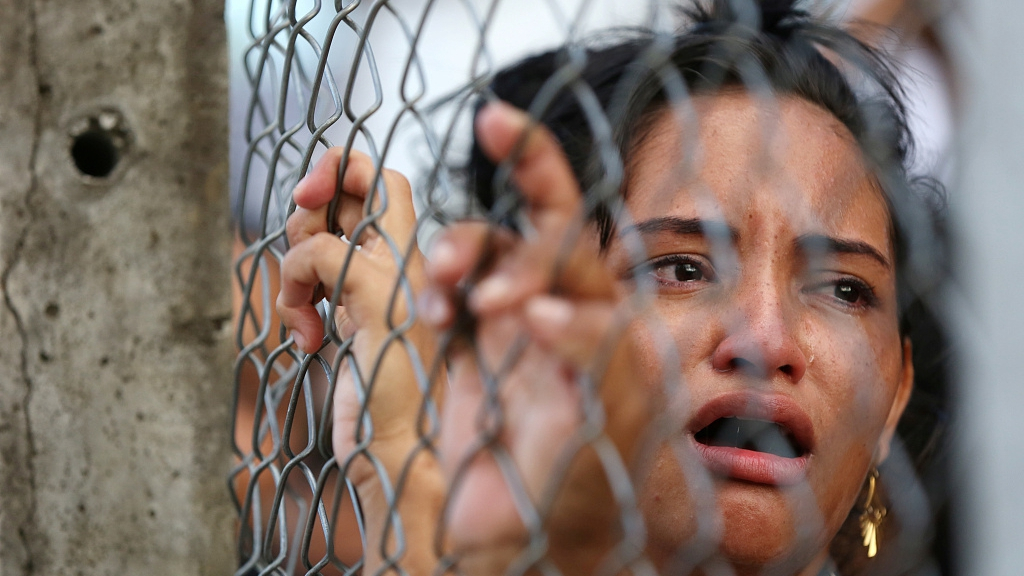
Brazilian Justice Minister Sergio Moro said on Tuesday that the prison gang leaders responsible for killing 55 inmates in prisons across the northern city of Manaus will be moved to maximum-security federal jails.
At least 55 inmates were strangled or stabbed with sharpened toothbrushes to death in front of visiting family members at four state facilities, Brazil authorities said.
The killings, Moro said were a result of a power struggle between prison gangs, which began Sunday at the Anísio Jobim penitentiary complex in Brazil's northwestern Amazonas state.
“The information we have is that there was a conflict between criminal gangs inside the prisons, which can happen anywhere in the world - but shouldn't,” he told reporters. “We have an obligation to try to control these cases. We will transfer the leaders responsible for these acts in Manaus to prisons of maximum security.”
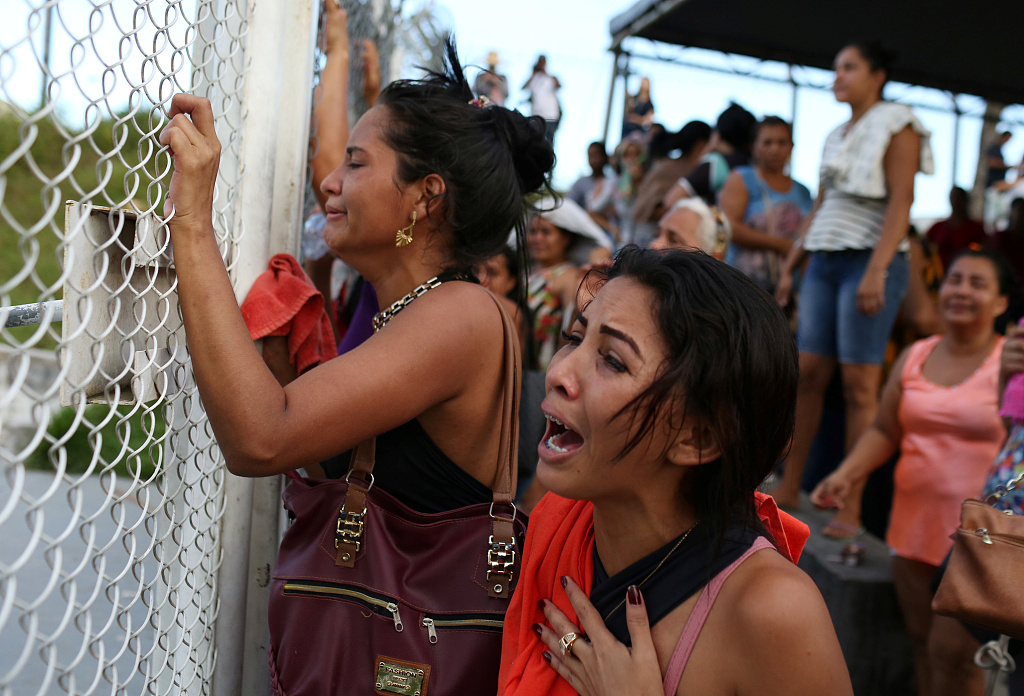
Relatives of inmates cry in front of a prison complex in the Brazilian state of Amazonas in Manaus, Brazil, May 27, 2019. /VCG Photo
Relatives of inmates cry in front of a prison complex in the Brazilian state of Amazonas in Manaus, Brazil, May 27, 2019. /VCG Photo
Brazil has the world's third-largest prison population. According to Institute for Criminal Policy Research (ICPR), the total prison population, including pre-trial detainees and remand prisoners are 712,305 until April 30, 2019, while its official capacity is 418,887, which means the facilities nationwide equipped to hold half number of the prisoners.
Brazil's prisons are run by inmates, and fights between and within gangs often yield deadly results. Washington Post reported that 120 inmates were killed in prisons across several states in January 2017.
The Amazonas state prosecutor urged the government to retake control of the prisons, using military force if necessary.
Brazil had used military force in 1992 to intervene a prison revolt, leaving 111 prisoners dead, 37 more injured, which was condemned by international society as a massacre. The riot occurred after a game of football quickly escalated into armed conflict. Following the prison riot, military police stormed the penitentiary, stripped and locked the prisoners in their cells and killed some by shooting.
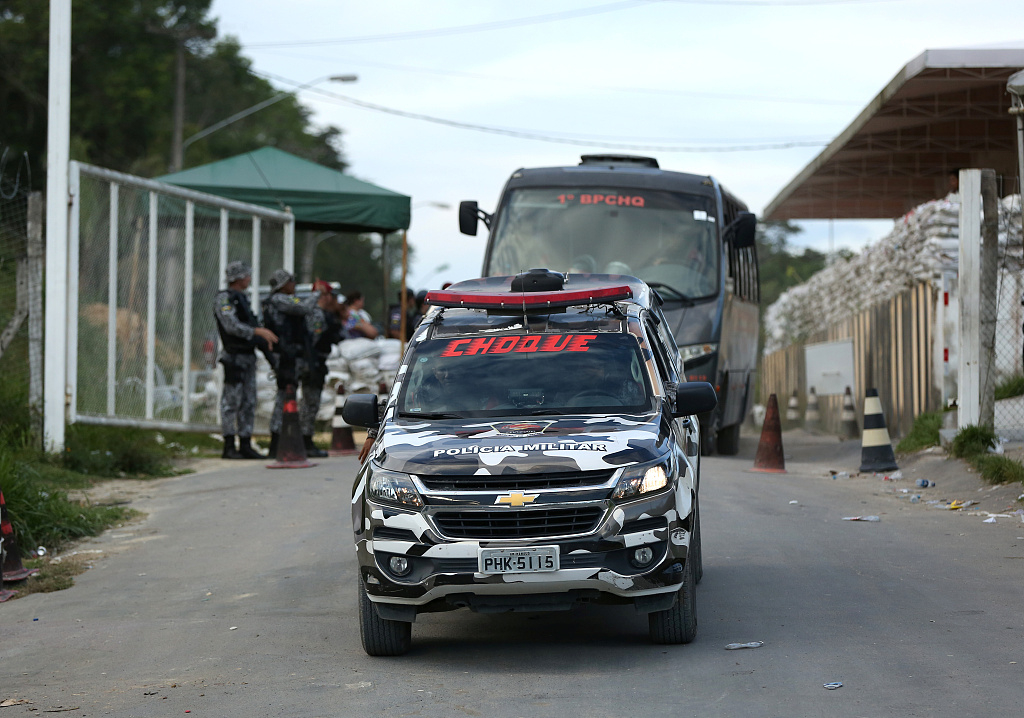
Riot police leave a prison complex in the Brazilian state of Amazonas in Manaus, Brazil, May 27, 2019. /VCG Photo
Riot police leave a prison complex in the Brazilian state of Amazonas in Manaus, Brazil, May 27, 2019. /VCG Photo
To weaken the power of gangs and reduce prison clashes, Brazil's government has long jailed gang leaders to prisons far from their homes, but it turned out that the action only helped gangs develop a national reach.
Local officials, worried that the clashes could spread, asked authorities to transfer gang leaders to federal penitentiaries.
A spokesman for Brazilian President Jair Bolsonaro said on Tuesday that there are no signs that the violence will spread to other parts of the country and the president has vowed to regain control of the prisons along with building many more.
But the vast majority of Brazil's prisons are administered at the state level. For decades they have been badly overcrowded and a headache for underfunded state government. Many lockups essentially serve as recruiting centers for drug gangs. Prison clashes often spread rapidly in Brazil, where drug gangs have de facto control over nearly all jails.
A federal task force is being sent to Manaus in an effort to halt the violence.
(With inputs from agencies)