Despite ups and downs in their relations, China and India have been making efforts to enhance communication, expand common ground and deepen mutual trust. The informal meeting between Chinese President Xi Jinping and Indian Prime Minister Narendra Modi on Friday and Saturday is part of these efforts.
When announcing the summit a few days ago, Chinese State Councilor and Foreign Minister Wang Yi called the two nations "natural cooperation partners," stressing that their common interests far outweigh their disputes.
It was not the first time Beijing underscored commonalities between the two Asian giants and called for enhanced cooperation.
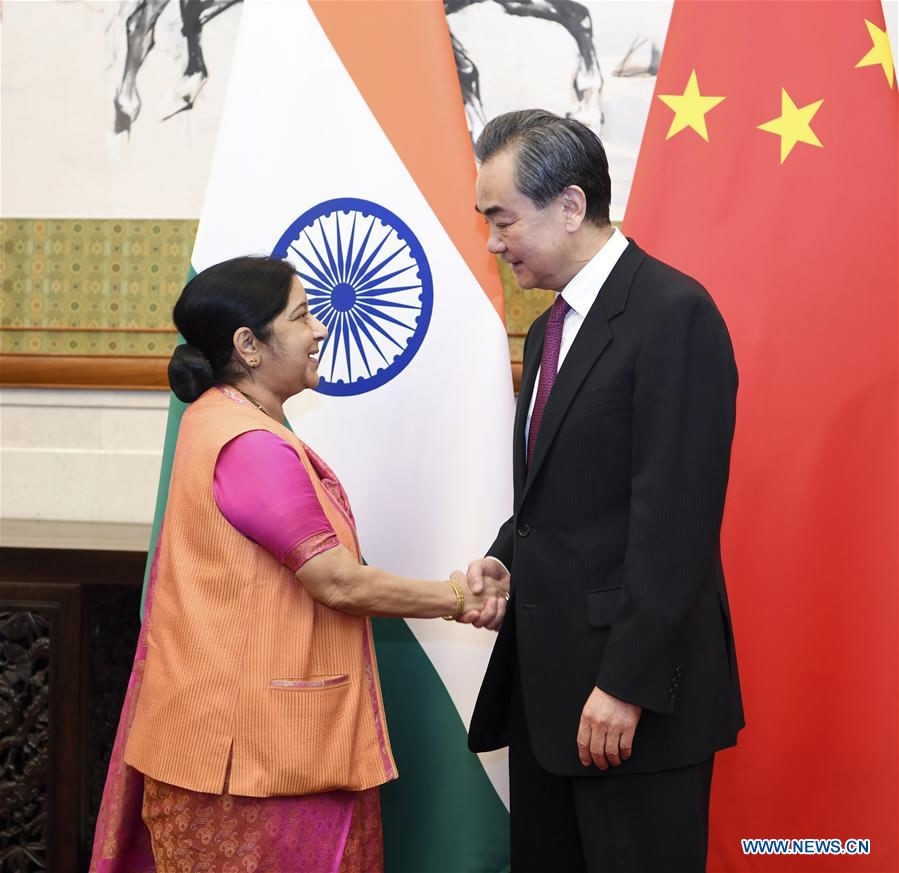
Chinese State Councilor and Foreign Minister Wang Yi (R) holds talks with Indian External Affairs Minister Sushma Swaraj in Beijing, April 22, 2018. /Xinhua Photo
Chinese State Councilor and Foreign Minister Wang Yi (R) holds talks with Indian External Affairs Minister Sushma Swaraj in Beijing, April 22, 2018. /Xinhua Photo
"Our shared understandings far outstrip our differences and our common interests far outweigh our frictions," the Chinese foreign minister told an Indian reporter at a press conference last month. "Let us replace suspicion with trust, manage differences through dialogue, and build a future through cooperation."
The view is also shared by many Indians. Gautam Bambawale, Indian ambassador to China, described the two countries as "partners in development and progress."
"We are not rivals," he said in January.
In a recent interview with CGTN, Indian economist Ajit Ranade said "it was wrong to say all of India sees China as a threat" and stressed that there were "huge opportunities" for cooperation.
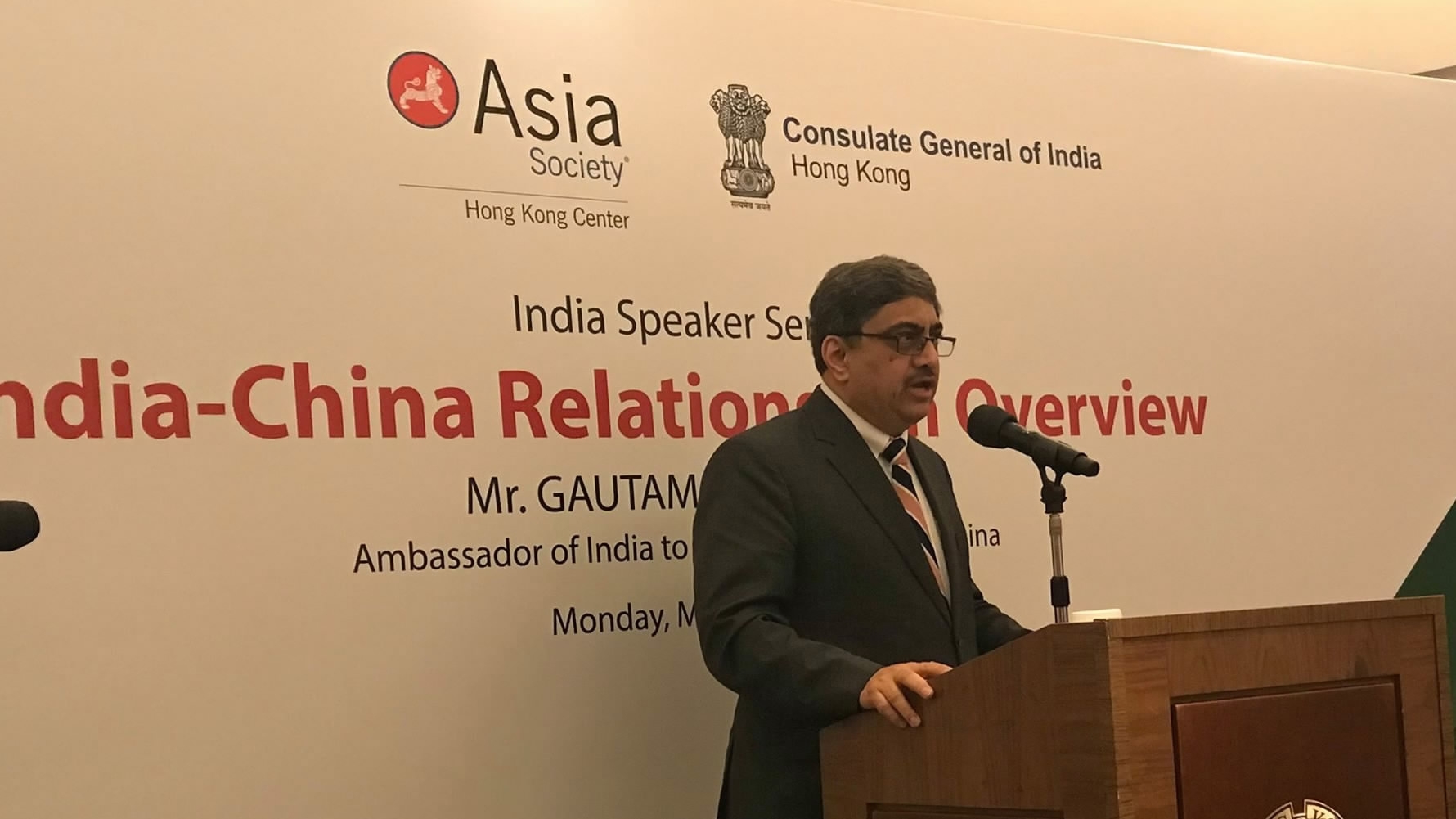
Indian Ambassador to China Gautam Bambawale delivers a talk on "India-China Relations: An Overview" hosted by Asia Society Hong Kong Center, in Hong Kong, China, March 19, 2018. /Photo via Indian Embassy to China
Indian Ambassador to China Gautam Bambawale delivers a talk on "India-China Relations: An Overview" hosted by Asia Society Hong Kong Center, in Hong Kong, China, March 19, 2018. /Photo via Indian Embassy to China
The optimism originates from some fundamental factors that bind the two countries together, though memories of the military standoff in the border area of Donglang are still fresh.
I. Both are major developing countries and emerging markets.
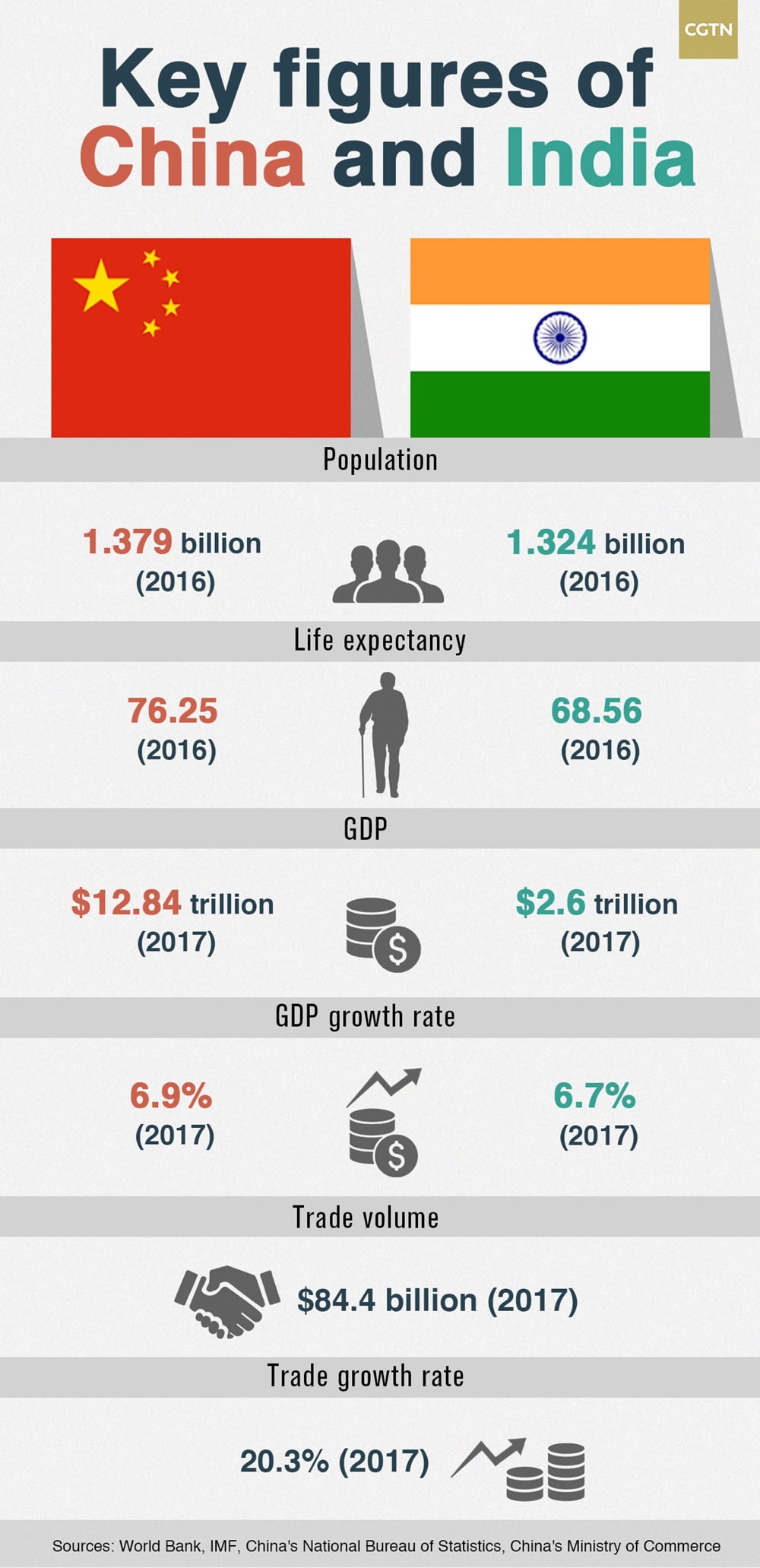
China and India share many common features. Both countries' populations are above 1.3 billion. China is the world's second largest economy, while India ranks the sixth. Combined, they account for over 35 percent of the world's population and contribute about 20 percent of global GDP, thus the two economies are at similar stages of development and can learn from each other in many ways.
Noting that the two neighboring countries are also the world's two largest developing countries and emerging markets, Xi told Modi during the BRICS summit last year that peaceful coexistence and win-win cooperation is the only choice for the two countries.
Modi agreed that India and China should not see each other as rivals and should instead make cooperation the focus of bilateral relations.
Moreover, the two countries are both time-honored civilizations with a long history of cultural exchanges, which help them better understand each other.
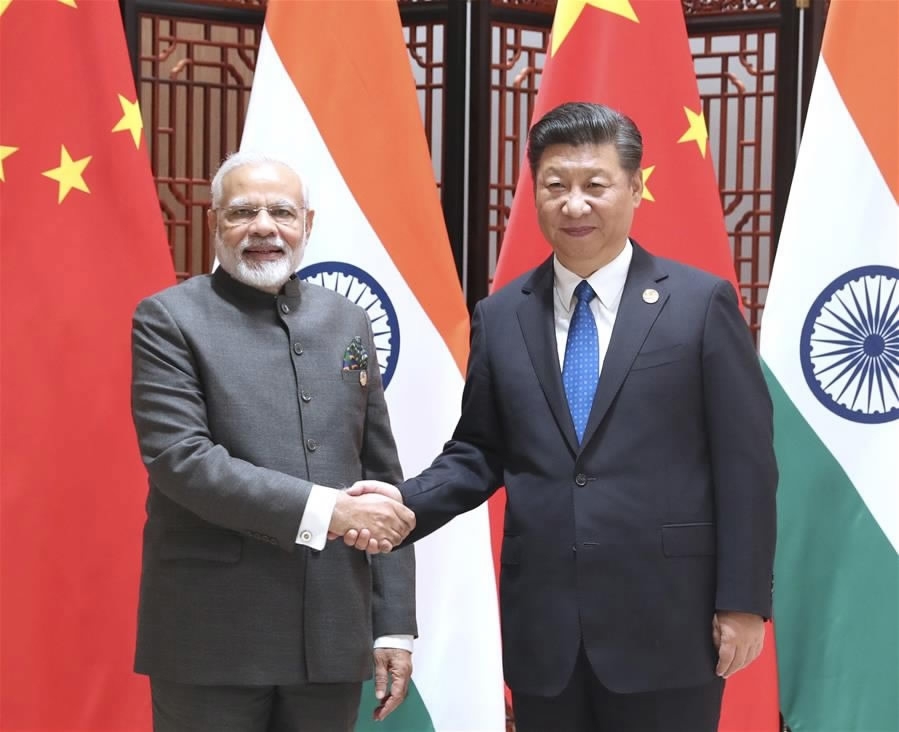
Chinese President Xi Jinping (R) meets with Indian Prime Minister Narendra Modi in Xiamen, southeast China's Fujian Province, September 5, 2017. /Xinhua Photo
Chinese President Xi Jinping (R) meets with Indian Prime Minister Narendra Modi in Xiamen, southeast China's Fujian Province, September 5, 2017. /Xinhua Photo
II. They share common interests, concerns and propositions.
Because of their similarities in scale and development, China and India share "common interests, concerns and propositions," Chinese Foreign Ministry spokesman Lu Kang said on Monday.
"Our two countries are the mainstays for a multi-polar world and economic globalization. We are important champions for regional and global peace, stability and development," he noted.
Both countries face enormous uncertainties in today's world, such as rising protectionism in the United States and multiple security concerns in Asia.
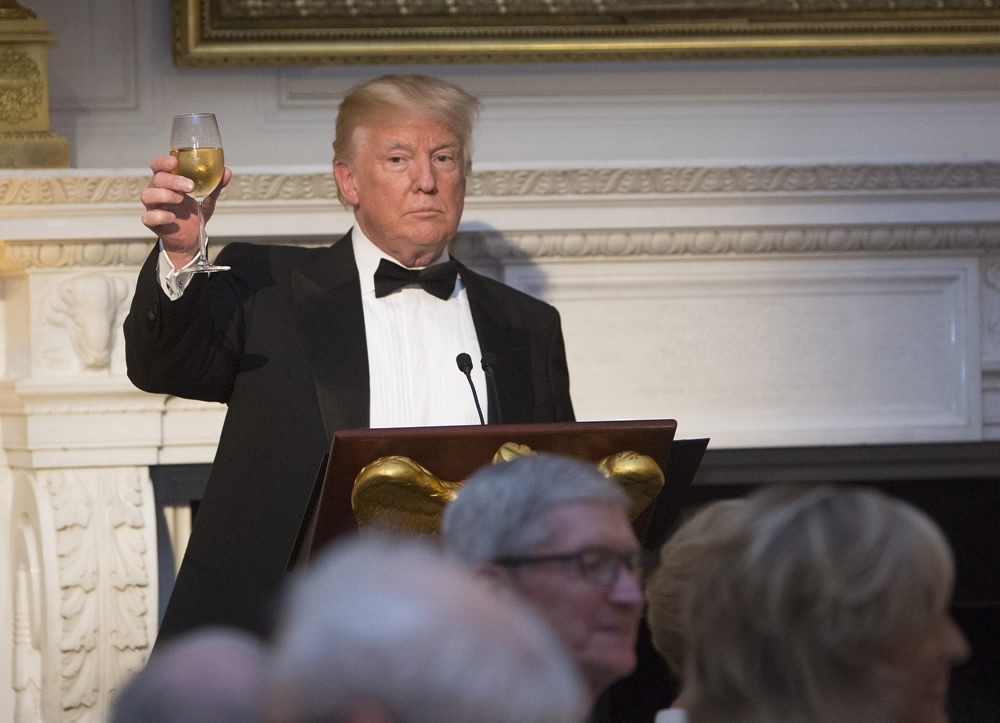
The world is witnessing rising protectionism in the US under President Donald Trump. /VCG Photo
The world is witnessing rising protectionism in the US under President Donald Trump. /VCG Photo
In fact, it is in this context that China and India decided to arrange this meeting, during which Xi and Modi will have strategic communication on the world's profound changes, and exchange, in an in-depth manner, views on overall, long-term and strategic issues regarding China-India relations, according to Wang Yi.
The two countries, despite having commonalities, need to "reconcile their ambitions, values, and interests adequately" in order to find more common ground, former Indian Foreign Secretary S Jai Shankar said recently at the Mint Asia-Hindustan Times Leadership Summit in Singapore.
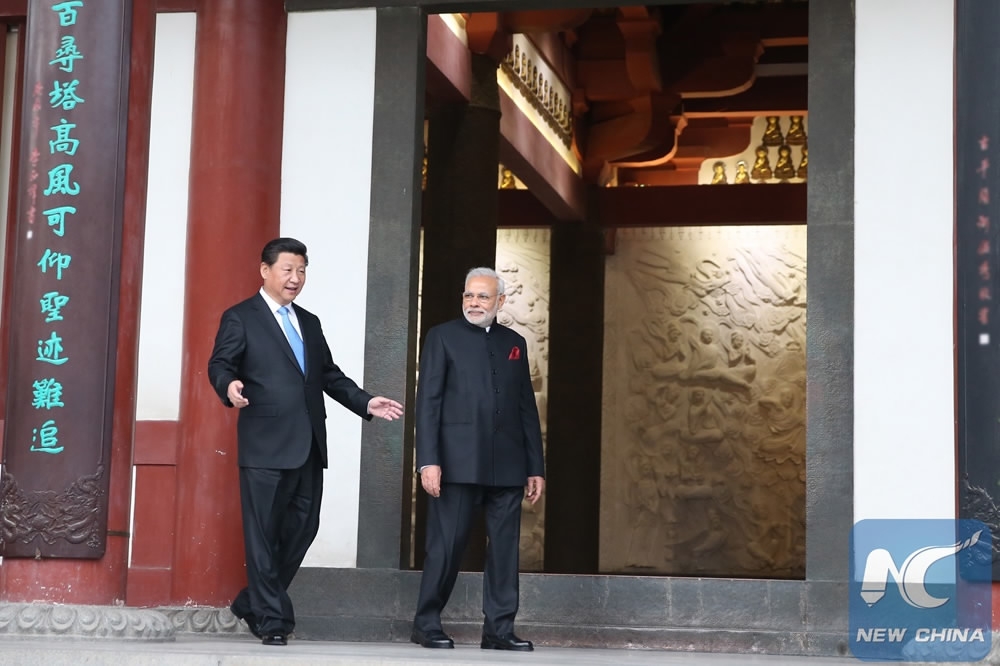
Chinese President Xi Jinping (L) accompanies Indian Prime Minister Narendra Modi to the Da Ci'en Temple after their meeting in Xi'an, northwest China's Shaanxi Province, May 14, 2015. /Xinhua Photo
Chinese President Xi Jinping (L) accompanies Indian Prime Minister Narendra Modi to the Da Ci'en Temple after their meeting in Xi'an, northwest China's Shaanxi Province, May 14, 2015. /Xinhua Photo
III. Their leaders meet frequently.
China and India are not just neighbors; they are both BRICS nations, members of the Group of 20 (G20) and participants at the East Asia Summit. No matter how the bilateral relationship is, Chinese and Indian leaders have lots of opportunities to meet each other and communicate every year.
With India's admission as a full member of the Shanghai Cooperation Organization (SCO) last year, the frequency of their meetings is set to increase further.
The Xi-Modi summit in Wuhan this week is
Modi's fourth visit to China since taking office in 2014. His first trip was an official visit to China in 2015, followed by his attendance at the 2016 G20 summit in Hangzhou and the 2017 BRICS summit in Xiamen.
02:44
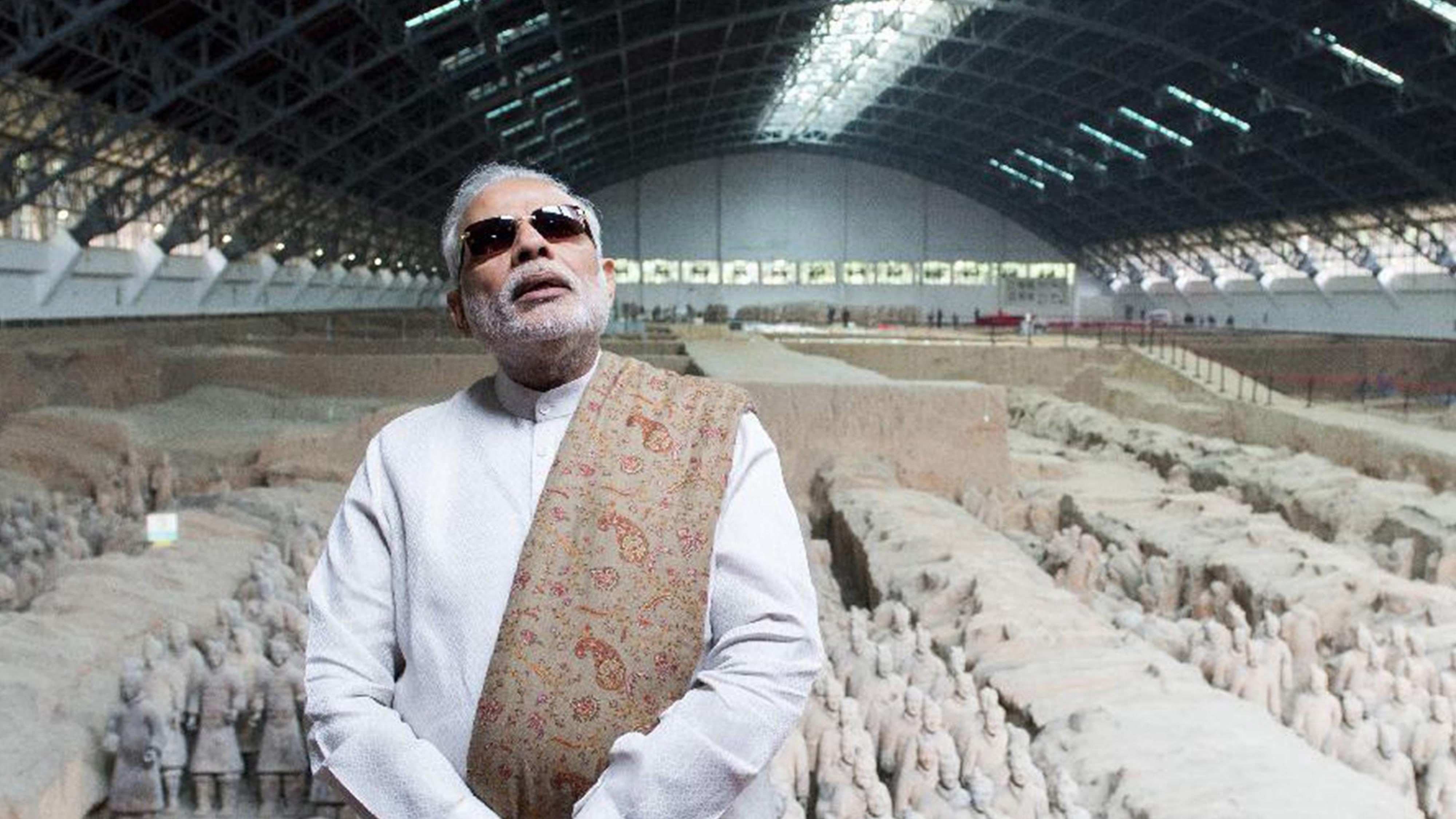
Modi's meeting with Xi on the sidelines of the BRICS summit last September came shortly after the end of the Donglang standoff, which lasted over 70 days. As the two leaders exchanged views on bilateral ties, tensions began to thaw.
The frequent talks between top leaders help both sides properly handle their differences and deepen mutual understanding.
IV. Their economies are complementary.
Chinese and Indian economies are highly complementary to each other.
For example, China can provide technology and financial support for India to build and improve upon its infrastructure, while India is strong in IT and pharmaceuticals.
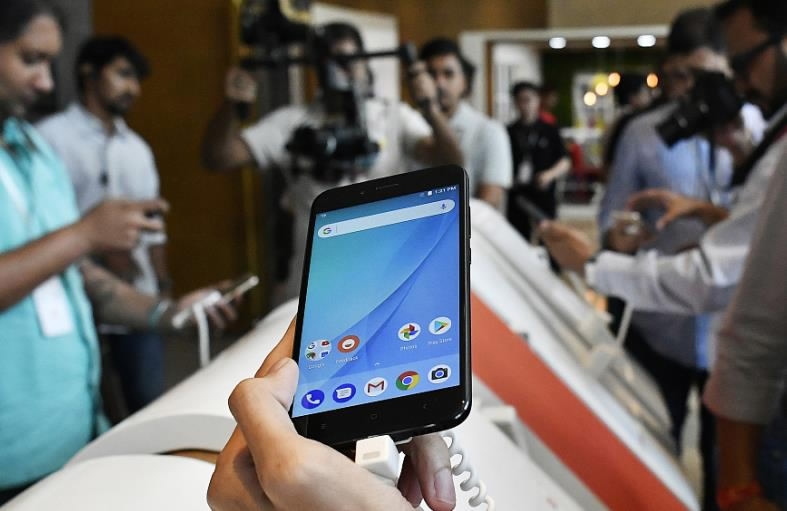
An attendee holds a Xiaomi's Mi A1 dual camera device during the smartphone's launch in New Delhi, India, September 5, 2017. /VCG Photo
An attendee holds a Xiaomi's Mi A1 dual camera device during the smartphone's launch in New Delhi, India, September 5, 2017. /VCG Photo
China's private investment in India has grown steadily in recent years. With the transfer of some labor-intensive industries, more jobs have been created in India.
According to official figures from the Chinese Ministry of Commerce, China's trade with India reached a record high of 84.4 billion US dollars in 2017, up 20.3 percent from the previous year.
During a visit by a Chinese trade delegation to India in late March, Chinese and Indian companies signed as many as 101 trade agreements with a total contract value of 2.38 billion US dollars, covering black tea, castor oil, peppermint oil, coconut fiber, coffee beans and other products.
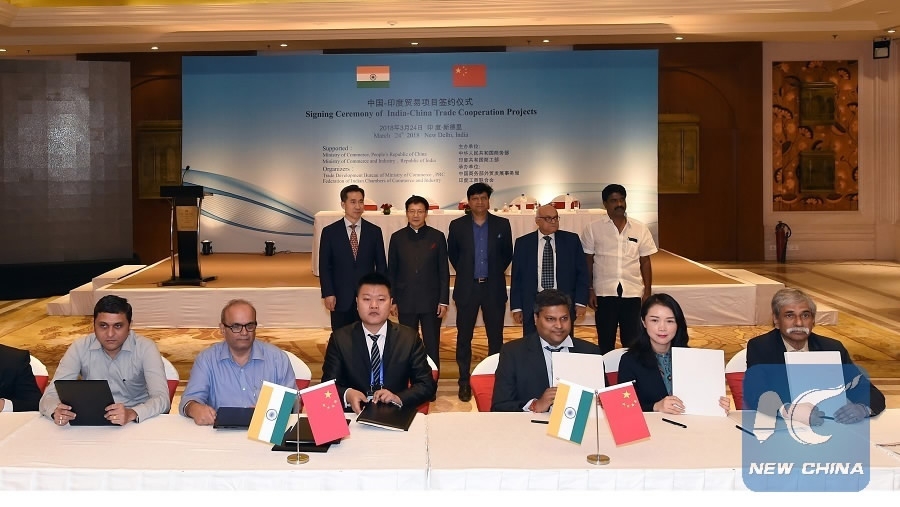
China's trade promotion group and India's Commerce and Industry Ministry attend the signing ceremony of India-China trade cooperation projects in New Delhi, India, March 24, 2018. /Xinhua Photo
China's trade promotion group and India's Commerce and Industry Ministry attend the signing ceremony of India-China trade cooperation projects in New Delhi, India, March 24, 2018. /Xinhua Photo
V. There is huge potential for further cooperation.
Although trade between China and India expanded significantly last year, it still accounts for a small proportion of the global total. And China is exporting much more to India than the other way round. Areas such as trade, investment, infrastructure, information technology, the Internet, cultural tourism, and health care hold great potential for cooperation.
At the 11th meeting of the China-India Joint Group on Economic Relations, Trade, Science and Technology held in New Delhi last month, both sides agreed to work together on China's Belt and Road Initiative, the "Made in India" movement, and the "Digital India" project.
When the Chinese trade delegation promoted the China International Import Expo (CIIE) in India, many Indian enterprises said they looked forward to participating in the expo as a first step into the Chinese market. The CIIE, to be held in November in Shanghai, is expected to increase Indian exports to China.

Chinese students share experiences about how the learning of Hindi has brought them closer to understanding Indian culture in the Indian embassy in Beijing, April 23, 2018. /CGTN Photo
Chinese students share experiences about how the learning of Hindi has brought them closer to understanding Indian culture in the Indian embassy in Beijing, April 23, 2018. /CGTN Photo
There is also big potential to be tapped for greater cultural and people-to-people exchanges. Over 20,000 Indians study in China, and Chinese people like India's Yoga, Darjeeling tea and Bollywood movies, Chinese Ambassador to India Luo Zhaohui noted in an article published on an Indian newspaper on Thursday.
Meanwhile, an increasing number of Chinese students are
learning Indian languages.
'Most precious commodity' in bilateral ties
To transform these favorable factors into expanded cooperation and strengthened friendship, efforts need to be made on both sides to enhance mutual trust.
"Mutual trust is the most precious commodity in China-India relations," Wang Yi said at the press conference in March.
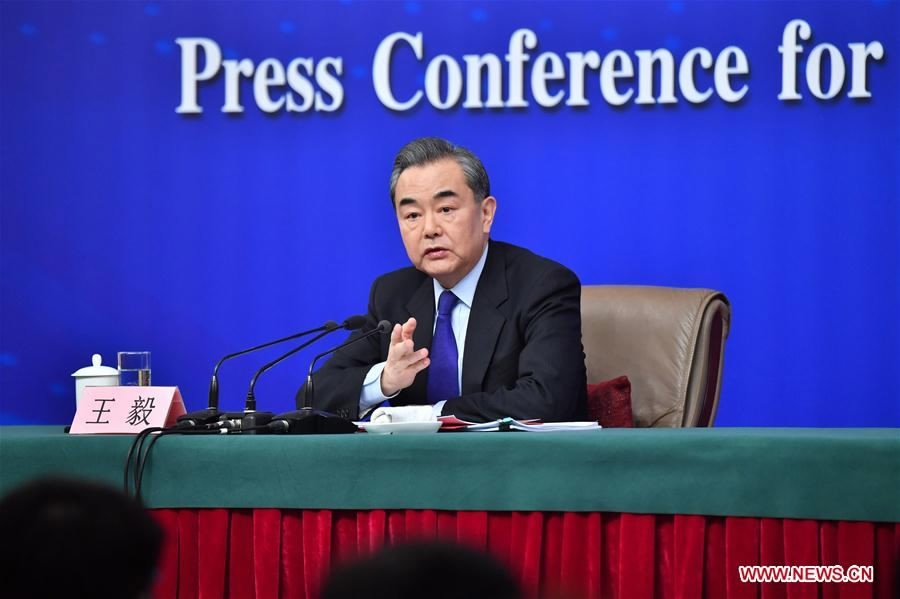
Chinese Foreign Minister Wang Yi answers questions on China's foreign policies and foreign relations at a press conference on the sidelines of the first session of the 13th National People's Congress in Beijing, March 8, 2018. /Xinhua Photo
Chinese Foreign Minister Wang Yi answers questions on China's foreign policies and foreign relations at a press conference on the sidelines of the first session of the 13th National People's Congress in Beijing, March 8, 2018. /Xinhua Photo
To this end, Indian envoy to China Gautam Bambawale
called for "more dialogue.""I believe that in the post-Donglang period, India and China need to be talking to each other and conversing with each other much more than in the past. This should be done at many different levels, including at the leadership level, the official level and the people-to-people level. Such communication should be frank, candid and open," he said.
Encouragingly, that is exactly what the two sides are doing.
(With inputs from Xinhua)
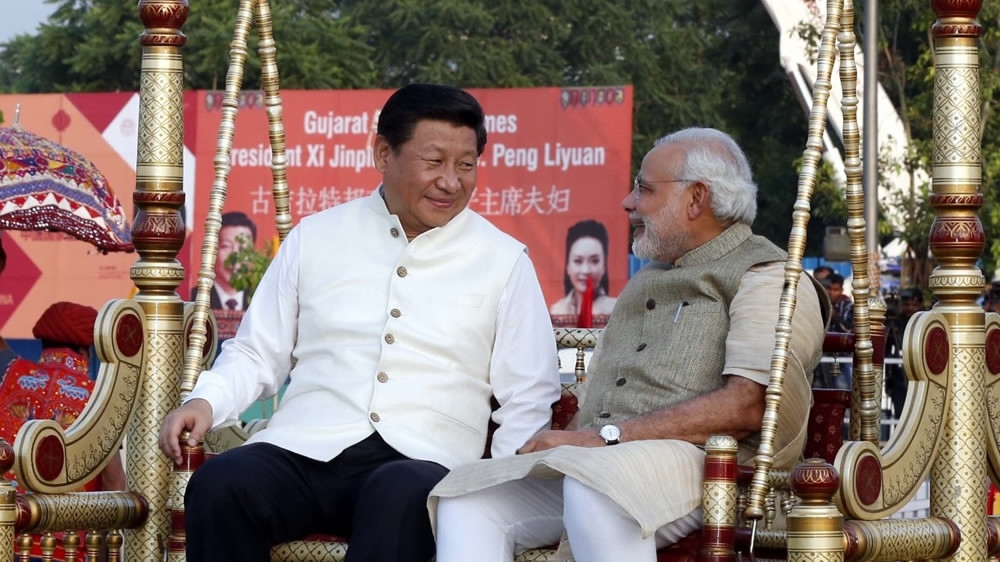
(Top photo: Chinese President Xi Jinping (L) talks with Indian Prime Minister Narendra Modi as they visit a riverside park development project in Gujarat, India, Sept. 17, 2014. /Xinhua Photo)
(Graphics by Li Xiaojie; video by Chen Shi)

 ["china"]