
World
07:01, 17-Aug-2018
Barcelona attacks anniversary
Updated
06:16, 20-Aug-2018
 ["china"]
Share







Copied
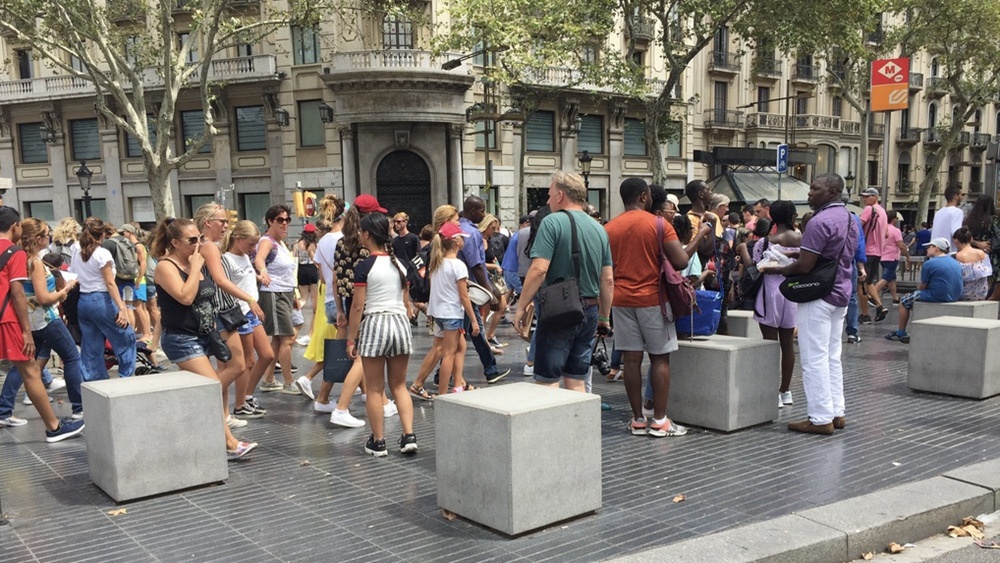
One year after the terrorist attacks on Barcelona and the nearby seaside resort of Cambrils killed 16 people and wounded 137 others, Spain’s Interior Ministry reports it has handled aid requests for 130 victims.
A Ministry statement said it has paid 11 million US dollars in indemnities and aid to victims so far. Separately, a new department created by local authorities in Barcelona after the attacks to provide psychological aid to the victims (called UAVAT by its Spanish initials) reports that it has helped 182 victims.
Most of them are in Barcelona, where the attacks caused the most deaths (14) and injuries (130).
The Barcelona psychological unit reported that it has aided 13 people who were physically injured in the attacks and 85 who witnessed the attacks.
03:32
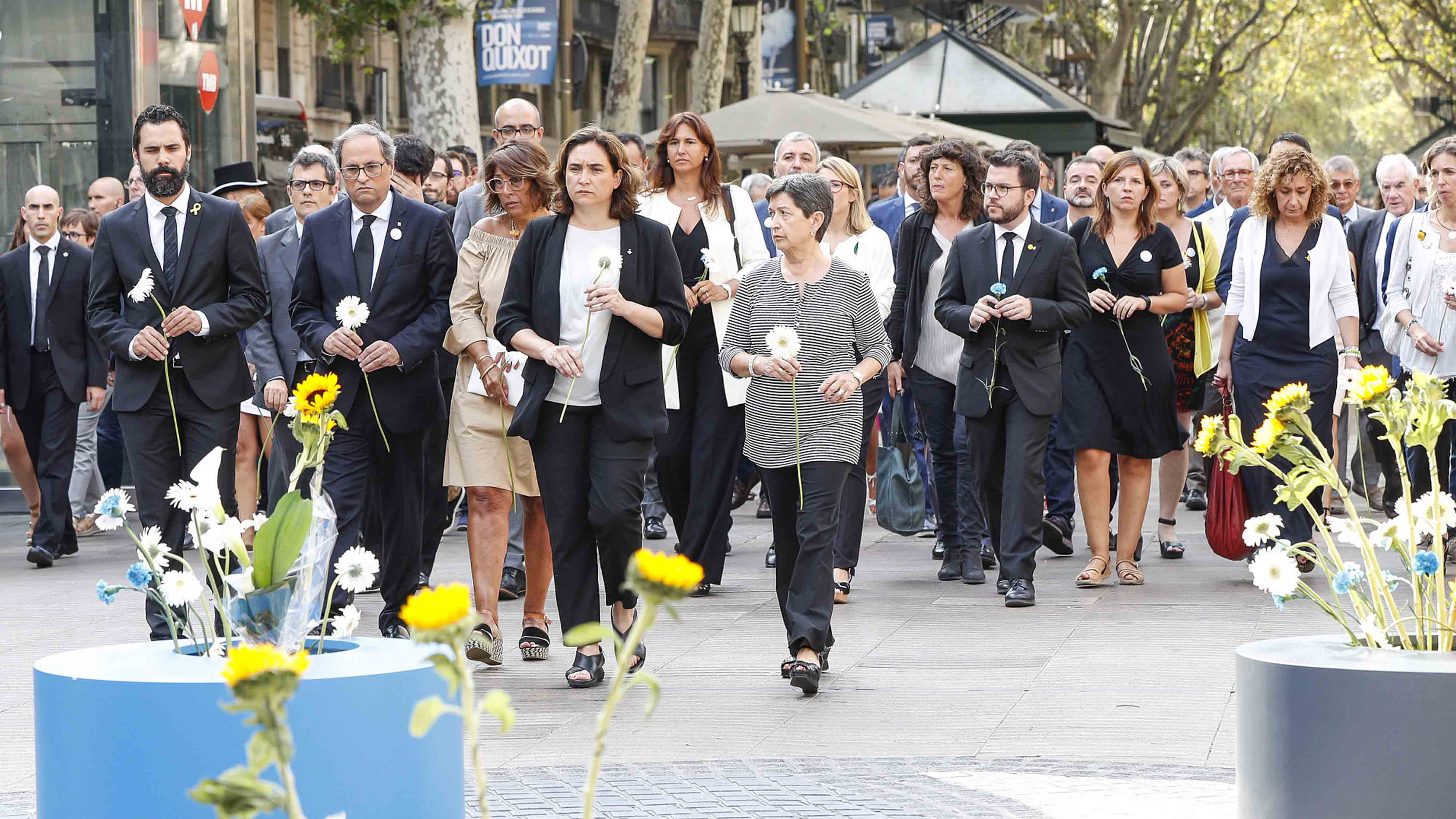
In Barcelona, that meant in some cases narrowly avoiding being crushed as a terrorist drove a rented van at high speed into crowds on La Rambla pedestrian promenade, Barcelona’s most famous street.
Elisa Micciola, a UAVAT psychologist, told CGTN, “From that moment, many of these people wonder where is a safe place. Many avoid going to crowded places, like the movies, shopping centers and concerts. Behind all that, is fear.”
Jose Moya was one of those witnesses. He has run a shop for 30 years, situated right on La Rambla. It sells vegetable, plant and flower seeds.
He told CGTN that he was working on August 17, 2017, with his back momentarily turned away from the pedestrian walkway, when around 5 pm, he heard a big commotion and turned around and saw the terrorist driver run his van right by the shop.
Somehow, Moya said, a little girl who was playing just outside the shop was unhurt by the speeding van.
But it smashed into some of his metal display stands just outside the shop and that noise seemed to alert some people up ahead to get out of the way.
“I saw people up in the air, either because they were hit by the van or because they were jumping to get out of the way. There were screams and then a brutal silence as La Rambla was cleared.” He said many people fled to neighboring streets but others seemed disoriented and unable to act.

Jose Moya at his shop on La Rambla in Barcelona, Spain, August 14, 2018 /CGTN Photo
Jose Moya at his shop on La Rambla in Barcelona, Spain, August 14, 2018 /CGTN Photo
He brought in some of these people to his shop and closed the doors and they stayed put for several hours until police told them they could leave.
“Am I afraid?” Moya said just before the one-year anniversary, “Maybe not. But anxious, yes. A lot of times, I look behind me, as if something were about to happen.”
Journalist Marta Palencia-Lefler said she was only on La Rambla that fateful afternoon because she had left her car in a repair shop, and was taking a walk with her partner.
They were about to cross a narrow lane of traffic that borders the pedestrian walkway but her partner insisted they go to a proper street crosswalk, just up the road.
At that moment, she saw the terrorist van rush by.
She and her partner were outside of a pharmacy and quickly took refuge inside. Soon after, she told CGTN that authorities brought in a young boy whom, she later found out, was from Australia.
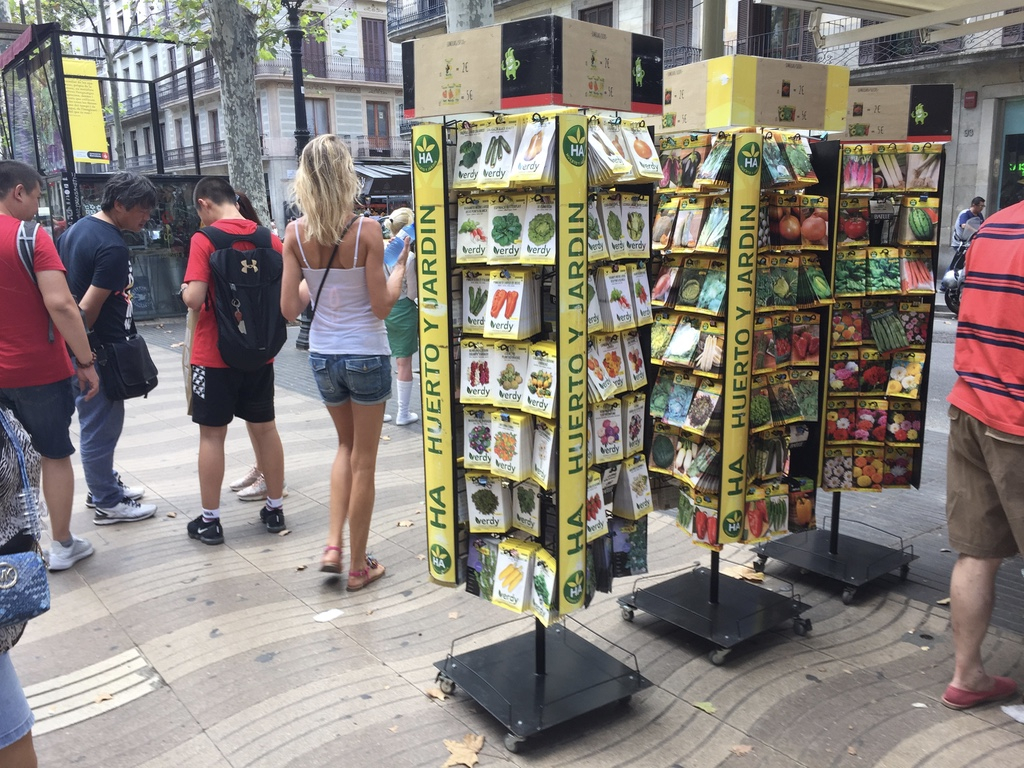
Jose Moya shop display stands like those hit by terrorist van, Barcelona, Spain, August 14, 2018 /CGTN Photo
Jose Moya shop display stands like those hit by terrorist van, Barcelona, Spain, August 14, 2018 /CGTN Photo
It was soon clear to all inside that he was dead and she said his face was covered with a towel.
“A little boy, dead. All of us, sort of being held here (in the pharmacy),” Palencia-Lefler said. “Above all, it’s the senselessness of everything, at that moment.”
Spanish authorities, including an investigating magistrate, have said that the terrorist cell had planned to carry out large-scale bombing attacks in Barcelona and possibly as far away as Paris, based on evidence gathered after the attacks.
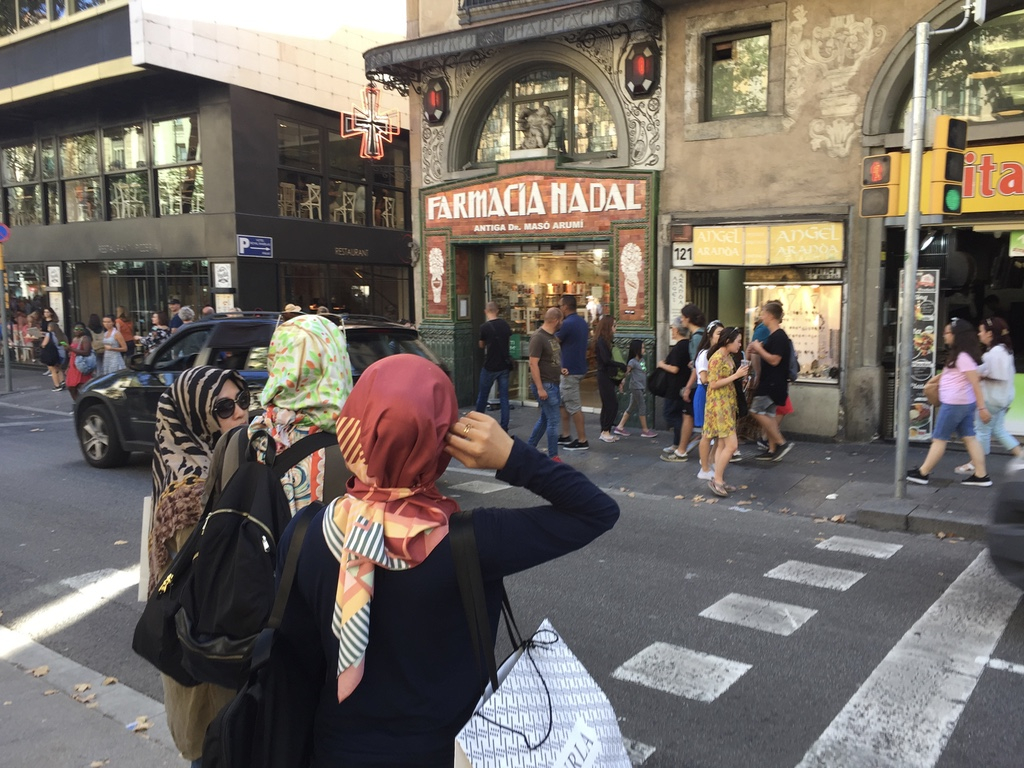
Barcelona pharmacy where journalist Marta Palencia-Lefler took refuge after the attacks /CGTN Photo
Barcelona pharmacy where journalist Marta Palencia-Lefler took refuge after the attacks /CGTN Photo
But on August 16, 2017, the explosives they were preparing at a safe house in the town of Alcanar accidentally exploded, killing two terrorists, including the alleged cell leader. The remaining members quickly changed plans, and decided on vehicle and knife attacks.
The next day, they struck Barcelona first, and hours later, other cell members drove a large sedan into the seaside resort of Cambrils in the early hours of August 18, 2018, attacking people out late on a summer night.
Police there soon shot dead five of the terrorists. Since the attacks, security has been tightened. Police under the command of the Catalan regional government, based in Barcelona, are more visible on the streets, with semi-automatic weapons drawn and at the ready.
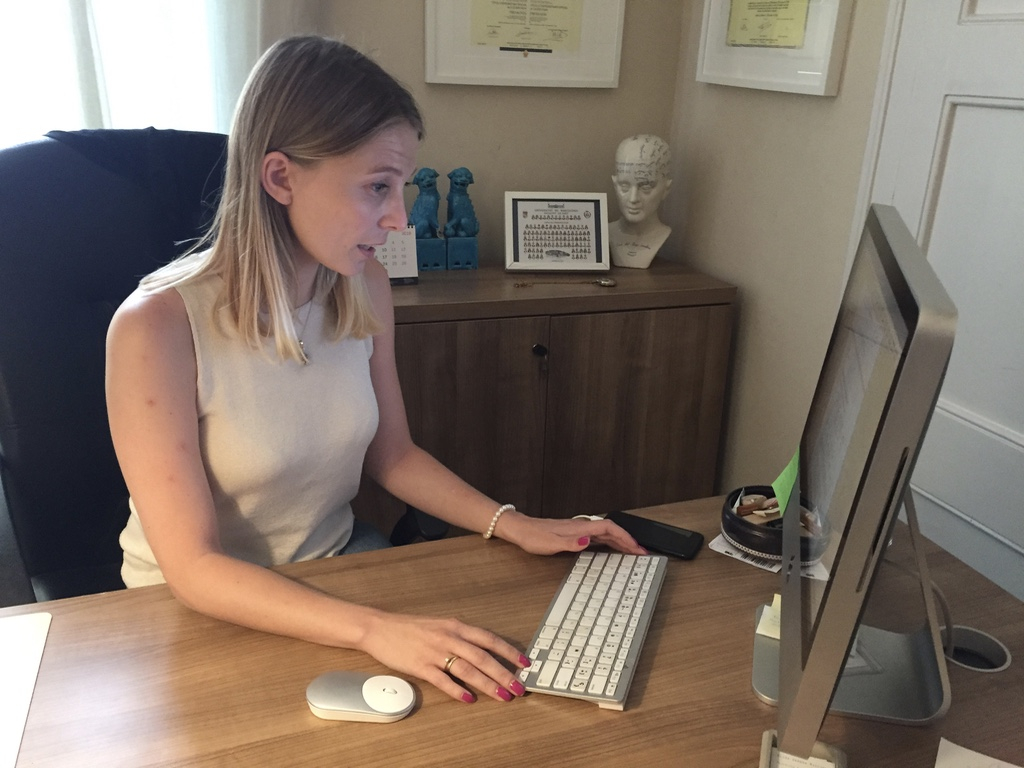
Psychologist Elisa Micciola has treated Barcelona attack victims. /CGTN Photo
Psychologist Elisa Micciola has treated Barcelona attack victims. /CGTN Photo
Concrete and metal barriers also have been erected at the start of La Rambla, by Barcelona’s Plaça de Catalunya, where the terrorist van was able to drive by last year.
The barriers aim to prevent such future attacks.
Spain’s King Felipe and Prime Minister Pedro Sanchez will lead the commemorative events on August 17 in Barcelona, one year after the attacks.