
Tech & Sci
21:15, 17-May-2018
The worldwide march to 5G mobile technology
 ["china"]
Share







Copied
01:36
Development of 5G, the next phase of mobile technology, is accelerating globally as people’s need to quickly reach out to every corner of the world is increasing.
It is projected that it will take only one millisecond for 5G signals to travel between terminals, 1/300 of the time for a human to blink.
China's three leading telecoms firms are on the forefront of the drive to the fifth-generation technology.
China Mobile plans 5G tests in five major cities including Shanghai in 2018, with more than 100 5G base stations. The company also plans a 5G business and application pilot program in 12 cities.
China Unicom said it will test 5G in seven regions this year, including Beijing, Shanghai and Xiongan New Area. It has built a platform in Chengdu, the capital city of Sichuan Province, for residents to experience Augmented Reality (AR) and Virtual Reality (VR) business via 5G.
As for China Telecom, it plans scale and preliminary commercial tests from the second half of this year to 2019. The company has already started its 5G trials in six cities.
China's phone makers are also advancing in 5G. Huawei announced that it will roll out its first 5G mobile phones in the second half of 2019. Vivo said that it will achieve 5G commercial use with its handsets the following year.
05:24
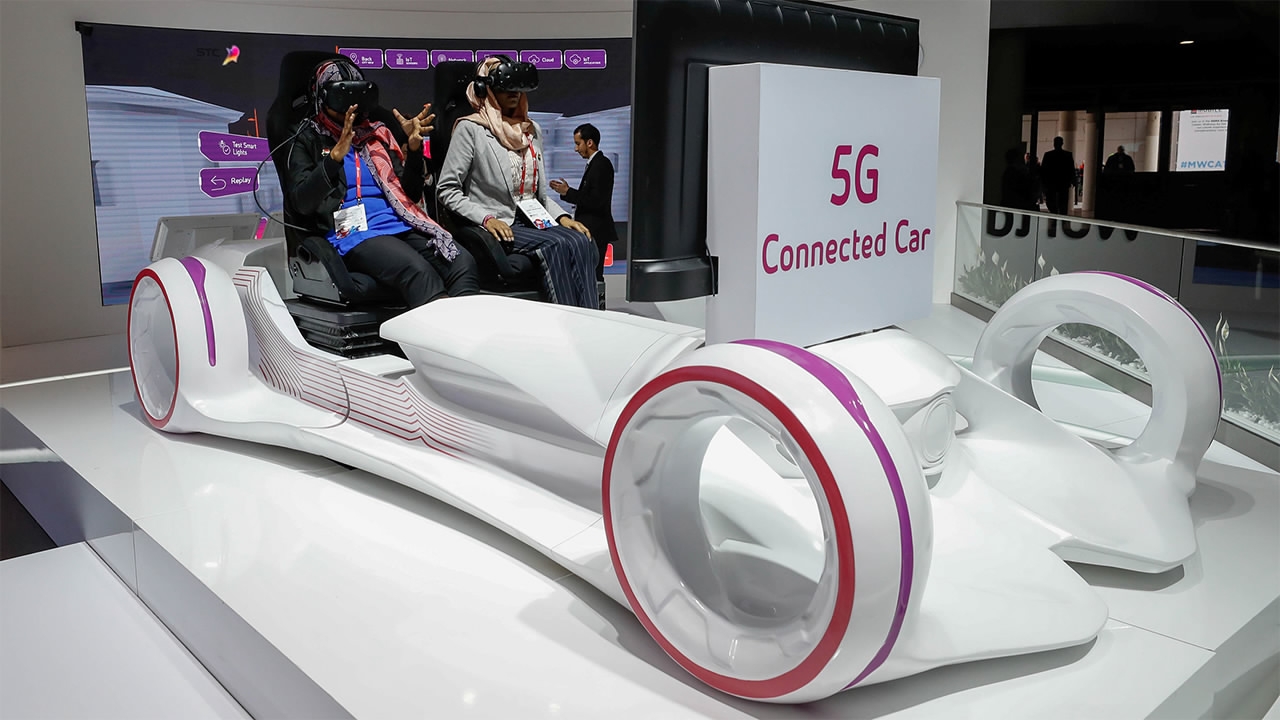
The US is another country leading the 5G race.
US carrier Verizon announced last year that it would deploy a 5G commercial use wireless network and core network in the second half of 2018. Qualcomm has been testing simulations of 5G's real-world performance in certain cities while AT&T announced it would commercially deploy 5G NSA.
China and the US are followed by Japan and South Korea, said Peter Liu, telecom research director at Gartner.
Japan has planned to start 5G commercial use in Tokyo in 2020 to support the Tokyo Olympics and Paralympic Games that same year. The commercial use of 5G is expected to expand nationwide by 2023 and more than 5 trillion yen (45.2 billion US dollars) will invested in the field.
South Korea seems to be running ahead thanks to its 5G debut at the 2018 Pyeongchang Winter Olympics. The experience underpins South Korea's plan to realize the commercial use of 5G before the end of 2020.
The European Union has set up a roadmap for 5G development and is expected to roll out the technology on the continent by 2025 while Russia's two biggest telecom carriers MegaFon and Rostelecom have teamed up to reduce costs in building 5G networks.
5G is coming sooner than expected, said Liu.
“By 2020, we’ll see 5 percent of mobile operators commercialize their 5G network,” he said, noting that although there’s a little bit of overhyping on the concept, 5G will definitely push forward the application of other technologies.
(CGTN’s Yan Yunli also contributed to the story.)