New election possible in Italy as two-month talks hit impasse
CGTN
["europe"]
Share
Copied
Italian President Sergio Mattarella has demanded talks with party leaders on May 7 to try to end nine weeks of increasingly fractious political deadlock following inconclusive March elections.
Mattarella has already held two rounds of talks which failed to end the stalemate while two further efforts at mediation carried out by parliamentary speakers also hit a brick wall.
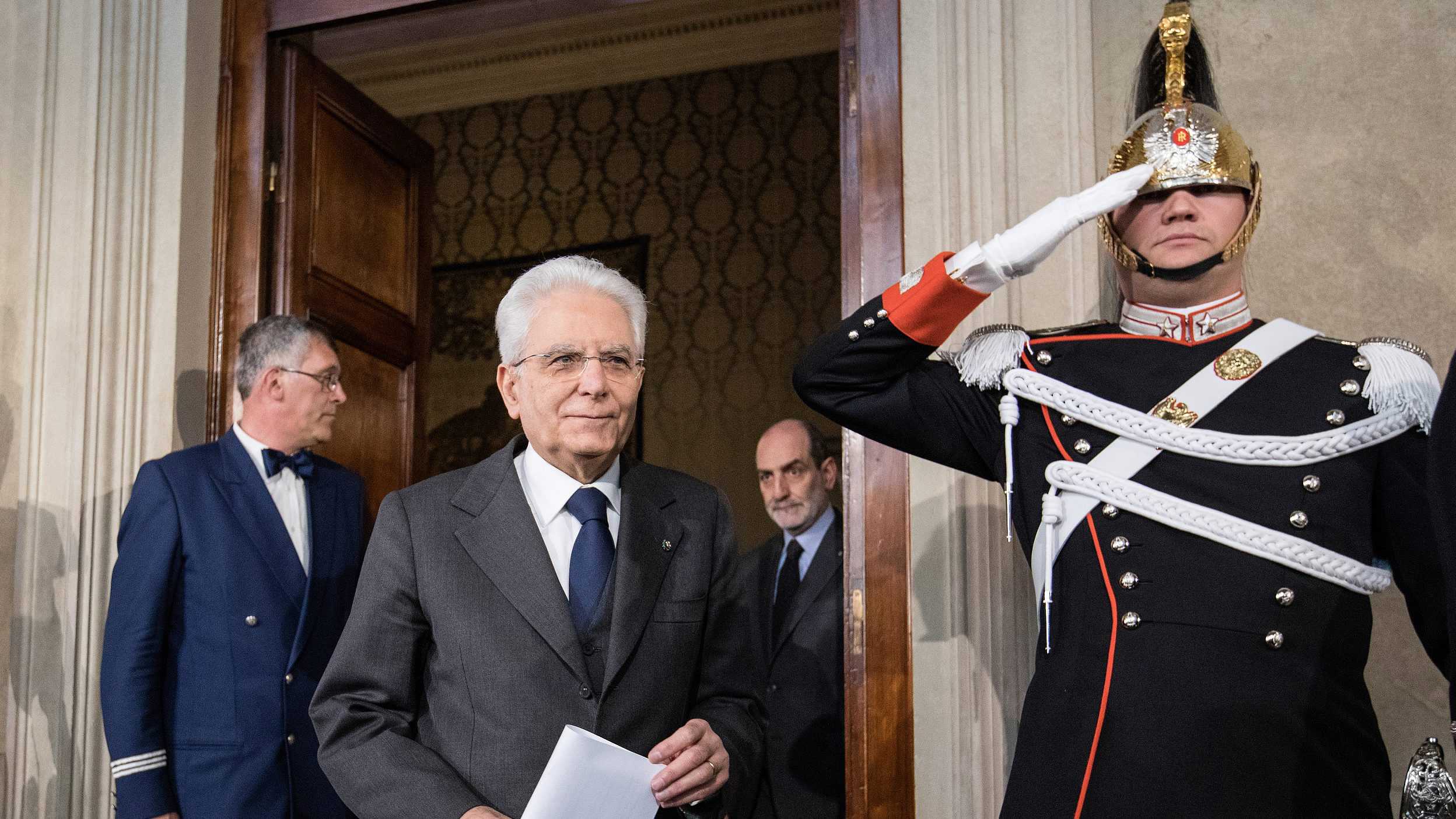
Sergio Mattarella, Italy's president, arrives to speak at a news conference following meetings with political parties at the Quirinale Palace in Rome, Italy, April 13, 2018. /VCG Photo
Sergio Mattarella, Italy's president, arrives to speak at a news conference following meetings with political parties at the Quirinale Palace in Rome, Italy, April 13, 2018. /VCG Photo
"After two months, the initial positions of the parties have not changed. No prospect has emerged for a government," the head of state's office said in a statement, adding that the president wanted to hear if party leaders had any other ideas.
Mattarella's options are rapidly dwindling and the possibility of a return to the polls sometime between the coming autumn and next spring looks increasingly likely.
A matrix of crisscrossing vetoes has so far prevented the parties from agreeing to a coalition deal, with friction and frustration growing by the day.
Deadlock in Italy
Who won the election? A national election on March 4 saw a center-right alliance led by the anti-immigrant League winning the most seats and the anti-establishment 5-Star Movement emerging as the biggest single party. No grouping won enough support to form a government.
What's happened since? The parties have tried to find enough common ground to form a coalition, but without success. Nine weeks of political paralysis has followed. 5-Star has called for new elections, but President Mattarella would prefer to put in place a stopgap government.
Who's running Italy? Day-to-day administration is being overseen by caretaker prime minister Paolo Gentiloni.
Underscoring the sense of paralysis, talks between the center-left and the 5-Star Movement over a coalition government failed to get off the ground on Thursday.
However, Mattarella did not wait for that news before announcing Monday's meetings – an acknowledgement that the deeply divided party will be unable to agree to such a deal.
Having come to the same conclusion, the leader of the 5-Star this week called for an immediate revote in June, but a source in the president's office told Reuters on Wednesday that the head of state would reject this demand.
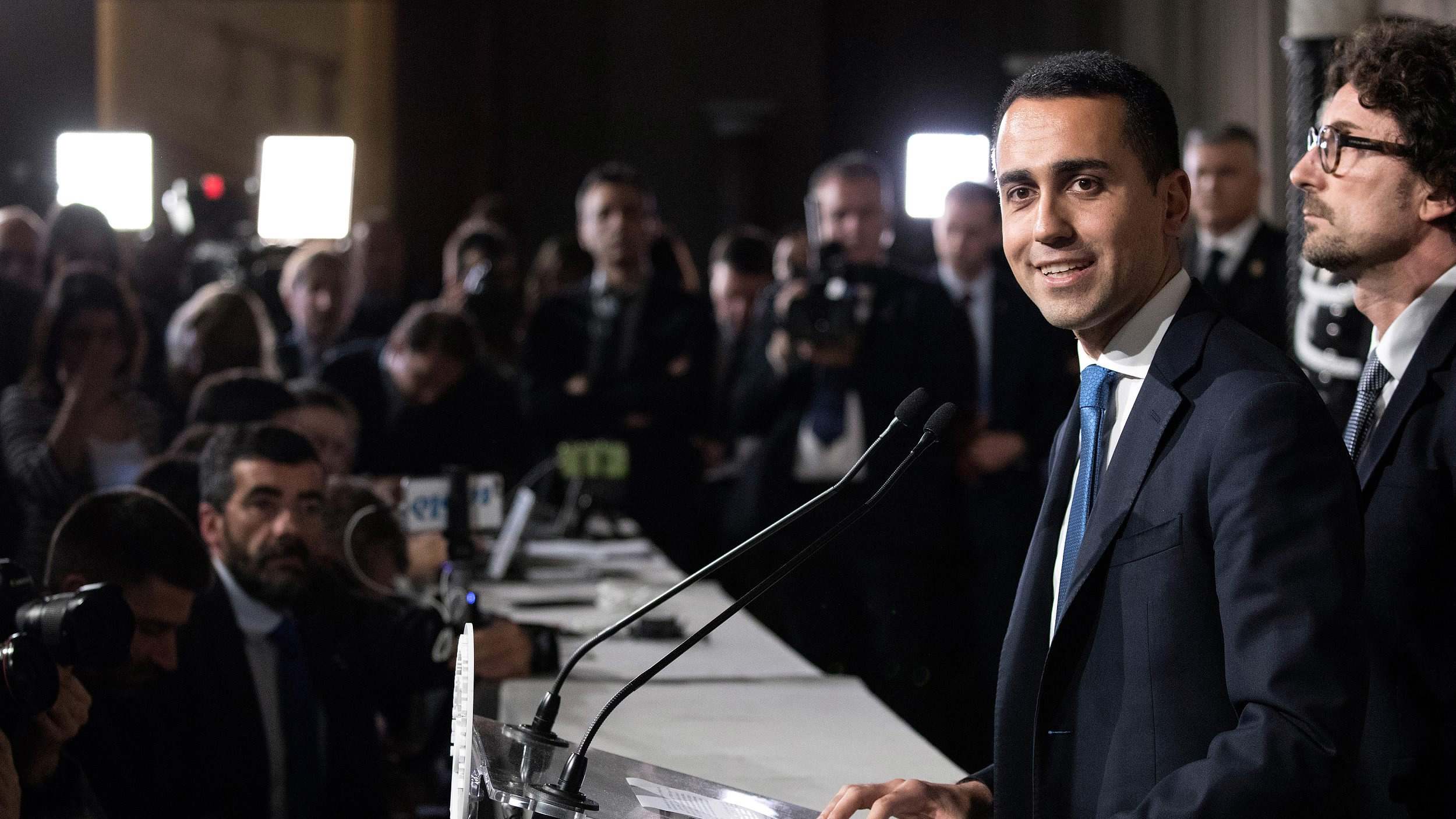
Luigi Di Maio, leader of the 5-Star Movement, speaks during a news conference following a meeting with Italian President Sergio Mattarellain Rome, Italy, April 12, 2018. /VCG Photo
Luigi Di Maio, leader of the 5-Star Movement, speaks during a news conference following a meeting with Italian President Sergio Mattarellain Rome, Italy, April 12, 2018. /VCG Photo
Instead, Mattarella wants to put together a stopgap government to draw up a 2019 budget that has to be approved by the end of December.
If party leaders fail to sign up to such an administration, which would almost certainly be led by a non-political figure, then a new vote would probably be held in October.
The last four Italian prime ministers took office thanks to backroom deals rather than ballot-box victories and repeated efforts to reform the electoral law that would allow for the swift formation of a government have failed to come up with a winning formula.
While 5-Star is pushing for an immediate revote, other parties have suggested working together to devise a new election system. However, winning wide backing for such a pact in the current political climate looks highly unlikely.
Italy's latest economic forecasts from the European Commission have underlined the need for a fully empowered government ready to undertake reform.
The forecasts showed that the Italian economy was set to grow 1.5 percent this year and just 1.2 percent next – the lowest amongst the European Union's 27 member states.

 ["europe"]