
Opinions
21:57, 21-Sep-2018
Reflections from the Summer Davos 2018
Updated
21:15, 24-Sep-2018
 ["china"]
Share







Copied
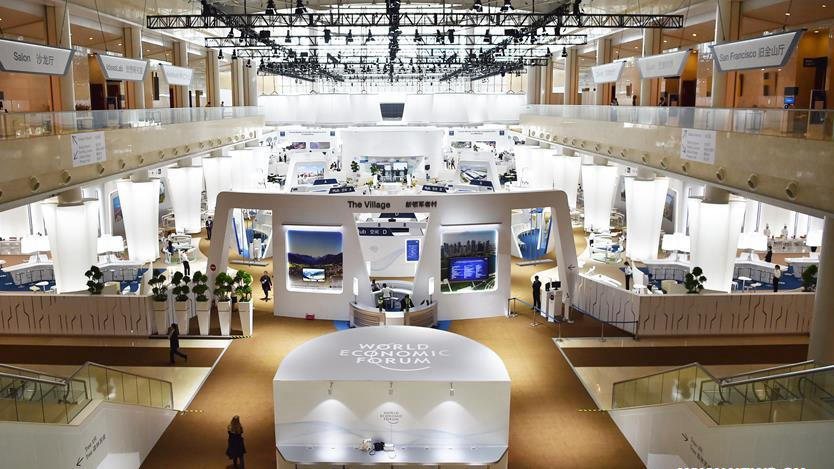
"Shaping Innovative Societies in the Fourth Industrial Revolution" was the them of this year's World Economic Forum's (WEF) Annual Meeting of the New Champions, also known as the Summer Davos, in Tianjin, north China, which drew a record number of participants.
It's a testament to the importance that policymakers and industry leaders are attaching to how the pace of technological change is reshaping globalization and societies.
Covering this year's Summer Davos, one could feel the excitement and potential that the Fourth Industrial Revolution (4IR) may bring.
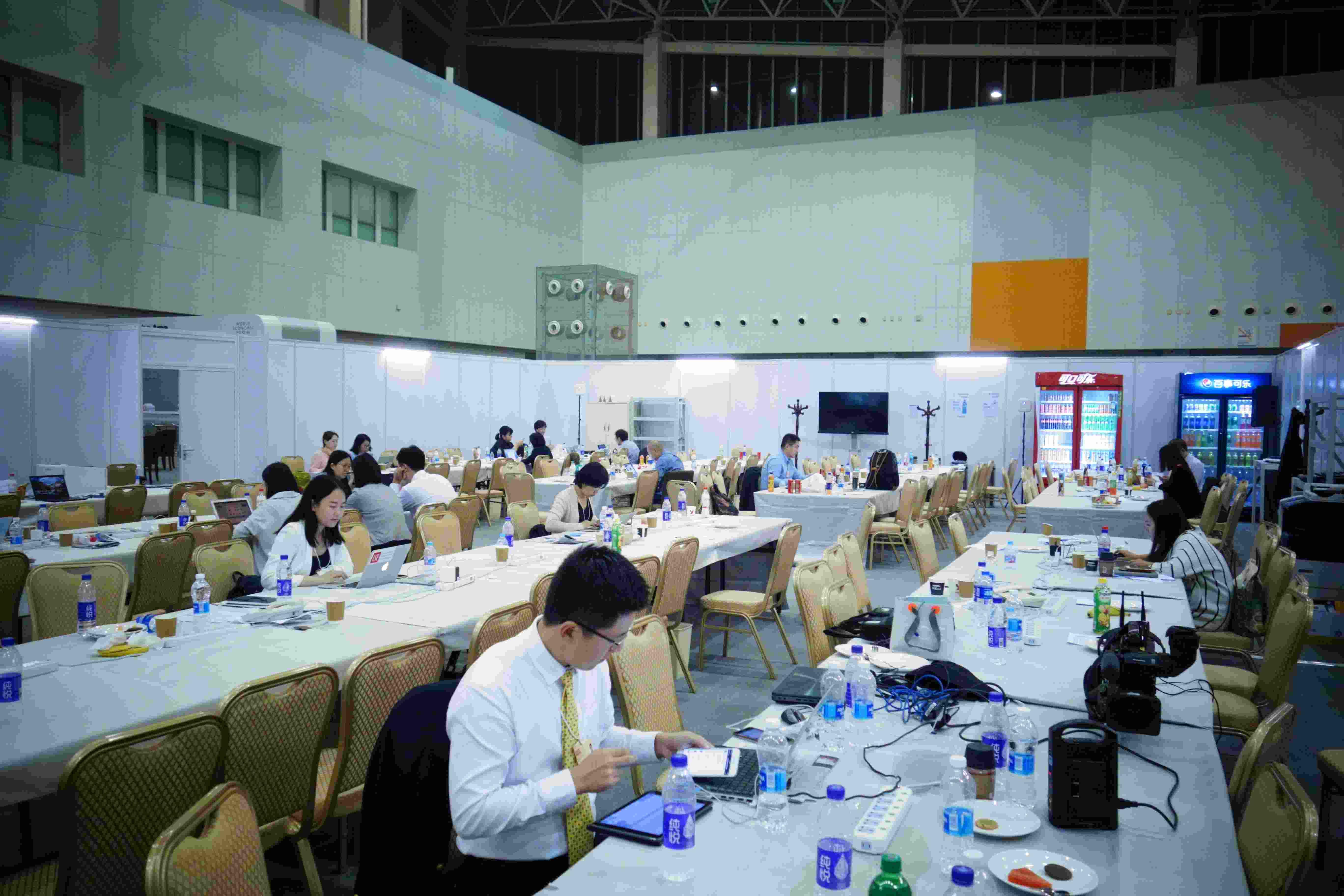
Media center of the Summer Davos 2018 in Tianjin, north China, Sept. 19, 2018. /CGTN Photo
Media center of the Summer Davos 2018 in Tianjin, north China, Sept. 19, 2018. /CGTN Photo
It's an industrial revolution defined by the WEF as combining the physical, digital, and biological. We heard about artificial intelligence (AI) as being an enabler of better decision making by combining precision with technologies such as haptics, which can replicate a sense of touch in midair.
That could translate into a significant reduction in germ transmission. But, along with the optimism and possibilities of the 4IR, there was also a sense of unease as businesses, governments, and societies race to adapt. The WEF says what makes the 4IR different is the speed at which it is progressing: Exponentially rather than the linearly, the pace at which humans are used to.
A key message I took from this year's Summer Davos is to find the right balance in an age of rapid transformation and striving to make the 4IR as inclusive as possible. This means making sure the 4IR does not contribute to widening inequality - not just wealth inequality, but also technological inequality.

CGTN's Michael Wang is doing an interview with Richard Baldwin, a professor of International Economics at the Graduate Institute. Sept. 19. 2018 /CGTN Photo
CGTN's Michael Wang is doing an interview with Richard Baldwin, a professor of International Economics at the Graduate Institute. Sept. 19. 2018 /CGTN Photo
It means working to reconcile the gap between our current education systems and ones needed to thrive in the 4IR age. It means the relationship between machines and labor needs to be urgently addressed, emerging and developing economies need to be able to share in the gains of the 4IR, and that the relationship between availability and access to new technologies is optimized to the benefit of all.
There is no right answer to what these balances may be. Societies will need to constantly fine-tune and adjust trade-offs in the 4IR age.
But for the prosperity of the 4IR to be inclusive, economic globalization needs to progress. The interconnectedness of our world determines that we work towards our most pressing challenges together.
During his keynote speech at this year's Summer Davos, Chinese Premier Li Keqiang stressed that China will push forth with openness, continual reforms, economic restructuring, and will foster an environment for innovation.
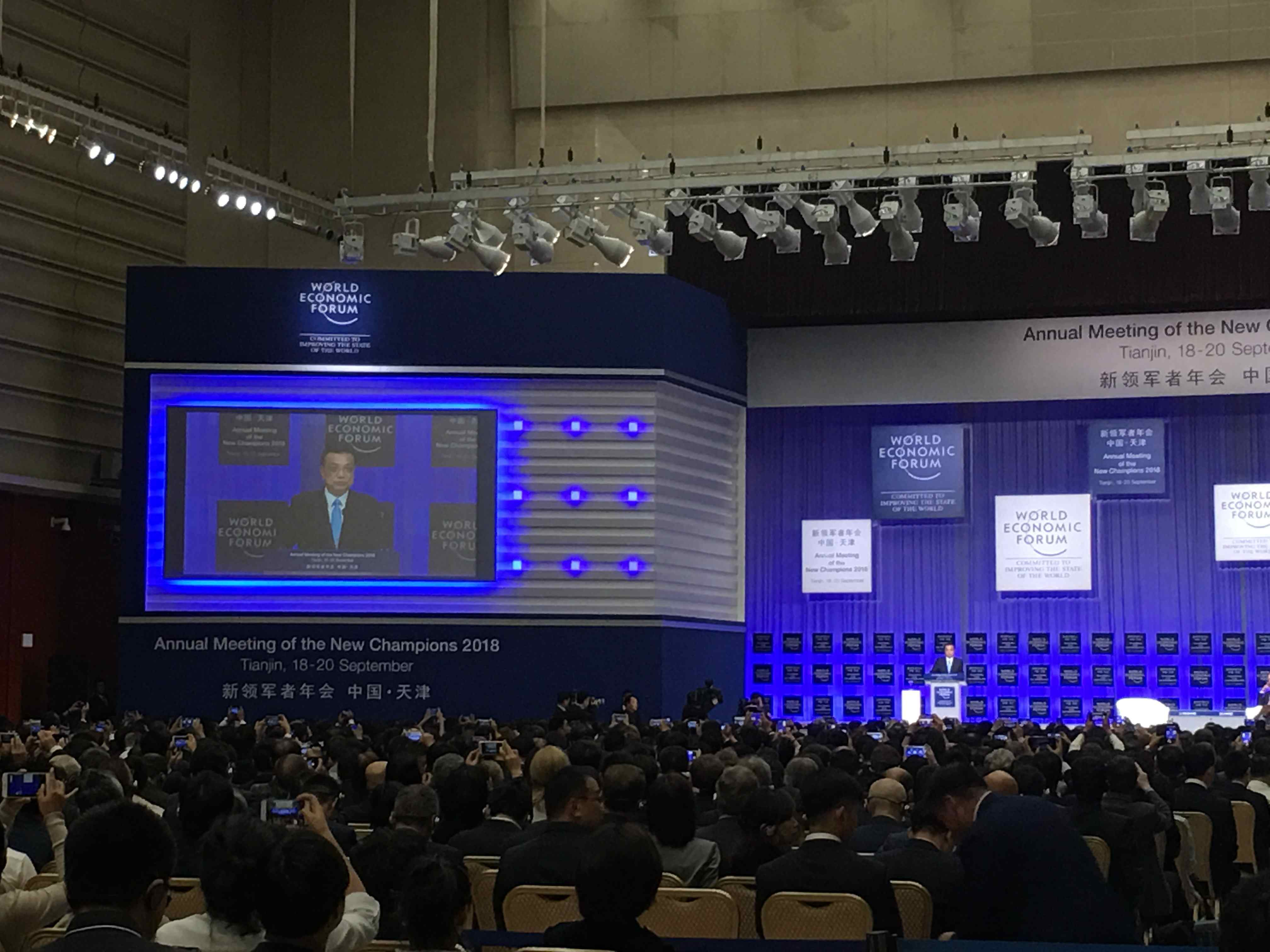
Chinese Premier Li Keqiang addresses the opening ceremony of the 12th World Economic Forum's Annual Meeting of the New Champions, or Summer Davos Forum, in Tianjin. /CGTN Photo
Chinese Premier Li Keqiang addresses the opening ceremony of the 12th World Economic Forum's Annual Meeting of the New Champions, or Summer Davos Forum, in Tianjin. /CGTN Photo
These commitments have led to unprecedented progress for China, but they are also clear signals that China will continue to do its part so the world can share in its development. They are also the building blocks which will allow China to navigate the exhilarating but also rocky waters of the 4IR.
As this year's Summer Davos concludes, the WEF announced that it will open a Center for the Fourth Industrial Revolution in Beijing. I believe this new center is as much of a benefit for China as it is to the whole world, allowing best practices to be shared by all.
With China embracing reforms, innovation, science and technology, the country stands ready to work with its global partners to shape innovative societies in the Fourth Industrial Revolution.
(Cover Photo: The venue of Summer Davos at Meijiang Convention and Exhibition Center in Tianjin, north China, Sept. 17, 2018./ Xinhua Photo)
(If you want to contribute and have specific expertise, please contact us at opinions@cgtn.com.)