
Business
22:37, 22-Sep-2018
Western China's opening-up welcomed at investment fair
Updated
22:18, 25-Sep-2018
 ["china"]
Share







Copied
02:37
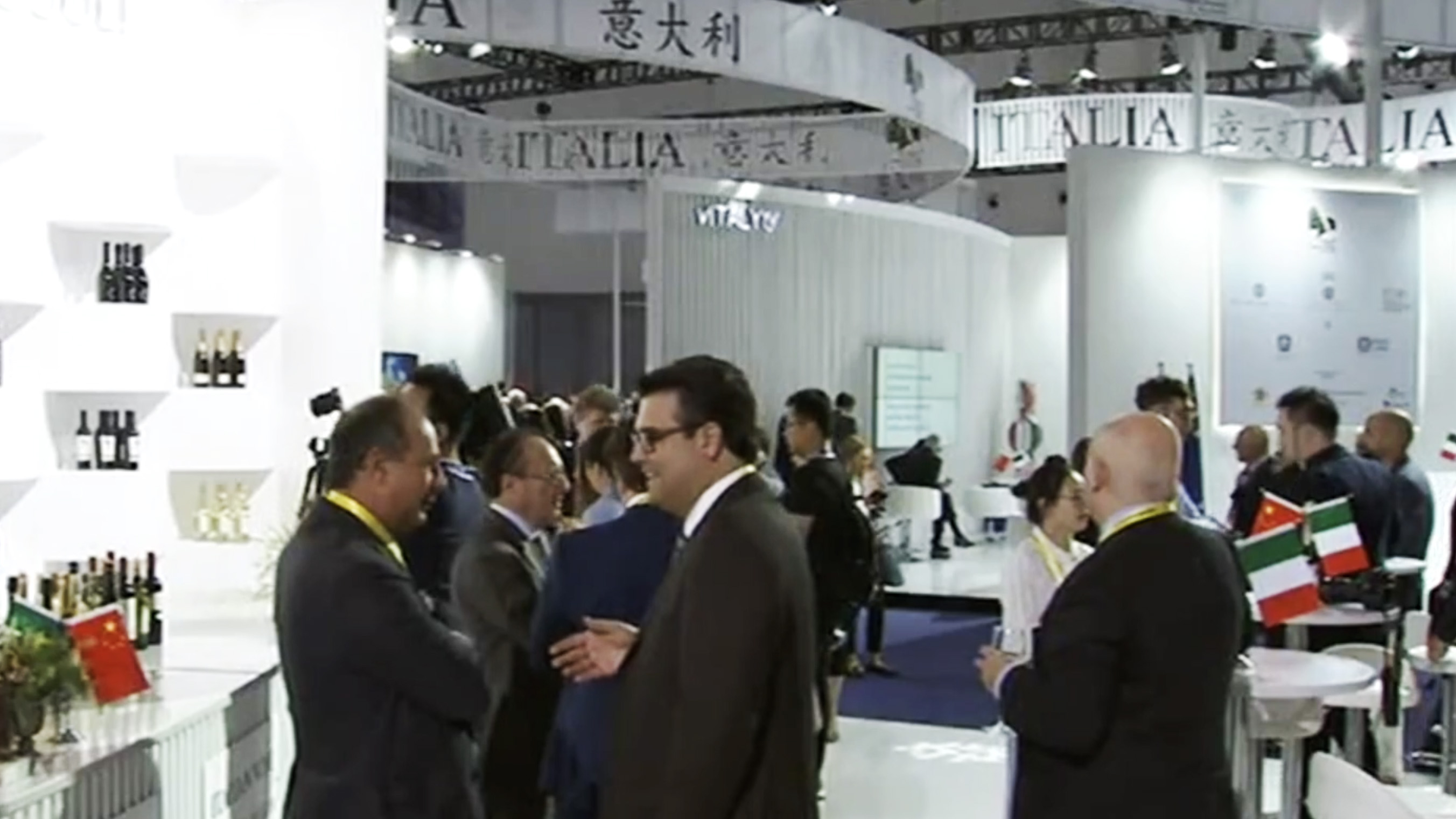
A senior Chinese official has laid out an investment plan for the nation's western region which is seen as ripe for further economic development and opening-up.
Western China – which includes Sichuan, Guizhou and Yunnan provinces, Chongqing municipality, as well as Tibet Autonomous Region and Xinjiang Uygur Autonomous Region – is said to cover 71.4 percent of the Chinese mainland but contribute only about a fifth to the country's GDP.
Chinese Vice Premier Hu Chunhua commended the area's impressive growth over the past five years during a speech at the opening of the Western China International Fair (WCIF) and said he expects the momentum to continue.
"We will speed up the construction of projects in the western region, in line with the country's national planning. This includes the Sichuan-Tibet and Chongqing-Kunming Railways as well as other major corridors," Hu said.
"We will also launch projects in the film, oil and gas, as well as IT industries. We will also promote innovation and seek to remove rules that prevent us from building a unified and level playing field."
His message was welcomed by foreign participants at the fair.
Alexander Fowles, the deputy consul general of Germany based in Chengdu, said Sino-German cooperation has expanded beyond just economic matters to the scientific field.
"I think China realizes that in order to have an innovative society, you need to have an open society and it needs to be based on transparency, cooperation, a level playing field and competition," he said. "I think the next phase of China's opening-up will be one where equal market access is allowed and is encouraged."
Fowles is hopeful that many steps have been taken in this regard.
"So I think an element of trust is necessary, and that ranges into all areas; for example, Internet access and the ability of foreigners and foreign institutions to do business based on mutual trust. I think China is moving in the right direction in that aspect."
Themed "New Era in China, New Advances in Western China," the 17th WCIF focuses on the Belt and Road Initiative and the development of the Yangtze River Economic Belt.
Already, Western China's GDP growth in the first half of 2018 – at 7.4 percent year-on-year – has outpaced the national average by 0.6 percentage points.
Michal Gawin, operations director at Spedcont, a Polish cargo terminal operator which links Lodz in Central Poland to Chengdu, said products shipped between the two have increased by 50 percent in the last two years.
"The [Belt and Road] project has helped companies to exchange products that are not able to be transferred by sea. I hope we will be able to increase the number of trains, product exchanges – both ways – from China and from Poland, in the coming years," he told CGTN.