
Opinions
22:20, 06-Aug-2018
Opinion: To see the future, look at Shenzhen
Updated
21:57, 09-Aug-2018
 ["china"]
Share







Copied
Editor's note: David Morris is a diplomat currently based in China, a former Australian senior political adviser and chair of the United Nations 2019 Asia Pacific Business Forum. The article reflects the author's opinion, and not necessarily the views of CGTN.
“I make robots,” said the sharply-dressed young man. We had arrived at the same time to an event celebrating 40 years of China’s reform and opening up in the experimental megacity, Shenzhen. My failing eyesight didn’t allow me to make out his business; I asked him what he did. It turned out he ran one of the world's leading robot manufacturers.
As you do in Shenzhen, where the future is being created today.
Some call it the 4th Industrial Revolution. Each industrial revolution has ushered in unprecedented social change. So hold on, because if you thought the world was changing fast, things are about to move a whole lot faster.
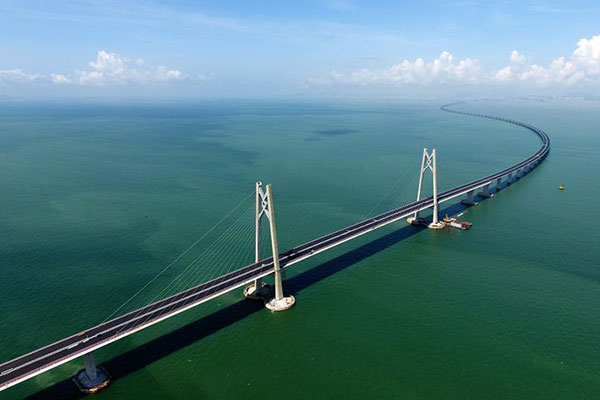
July 7, 2017: Hong Kong-Zhuhai-Macao Bridge. An underground tunnel section was completed on Friday, marking the end of the construction of the main structure for the world's longest cross-sea bridge. /Xinhua Photo
July 7, 2017: Hong Kong-Zhuhai-Macao Bridge. An underground tunnel section was completed on Friday, marking the end of the construction of the main structure for the world's longest cross-sea bridge. /Xinhua Photo
And one of the changemakers is likely to be this remarkable South China entrepôt. Shenzhen is an industry town in a hurry to transform from the world’s electronics hub to the driving force of the technological future.
Once the cheap manufacturing back office to Hong Kong, Shenzhen is coming of age. It’s no coincidence that this city was the epicenter of Deng Xiaoping’s reform and opening up in the late 1970s.
Shenzhen was China’s first Special Economic Zone, unleashing the animal spirits of business. It is strategically located in the Pearl River Delta, drawing on the international finance reach of Hong Kong, the trading heritage of Guangzhou (old Canton) and a labor force of over 70 million people in the surrounding cities and towns.
All the world’s major tech brands are manufactured here, including Apple, Intel and Microsoft. The ones to watch, though, are the local champions. Among the one million private firms in Shenzhen are DJI, the world’s leading drone manufacturer, Tencent, whose WeChat is the social media platform of choice for a billion people, and many globalizing brands such as Huawei, BYD, ZTE and Vivo.
In many of these firms a new meritocracy is forming in which talented, young people are enjoying rapid promotions and flatter structures than they would find elsewhere in China. Startups are attracted to Shenzhen because of the speed at which things happen and the open source, collaborative culture.
No longer do these firms need a Special Economic Zone. They are born global players.
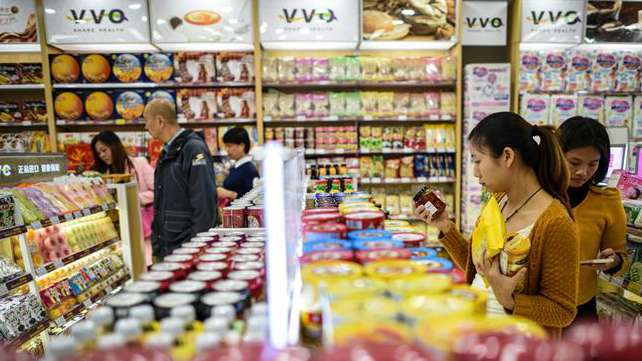
Customers buy food at the CTFHOKO shopping mall in Shenzhen. /Xinhua Photo
Customers buy food at the CTFHOKO shopping mall in Shenzhen. /Xinhua Photo
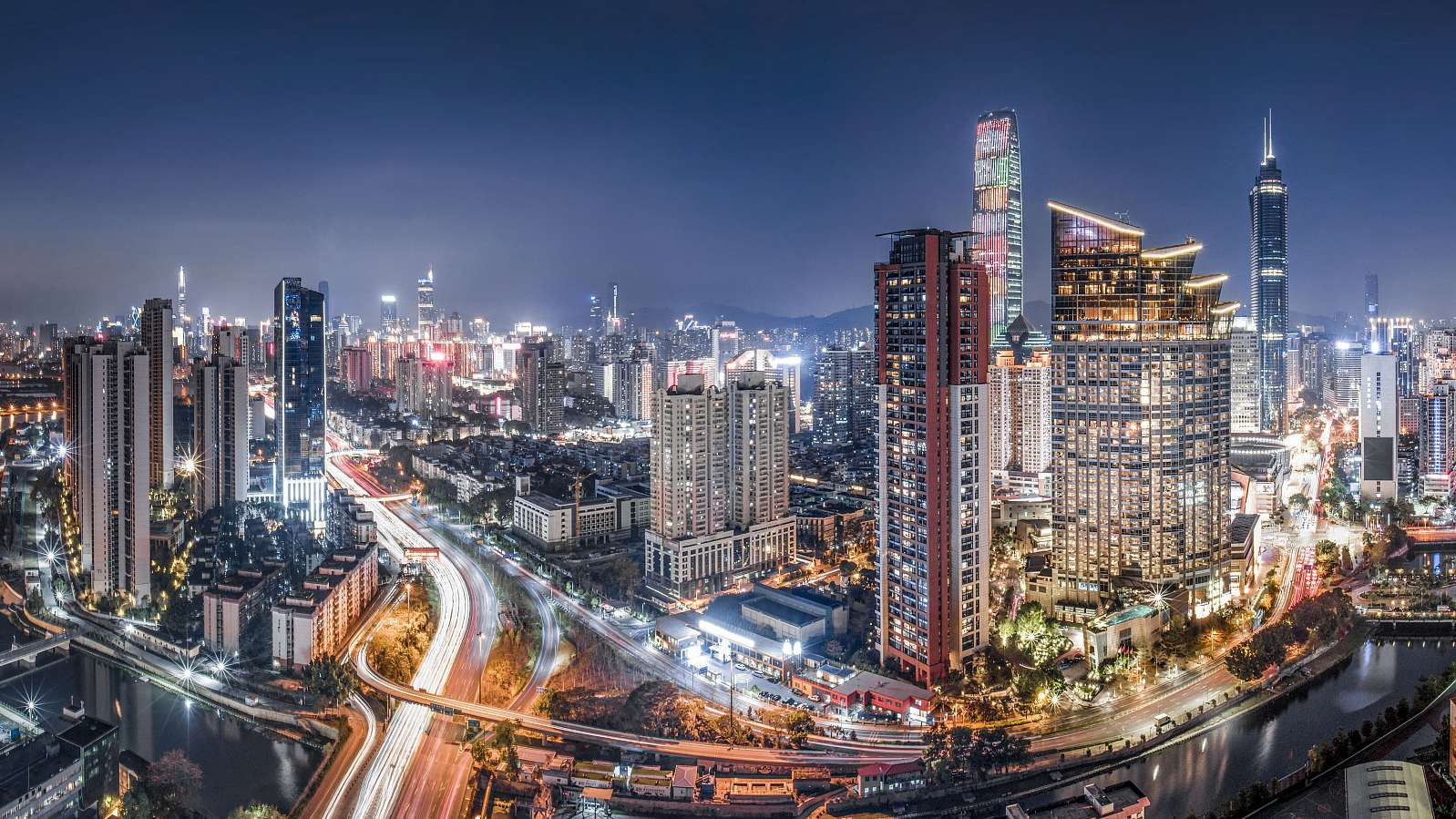
This is the site of the world’s most rapid and largest scale urbanization. In 40 years, Shenzhen has grown from a fishing village of 30,000 to a city of more than 11 million, to one of the leading cities of China with GDP of an estimated 331 billion US dollars in 2017, clipping Guangzhou and well on the way to surpassing Hong Kong in the next few years.
Per capita GDP remains half that of Hong Kong but therein lies part of Shenzhen’s competitive advantage. Shenzhen has the highest per capita GDP in China's mainland, growing at about nine percent, well above the national average.
In the space of a generation, Shenzhen has developed a unique entrepreneurial culture. It’s a migrant city, drawing ambitious young people from all over China looking to make their fortune and hungry to learn and innovate. It seems everyone is working two jobs, in part-time education and learning a language, all to be sure not to fall behind.
Unlike anywhere else in China, Shenzhen is overwhelmingly a private sector economy. Its businesses rise and fall rapidly and its massive industries generate huge numbers of suppliers and service providers who can nimbly switch from one client to another.
With a passion for innovation, public and private sector firms are committed to research and development, soaking up a whopping four percent of the city’s GDP.
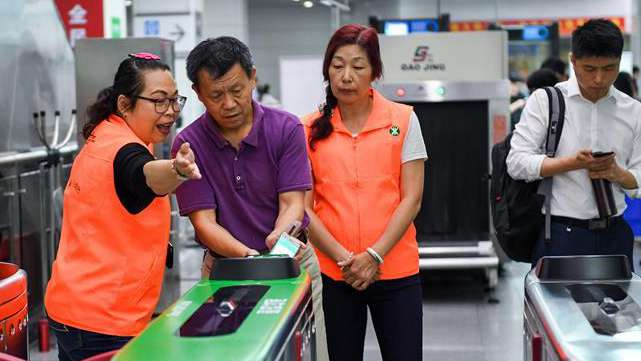
A volunteer helps a passenger use a smartphone-generated QR code to buy a ticket in Shenzhen Metro. /Xinhua Photo
A volunteer helps a passenger use a smartphone-generated QR code to buy a ticket in Shenzhen Metro. /Xinhua Photo
Shenzhen is about to get a huge identity boost as the hub of China’s vision for the whole Pearl River Delta cluster of cities, badged as the “Greater Bay Area” plan. This is an economic powerhouse region including Hong Kong, Guangzhou and Foshan.
By combining the strengths of each city stretched across 200 kilometers, and building stronger and faster connectivity between them, the Greater Bay Area is envisaged to be an international powerhouse for finance, logistics, technology and innovation.
So if Shenzhen isn’t world famous yet, its time is about to come. How the Shenzhen story will evolve from here is impossible to predict, with such fast-paced industries and such an adaptable mindset. Can it turn Made in China into Created in China?
The story of Shenzhen is the story of modern China, the nation that in one generation has developed faster, and on a bigger scale, than any other place in history. Of course, China still has many challenges, contradictions, risks and fears for the future, but Shenzhen demonstrates that tackling the economics is a big part of the solution. China has surprised in the past and it will again.
Today, 90 percent of the world’s electronics have at least one component made in Shenzhen. In the future, will 90 percent of the AI driving our cars, our augmented reality devices and many of the products and services we can’t imagine yet all originate in Shenzhen?
Watch this space.