
Opinions
20:44, 07-Oct-2018
Opinion: Pompeo's Tokyo tour a hypocritical political stunt
Updated
20:08, 10-Oct-2018
 ["other","Asia"]
Share







Copied
Editor's note: The author is a journalist for CGTN. The article reflects her views, and not necessarily those of CGTN.
US Secretary of State Mike Pompeo has arrived in Pyongyang on Sunday for his fourth visit there after leaving Tokyo, where he and Japanese Prime Minister Shinzo Abe vowed coordinated efforts to usher the DPRK into an era of denuclearization.
"It is important for us to hear from you as I travel to Pyongyang to make sure that we are fully in sync with respect to missile programs… We will bring up the issue of the abductees as well," Pompeo told Abe. He also stressed the importance of trilateral cooperation among Washington, Tokyo and Seoul on the perennial issue haunting the Korean Peninsula.
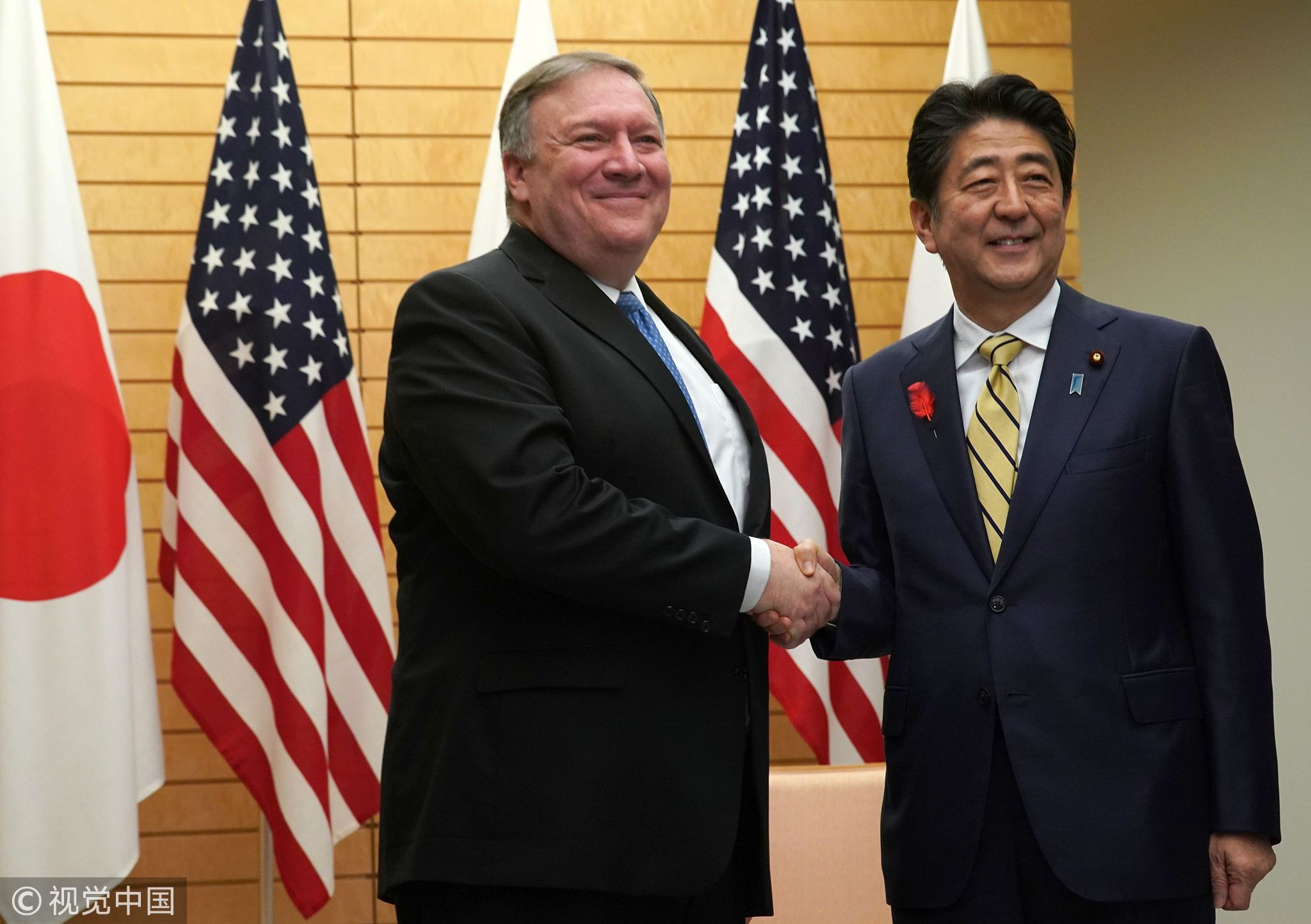
US Secretary of State Mike Pompeo (L) shakes hands with Japanese Prime Minister Shinzo Abe in the latter's office in Tokyo, October 6, 2018. /VCG Photo
US Secretary of State Mike Pompeo (L) shakes hands with Japanese Prime Minister Shinzo Abe in the latter's office in Tokyo, October 6, 2018. /VCG Photo
The issue of the Japanese nationals who were allegedly abducted by the DPRK in the 1970s and 1980s has been the main obstacle preventing Japan and the DPRK from normalizing their bilateral ties since 2002. Abe had anxiously been seeking to address this conundrum over the past months, mainly in order to clinch a third term in office. He has succeeded in being reelected, but the alleged issue remains.
"And the ability of the US to settle it is extremely limited," said Tom Fowdy, a UK-based political analyst. "Pompeo's pledge to raise the issue is, at best, only expressing diplomatic courtesy and rhetorical support for Japan's position," he told CGTN.
Similarly, the joint promise to coordinate efforts on the DPRK nuclear issue is more of a symbolic gesture. In fact, Abe has been one of the staunchest supporters of US President Donald Trump's "maximum pressure" campaign against the DPRK, said Fowdy. That's why there were reports from Japan suspecting that DPRK ships were engaging in illegal trade. Furthermore, Tokyo has also been lobbying Seoul against loosening sanctions on Pyongyang.
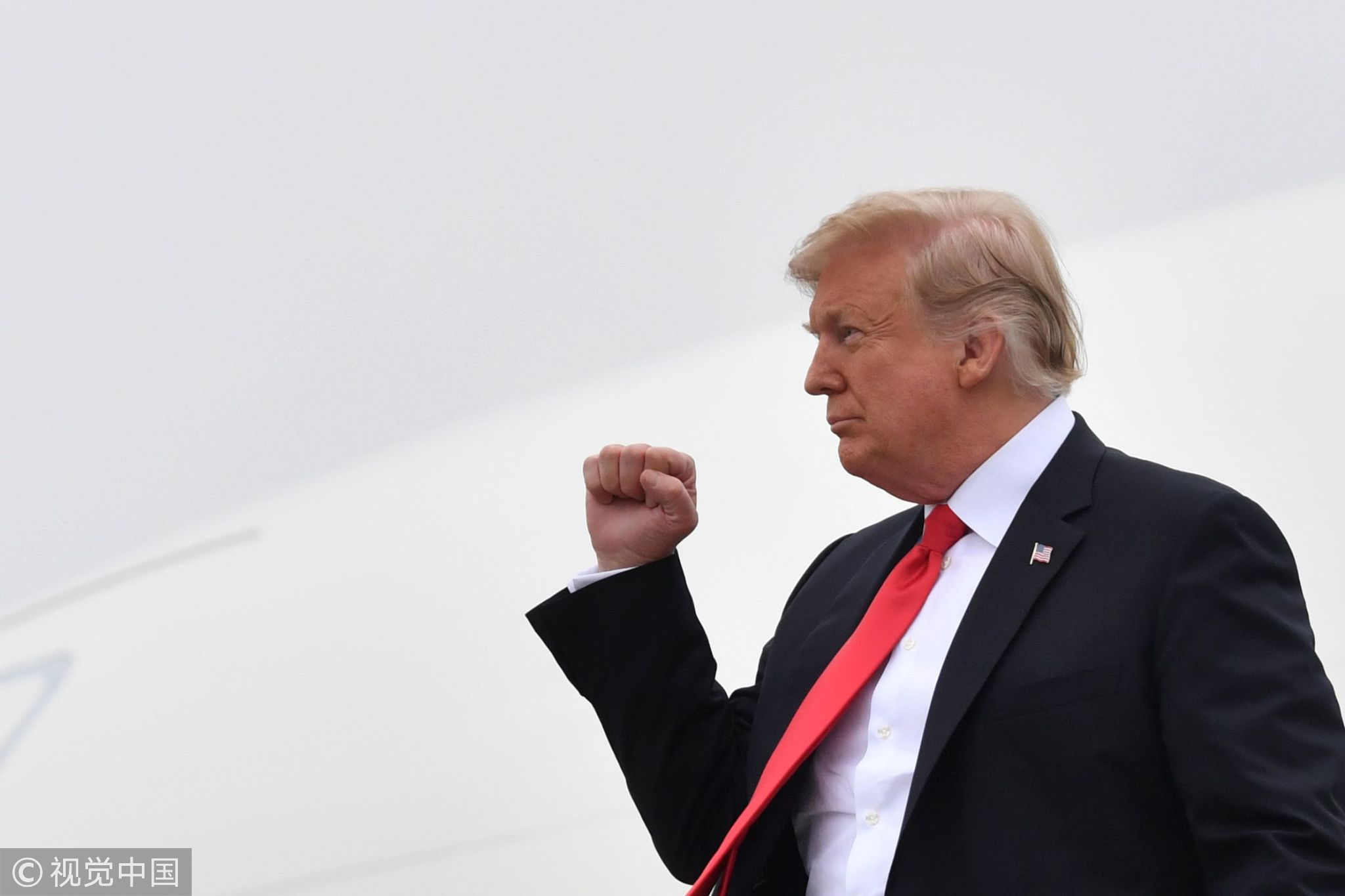
US President Donald Trump gestures as he steps off Air Force One upon arriving for a "Make America Great Again" rally in Topeka, Kansas, October 6, 2018. /VCG Photo
US President Donald Trump gestures as he steps off Air Force One upon arriving for a "Make America Great Again" rally in Topeka, Kansas, October 6, 2018. /VCG Photo
However, the impulsive use of Trump's and Abe's "maximum pressure" policy will probably end up in a predicament. Since the Singapore summit this June, another US ally -- the Republic of Korea -- has gradually absented itself from this strategy. And China consistently opposes unilateral sanctions by the US and its allies.
With waning support, this trump card of Trump on the Korean Peninsula may not survive for long, and will risk leaving America alone in this approach. Therefore, he needs Japan's support to buffer his position on the Korean Peninsula.
Plus, in Trump's eyes, "cash is king." He may wish that the Japanese government provide financial aid to the DPRK in its commitment to economic development, to get its political concession in return. But this strategy may go nowhere given the fundamental differences in how to approach denuclearization between Trump and DPRK leader Kim Jong Un.
So what's the point of Pompeo's Japan visit?
It seems that one of his primary missions is to reassure a strained Japan, which has been marginalized in the intense DPRK negotiations over the spring, and hence probably quite wary of a change in the security landscape of East Asia. After all, it has been under the nuclear umbrella of the US since the Cold War. Any minute change in the decades-long security architecture will deal a heavy blow to the island country off the east coast of Asia.
Moreover, Pompeo is hoping to drum up greater domestic support for US President Donald Trump as the mid-term elections draw near by touting progress in bilateral relations, but Washington and Pyongyang are actually mired in a deadlock after Trump and Kim met in Singapore.
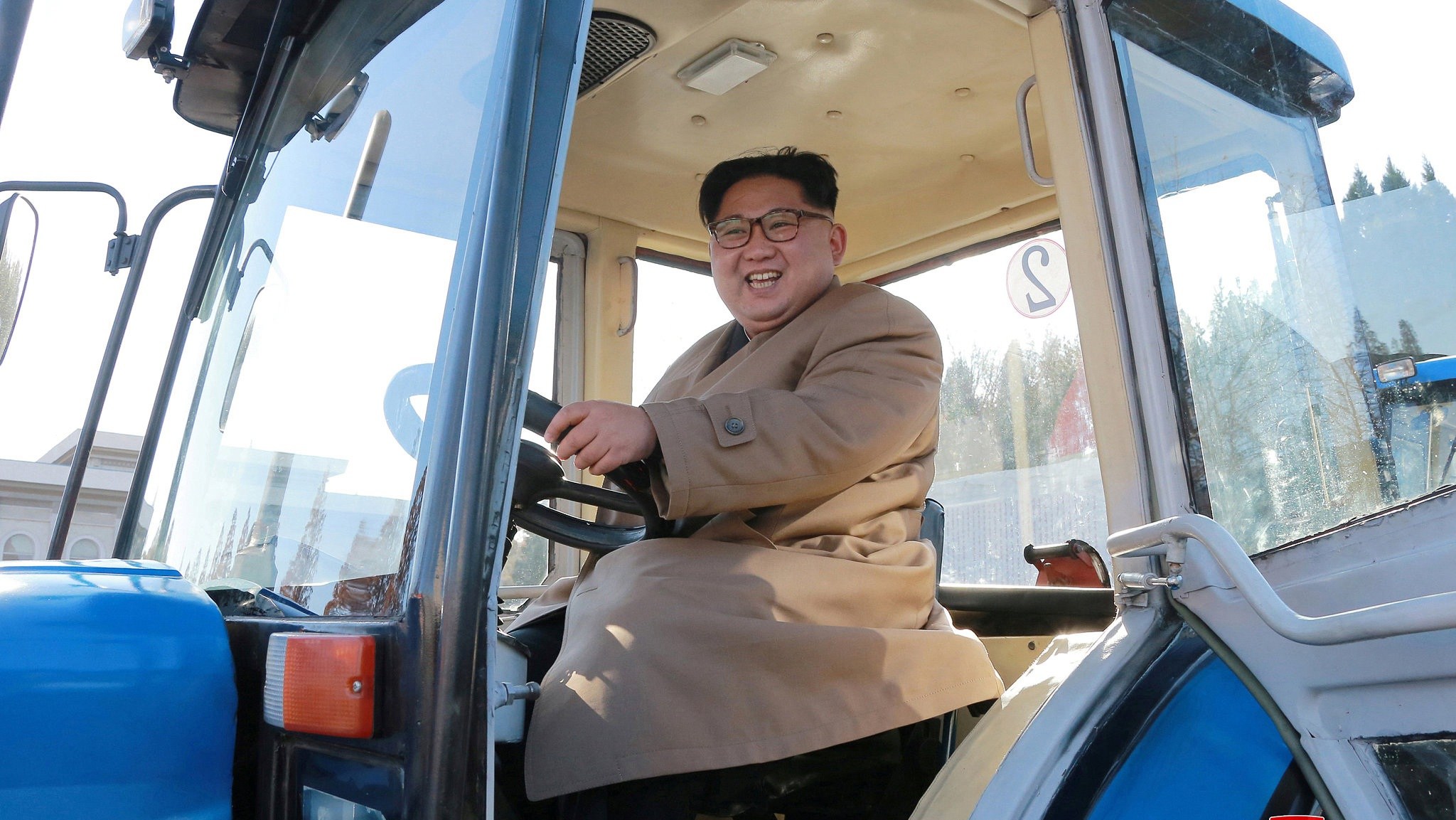
DPRK leader Kim Jong Un gives field guidance to the Kumsong Tractor Factory in Pyongyang, November 15, 2017. /VCG Photo
DPRK leader Kim Jong Un gives field guidance to the Kumsong Tractor Factory in Pyongyang, November 15, 2017. /VCG Photo
Given a dose of scandals at home and an escalating trade war with China, Trump needs to make headway on foreign affairs now more than ever to rev up his voter base, in addition to maintaining an already stable domestic economy, with the latest unemployment rate at its lowest level since 1969.
Through a tour of the four Asian countries, Pompeo is eyeing the arrangement of a second summit between Trump and Kim. He was "pitching a message to the American electorate that Mr. Trump's DPRK policy has been a success and that progress is being made," said Fowdy.
Looking to chart a path toward a nuclear-free Korean Peninsula in effort with Japan is another tomfoolery of the Trump administration. Pompeo should have focused more on the troubled US-Japan alliance. Protests against US military bases have never ceased in Okinawa all these years. That's why the relocation of the US Marine Corps Air Station Futenma from Ginowan to Henoko has still failed to go through.
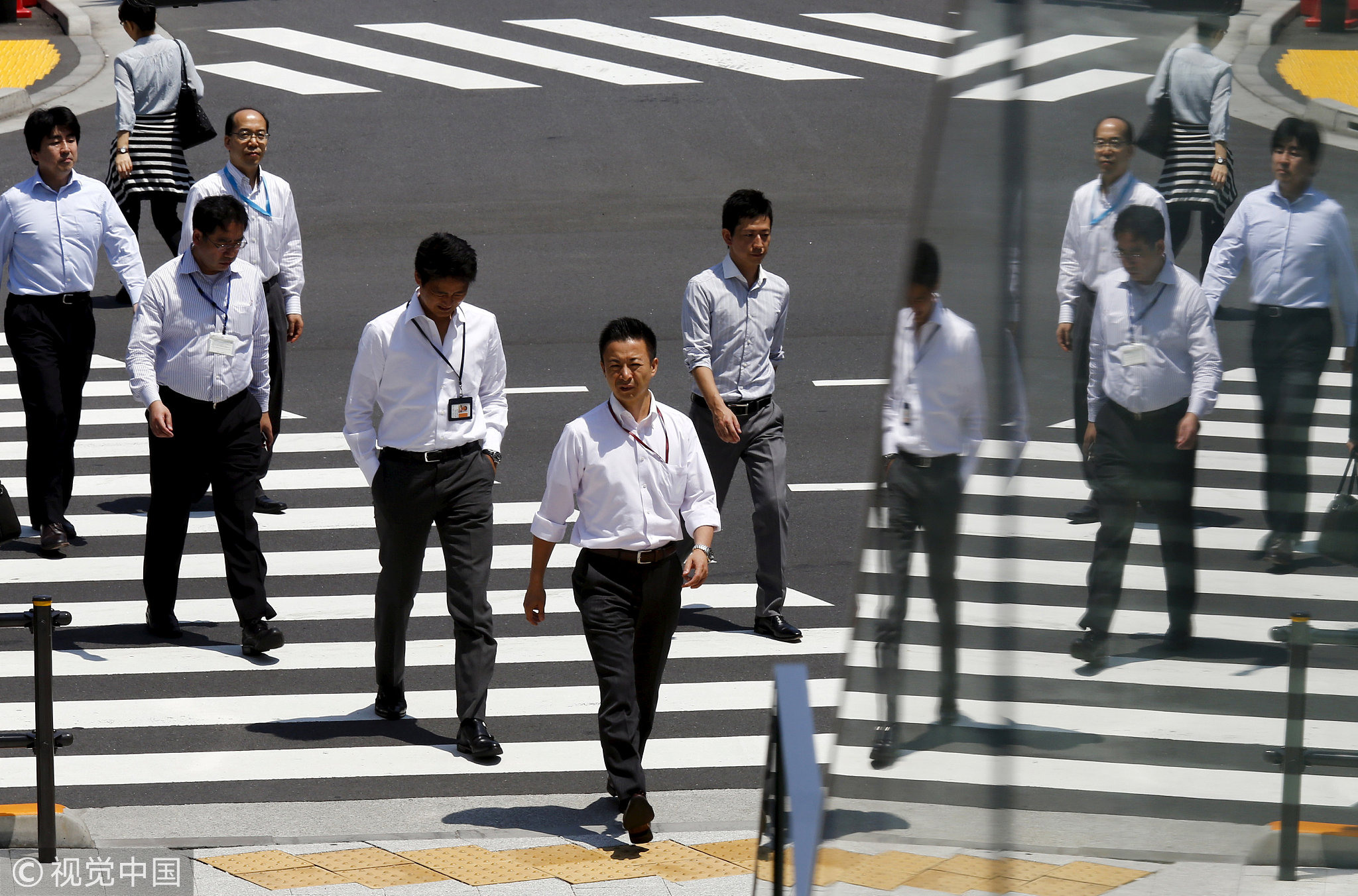
Office workers are reflected in a glass railing as they cross a street during lunch hour in Tokyo June 1, 2015. /VCG Photo
Office workers are reflected in a glass railing as they cross a street during lunch hour in Tokyo June 1, 2015. /VCG Photo
Most recently, Japan was again enmeshed in a trade conflict with the US, which slapped steel and aluminum tariffs on one of its closest allies in March. Trump threatened stiff levies on Japanese auto exports, making Japan the next likely target in his trade salvos. As Abenomics is poised to meet an impasse next year with a domestic consumption tax hike, how to boost its sluggish economy flirting with low inflation is a top priority for Abe's cabinet.
Trying to seek common ground on the DPRK nuclear issue in order to "consolidate" the US-Japan alliance while skirting key issues is of no use to reinforcing regional security and remedying their faltering ties.
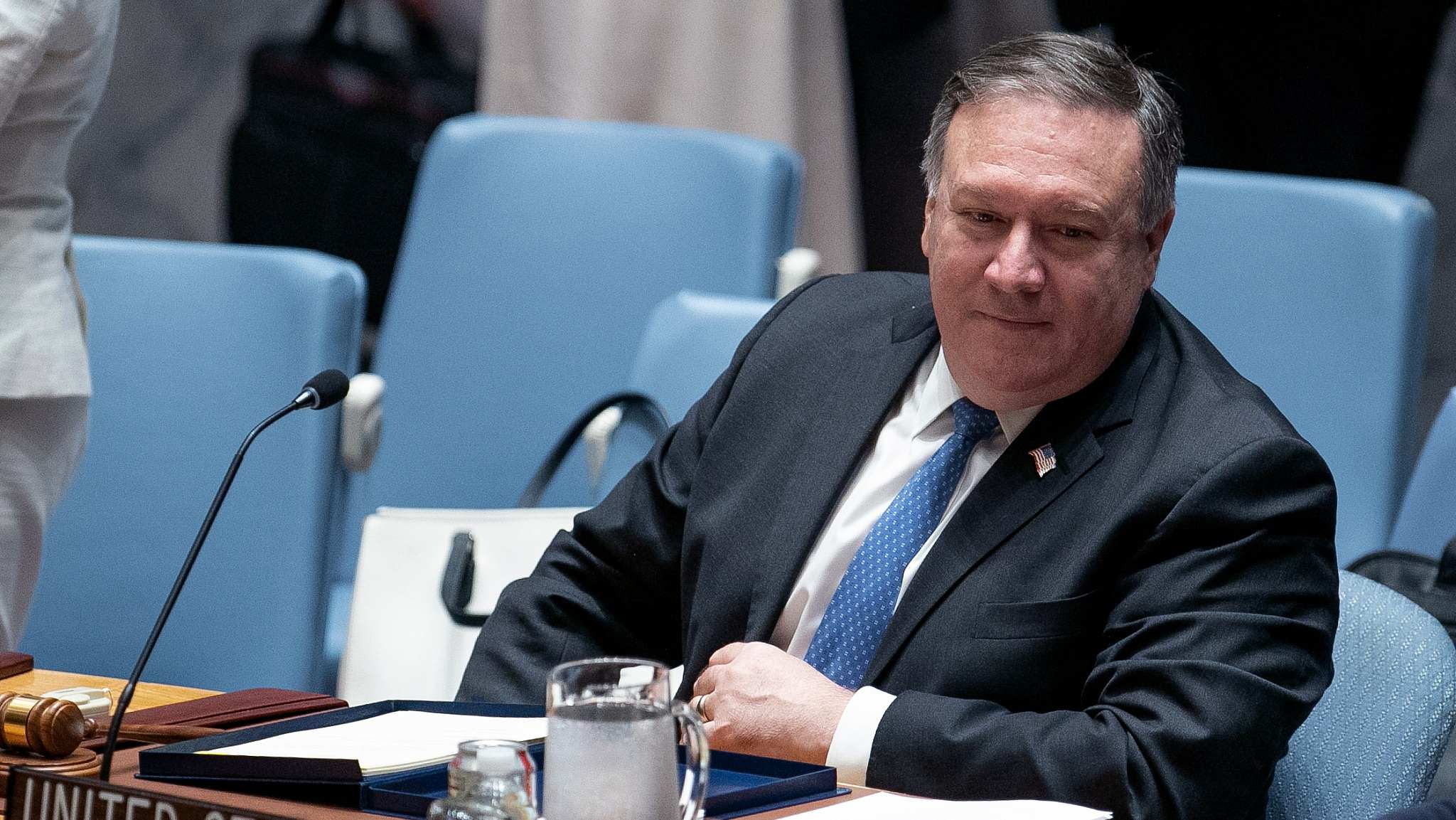
(Cover photo: Mike Pompeo arrives for a United Nations Security Council briefing in New York, September 27, 2018. /VCG Photo)
(If you want to contribute and have special expertise, please contact us at opinions@cgtn.com)