
Opinions
18:31, 01-Jun-2018
Opinion: Celebrating the Children’s Day, celebrating our future
 ["china"]
Share







Copied
Editor's note: Dr. Wang Yan is a director of Department for International Exchange at the National Institute of Educational Sciences of China. The article reflects the author's opinion, and not necessarily the views of CGTN.
There are many reasons to celebrate the childhood.
It is an age of the most innocent mind, the brightest smile, purest feelings, a time when children enjoy stress-free life away from complexities and anxiety of life and work, a phase of life when children grow strong mind and body for a bright future in life.
Today marks the 90th global celebration of the rights and well-being of children around the world. In 1925, at the World Conference for the Well-being of Children in Geneva, Switzerland, governments around the world decided June 1 to be International Children's Day.
The day is celebrated by raising awareness of child well-being, welfare and rights, as well as showing appreciation for our children, the future.
Since then, people around the globe created various ways to celebrate the festival. It offers the children a day to thoroughly enjoy the fun of their childhood, an occasion for grown-ups to think back over the joys of childhood.
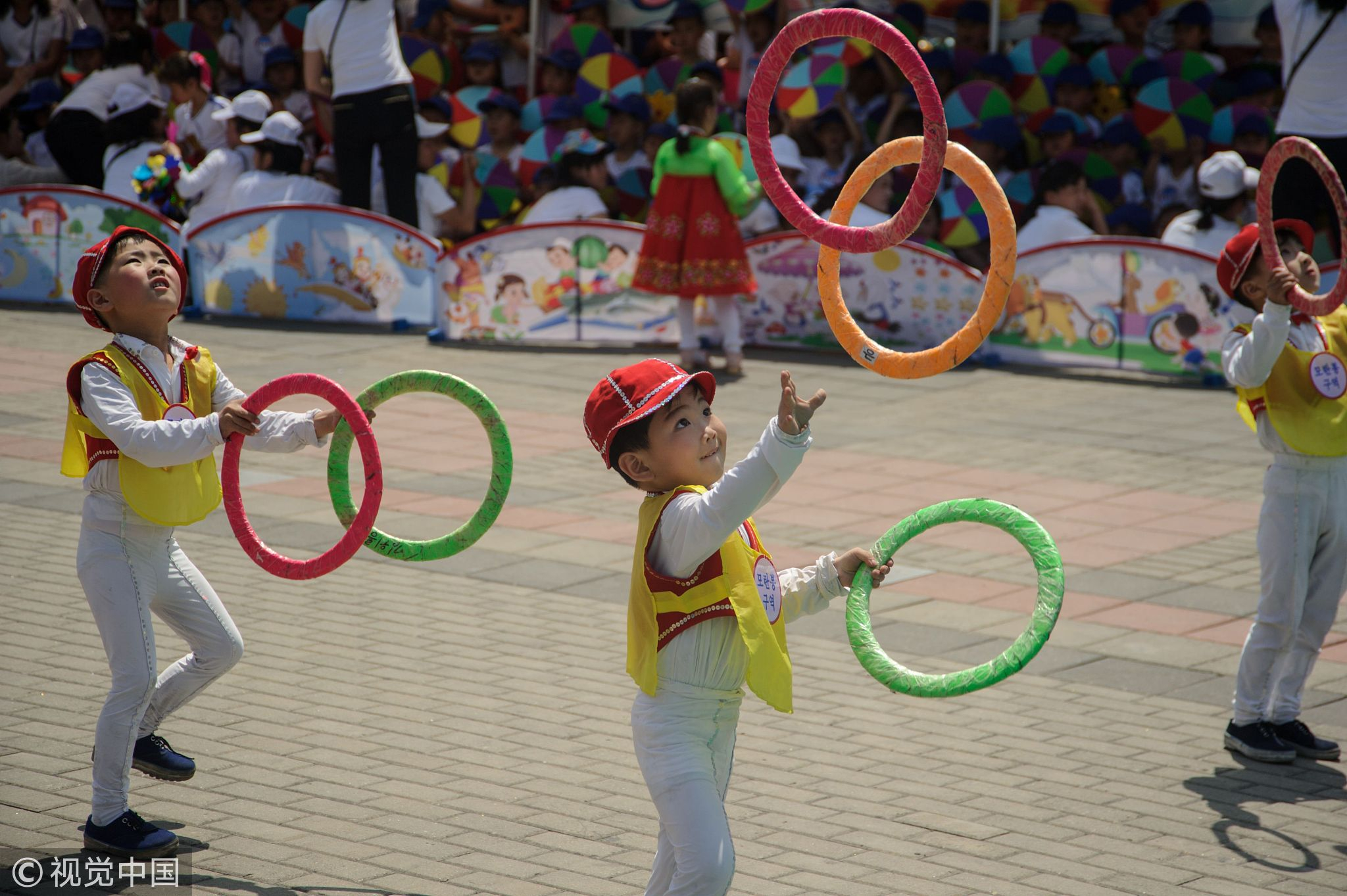
June 1, 2018: Children take part in a joint friendship gathering to mark the 68th anniversary of an 'International Children's Day' event at the Kaeson Youth Park in Pyongyang. / VCG Photo
June 1, 2018: Children take part in a joint friendship gathering to mark the 68th anniversary of an 'International Children's Day' event at the Kaeson Youth Park in Pyongyang. / VCG Photo
Moreover, it evokes various thoughts and discussions on improving education and skills training, enhancing social welfare for children and protecting children from violence and danger, so that people could fulfill their obligations and intensify their efforts regarding the future generations and future citizens.
President Xi Jinping greeted all the children in China that “Wonderful life belongs to you and beautiful Chinese dream belongs to you.” The most recent statistics show that there are 271 million people under the age of 18 in China, accounting for 20 percent of total population of this country and 13 percent of all children in the world.
Thanks to economic and social economic development in recent years, the children in China enjoys better education in terms of access, quality and equity as more than half of the world's children are facing the risks of one or more of the three threats -- conflict, poverty and discrimination against girls (according to a new report from Save the Children).
In China, children enroll in pre-school at age two or three and leave pre-school at the age of six. The gross enrollment rate for kindergarten has reached 77.4 percent in 2016. The government has committed to universalize one to three years of pre-school by 2020 progressively.
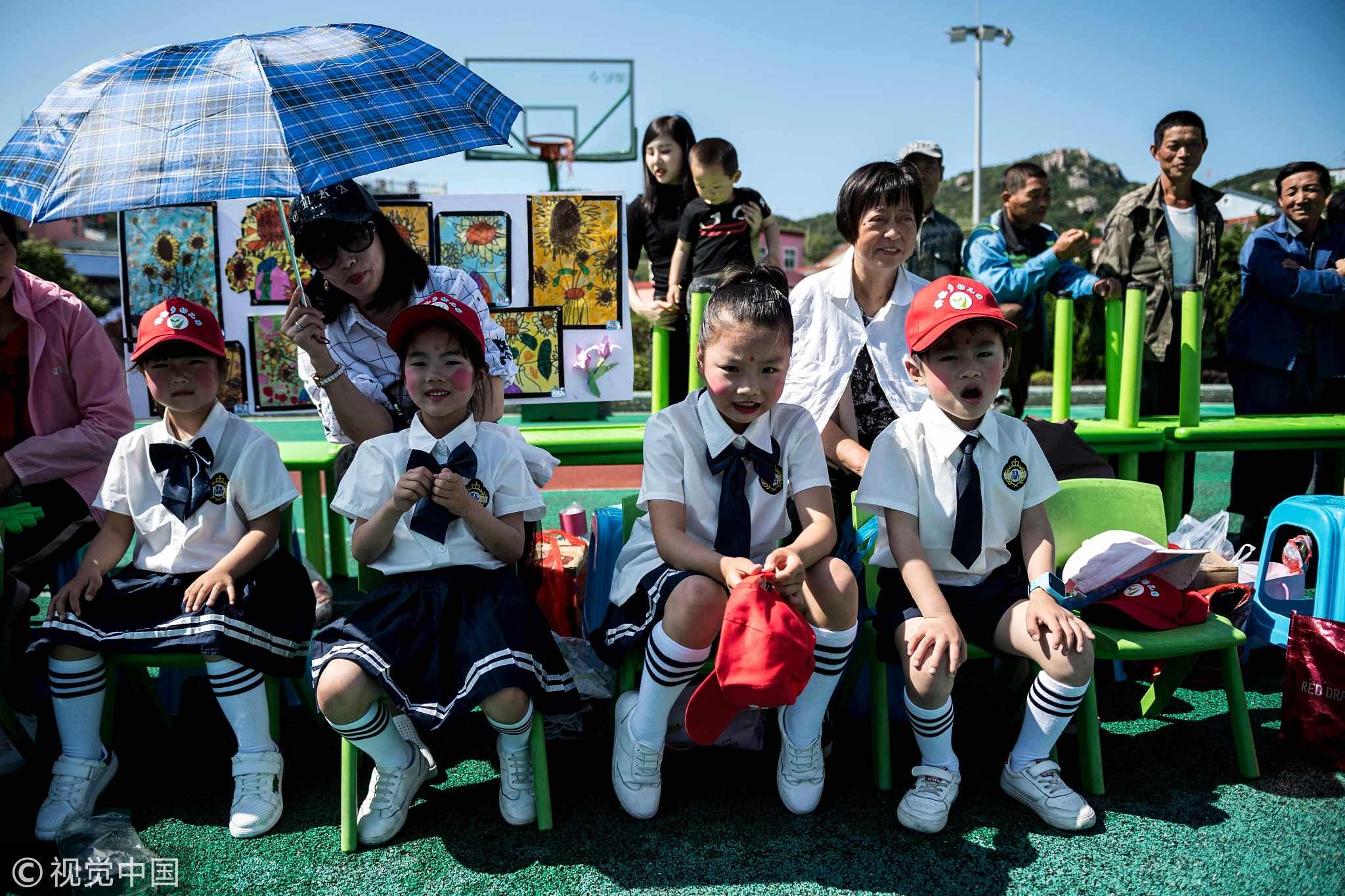
June 1, 2018: Parents and their children attend an event at a village square on International Children's Day on Gouqi Island in Zhejiang province, around 100km south of Shanghai. / VCG Photo
June 1, 2018: Parents and their children attend an event at a village square on International Children's Day on Gouqi Island in Zhejiang province, around 100km south of Shanghai. / VCG Photo
By the end of 2017, nine-year primary education has been made universally accessible, with retention rate reaching 93.4 percent. Approximately 93.7 percent of graduates of lower secondary education could get into upper secondary education. More than 40 percent of children, by 18, could enter into colleges and universities (The gross enrollment rate of higher education is 42.7 percent in 2016).
Not every child could celebrate the Children’s day with their parents. The latest statistics show that 49 percent of the children (0-17 years old) live in urban areas, 51 percent in rural areas, and 15 percent in poverty-stricken rural areas. Nine million are left behind in villages while their parents work in cities.
Accompanying and joying your family is the most important source of acquisition of social and emotional skills, which increasingly counts for children’s growth and development in today’s world.
As the issue has drawn the attention of the school, the government and communities offer various activities to fill the gap of such happy moments for these children.
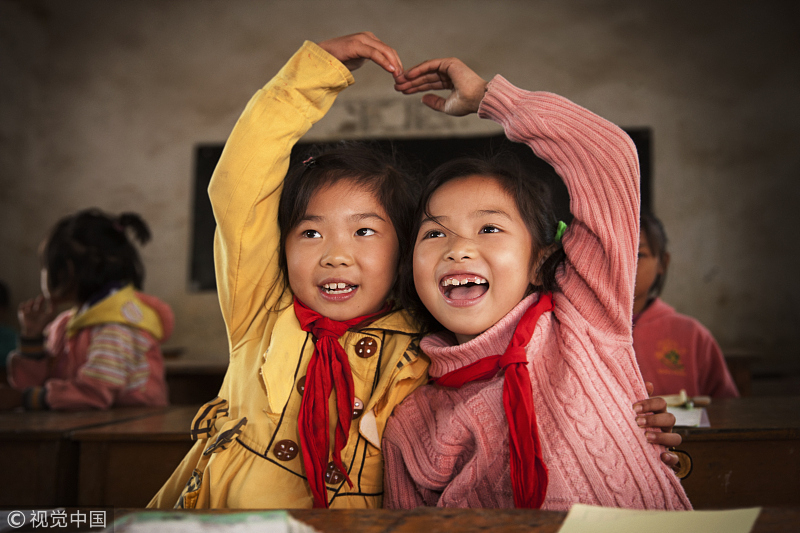
School children / VCG Photo
School children / VCG Photo
Today, in various parts of China, there are occasions and events tailored to left-behind children to enjoy the festival, including best wishes, cards, and gifts from their peers, teachers and schools.
With rising awareness of the issue, increasing number of businesses and non-governmental organizations are also getting involved in creating different activities for left behind children. Also, in media, the dilemma with left-behind children is being addressed on how to resolve the situation.
As the children grow older, International Children’s Day will be honored in different ways. But the ethos of valuing childhood and the responsibility for providing children with the ability to capitalize on the possibilities of the future will be passed down from generation to generation.
With such, we’ll be capable of making significant changes in life and realize our dreams for the future.