
Culture
20:42, 24-Apr-2019
Perseverance pays off: Peking opera blossoms in northeast China
 ["china"]
Share







Copied
03:56
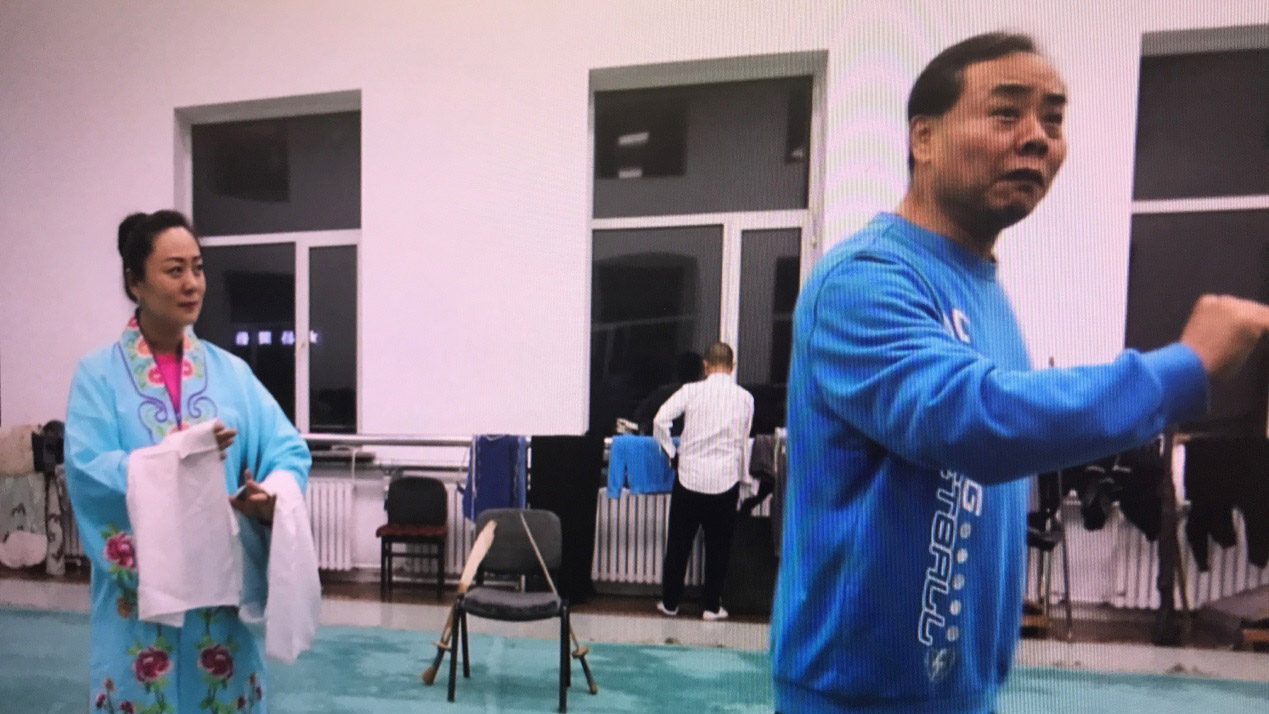
Along with major performance troupes based in Beijing, Tianjin and Shanghai, in recent years a Peking opera troupe in northeast China's Jilin Province is becoming more and more popular. Thanks to Ni Maocai, the head of the troupe, efforts to reform the opera performances -- in response to sagging audience numbers -- have paid off. Now Ni and his team are preparing something new to celebrate China's 70th founding anniversary in October.
The something new is known as “Rhododendron Mountain.” Ni Maocai and his team have been rehearsing this contemporary play for nearly six months.
"The characteristics of the Gao School are well-rounded, comprehensive, and rich in repertoire. You can't make it if you fail to locate your breathing cavity," said Ni.
The Gao School is one of the performing styles in Peking opera, with sheng as the main male role and laosheng as a dignified older role. The laosheng from the Gao School sings in an extremely high and shrill voice. In the early 1930s, artist Gao Qingkui updated traditional repertoires and established this unique genre, named after him. And Ni Maocai is heading the third generation.
"We have to pass down good traditions, while development and innovation are also inevitable. It's good to know that Peking opera is getting more popular on campuses in recent years," said Ni.
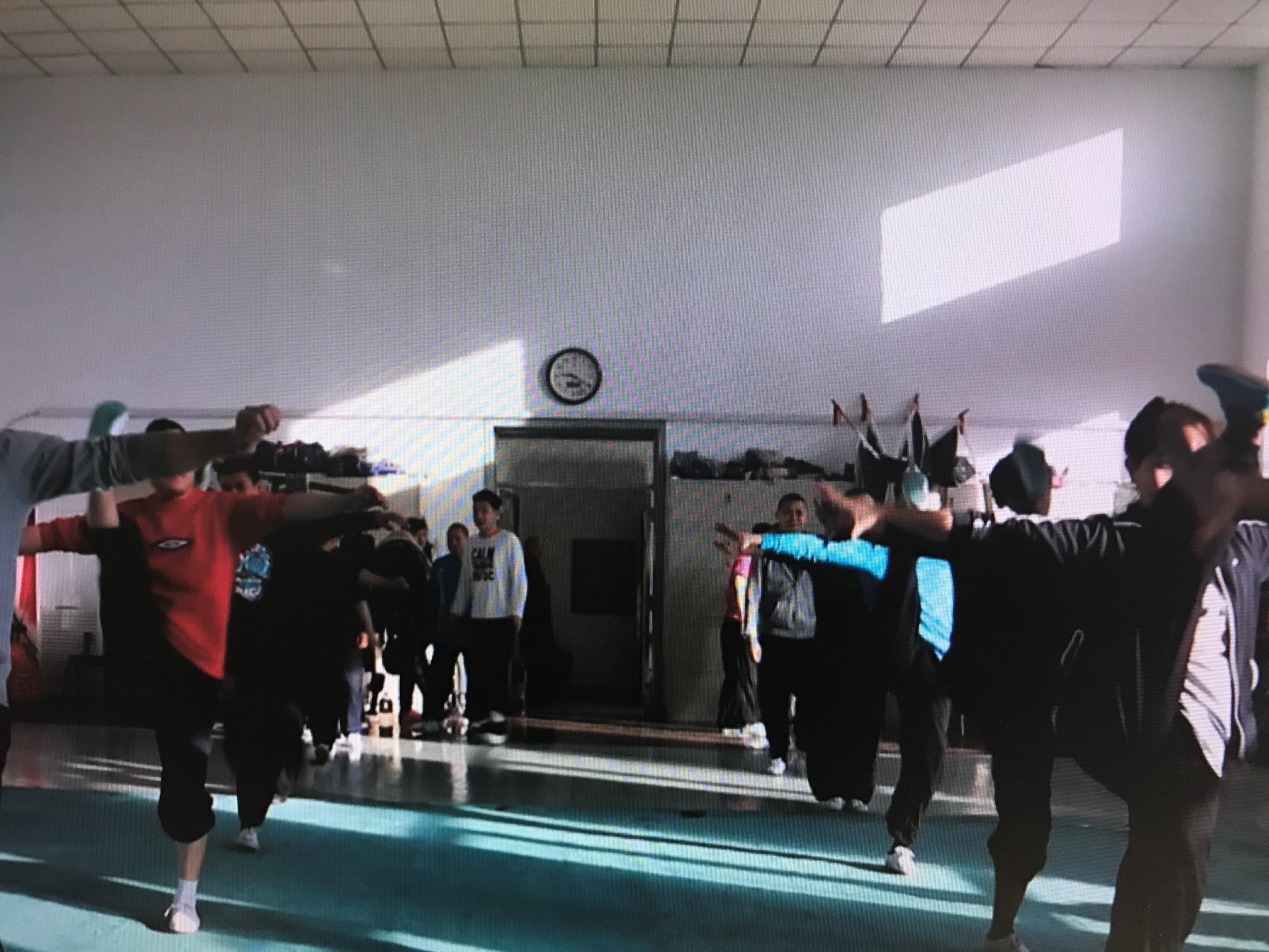
Ni Maocai's troupe members are training. /CGTN Photo
Ni Maocai's troupe members are training. /CGTN Photo
Due to its extremely technical demand on the voice, there are very few young people to carry on this tradition today. But Ni never stops looking for promising actors, and Xu Zhaohuang is one of them.
"Three hours just to practice this. I started playing hammer when I was 13 years old. Now I practice it almost every day. No idea how many times I did it per day," said Huang.
And it's been 30 years. As an old saying goes, "One minute on the stage, ten years of hard work off stage." There's definitely no shortcut to the pinnacle of art.
"My arms were worn out and bleeding when I started acrobatic training as a teenage boy. Slowly, slowly, years of hard work have made my skin less sensitive but more tough. I don't feel painful any more. You know I can play over ten kinds of props," said Xu.
When it comes to everyday practice, even experienced artists like Ni can't slack off. Every morning at eight o'clock, he is seen with the other young performers practicing in the rehearsal hall.
"In the past, old masters joked that the training experience was like staying behind bars for eight years. At the very beginning, stretching your legs or waist like this is no different from being tortured in prison. Only perseverance leads you to success. For me, it's good to be with young people, they're pretty energetic," said Ni.
His perseverance makes it possible to develop and pass down the Gao School's artistry. And it has also helped him and his team win the top prize of Chinese opera -- the Plum Blossom Award.
"Actors need to internalize what they've learned off stage and performed on stage," said Ni.
Thanks to the hard work of Ni and the Gao School, there's hope that Peking opera will be shared with future generations.