
World
10:53, 22-Aug-2018
Kerala floods: Gov't criticized for disregarding flood warnings
Updated
10:44, 25-Aug-2018
 ["other","South Asia"]
Share







Copied
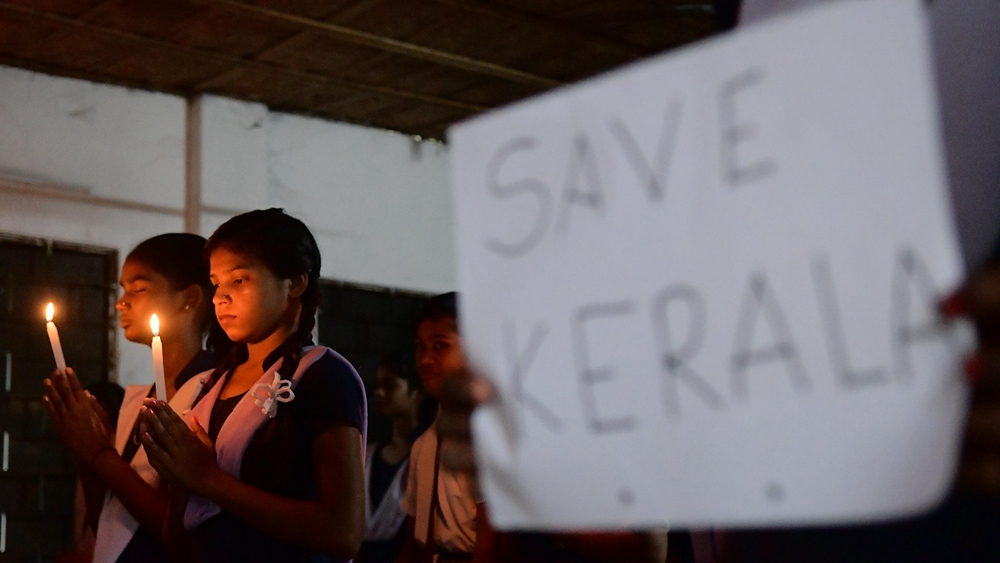
Top Indian environment experts who predicted devastating floods would hit Kerala state said Tuesday their warnings went unheeded by politicians eager to fast-track money-making projects.
The southern state has been battered by the worst floods in almost a century that have killed more than 410 people since the monsoon started in June. About a million people are taking shelter in temporary camps.
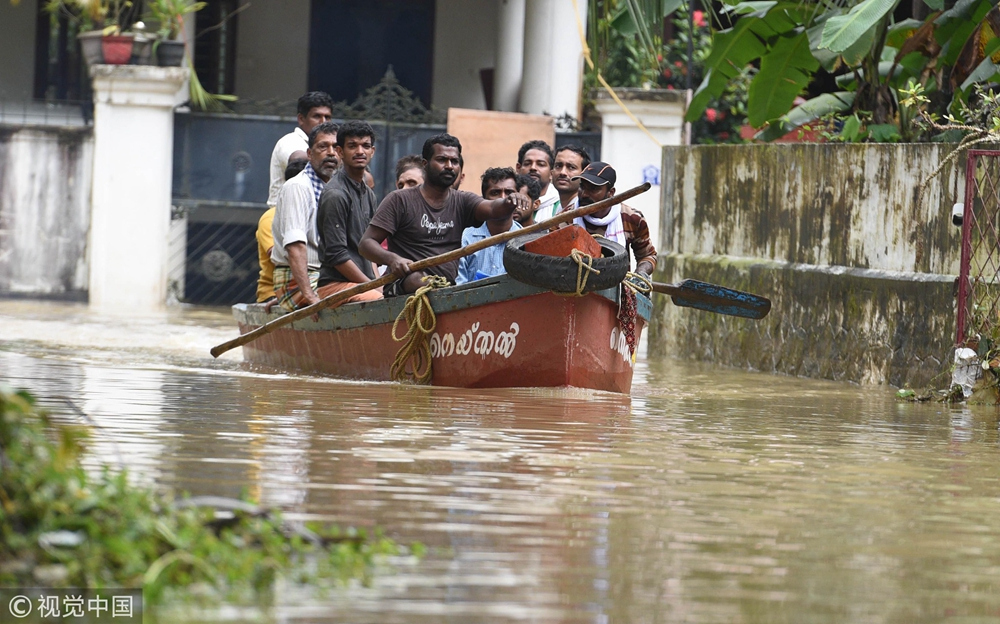
Volunteers and fisherman rescue residents in a residential area in Alappuzha in the south Indian state of Kerala, August 19, 2018. /VCG Photo
Volunteers and fisherman rescue residents in a residential area in Alappuzha in the south Indian state of Kerala, August 19, 2018. /VCG Photo
Man-made problems
Muralee Thummarukudy, a United Nations disaster response expert, and ecologist Madhav Gadgil, warned in reports back as far as 2011 that a mega-monsoon was inevitable and that the state was ill-prepared.
Critics say Kerala and the national government have ignored environmental concerns as they push power plants and coal mines, hotel resorts and new housing.
Lakes and wetlands that soak up floods have disappeared, and new concrete buildings concentrate excess water in certain areas and make it harder to drain away.
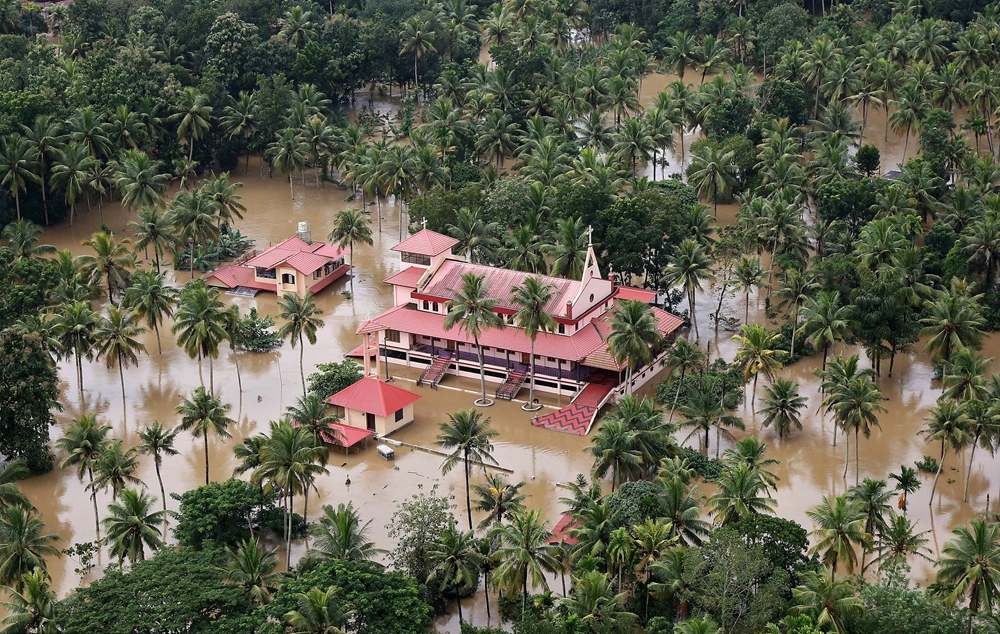
An aerial view shows partially submerged houses at a flooded area in the southern state of Kerala, India, August 17, 2018. /VCG Photo
An aerial view shows partially submerged houses at a flooded area in the southern state of Kerala, India, August 17, 2018. /VCG Photo
In recent years, Kerala governments have aggressively promoted the state's palm tree-lined beaches and lush plantations to draw international tourists.
Ecologist Madhav Gadgil, who suggested a ban on new industrial and mining activities in Kerala in a 2011 report, said man-made problems had played a key role in the disaster.
But political and corporate lobbying meant the recommendations were ignored and resorts for the wealthy have mushroomed along coasts and rivers.
A senior official in Kerala's environment and climate change department downplayed the criticism.
"It is wrong to say we have not done enough. We started eco-restoration of wetlands and we have also banned plastic," said the official, who asked not to be named.
"We are doing our best. It is nature's fury, you cannot point blame on anyone."
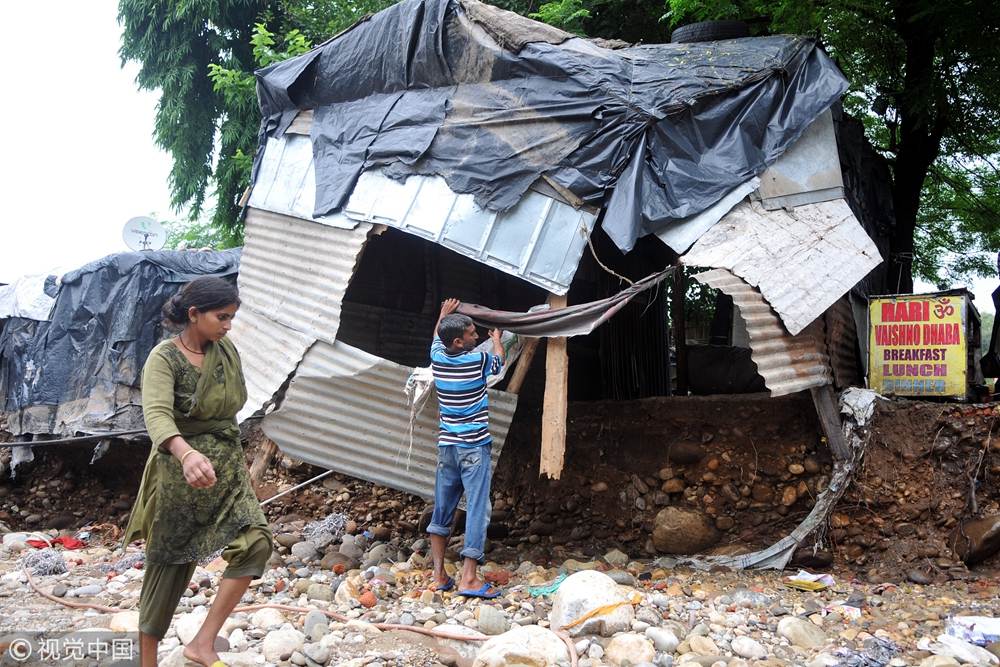
A man tries to salvage some belongings from what remained of a damaged house after a flash flood, India, August 21, 2018. /VCG Photo
A man tries to salvage some belongings from what remained of a damaged house after a flash flood, India, August 21, 2018. /VCG Photo
Unsung heroes
Meanwhile, rescue officials, victims and others said the unsung heroes of the massive relief operation were fishermen and other local people with boats, who volunteered to help rescue tens of thousands of stranded people, often long before official rescue teams could arrive.
Mohamed Ansheed, whose family was rescued in Malappuram district, said he was deeply indebted to the fishermen.
“I will never forget that day. They helped a lot of people,” said Ansheed, adding that while the National Disaster Response Force (NDRF) teams had to halt their own rescue missions at sundown for safety reasons, local fishermen worked into the night with headlamps and rudimentary tools.
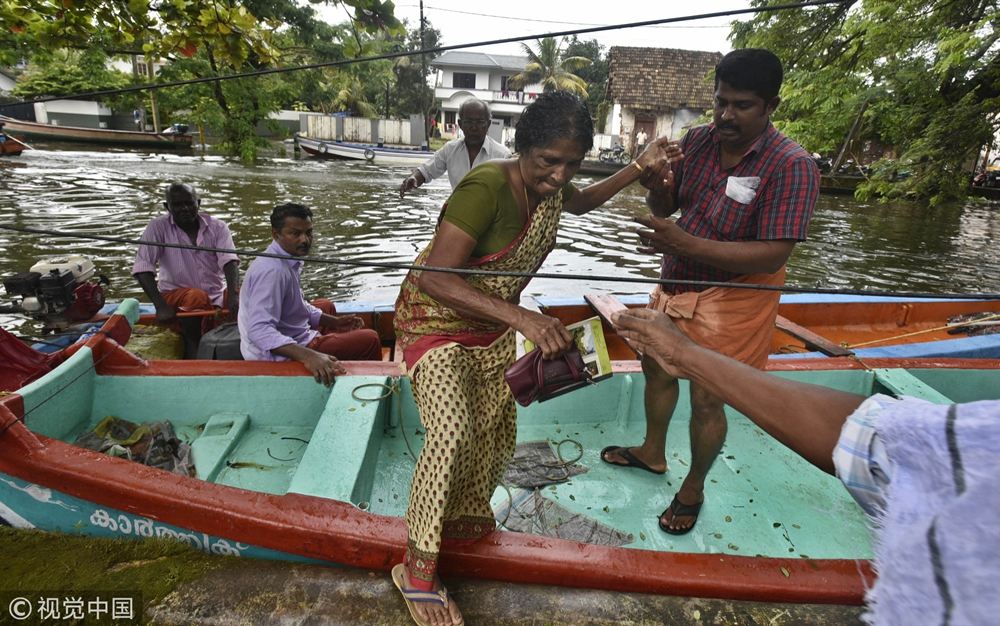
Local fisherman and rescue personnel evacuate residents through a boat in Alappuzha, August 20, 2018. /VCG Photo
Local fisherman and rescue personnel evacuate residents through a boat in Alappuzha, August 20, 2018. /VCG Photo
Kerala’s Chief Minister Pinarayi Vijayan said the state would honor boatmen who participated in the rescue effort, reimburse them, and repair boats damaged in the operation.
(Cover: Students from Agartala offer prayers for Kerala floods victims, August 21, 2018. /VCG Photo)
Source(s): AFP
,Reuters