
China
19:30, 18-Jul-2018
Does plastic surgery really improve people's lives?
Updated
18:42, 21-Jul-2018
 ["china"]
Share







Copied
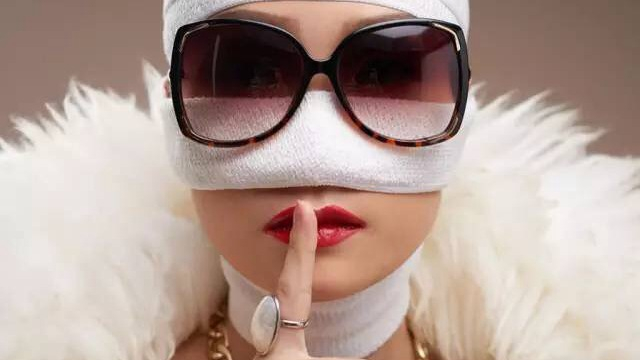
“This is not my first time visiting a plastic surgeon. I have doubled my eyelids, injected hyaluronic acid into my nose and cheeks – and I went to the hospital yesterday to inject Botox into my face to make it thinner because, since it is now the summer holiday, I have time to recover.” This is what He, a second-year postgraduate student at one of China’s top universities, told CGTN.
Thousands of female students like her, who are studying at college or even still at high school, make appointments with plastic surgeons during their summer holidays because the break – which can last up to three months – gives them ample opportunity to relax and heal from surgery.
Also, with the gaokao - China's national college entrance exam - having passed, high school graduates are now free to enjoy their leisure time. But some students consider their appearance to be an investment for the future and so commit their holidays to getting plastic surgery done.
“We have asked our users and verified that more than 50 percent of our clients in the summer are students,” said Wang Sijing, the COO of the Gengmei app, a platform which provides plastic surgery discounts. “Also, the revenue we get from students makes up [roughly] 40 to 50 percent of our general income for the whole year."
Why do students get plastic surgery?
The rise of “selfie culture” is considered to be one of the reasons for the boom in surgery among students. It is believed that the young patients see how their appearance is improved by filters in apps and believe that surgery will make them look like that in real life.
There is also a desire to look better on social media, particularly on image-focused platforms such as Weibo and WeChat Moments.
And with the rise of Chinese live-streaming apps like Douyin, people – students in particular - have more ways to find celebrities and people they admire. To ordinary students, these famous online figures live fun and interesting lives, but, most importantly, they all share the same look: Big eyes, small noses, and pointed chins.

An Internet celebrity who sings on a Chinese live-streaming app. /VCG Photo
An Internet celebrity who sings on a Chinese live-streaming app. /VCG Photo
When students see that a relatively young and well-known person has improved their appearance through plastic surgery, they consider it too, and the competitive nature of social media is now also having a similar effect on some younger patients.
What are the problems?
When asked how she pays for her plastic surgery, He said: “I usually use loans to pay the fees, since it is so convenient to get loans from the Internet.”
She isn't the only one. As access to financial services expands and become more open in China, a larger amount of students are taking out loans for plastic surgery. Some have no personal savings, and it is hard to get financial support from parents if they are traditionally minded. As a result, they turn to loans for help.
However, the loan market is volatile, and students - who, as a group, have a low earning ability and are prone to snap judgments - often have difficulty making their repayments. As a result, they can get trapped by loan sharks and end up involved in scams such which involve extortion. Increasingly common are "naked loans" in which the lenders demand nude photos from borrowers and then threaten to release them online if payments aren't made.
The plastic surgery market is volatile too – plastic surgery can easily go wrong if it is performed at an unlicensed "black clinic". Botched cosmetic surgery is common, and some of the victims spend the rest of their lives trying to correct it, which is torture for their body, their mind and their bank balance.
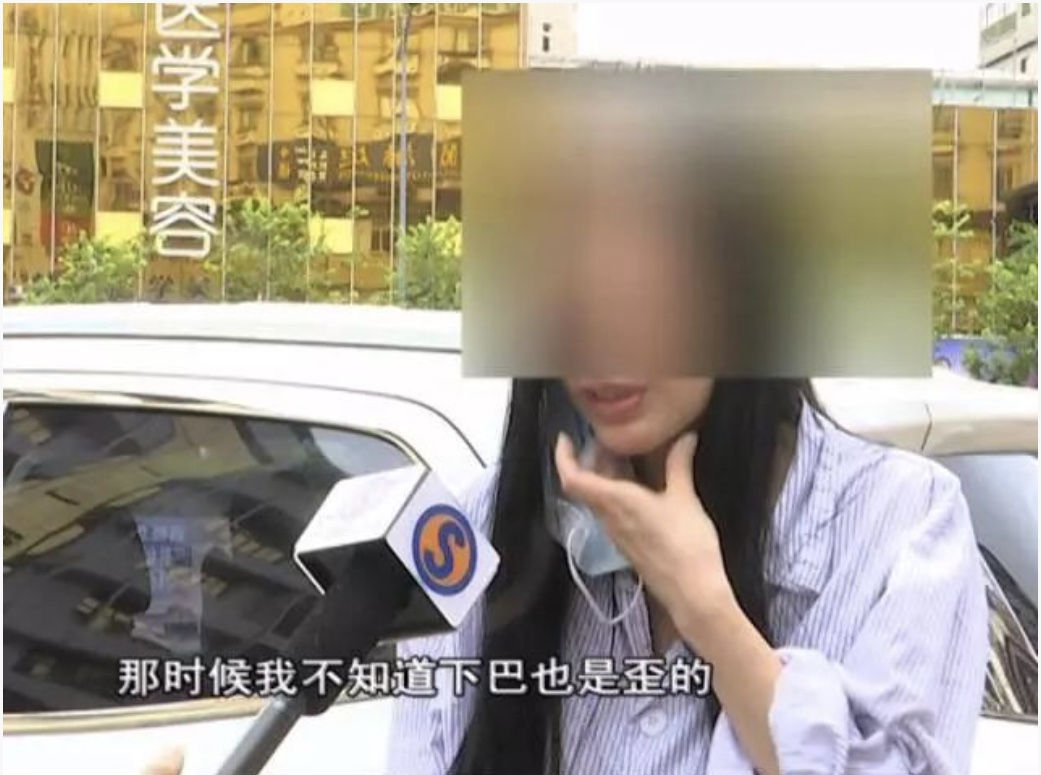
A girl who got a botched nose job. /Sina News Photo
A girl who got a botched nose job. /Sina News Photo
According to The Beijing News, there are over 500 genuine plastic surgery hospitals in Beijing, but the number of "black clinics" is over 1500. This means most plastic surgeries end in failure, and some doctors claim that around 60 to 70 percent of their patients come to them to fix their botched operations.
But this statistic isn't enough to put students off as many believe a better appearance will lead to a better job. According to Li Weiwei, the director of Beijing Tsinghua Changgung Hospital's cosmetic center, double eyelid surgery accounts for 70 percent of all plastic surgery appointments booked by Li’s patients. The remaining 30 percent tend to seek nose reshaping and implants.
Bigger eyes make people look mixed-blooded, which is the most popular look in China now. And the female students believe having the most popular look will bring them better opportunities in the job market, and help them find a better boyfriend.
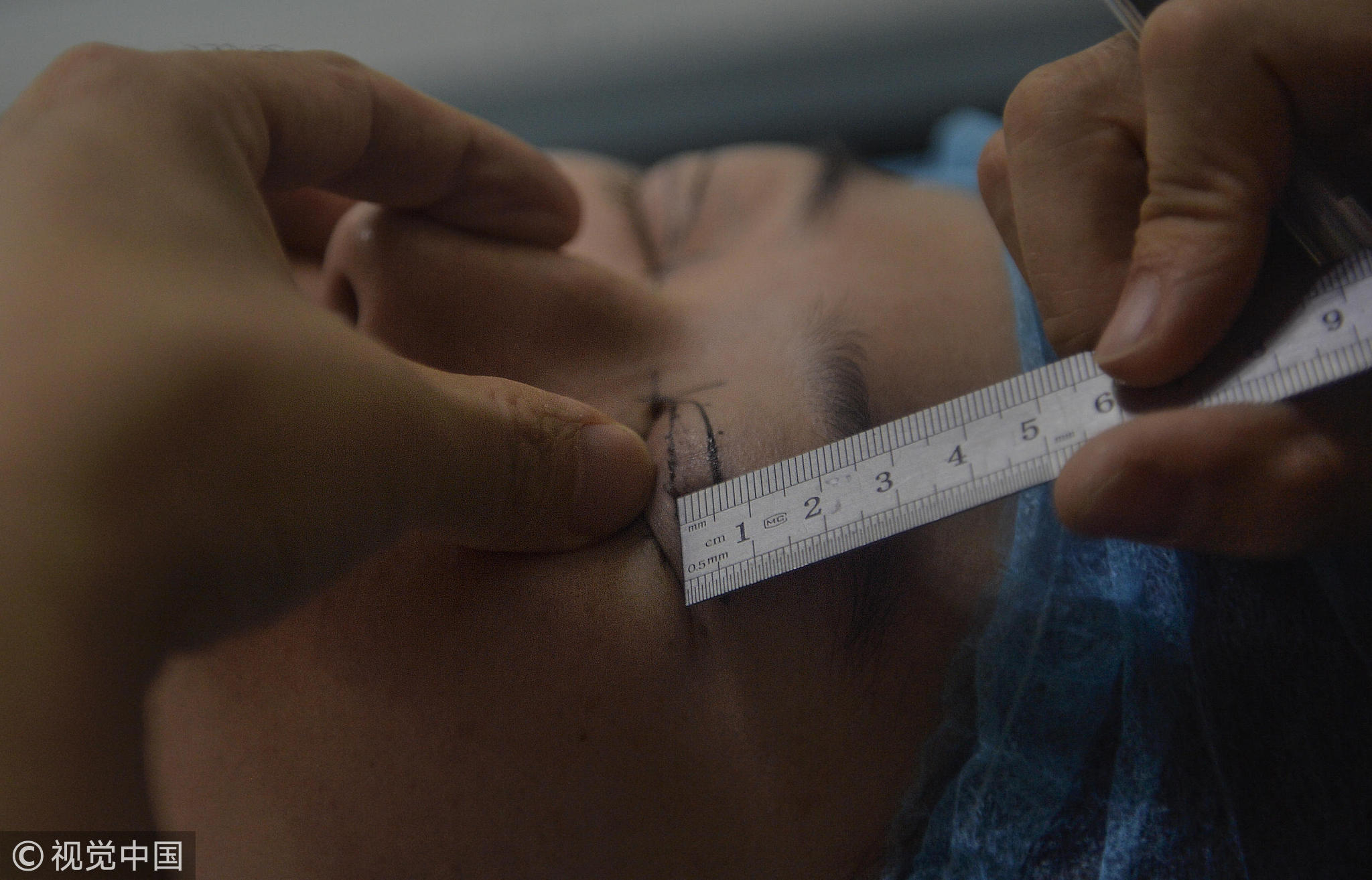
A student getting double eyelid surgery. /VCG Photo
A student getting double eyelid surgery. /VCG Photo
Less extreme and less expensive cosmetic treatments, such as face-thinning injections, skin whitening and hyaluronic acid nose fillers, are also very popular among students in China.