Editor's note: Peter Doran is a lecturer at the School of Law of Queen's University Belfast, The Senator George J Mitchell Institute for Global Peace, Security and Justice and Centre for Evidence and Social Innovation. The article reflects the author's opinions, and not necessarily the views of CGTN.
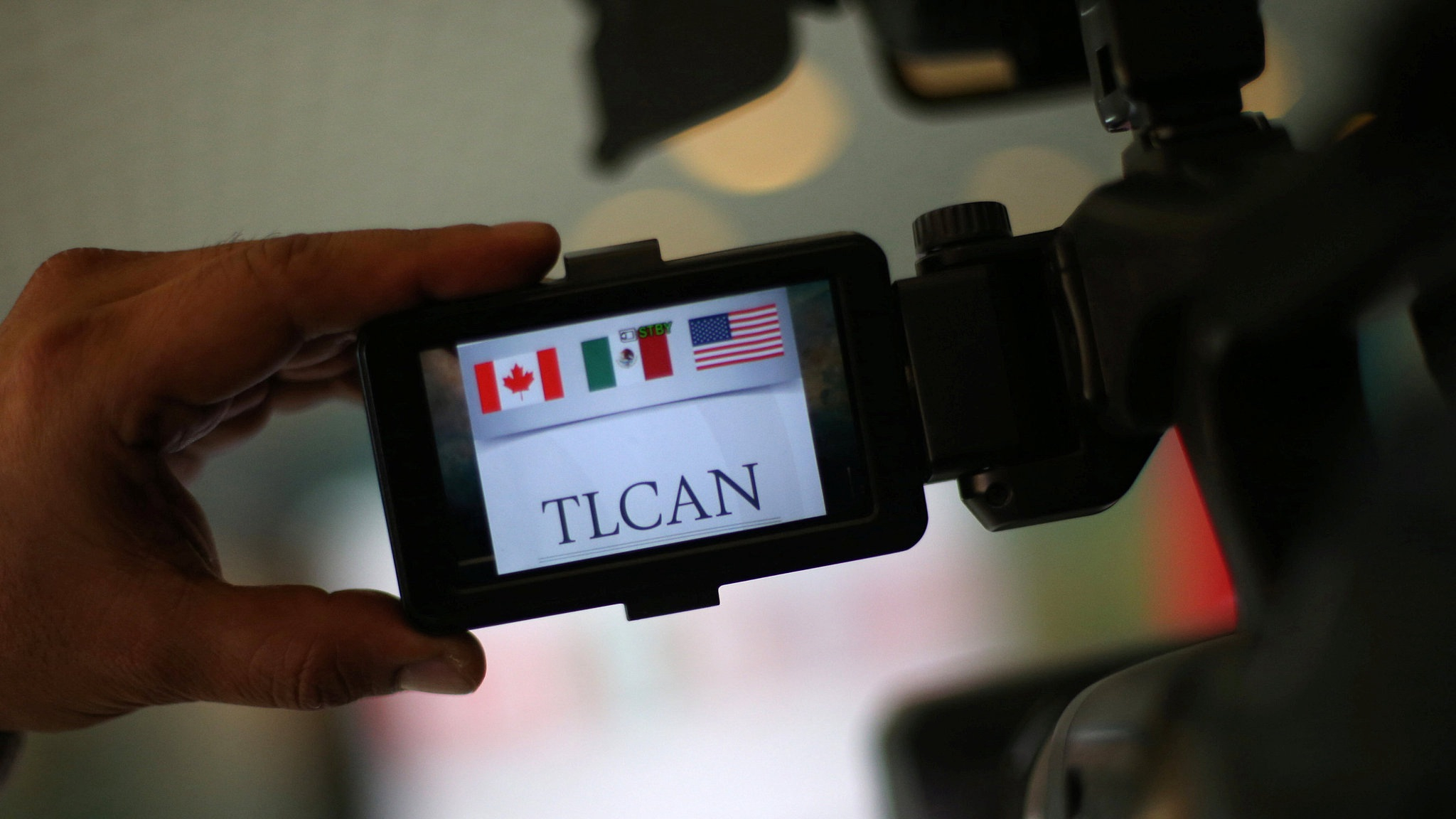
Donald Trump's tentative bilateral agreement with Mexico to carry out emergency repairs to the 25-year-old landmark North American Free Trade Agreement (NAFTA) has put the US President on a potential collision course with Washington lawmakers, who have the final say on the deal.
Trump's casual contempt for Canada's role in the attempt to overhaul NAFTA and some details in the bilateral agreement will rile lawmakers on both sides of the aisle, and parts of the US automotive manufacturing industry.
Canada was a full partner to NAFTA together with Mexico and the United States, but President Trump has signaled that he is prepared to press ahead with the overhaul in a bilateral arrangement with Mexico.
While agriculture and trade dispute settlement procedures figure in the US-Mexico deal, it is the pay-off for the US automotive industry that has been talked up as the major win by Trump.
He wants more cars and car-parts built in the homeland. Shares in Ford, General Motors, and Fiat Chrysler rallied after the conclusion of the bilateral talks and agreement that 75 percent (up from 62 percent) of the parts used in the US and Mexican-assembled vehicles must come from the region.
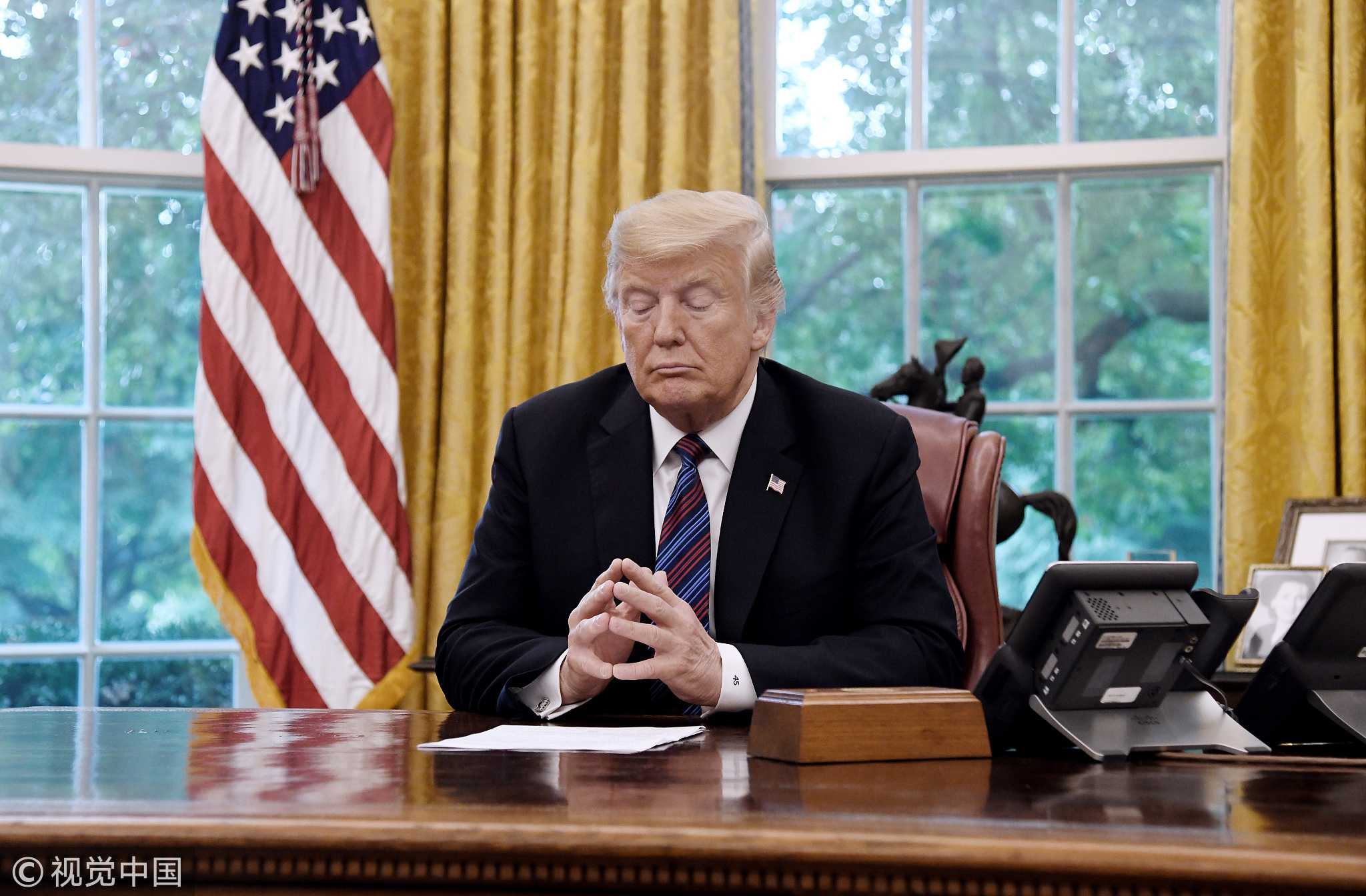
US President Donald Trump listens to Mexico President Pena Nieto during a phone conversation to announce the United States-México trade agreement in the Oval Office of the White House in Washington, DC, August 27, 2018./ VCG Photo
US President Donald Trump listens to Mexico President Pena Nieto during a phone conversation to announce the United States-México trade agreement in the Oval Office of the White House in Washington, DC, August 27, 2018./ VCG Photo
Other elements of the deal, on a wage protection floor and the origin of steel used in manufacturing, are also intended to protect American jobs and manufacturing.
The US-Mexico bilateral agreement was accompanied by characteristic posturing by the US President. Trump attempted to apply maximum pressure on Canada to fall into line with the new deal, warning that he was prepared to introduce new levies on Ottawa's automotive industry.
The Canadian Foreign Affairs Minister, Chrystia Freeland, dashed back from Europe to Washington Tuesday to pick up talks with her US counterpart, Trade Representative Robert Lighthizer.
Trump left little wriggle room for Canada as he had already signaled White House plans to present the US-Mexico deal to Congress by Friday.
US lawmakers have already signaled that the White House would not be able to use expedited procedures to get congressional approval on the bilateral deal. There is political and industry concern at Trump's attitude toward Canada's role in NAFTA and to some aspects of the deal.
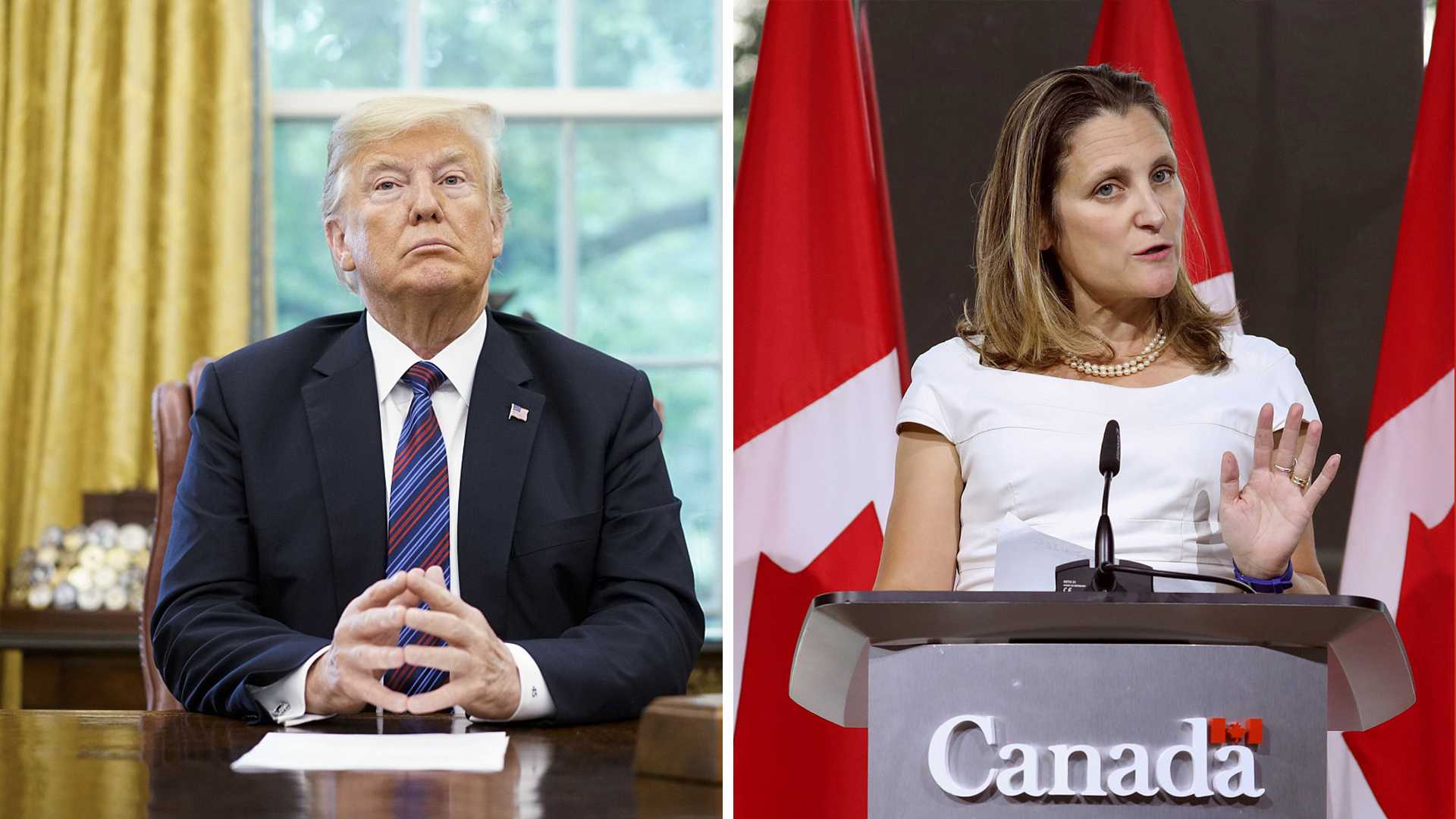
The combined photo shows US President Donald Trump (L) listening during a phone conversation on August 27, 2018, and Canadian Foreign Minister Chrystia Freeland taking part in a news conference on August 31, 2018./ VCG Photo
The combined photo shows US President Donald Trump (L) listening during a phone conversation on August 27, 2018, and Canadian Foreign Minister Chrystia Freeland taking part in a news conference on August 31, 2018./ VCG Photo
Accusing Trump of "abusing executive power to impose tariffs on a variety of trading partners," the Financial Times urged Congress last Wednesday to reassert its authority over trade deals and demand that sanity and transparency be restored to the process.
The Navarro Effect
As the White House prepares to get buy-in from Capitol Hill, one man who will have a lot of skin in the game is Trump's trade czar, Dr. Peter Navarro, who heads the Office of Trade and Manufacturing Policy.
Navarro, a once lowly university academic with a specialism in utilities, has enjoyed a meteoric rise to prominence since catching Trump's eye with his overwrought -- and some would say downright dangerous -- writings on China and the threat to the US global position.
In fact, Vanity Fair has reported that it was Trump's political advisor and son-in-law, Jared Kushner, who spotted Navarro's book, Death By China, after conducting a search on Amazon.
Navarro's appointment in December 2016 was greeted by Dan Ikenson, writing for The Hill, with the observation that it represented "the latest assault on the fundamental premise that public policy should be rooted in fact and reason."
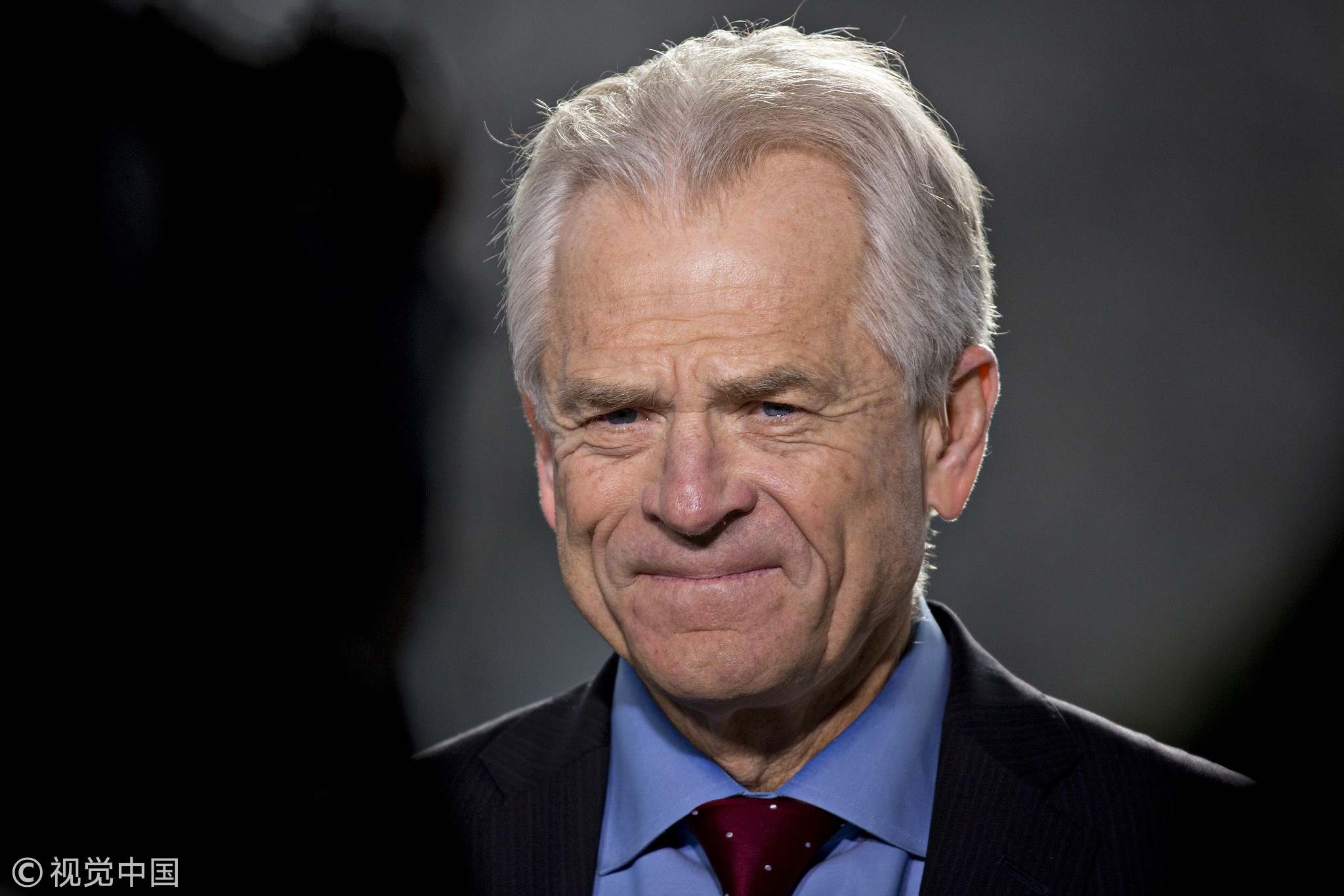
Peter Navarro, director of the National Trade Council, pauses during a Bloomberg Television interview outside the White House in Washington, DC, US, on Wednesday, March 28, 2018./ VCG Photo
Peter Navarro, director of the National Trade Council, pauses during a Bloomberg Television interview outside the White House in Washington, DC, US, on Wednesday, March 28, 2018./ VCG Photo
Navarro provides an academic sheen for Trump's Manichaean or zero-sum worldview, especially as it applies to trade. He has combined an academic career at the University of California with a series of unsuccessful attempts to be elected to public office in the 1990s.
What brought Navarro to Trump's attention was a series of populist books and documentaries warning about "The Coming China Wars," in which Navarro tapped into a millennial fear of China's rise as a significant economic actor.
Navarro has been at Trump's side since his election campaign, pressing for withdrawal or rewriting of trade deals such as NAFTA.
The New York Times has reported three occasions on which Navarro attempted to withdraw the US from NAFTA only to be overruled by other senior economic advisors.
Responding to the tentative US-Mexico bilateral overhaul of NAFTA, Navarro was at pains to talk up Trump's achievements, which amount to little more than a tweaking of the original Agreement.
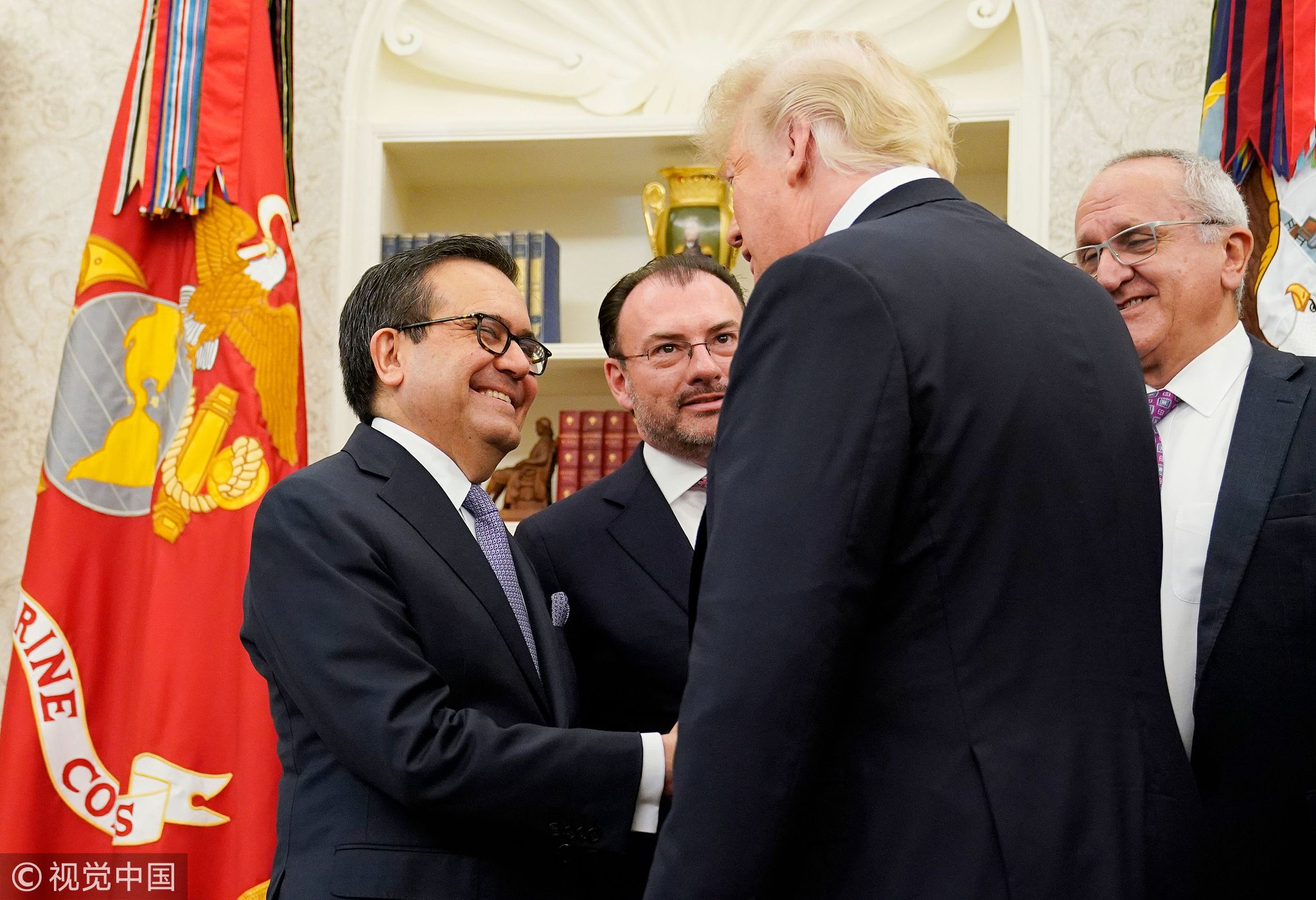
The US President Donald Trump (R) shakes hands with Mexico's Economy Minister Ildefonso Guajardo Villarreal watched by Mexico's Foreign Minister Luis Videgaray Caso (C) as he arrives to speak on trade in the Oval Office of the White House in Washington, DC, on August 27, 2018./ VCG Photo
The US President Donald Trump (R) shakes hands with Mexico's Economy Minister Ildefonso Guajardo Villarreal watched by Mexico's Foreign Minister Luis Videgaray Caso (C) as he arrives to speak on trade in the Oval Office of the White House in Washington, DC, on August 27, 2018./ VCG Photo
The markets initially responded positively to the US-Mexico deal, in the expectation that Canada would eventually find a route to come on board.
After a year of pyrotechnics and aggressive language, it seemed that the American president and Navarro's attempts to reduce the complex world of trade negotiations to a "morality play" had resulted in little more than a marginal win for the US.
This is a sign of hope that Trump's rhetoric of trade wars might yet be de-escalated.
These are testing times for Trump and his much-ridiculed trade czar, Navarro. While Navarro may insist that his master is simply trying to re-establish a "level playing field," Washington lawmakers and the automobile lobby will make the final call in a world marked by levels of complexity far beyond those with which either man can come to terms through the comforting rhetoric they share with parts of America's disenchanted classes.

 ["china"]