China, India 'language diplomacy' takes center stage ahead of Xi-Modi talks
By Abhishek G Bhaya
["china","other","India"]
Share
Copied
03:12
It was a unique spectacle as young Chinese men and women speaking fluent Hindi greeted the visiting Indian External Affair Minister Sushma Swaraj at a gathering in Beijing on Monday.
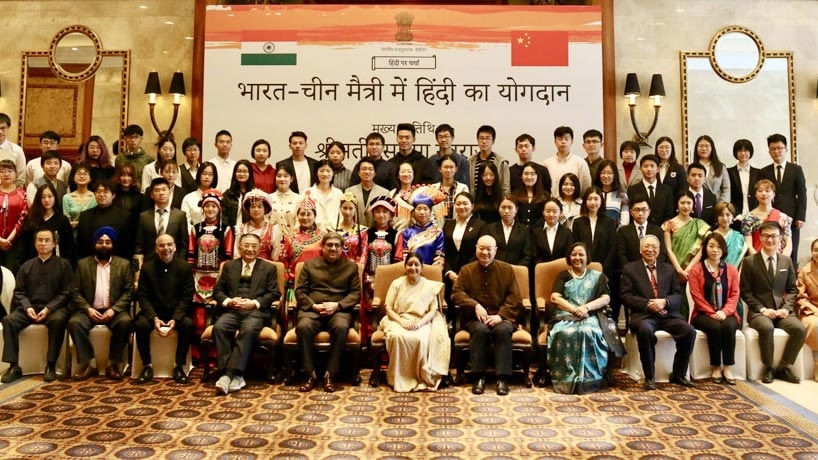
Swaraj, who was on a four-day visit to China from April 21-24, felicitated a group of Chinese students and professors of Hindi language from various universities across China at the event organized by the Indian Embassy in Beijing. Such a scene could be dubbed as an initiative in “language diplomacy” ahead of the crucial talks between Chinese President Xi Jinping and Indian Prime Minister Narendra Modi in the central Chinese city of Wuhan on April 27-28.
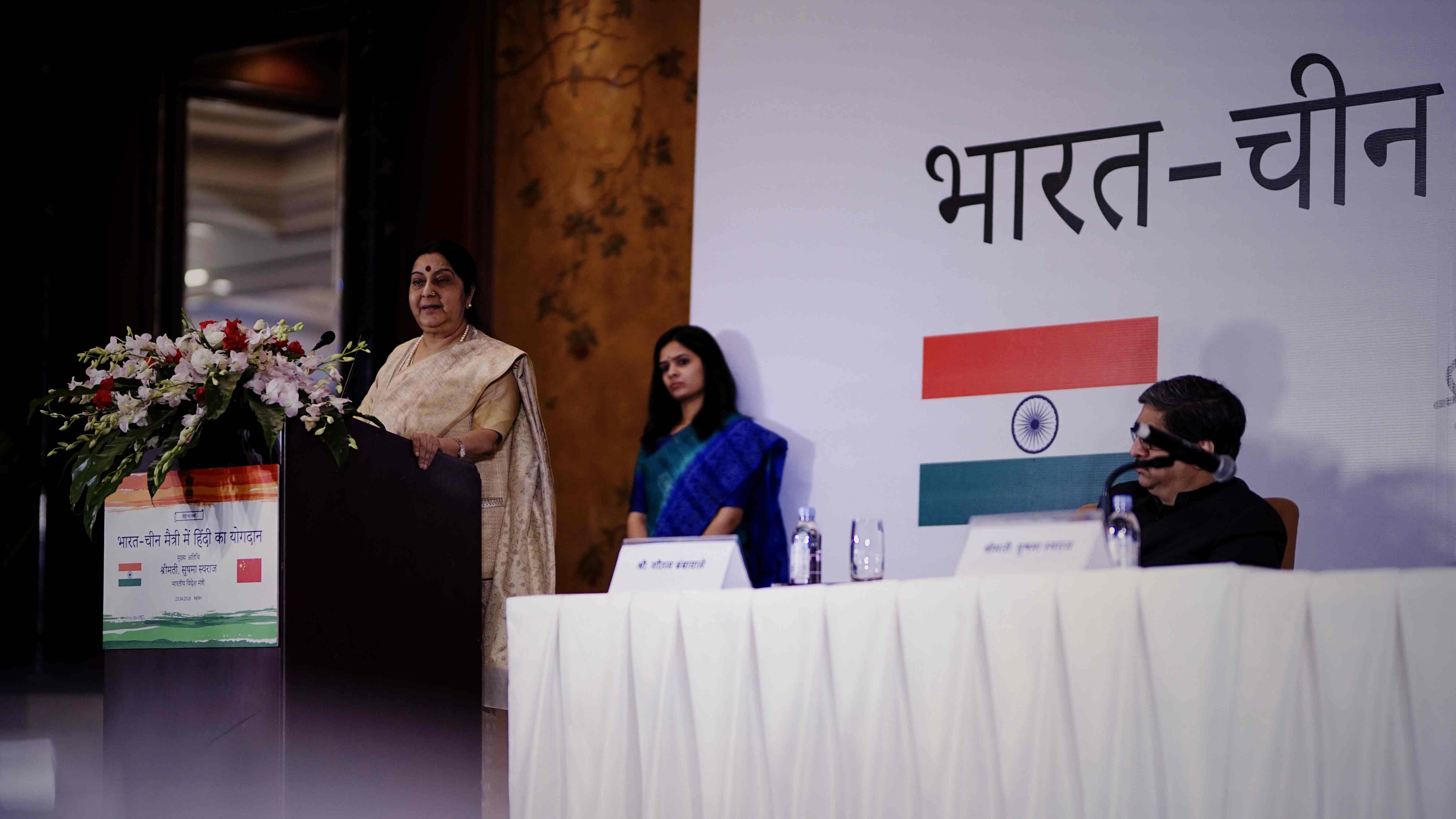
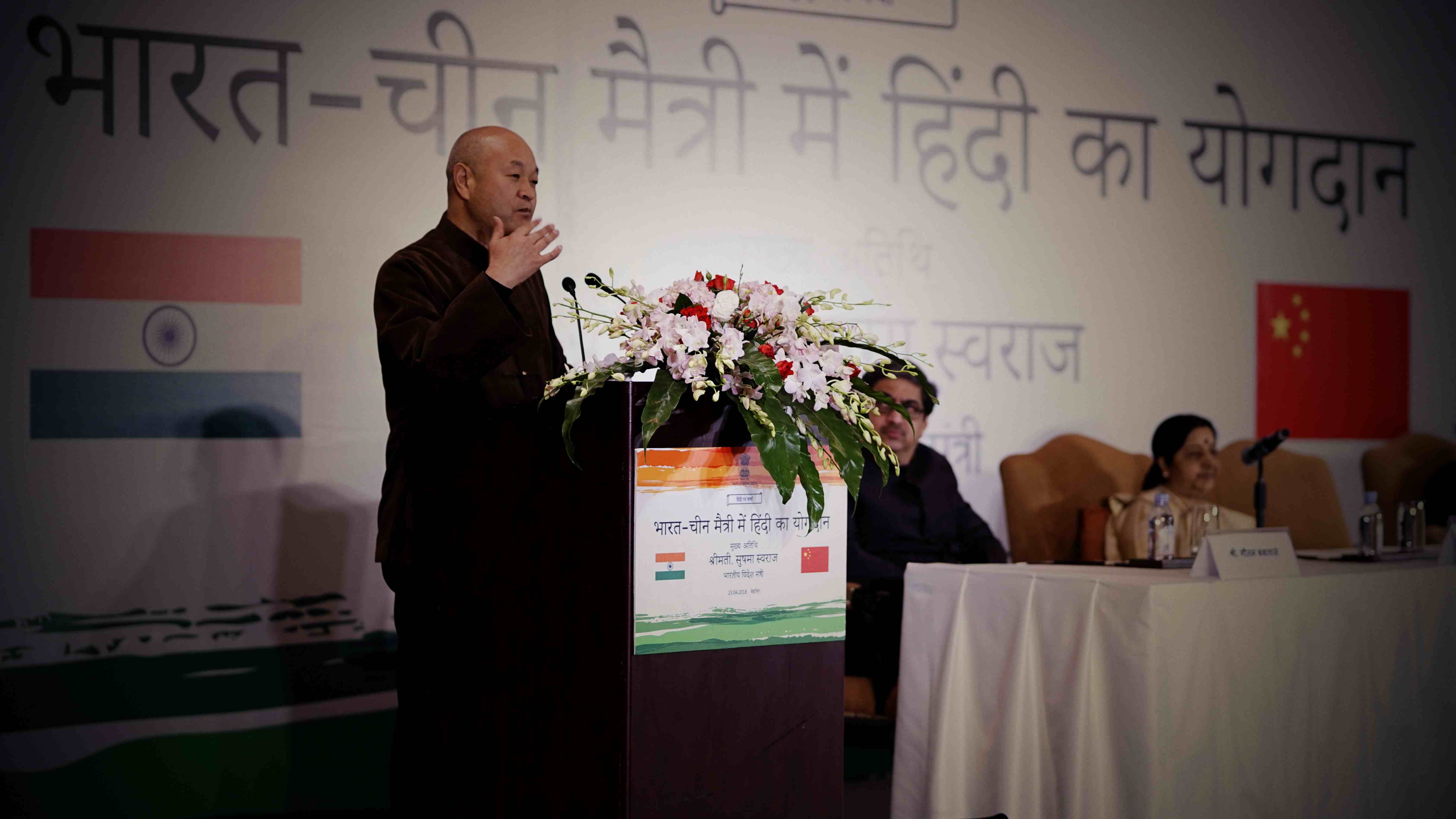
India's External Affairs Minister Sushma Swaraj (left) urged Indian and Chinese people to learn each other's languages to overcome communication barriers, at an event to celebrate "Contribution of Hindi in India-China Friendship," in Beijing on April 23, 2018. /CGTN Photo
India's External Affairs Minister Sushma Swaraj (left) urged Indian and Chinese people to learn each other's languages to overcome communication barriers, at an event to celebrate "Contribution of Hindi in India-China Friendship," in Beijing on April 23, 2018. /CGTN Photo
Swaraj also invited a delegation of 25 Chinese students of Hindi language to India, while urging Indian and Chinese people to learn each other’s languages to overcome communication barriers at Monday’s event aptly titled “Contribution of Hindi in India-China Friendship.”
"When two friends sit together, what do they want? They want to talk their hearts out to each other, share what they feel. And for that, we need a language. I should be able to understand Chinese when you speak, and you should be able to understand Hindi when I talk," she added.
“I want to say that the way India and China's relations are strengthening, trade is increasing, we are working together on international forums, it has become increasingly important that you learn Hindi and we learn Chinese. So that when Indians visit China they don't face difficulty, and when Chinese visit India, you don't require an interpreter,” she said.
Bollywood, a big draw
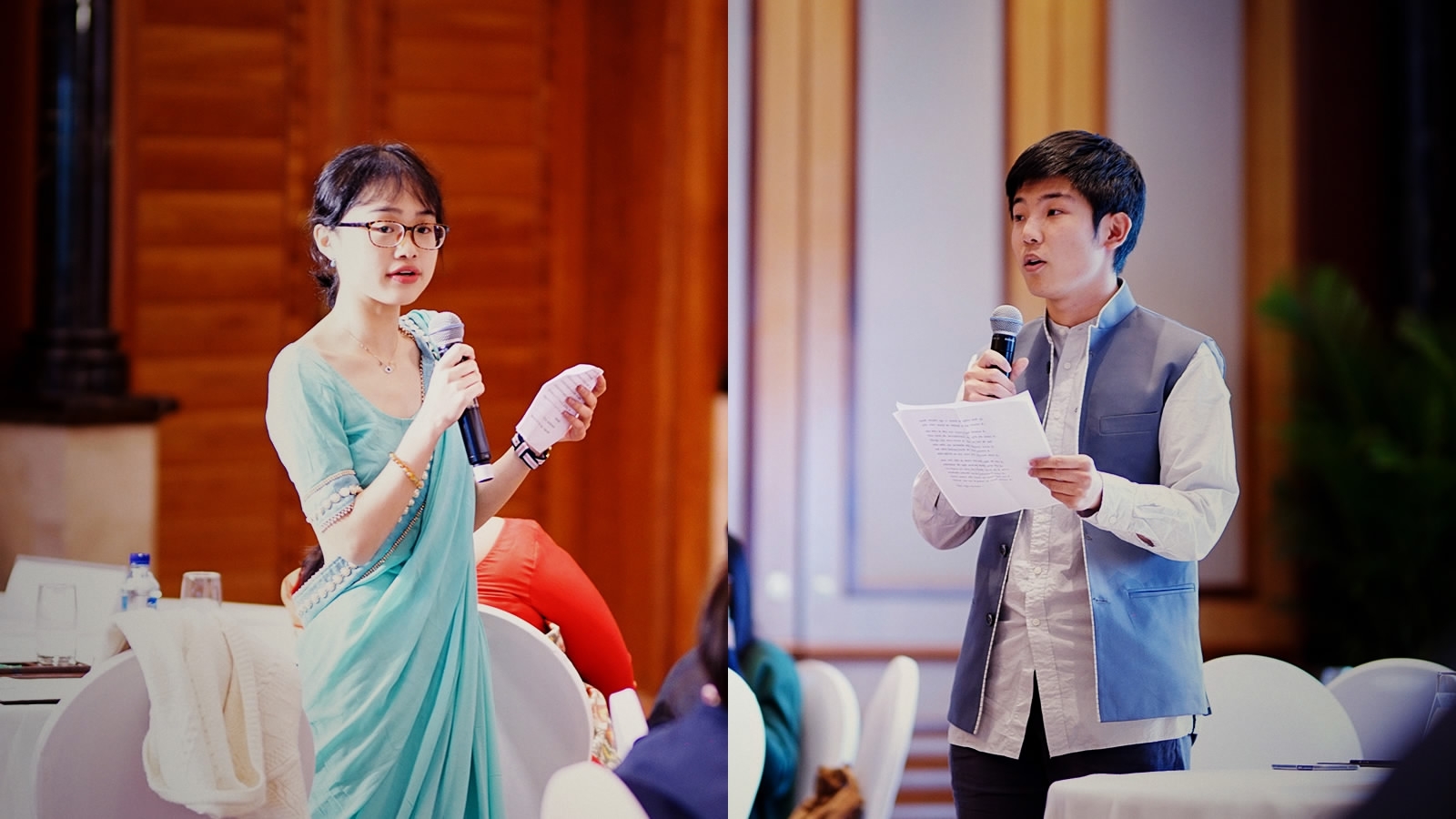
Chinese students at the event shared a range of experiences about how the learning of Hindi has brought them closer to understanding Indian culture. /CGTN Photo
Chinese students at the event shared a range of experiences about how the learning of Hindi has brought them closer to understanding Indian culture. /CGTN Photo
The Chinese students, who introduced themselves using their Hindi names as well, shared their experiences about how the learning of Hindi has brought them closer to understanding Indian culture. Some of them also narrated poems and phrases by well-known Hindi poets and righters such as Munshi Premchand, Ramdhari Singh Dinkar and Baba Nagarjun.
“I didn't know very much about India before I was in high school. But I knew that India was a country of great culture and found it very interesting, so I chose Hindi as my major [at university]. Gao Xirui, a freshman at the Hindi department of Peking University, told CGTN Digital.
“I want to study not only Hindi but also the culture of India and get to know the country and maybe improve the relationship between India and China,” said Gao, who is also known by his Hindi name Sanjeet. “My teacher gave me this name. Sanjeet means success, and he wished that I would be successful,” Gao elaborated.
Others mentioned how the recent popularity of Bollywood movies had drawn many Chinese towards the language.
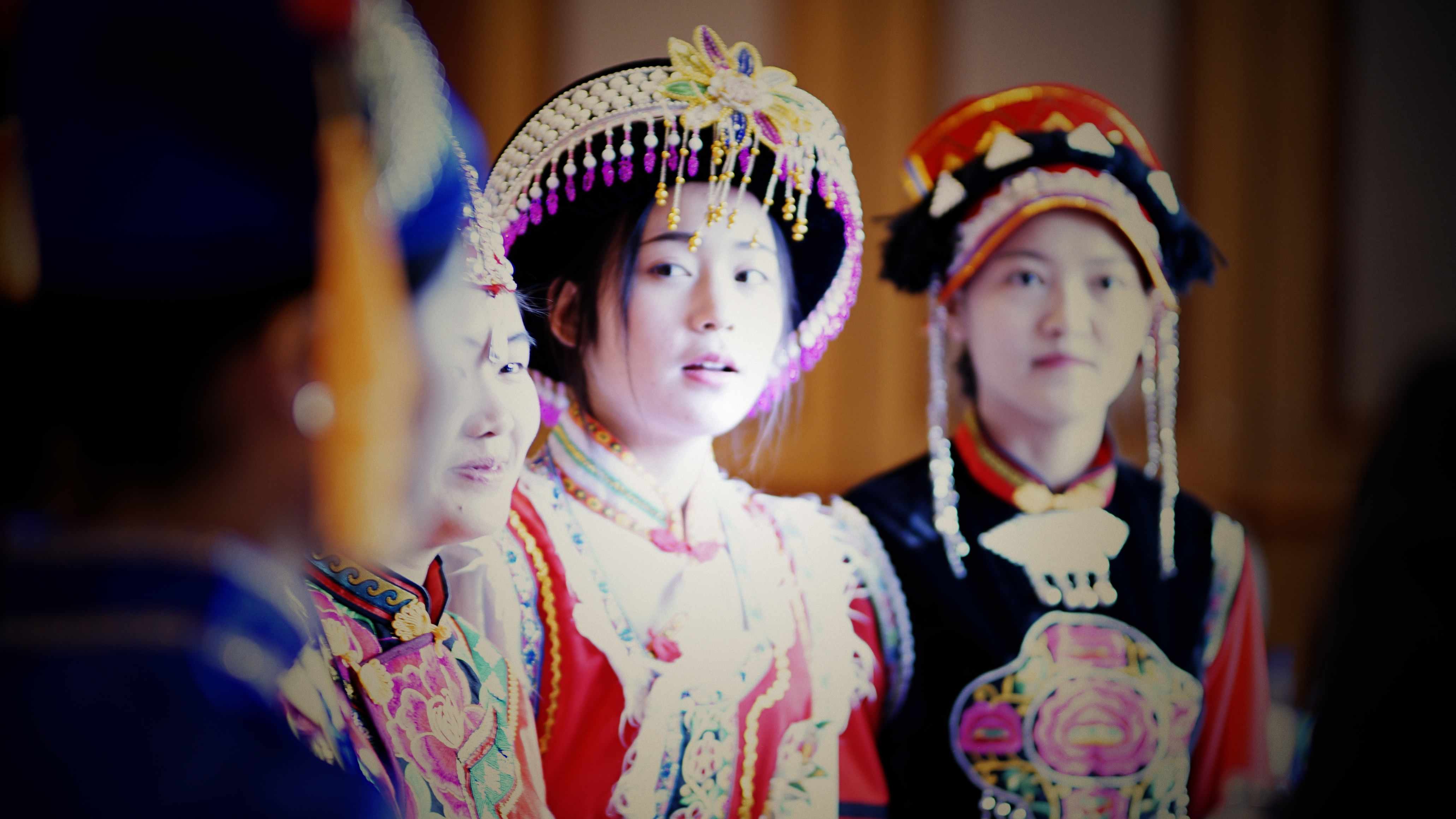
Many of the Chinese students admitted that the recent popularity of Bollywood movies in China had drawn them towards learning the Hindi language. /CGTN Photo
Many of the Chinese students admitted that the recent popularity of Bollywood movies in China had drawn them towards learning the Hindi language. /CGTN Photo
“Before coming to the University, I used to listen to Hindi songs from some of the popular films, which raised my curiosity about the language,” said Kang Rui, a student at Peking University, whose Hindi name is Priyanka.
“Many Chinese have started paying attention to the Hindi language due to the popularity of Bollywood films. But after joining the Hindi department [of Peking University], I’ve realized that besides the song, dance and entertainment, we need to understand other aspects of India as well,” she added.
Swaraj also acknowledged the recent success of Bollywood hits like “Dangal,” “Secret Superstar” and “Hindi Medium” while suggesting that understanding the language without subtitles could improve the overall experience of watching such movies.
Revival of civilizational closeness
Prof Jiang Jingkui of Peking, a passionate Hindi lover, is known for his coinage of the phrase "Chindustan" (China + Hindustan) to promote friendship between both the nations. /CGTN Photo
Prof Jiang Jingkui of Peking, a passionate Hindi lover, is known for his coinage of the phrase "Chindustan" (China + Hindustan) to promote friendship between both the nations. /CGTN Photo
As Chinese investments grow across various states of India, there is an increasing interest in China for Hindi and other languages used in India such as Bengali, Tamil and Urdu. Chinese universities are also teaching Tamil, Urdu and Bengali languages. There are plans to introduce Assamese and Punjabi in Chinese universities soon.
“When I studied Hindi language in the 80s, there was only one university in China where the language was taught. Today, there are about 16 universities across China where over 400 Chinese students are learning Hindi,” said Prof Jiang Jingkui, who teaches Hindi at Peking University.
“We regard Hindi as a symbol of Indian culture, Indian literature and Indian civilization. Hindi is a kind of bridge between two civilizations, just as Sanskrit was in ancient times,” said Jiang, who is a passionate Hindi lover and is known for his coinage of the phrase “Chindustan” (China + Hindustan, which is another name for India) to promote friendship between the nations.
“In ancient times, we understood India very well. But during the 200 years of colonial history, we nearly became strangers. However, there’s resurgence in both the countries about reviving the civilizational closeness. To understand each other we need to make friends, and that is where knowing each other’s languages help,” said Jiang, echoing the sentiments expressed by Swaraj earlier.
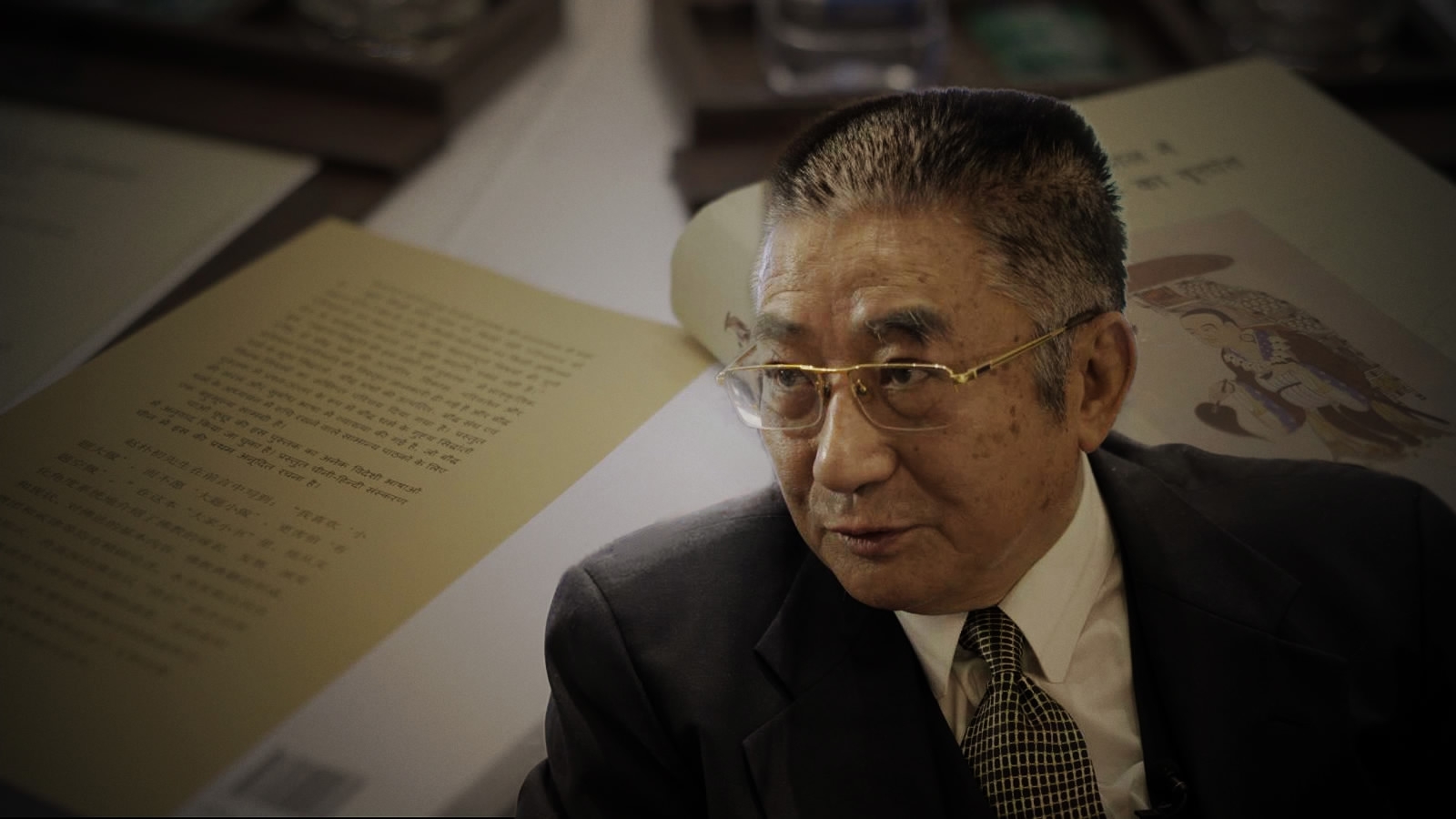
Octogenarian Prof Chen Lixing has been associated with studying and teaching the Hindi language for the past 65 years. He has translated several ancient Chinese scriptures and books in Hindi. /CGTN Photo
Octogenarian Prof Chen Lixing has been associated with studying and teaching the Hindi language for the past 65 years. He has translated several ancient Chinese scriptures and books in Hindi. /CGTN Photo
Among those present at Monday’s event was renowned octogenarian Chinese authority on Hindi and Indian literature, Prof Chen Lixing, who has also translated several ancient Chinese scriptures and books into Hindi.
“I am very happy to attend this discussion on the contribution of Hindi language in India-China friendship. I am an old member of the Hindi family and have studied and taught the language for over 65 years,” Chen told CGTN Digital, speaking in Hindi.
Three Chinese universities are teaching Tamil and Bengali while Urdu, which is also the main language of Pakistan, is being taught at 10 universities.
With interest in Mandarin among Indians witnessing a significant jump in recent times, it seems that language diplomacy will be at the core of China-India ties in times to come.

 ["china","other","India"]