
World
14:16, 17-May-2018
India suspends military operations in Kashmir for Ramadan
 ["china"]
Share







Copied
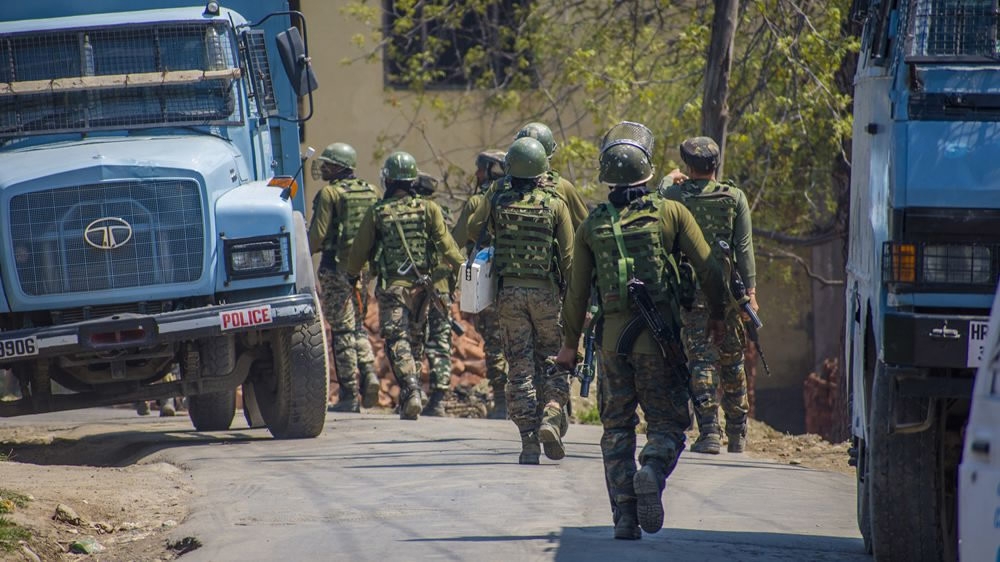
Indian military operations against rebels in the disputed Kashmir territory were suspended Wednesday in a rare gesture for the Muslim holy month of Ramadan.
The 30-day halt is the first of its kind in Indian-controlled Kashmir for nearly two decades, and follows an escalation of violence in recent months in the Muslim-majority Himalayan region.
India has 500,000 troops in Kashmir, which is divided between India and Pakistan and claimed by both.
Home Minister Rajnath Singh said the suspension was to allow a peaceful celebration of the fasting month.
The decision means Indian troops will stop the pursuit of militants and door-to-door house searches – but they will still retaliate if attacked, officials said.

Kashmiri Muslim women shout anti-Indian slogans as they attend the funeral of Adil Ahmed Yadoo, a civilian mown down by Indian police armored vehicle during his funeral procession May 5, 2018 in Srinagar, the summer capital of Indian administered Kashmir. /VCG Photo
Kashmiri Muslim women shout anti-Indian slogans as they attend the funeral of Adil Ahmed Yadoo, a civilian mown down by Indian police armored vehicle during his funeral procession May 5, 2018 in Srinagar, the summer capital of Indian administered Kashmir. /VCG Photo
In a statement, Singh sought the cooperation of "everyone" in the initiative but did not make a direct call for militants to suspend hostilities.
There was no immediate response from militant groups that have been fighting Indian rule in the territory for nearly three decades.
Indian authorities and Hizbul Mujahideen, the largest indigenous militant group, both briefly stopped fighting in 2000.
However, the conflict has never shown any serious sign of ending.
Violence escalated after Indian troops killed a top militant commander in a 2016 gunfight that led to months of street protests in which scores of demonstrators were killed.
Dozens of young men have since joined militant groups and there are now almost daily gunfights between armed rebels and Indian soldiers.
More than 200 militants and 57 civilians were killed in 2017. Many of the civilians were killed in protests to stop troops firing on holed-up rebels.
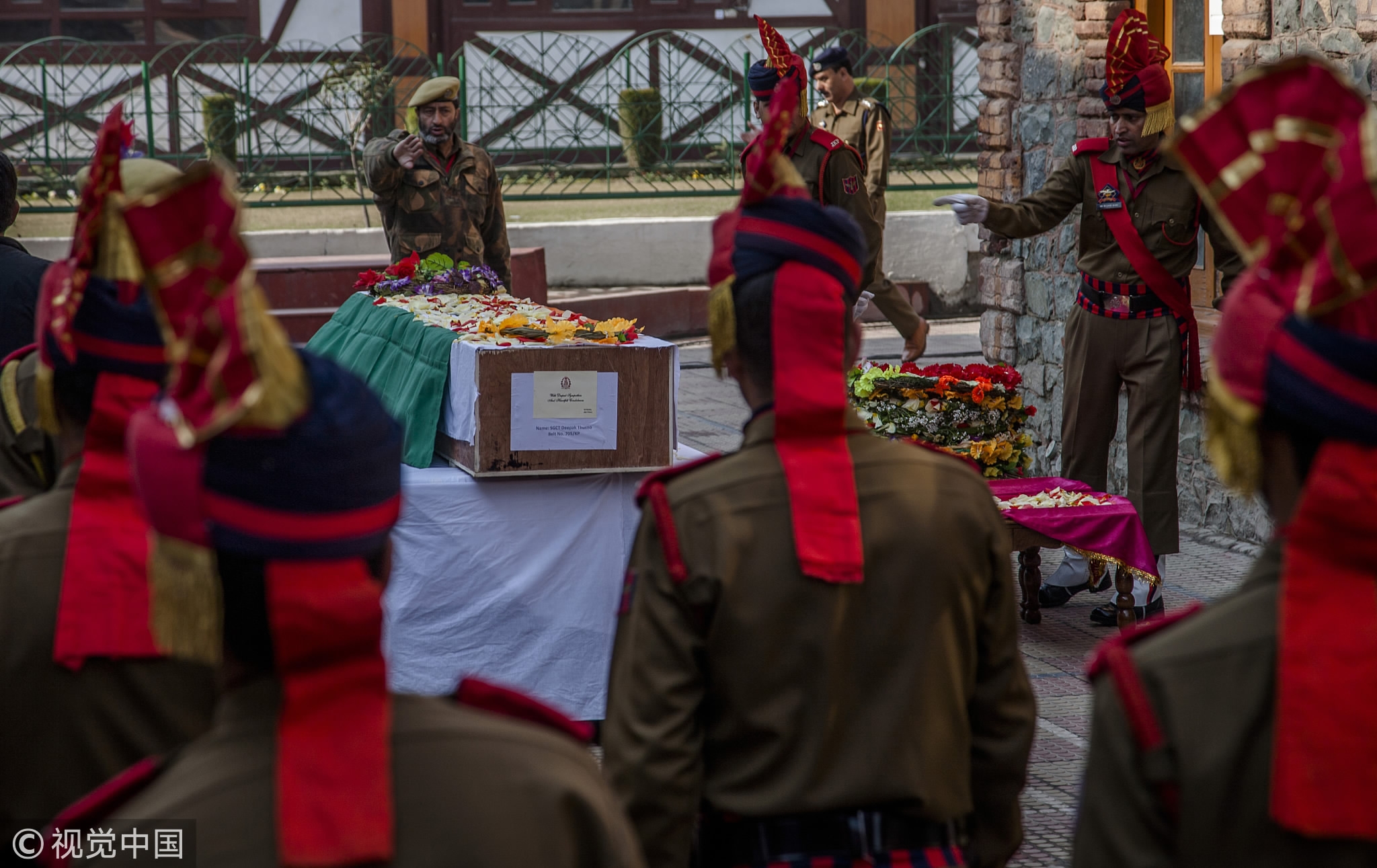
Honor guards of Indian police stand in formation as they honor the coffin containing the body of their comrade, Deepak Thusoo, killed in a gun battle with suspected rebels, during his wreath laying ceremony at a police headquarters, on March 21, 2018, in Srinagar, the summer capital of Indian administered Kashmir. /VCG Photo
Honor guards of Indian police stand in formation as they honor the coffin containing the body of their comrade, Deepak Thusoo, killed in a gun battle with suspected rebels, during his wreath laying ceremony at a police headquarters, on March 21, 2018, in Srinagar, the summer capital of Indian administered Kashmir. /VCG Photo
More than 70 militants have been killed this year in dozens of gunfights and more than 30 civilians have also died.
Chief Minister Mehbooba Mufti, who runs the Kashmir administration in an alliance with Prime Minister Narendra Modi's Bharatiya Janata Party, expressed hope that the decision "will create a peaceful and amicable environment for sustained dialogue."
Kashmir has been divided between India and Pakistan since the end of British rule in 1947. They have fought two wars over the disputed territory.
Rebel groups seek independence or a merger of the territory with Pakistan. India accuses Pakistan of arming the rebels, but Islamabad says it only gives diplomatic and moral support.
Six civilians were shot dead by Indian government forces in protests over the killing of five militants on May 7.
(Cover: Indian military forces walk towards a gun battle between Indian armed forces and rebels April 1, 2018 in Shopian south of Srinagar, the summer capital of Indian administered Kashmir, India. /VCG Photo)
Source(s): AFP