
Politics
22:07, 26-Sep-2018
Iran in firing line as Trump takes gavel at UN Security Council
Updated
21:51, 29-Sep-2018
 ["other"]
Share






Copied
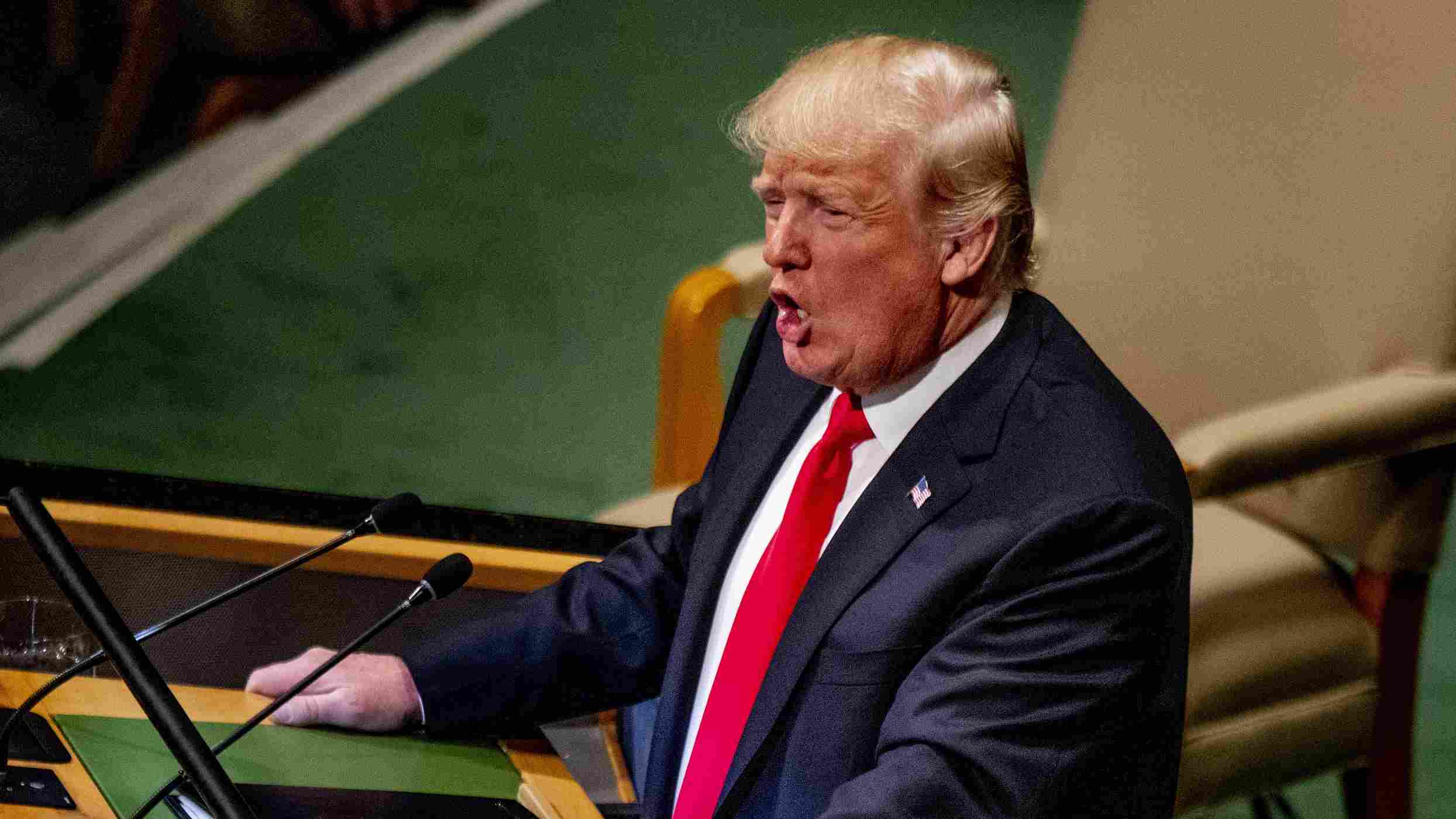
Frictions between the United States and Iran are set to be stepped up on Wednesday when US President Donald Trump chairs a UN Security Council meeting at which Tehran will be the focus.
Trump and Iranian President Hassan Rouhani gave dueling speeches at the UN General Assembly on Tuesday, with the US leader accusing Tehran of sowing "chaos, death and destruction" and his Iranian counterpart ridiculing the man in the White House as "preposterous" and accusing the US of seeking to overthrow his government.
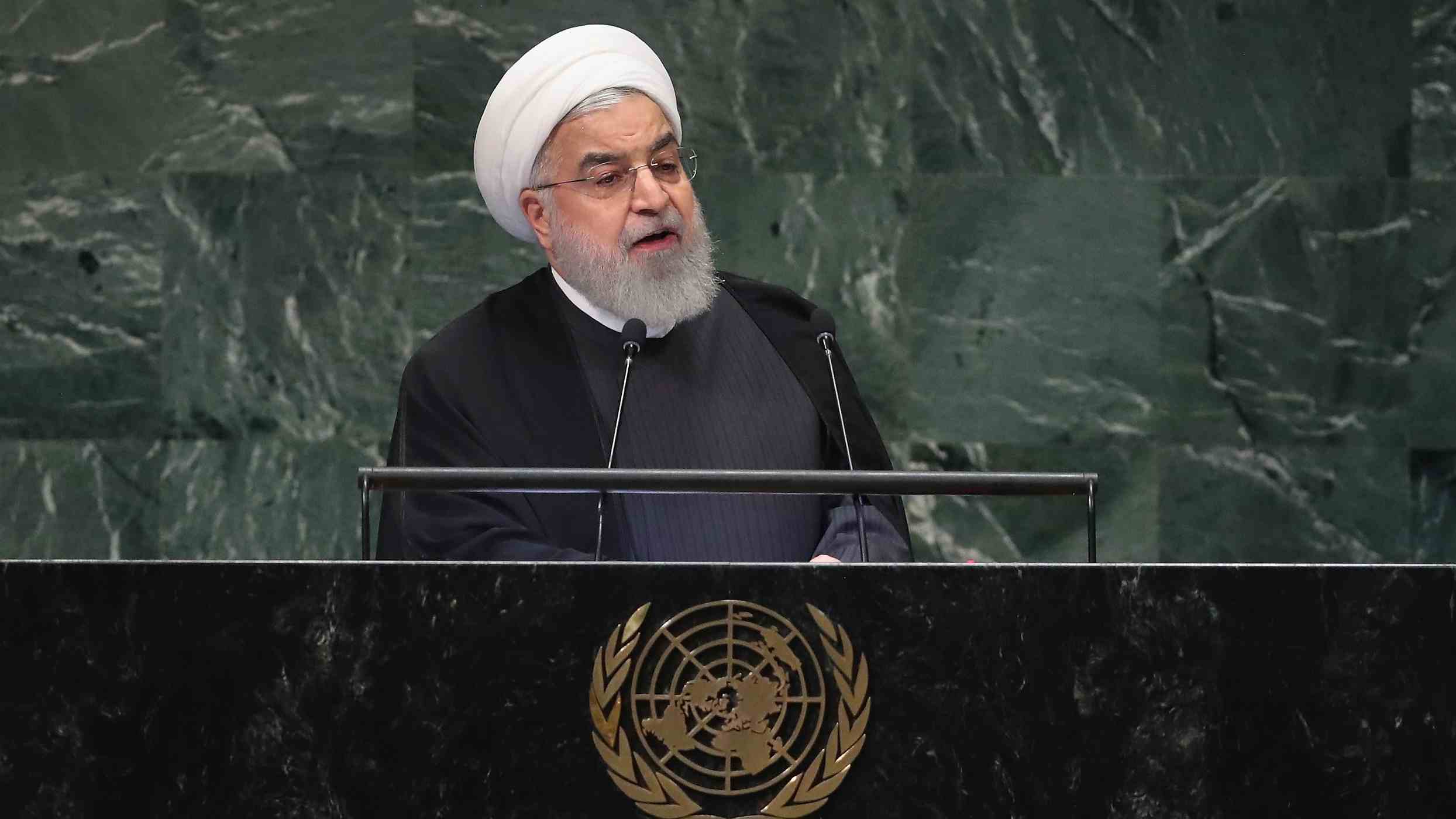
President of Iran Hassan Rouhani addresses the 73rd UN General Assembly, New York, September 25, 2018. /VCG Photo
President of Iran Hassan Rouhani addresses the 73rd UN General Assembly, New York, September 25, 2018. /VCG Photo
The US president urged the world to isolate Tehran through sanctions, a call that was rejected by other signatories to the Iran deal but is expected to be repeated by Trump when he takes the gavel at a UN Security Council meeting for the first time on Wednesday.
"We ask all nations to isolate Iran's regime as long as its aggression continues," Trump, who withdrew the US from the Joint Comprehensive Plan of Action (JCPOA) in May, said on Tuesday.
Read more:
John Bolton, Trump's national security adviser and a longstanding Iran hawk, later upped the anti-Iran rhetoric. "If you cross us, our allies or our partners, if you harm our citizens, if you continue to lie, cheat and deceive, there will be hell to pay," he said in a speech to anti-Tehran activists in New York.
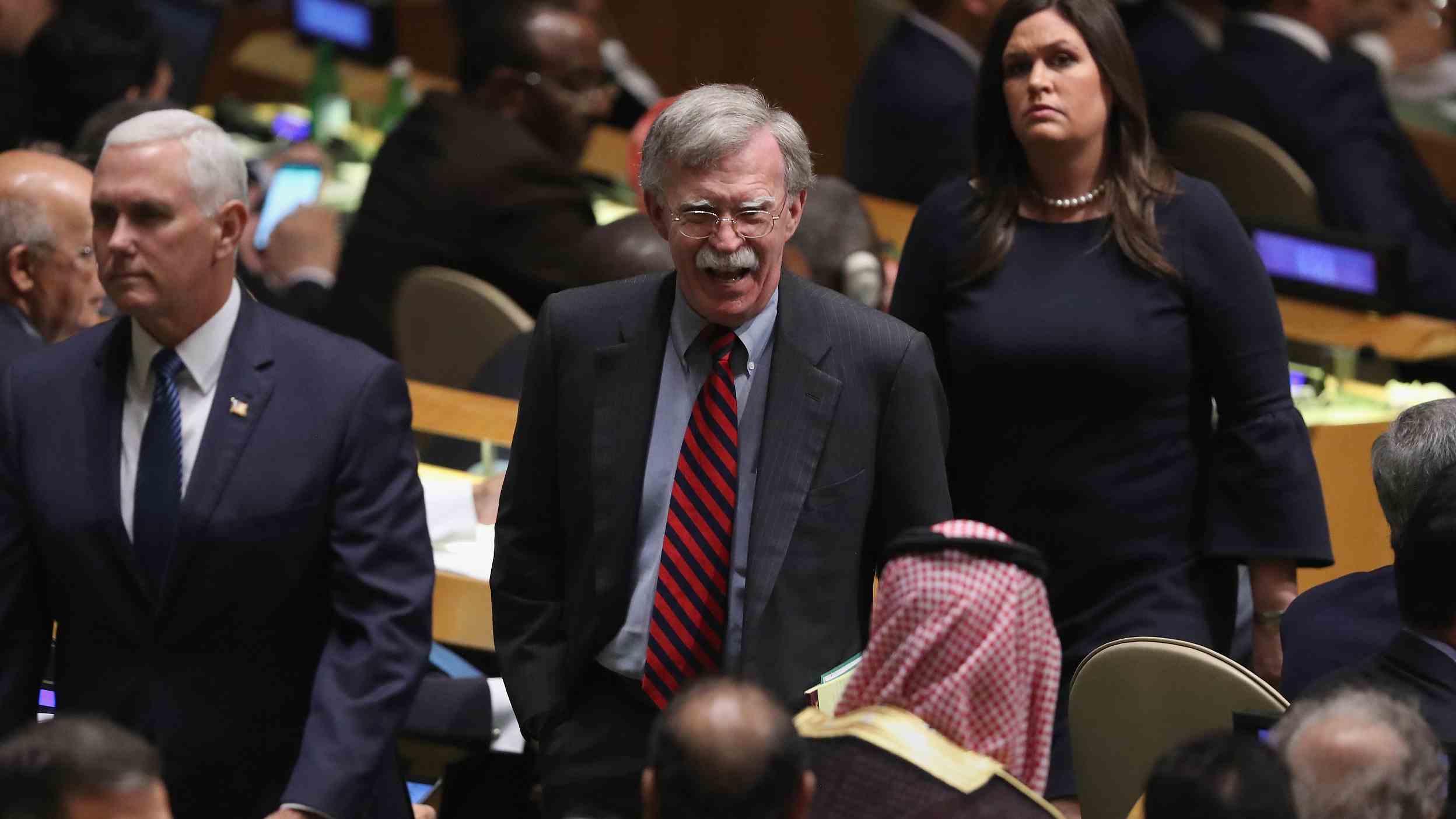
US National Security adviser John Bolton (C) greets a member of the Saudi Arabian delegation as he arrives with US vice president Mike Pence (L) and White House press secretary Sarah Huckabee Sanders at the UN General Assembly, New York, September 25, 2018. /VCG Photo
US National Security adviser John Bolton (C) greets a member of the Saudi Arabian delegation as he arrives with US vice president Mike Pence (L) and White House press secretary Sarah Huckabee Sanders at the UN General Assembly, New York, September 25, 2018. /VCG Photo
Whether Rouhani will attend the Security Council meeting is uncertain, but the remaining signatories to the JCPOA – Britain, China, France, Germany and Russia – have made clear they are working to keep Iran engaged with the international community.
In talks with Iranian Foreign Minister Javad Zarif on the sidelines of the UN General Assembly, Chinese State Councilor and Foreign Minister Wang Yi called for the comprehensive deal to be upheld and supported Iran's right legitimate interests to be respected.
Read more:
On Monday the Iran deal signatories announced a plan to evade US sanctions via a new EU payment mechanism, or Special Purpose Vehicle (SPV), that would theoretically allow trade and financial transactions with Iran to continue without triggering US penalties.
The announcement highlighted a growing split between the US and European powers, already strained by the implementation of trade tariffs on Brussels.
US Secretary of State Mike Pompeo, addressing an anti-Iran pressure group on Tuesday, said he was "disturbed and indeed deeply disappointed" by the SPV announcement.
"This is one of the most counterproductive measures imaginable for regional and global peace and security," adding that "The European Union is strong on rhetoric and weak on follow-through. We do not intend to allow our sanctions to be evaded by Europe or anybody else."

French president Emmanuel Macron addresses the 73rd UN General Assembly, New York, September 25, 2018. /VCG Photo
French president Emmanuel Macron addresses the 73rd UN General Assembly, New York, September 25, 2018. /VCG Photo
French President Emmanuel Macron, however, on Tuesday stressed that Iran should be allowed to freely trade oil and stressed call for dialogue as he rejected Trump's isolation call.
"What will bring a real solution to the situation in Iran and what has already stabilized it? The law of the strongest? Pressure from only one side? No!" Macron said in his address to the UN General Assembly.
The US reimposed a tranche of sanctions on Iran in August and is scheduled to roll a second set, which encompasses oil and shipping, back into place in November.
"It would be good for the price of oil for Iran to be able to sell it. It's good for world peace and it's good for the shape of the international price of oil," Macron later told reporters.

Twitter Screenshot
Twitter Screenshot
Trump's strong rhetoric on Tuesday is not likely to be swayed by opposition from Europe, however, and is expected to be repeated at a UN Security Council meeting which was broadened to encompass nuclear non-proliferation amid US concerns that the original focus on Iran would highlight Washington's own isolation from traditional allies.
11001km