
AI
09:51, 30-Aug-2018
Eureka! AI could predict earthquake aftershocks
Updated
08:46, 02-Sep-2018
 ["china"]
Share







Copied
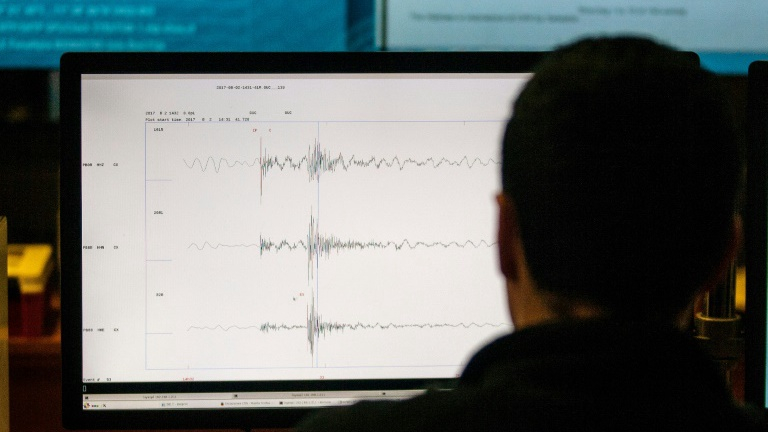
Lightning might not strike twice, but earthquakes can. And forecasting where aftershocks will hit might now be a little easier thanks to an assist from artificial intelligence (AI).
Aftershocks can be more destructive than the quakes they follow, making it all the more important for experts to be able to predict them.
A machine-learning study that analyzes hundreds and thousands of earthquakes has outperformed the method scientists generally use to work out where these tremors will strike.
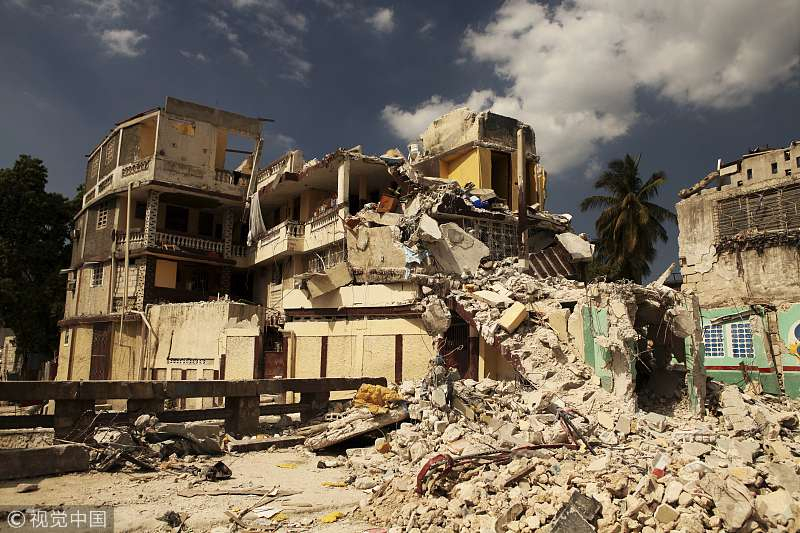
Aftershocks can be more destructive than the quakes they follow. /VCG Photo
Aftershocks can be more destructive than the quakes they follow. /VCG Photo
"The previous baseline for aftershock forecasting has a precision of around three percent across the testing data set. Our neural network approach has a precision of around six percent," said Phoebe DeVries, co-author of the study published in the journal Nature on Thursday.
"This approach is more accurate because it was developed without a strongly held prior belief about where aftershocks ought to occur," DeVries, a post-doctoral fellow at Harvard, told AFP.
The researchers used a type of artificial intelligence known as deep learning, which is loosely modeled on the way the human brain makes connections.
The program allowed the researchers to map relationships "between the characteristics of a large earthquake – the shape of the fault, how much did it slip, and how did it stress the earth – and where aftershocks occurred," said Brendan Meade, professor of earth and planetary science at Harvard, and a study co-author.
The researchers tested the network by holding back a quarter of their data set, and feeding the remaining information into the program.
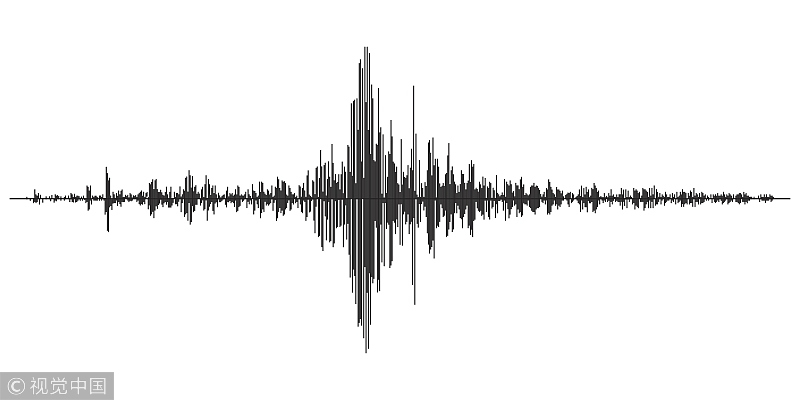
Researchers use a type of artificial intelligence known as deep learning to forecast aftershocks. /VCG Photo
Researchers use a type of artificial intelligence known as deep learning to forecast aftershocks. /VCG Photo
They then tested how well the program predicted the aftershock locations of the 25 percent of cases it hadn't been fed.
They found six percent of the areas the program identified as high-risk did in fact experience aftershocks, up from three percent using existing methods.
Analyzing the research, Gregory Beroza, a professor of geophysics at Stanford University, cautioned it "might be premature to infer... an improved physical understanding of aftershock triggering."
In an article published in Nature alongside the study, he said the research had focused on only one set of changes caused by earthquakes that can affect where aftershocks occur.
"Another reason for caution is that the authors' analysis relies on factors that are fraught with uncertainty," Beroza wrote.
DeVries acknowledged that additional factors affect where aftershocks occur and that there is "much more to be done."
"We definitely agree that this work is a motivating beginning, rather than an ending," she acknowledged.
(Top image: Seismologists have methods to forecast when aftershocks will hit and how strong they will be, but there is more uncertainty about how to predict where they will strike. /AFP Photo)
Source(s): AFP