
Opinions
22:59, 08-Aug-2018
Opinion: Trump’s sanctions: Living in a world bereft of discretion
Updated
22:07, 11-Aug-2018
 ["north america","other"]
Share






Copied

Editor's note: Ghanbar Naderi is an Iranian columnist and political commentator. The article reflects the author’s opinion, and not necessarily the views of CGTN.
The Iran nuclear deal embodies the vital role that rules-based international institutions and treaties can play in advancing the common good.
It’s a shame that this common good is now under threat because US President Donald Trump decided to abandon the international agreement in May. The unilateral withdrawal came despite other parties to the agreement – Britain, China, France, Germany, Russia and the EU – pleaded with Trump not to abandon the pact aimed at blocking Iran from acquiring a nuclear weapon.
To make things worse, on Tuesday, August 7, Trump re-imposed tough, unilateral sanctions against Iran, bringing back into effect harsh penalties that had been lifted under the multi-party agreement ratified by the United Nations Security Council. If this doesn’t highlight the US leader’s distaste for multilateral agreements, we don’t know what else does.
Let the die be cast
In today's tumultuous world, where there is commerce there is peace. The die might have been cast but the battle won’t be won. If Trump is really asking for “world peace” he must realize that a full-blown economic warfare is not the answer. It is unsustainable.
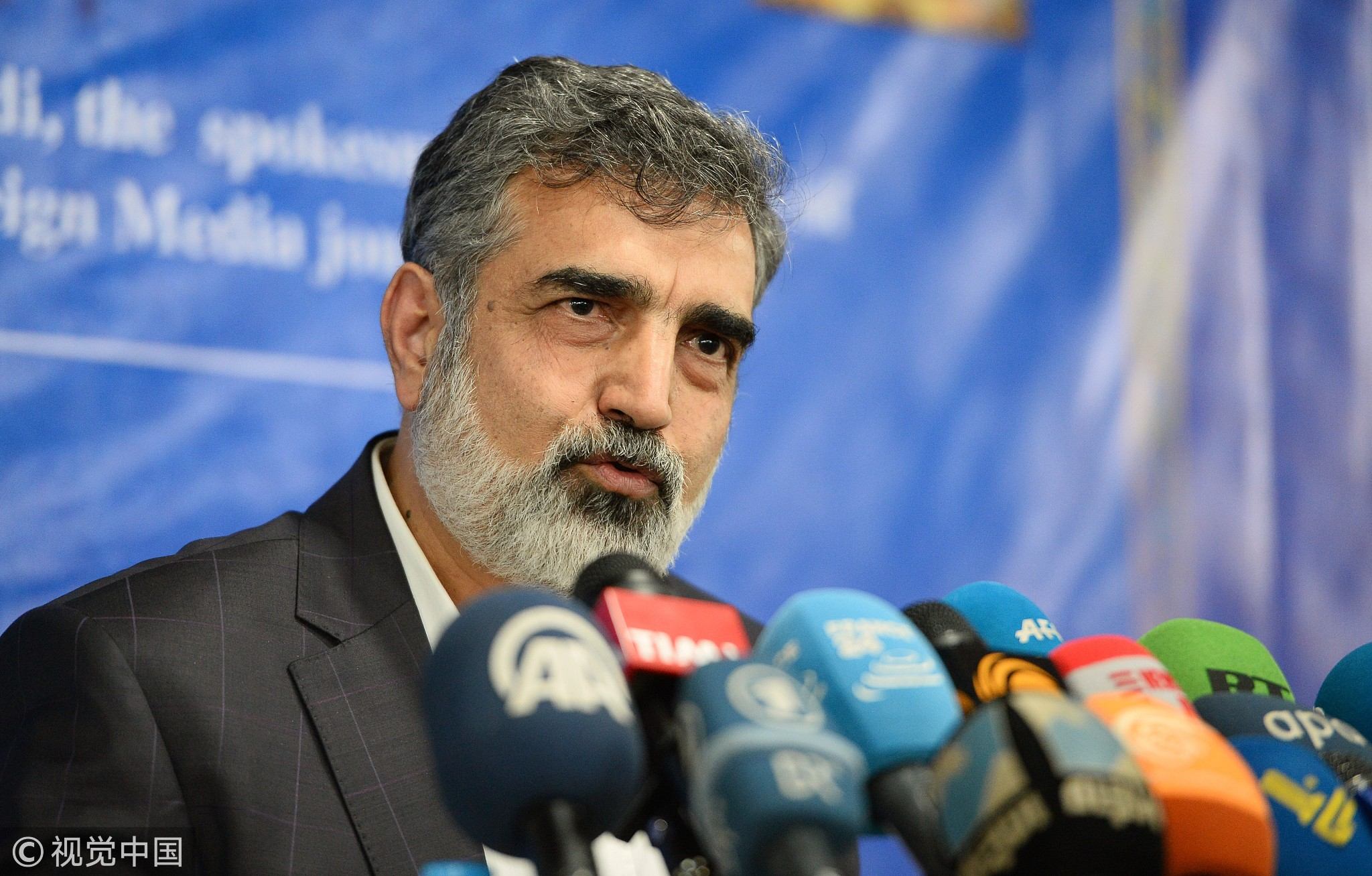
Behrouz Kamalvandi, spokesman for the Atomic Energy Organization of Iran (AEOI), answers questions from foreign journalists during his press conference in Tehran, Iran, July 17, 2018. /VCG Photo
Behrouz Kamalvandi, spokesman for the Atomic Energy Organization of Iran (AEOI), answers questions from foreign journalists during his press conference in Tehran, Iran, July 17, 2018. /VCG Photo
Many Iranian officials have spent their careers fighting Washington’s forever economic wars, hopping from one diplomatic zone to another or sometimes returning to the same campaign again and again. All US presidents in the past 40 years have spent much of their times at this war, still without a victory in sight. It’s likely, as well, that the meaningless economic spat Trump is hoping to win will grind on for the better part of his presidency.
In between, Iran might be losing money and trade, but its financial woes are largely the result of bad policy. Nearly all the losses in the value of national currency in recent decades are mostly attributable to a strategy requiring it to devalue the rial to boost exports, shrink trade deficits, and reduce sovereign debt burdens.
In addition, unilateral sanctions are not won – they just continue forever, causing trade disruption and financial loss. In spite, or perhaps because, of these circumstances, Iran won’t capitulate. The country has always shown remarkable resilience towards US pressures and threats, and its trade and international cooperation and just about any other thing will continue to rise because Trump’s actions are short of international virtues.
Zero-sum game
The history of the fight against US unilateralism, protectionist measures and trade wars should inform today's world community to win for multilateralism.
Trump has warned other countries in tweeted diktats against doing business with Tehran, saying he imposed “the most biting” sanctions on the country. The bully-boy wants to cut Iran’s oil sales, its biggest and most important export. Trump also says he probably won’t be offering waivers to allies that want to keep buying oil.
Amid warnings that such measures could push prices above 90 US dollar a barrel, the world has said no to Trump’s oil war. China is Iran’s biggest customer and was the first the US demanded to stop buying oil. China refused.
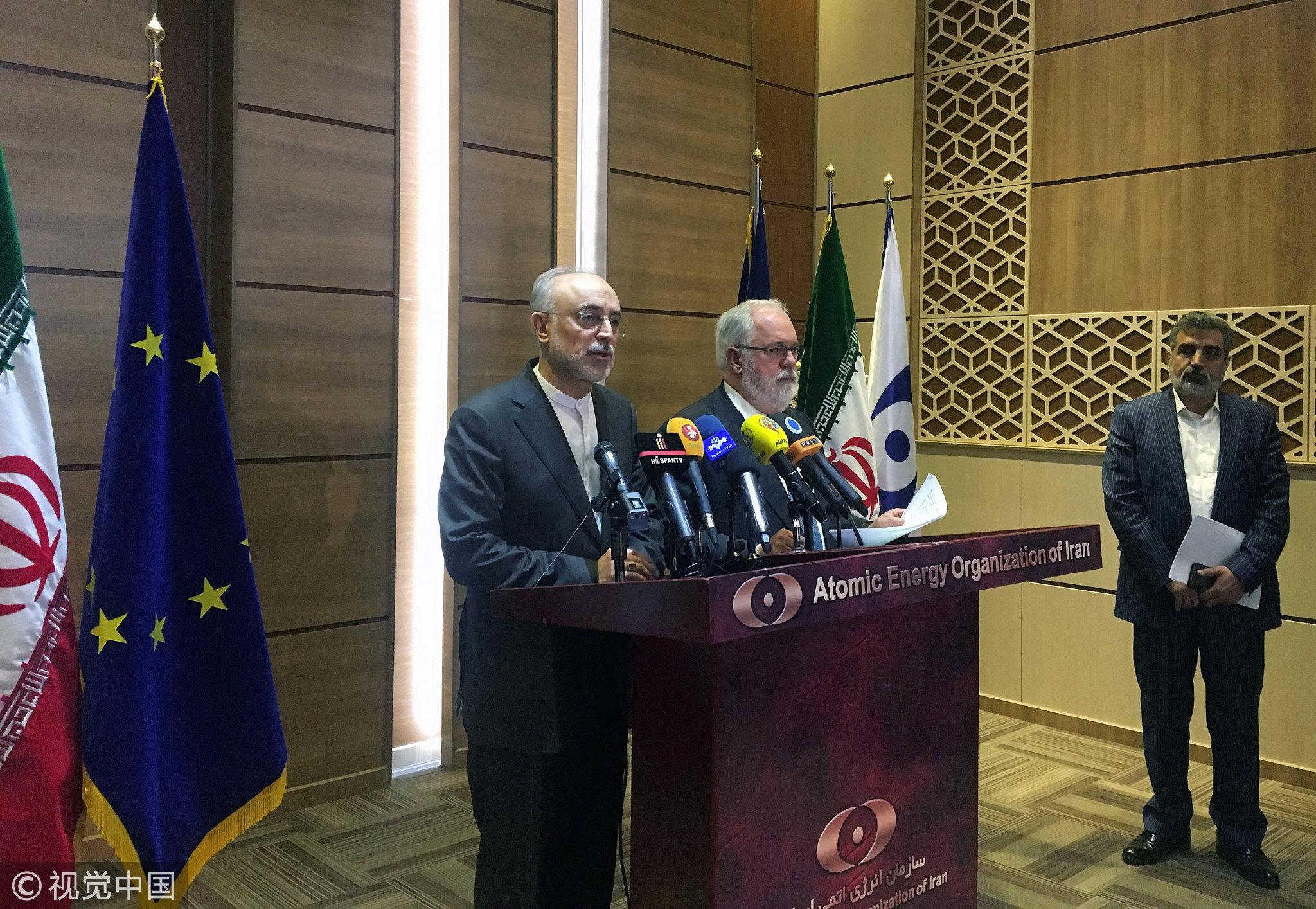
Iran's nuclear chief Ali Akbar Salehi speaks during a joint press conference with European Commissioner for Energy and Climate, Miguel Arias Canete, in Tehran, Iran, May 19, 2018. /VCG Photo
Iran's nuclear chief Ali Akbar Salehi speaks during a joint press conference with European Commissioner for Energy and Climate, Miguel Arias Canete, in Tehran, Iran, May 19, 2018. /VCG Photo
India, Japan, and South Africa have offered to reduce their purchases, while many other countries won’t be joining US sanctions. This, plus a barter system which avoids sanctionable transfers to Iran means the country won’t see its exports go to zero any time soon.
How low can Trump go?
It is not likely that Trump is actually going to sit down with Iranian President Hassan Rouhani and work out another nuclear deal. The Trump administration won’t simply decide to ignore Iran and focus on other issues either.
In contrast, the European Union says the nuclear agreement is central to regional and international stability, and the international community has an obligation to protect the deal and maintain economic relations with Iran.
So there are far too many ways for Iran and the US to sort out their differences – instead of a naval clash in the Persian Gulf as a consequence of Iran closing the Strait of Hormuz. Trump also needs to take this out of his head that a war with Iran will boost his party’s sagging political fortunes ahead of the mid-term elections in November.
What the US president fails to notice is that Iran doesn’t even need to orchestrate a full-blown counterattack because it won’t abandon the UN-endorsed nuclear deal. The economic warfare itself and anger at the pressure it might put on ordinary Iranian citizens could be enough to unite tens of millions of people behind their government.
As a conciliatory gesture, therefore, if Trump really wants to talk, he will have to stop targeting the restless population in the sanctioned country. If a sedition campaign is in the works, the US administration officials are not just going to have a bad year – they are going to have a bad rest of Trump’s presidency in Washington.
To end the current altercation and for the sake of a groundbreaking approach, Trump should stop going that low. Ending the unlawful and unjustified campaign of piling financial pressure on Tehran and returning to the nuclear agreement will do the trick.