
Politics
08:20, 14-May-2018
7 decades of Israel-Palestine turmoil to be marked with US Embassy move
 ["china"]
Share







Copied
02:28
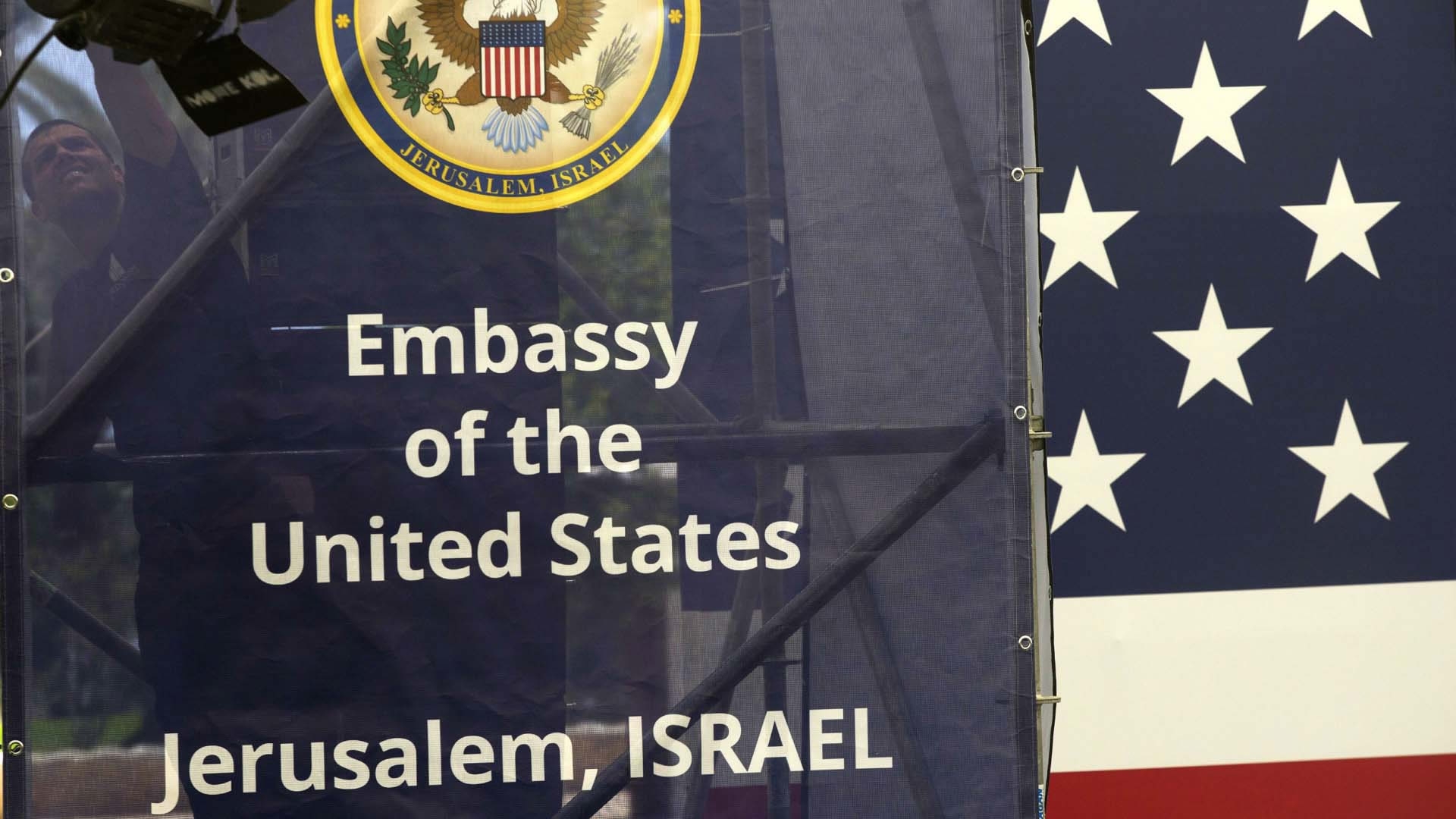
As the United States prepares to officially move its Israeli embassy to Jerusalem, CGTN’s Roee Ruttenberg looks back at how the uneasy state of affairs between Israel and Palestine came to be.
In 1947, the United Nations approved a plan to split up British Mandate Palestine into a Jewish state and an Arab state. Adopted as Resolution 181, it also called for a special international regime to separately administer the holy city of Jerusalem. Meaning, Jerusalem would belong to neither country… at first.
The Jewish Agency accepted the partition plan, while Arab governments and leaders rejected it.
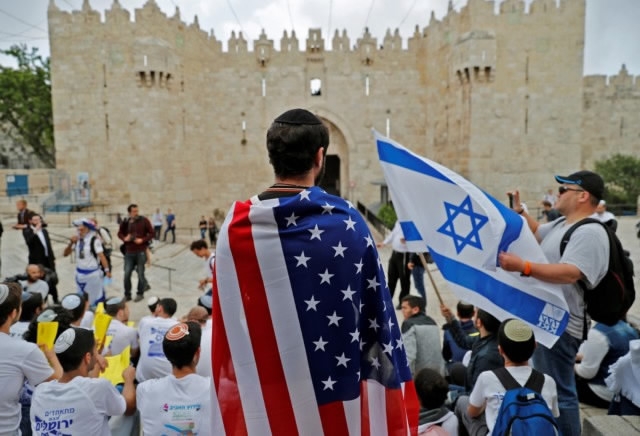
An Israeli man wears the US national flag at Damascus Gate in Jerusalem on May 13, 2018, as Israeli nationalist settlers celebrate Jerusalem Day in the Old City. /AFP Photo
An Israeli man wears the US national flag at Damascus Gate in Jerusalem on May 13, 2018, as Israeli nationalist settlers celebrate Jerusalem Day in the Old City. /AFP Photo
War soon broke out.
By 1948, the Jews declared an independent state called Israel, and took control of the areas west of Jerusalem, declaring it their capital. Jordan took control of the Old City and almost everything east of it, annexing the land two years later. Most Arabs living there, Palestinians, fell under Jordanian administration.
Two decades later, another war erupted and Israel captured East Jerusalem and the Old City from Jordan. In 1980, Israel declared Jerusalem its “complete and united” capital. But the move draws widespread criticism abroad. The few foreign embassies built in West Jerusalem moved to the less controversial beachfront city of Tel Aviv. Palestinians continued to insist Jerusalem was their capital.
In the 1990s, the US brought the Israelis and Palestinians to the table for peace talks in Norway. The Oslo Accords called for the final status of Jerusalem to be decided through negotiations between the parties.
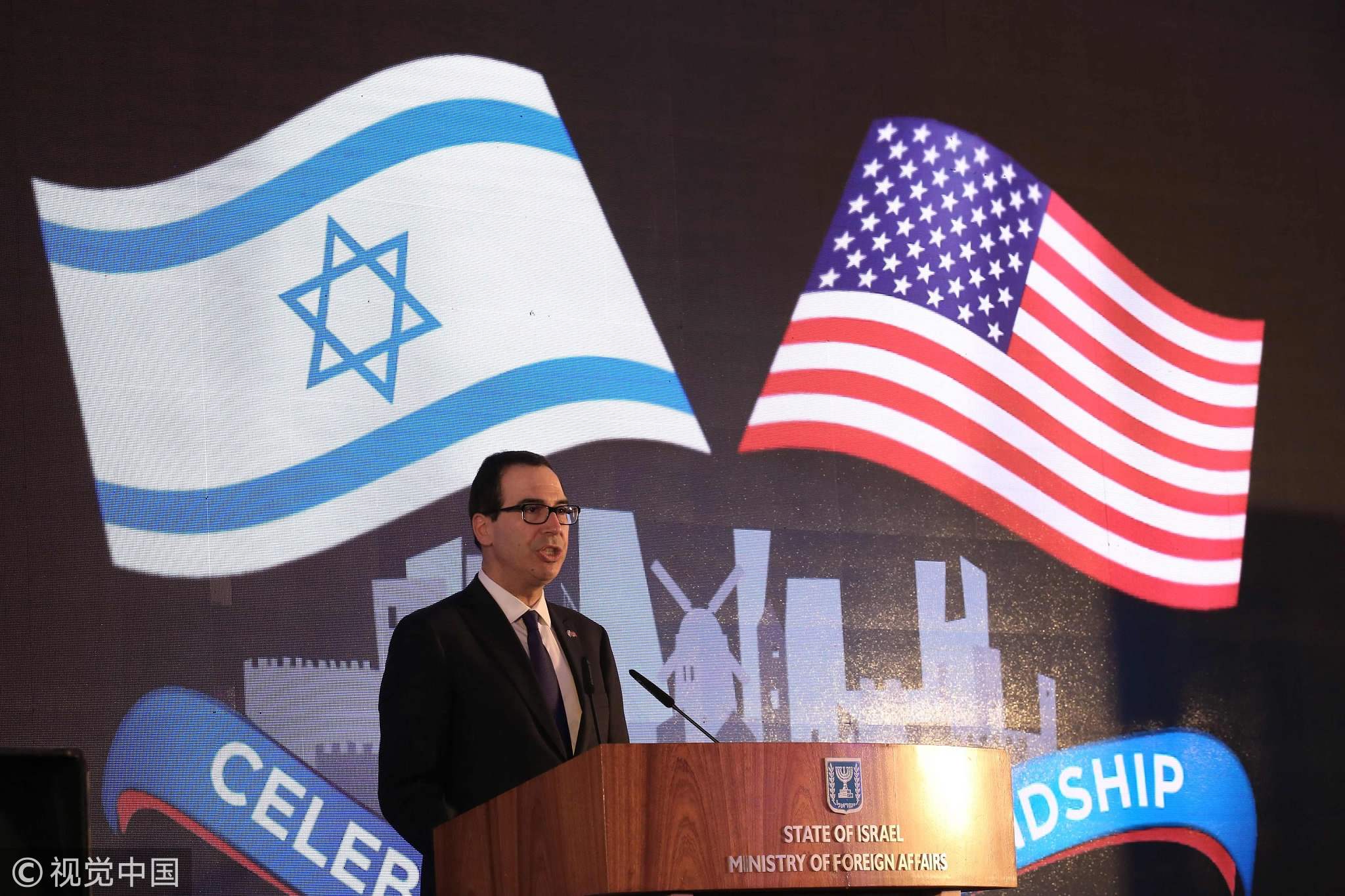
US Treasury Secretary Steve Mnuchin gives a speech as he attends the official reception on the occasion of the opening of the US Embassy at the Ministry of Foreign Affairs in Jerusalem, May 13, 2018. /VCG Photo
US Treasury Secretary Steve Mnuchin gives a speech as he attends the official reception on the occasion of the opening of the US Embassy at the Ministry of Foreign Affairs in Jerusalem, May 13, 2018. /VCG Photo
At the same time in Washington, the US Congress passed the Jerusalem Embassy Act, requiring the American Embassy to be moved from Tel Aviv to Jerusalem. But an exemption was provided, allowing the US president to sign a waiver – every six months – citing national security concerns.
Over 20 years, president after president vowed to move the embassy, but would ultimately sign the waiver, angering pro-Israel activists in the US.
Even Donald Trump signed it last June. But the following December, he then announced he was going to fulfill his campaign promise to move the embassy and recognize Jerusalem as Israel’s capital.
The move has been largely condemned as favoring Israel, though some countries have said they will follow Washington’s lead.
The White House says the move changes nothing, leaving final status negotiations in the hands of the parties on the ground. The move, according to the administration, merely recognizes a reality.