
Opinion
09:27, 16-May-2019
It is beyond imposing tariffs
 ["china"]
Share







Copied
Editor's note: Victor Oluoch is a journalist with Kenya's Nation Media Group and is currently participating in the China Africa Press Center 2019 program in Beijing. The article reflects the author's opinion, and not necessarily the views of CGTN.
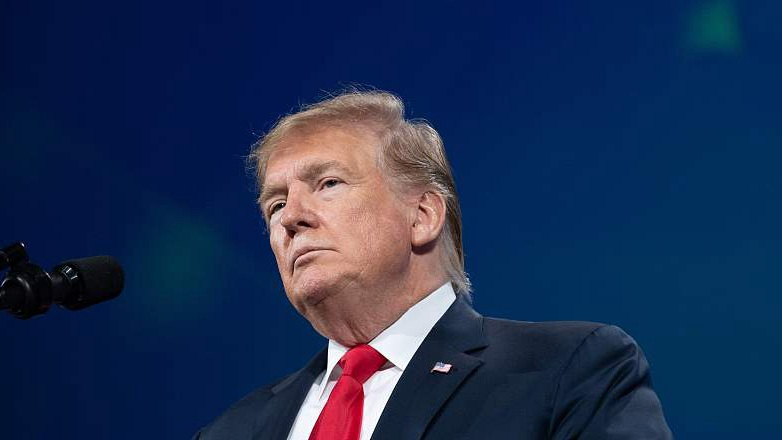
With current retaliation methods witnessed in the Sino-U.S. trade after Donald Trump's administration increased tariffs on Chinese imports to 25 percent up from 10 percent, it is evident that their relations are destined to deteriorate as they enter what can be described as an era of increasingly nationalistic rivalry in the diplomatic and economic arena.
Both parties need to understand that they are the main determinants of the world economic growth and their friction hurts many countries. They need to comprehend that no deal will be reached with revenge, and hence, sobriety needs to be applied.
You will agree that the Trump administration is scared of losing its lone superpower status to a communist-ruled China whose global influence, military might and high-tech capabilities are rapidly rising.
The toughening stances of both sides indicate that the two powers are ready to a play hardball to protect their national interests.
In fact, the U.S. needs to be more flexible because of the position of China, which is also the position of many countries tired of American trading style globally.
When one reads the history of China, he/she realizes that the country built its prestigious Great Wall over 2000 years ago and Chinese have remained to respect their founding footsteps but have never shown any sign of protectionism as America has been alluding.
However, the current tariffs from both sides have unrivaled rafts of issues which will continue to be the cause of bleak Sino-U.S. ties: U.S. military aid to self-ruled Taiwan, Chinese territorial claims in the disputed South China Sea, U.S. criticism of Beijing's Belt and Road Initiative (BRI) and U.S. security warnings against Chinese telecom champion Huawei.
The current trade war is just in the eyes, but deeper, according to me, it symbolizes many things which will come out in the open on a later date. The U.S. fears competition but rather wants to safeguard the status quo, it looks at China as a developing country which should not compete with the U.S. in the global market perspective.
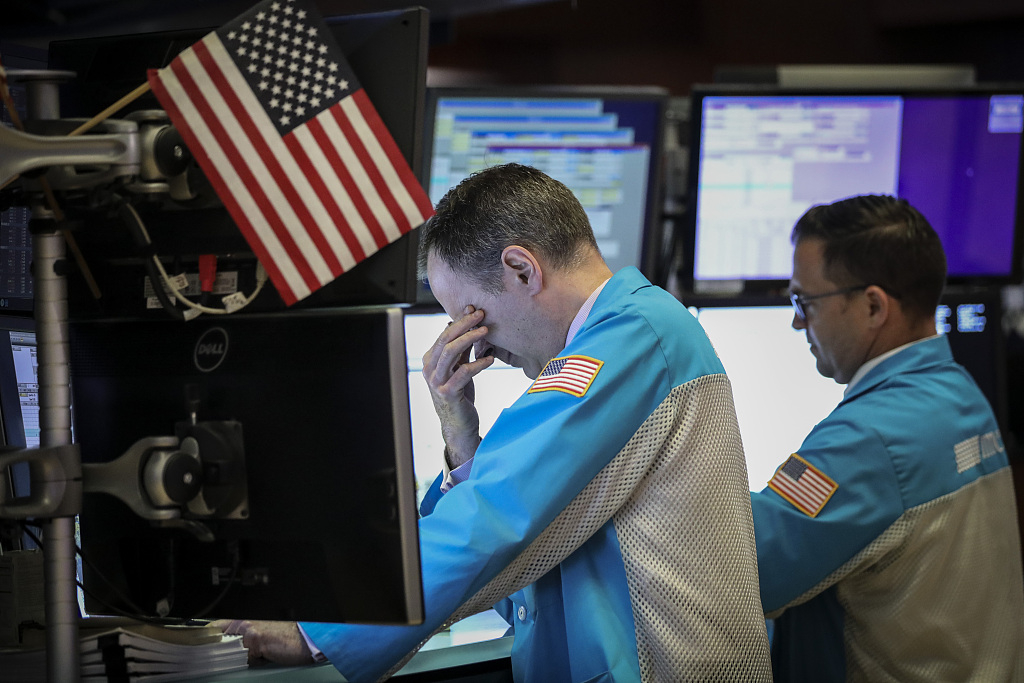
Stock market professionals ahead of the closing bell at the New York Stock Exchange (NYSE), May 13, 2019. /VCG Photo
Stock market professionals ahead of the closing bell at the New York Stock Exchange (NYSE), May 13, 2019. /VCG Photo
Unfortunately, the two economic giants need to be sincere in their talks because their friction might start to unprecedentedly mobilize hostility between the Chinese and American societies.
The two countries are also locked in a battle for global influence, with Washington calling President Xi Jinping's cherished BRI, a project to connect Asia, Europe and Africa via a network of ports, railways and roads, as a geopolitical vehicle. This has seen Trump's government come up with one-billion-U.S.-dollar Connect Africa Initiative to counter BRI's dominance in Africa.
China's increasing its military expenditure and modernizing its army with big spending on aircraft carriers, stealth warplanes and other state-of-the-art weaponry are some of the things making U.S. unhappy, hence using tariffs to scare Beijing.
From another view, technology seems to have taken center stage in the battle for economic supremacy between Washington and Beijing with China's giant tech Huawei being in the middle of the skirmish as it seeks to become the global leader in ultra-fast 5G wireless technology.
The U.S. has been pressing Western allies to shun Huawei over fears that its equipment can serve Chinese intelligence services, and a top executive was detained in Canada on a U.S. warrant over the alleged violations of Iran sanctions.
Ironically as the talks continue from one stage to the other, U.S. feels that China is not supporting the free trade economy when it is the one which continues to champion for protectionism despite its industries being established decades ago. As a result, we have seen the U.S. imposing tariffs on China.
Due to these tariffs, exports from the U.S. to China slumped by seven percent in 2018 depicting how important China is to the U.S. and vice versa. Reports by the U.S.-China Business Council released last week depict that U.S. workers are hurt because exports to China support more than a million jobs in the United States.
As the world's two largest economies, their needs remain intertwined and they cannot survive without each other, in fact, they set the pace for other economies, and hence when their economies are deteriorating other countries do suffer.
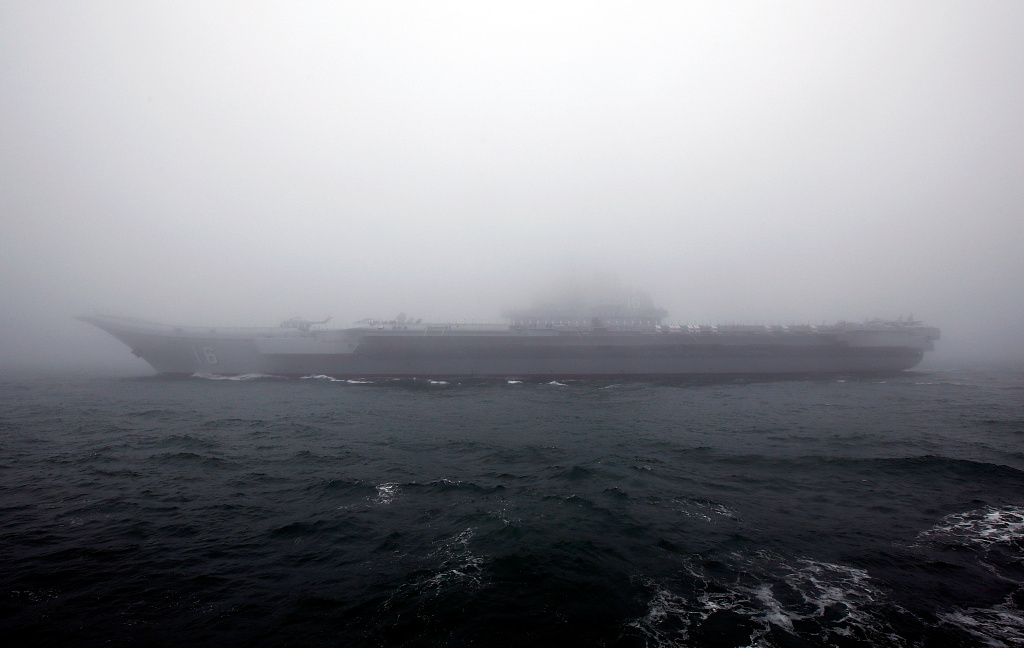
Chinese aircraft carrier Liaoning takes part in a naval parade to mark the 70th anniversary of the founding of Chinese People's Liberation Army Navy, Qingdao, east China's Shandong Province, April 23, 2019. /VCG Photo
Chinese aircraft carrier Liaoning takes part in a naval parade to mark the 70th anniversary of the founding of Chinese People's Liberation Army Navy, Qingdao, east China's Shandong Province, April 23, 2019. /VCG Photo
Economists define protectionism/unilateralism as any policy which provides an unfair advantage to a home industry against international competition. On the other hand, free trade/multilateralism simply means a policy that provides equilibrium to all industries on the global market regardless of their country with the aim of a stable economic growth.
The trade war between the world economic giants is a Cold War between protectionism and multilateralism. In the 21st century many countries are not for protectionism and that is why China is highly becoming the darling of many developing countries which have suffered at the hands of protectionists for decades.
From an economic point of view, which stipulates that free trade makes everything cheaper and improves the quality of products benefiting everyone directly, you will agree with me that China means well for all countries while the U.S. is busy trying to maintain status quo of being the superpower.
China's stand in its current talks with the U.S. serves the interests of all countries because with multilateralism you will realize that all countries have different production strengths in terms of cheap workforce, technological expertise and natural resources.
As a result, each country will focus and specialize on what it does the best and produce better quality and cheap products to satisfy the end consumer and lift themselves out of poverty as a result of continuous foreign investment along with quality opportunities in the world market.
(If you want to contribute and have specific expertise, please contact us at opinions@cgtn.com.)