
Politics
22:26, 28-Jul-2018
Cambodia election: Hun Sen's 33-year premiership likely to continue
Updated
21:37, 31-Jul-2018
 ["china"]
Share







Copied
00:53
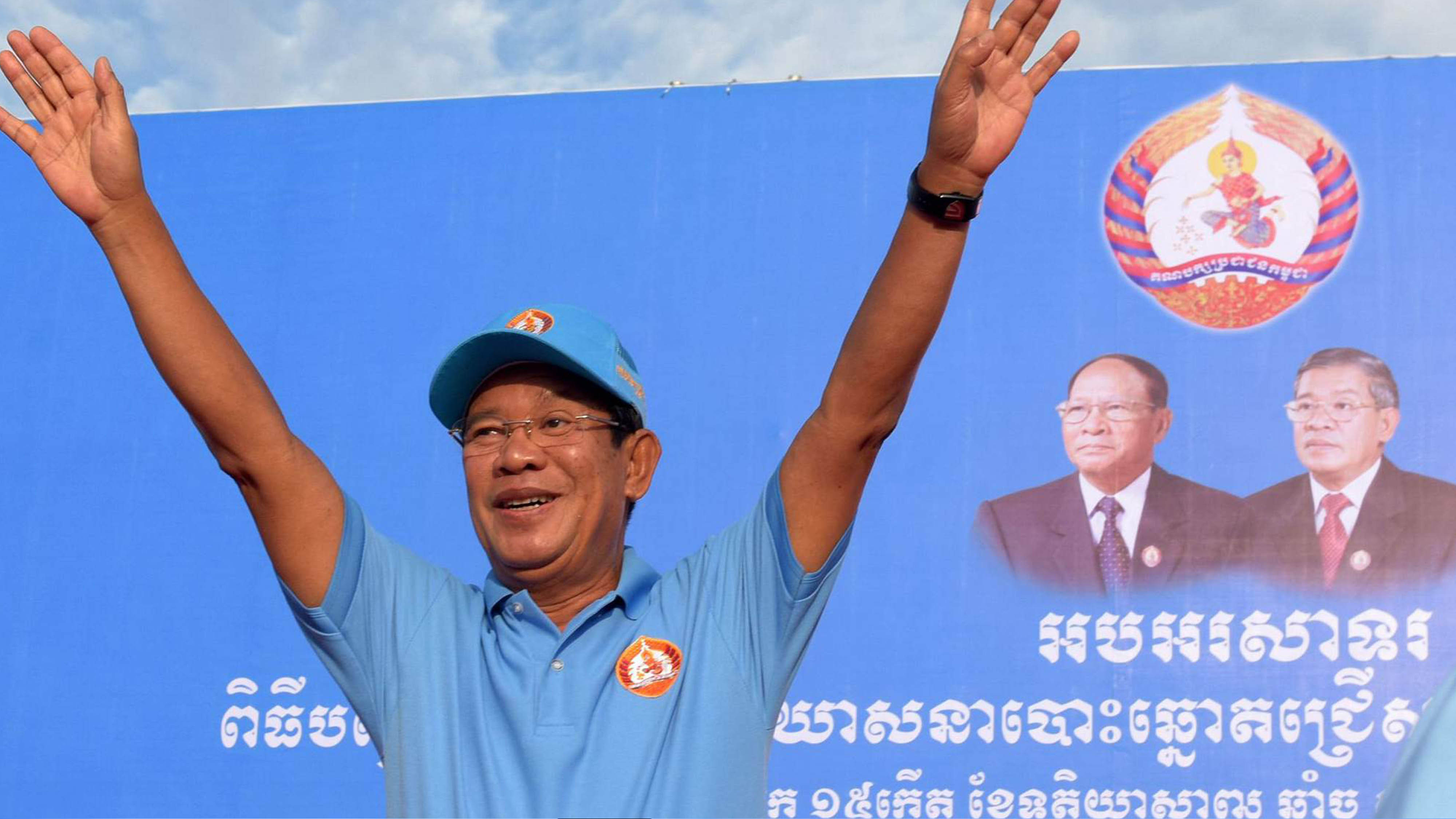
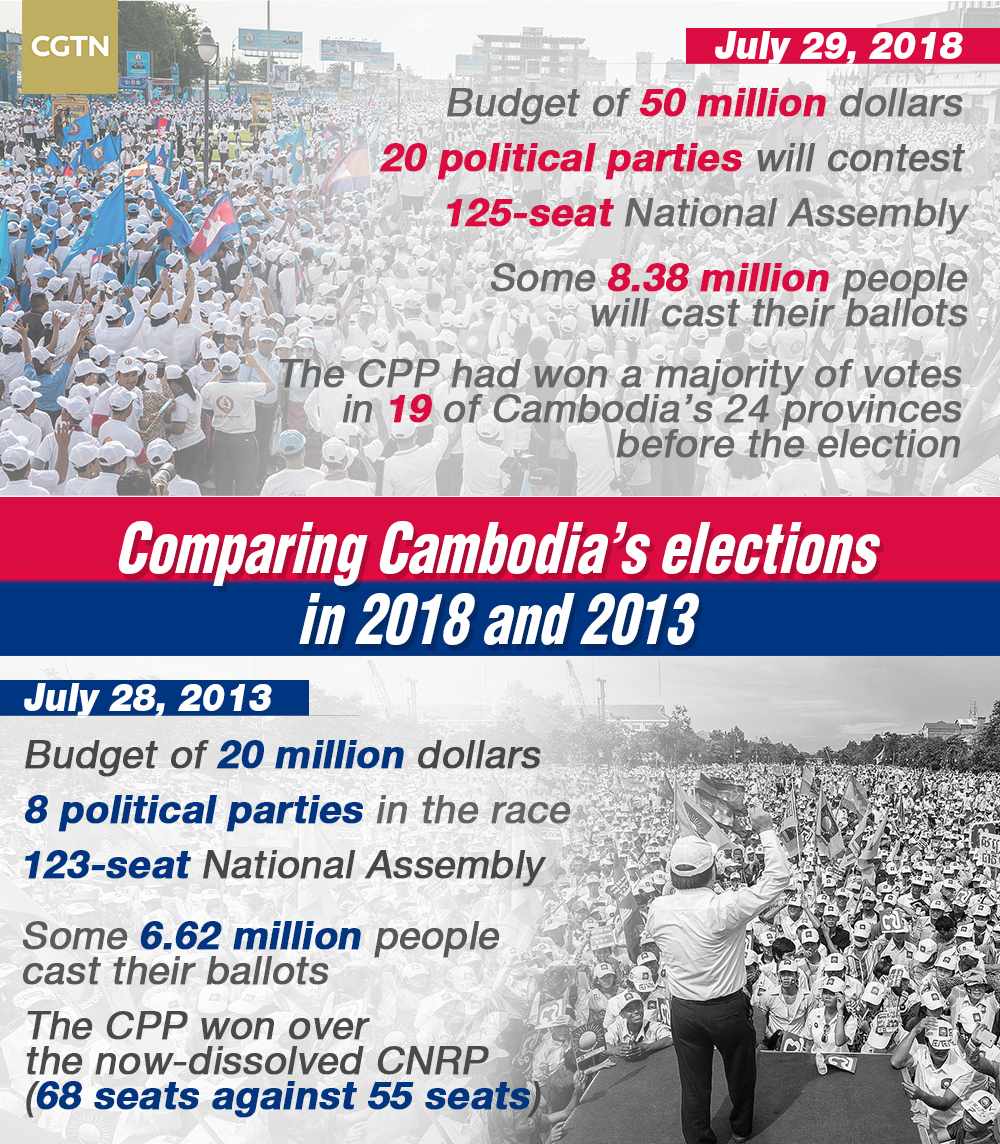
The sixth general election kicked off in Cambodia on Sunday with a total of 20 political parties taking part in the race, a National Election Committee (NEC) spokesman said.
"Polling began at 7:00 a.m. local time (at 22,967 polling stations) and is due to close at 3:00 p.m.," NEC member and spokesman Dim Sovannarom told the reporters.
Some 8.38 million eligible voters are expected to cast their ballots in the election, which is held to elect the members of parliament for the 125-seat parliament, according to China's Xinhua News Agency's report on Sunday.
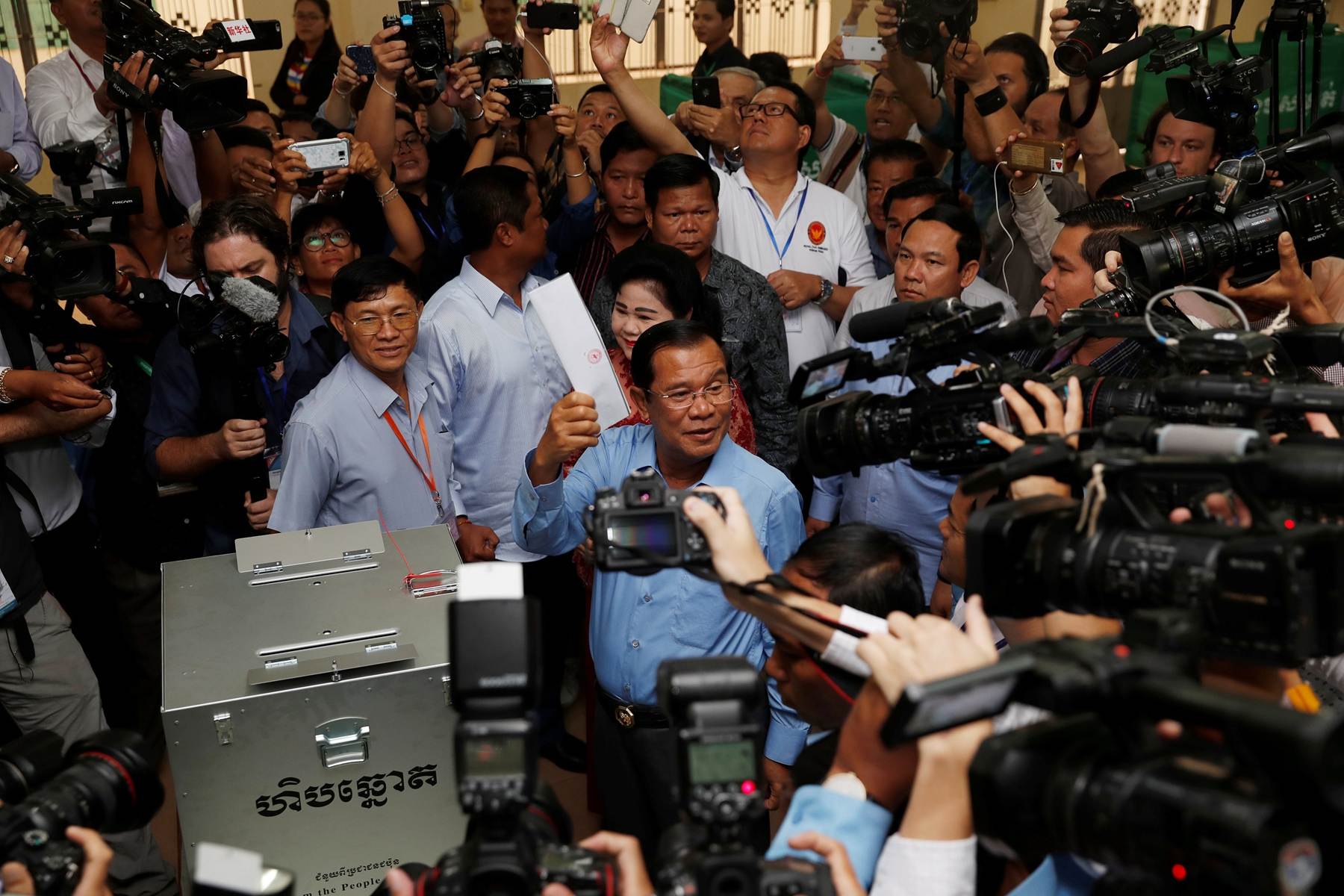
Cambodia's Prime Minister and President of the Cambodian People's Party Hun Sen prepares to cast his vote at a polling station in Takhmao, Cambodia on July 29, 2018. /Reuters Photo
Cambodia's Prime Minister and President of the Cambodian People's Party Hun Sen prepares to cast his vote at a polling station in Takhmao, Cambodia on July 29, 2018. /Reuters Photo
Across the country, ballot boxes have been put in place and voter lists posted up at the almost 23,000 polling stations on Sunday.
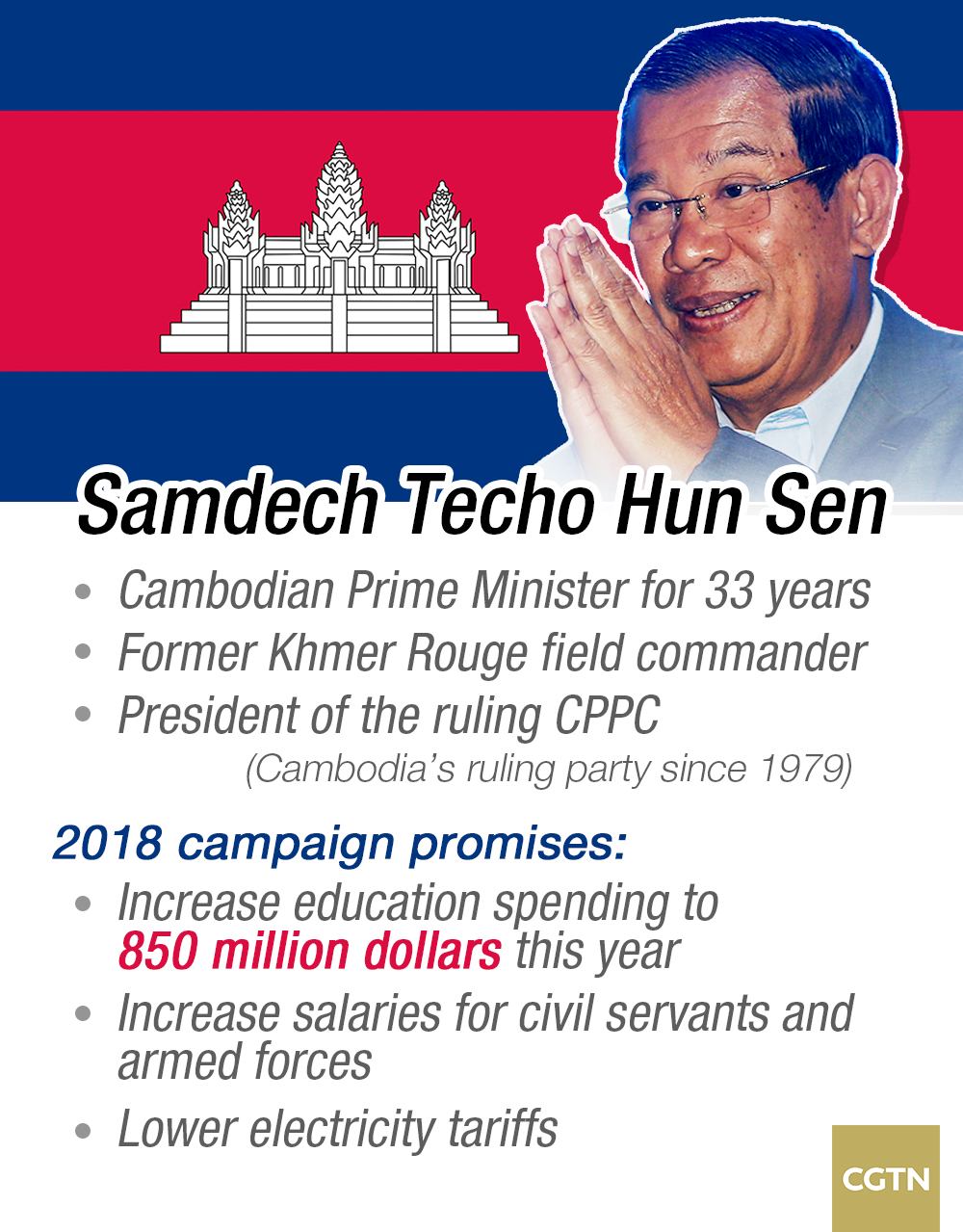
Hun Sen, the world’s longest-serving prime minister, will become the leading actor again, with little doubt that he will win the election once again with a landslide victory.
Though the win will be difficult and Cambodia's future still faces challenges from domestic and international pressures, 66-year-old Hun Sen seems to have made up his mind to hit a way out for a better Cambodia.
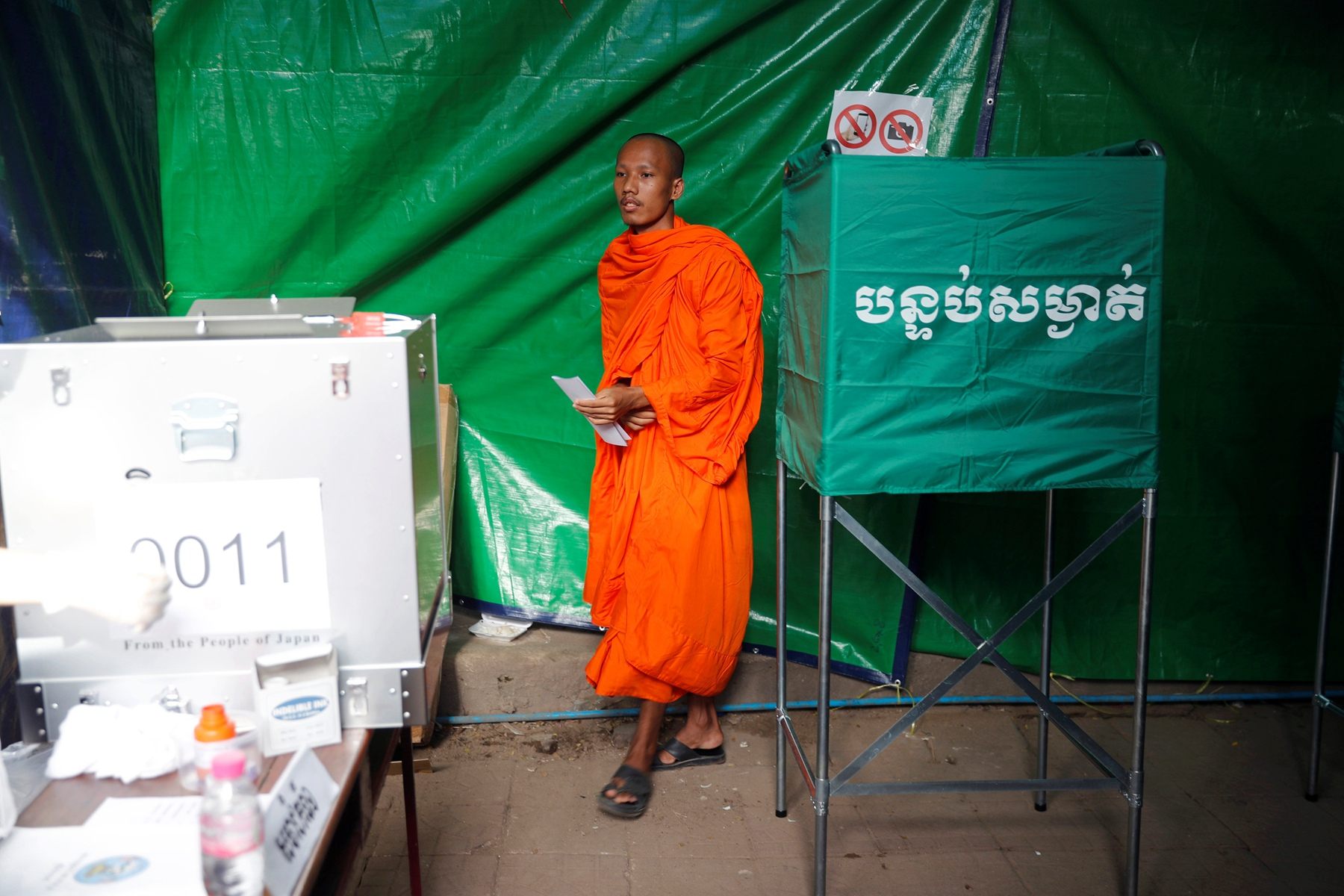
A monk votes at a polling station in Phnom Penh, Cambodia on July 29, 2018. /Reuters Photo
A monk votes at a polling station in Phnom Penh, Cambodia on July 29, 2018. /Reuters Photo
33 years and possibly more
The Cambodian People's Party (CPP) would pay "any cost" to maintain the country's hard-earned peace, not allowing any foreign power or group to destroy it.
CGTN Photo
CGTN Photo
Prime Minister Hun Sen made the remarks at the party's massive rally on Friday. "Anyone who goes to vote is supporting democracy. Anyone who does not, intentionally, is destroying it," he added.
Hun Sen focused on the issues of security and prosperity during his pre-election campaign.
02:53
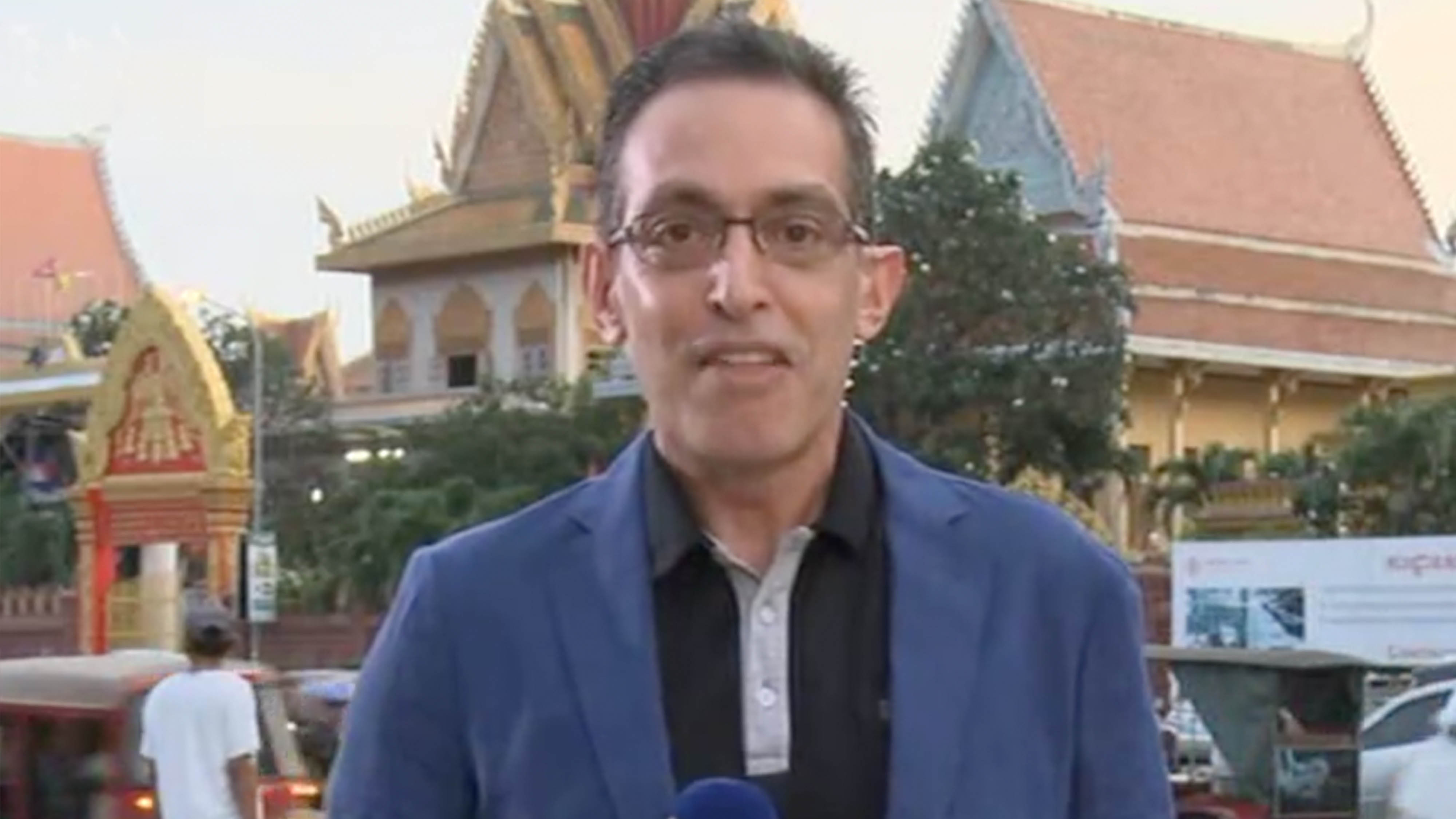
CGTN's correspondent Rian Maelzer in Phnom Penh also reported that Cambodian people may stick with the ruling party and Hun Sen because of good performance in economic areas.
Cambodia has been the world’s sixth fastest growing economy over the past two decades, according to the World Bank, with growth expected to be 6.9 percent this year.
Voices from domestic opposition parties
According to the National Election Committee (NEC), 20 political parties are contesting in the forthcoming election.
The main opposition Cambodia National Rescue Party (CNRP) is calling for a boycott of the poll and says the ruling party is pressuring people to vote. The "clean finger" campaign – a reference to the ink applied to voters' fingers by polling officials after they have cast their ballot, is on in Cambodia.
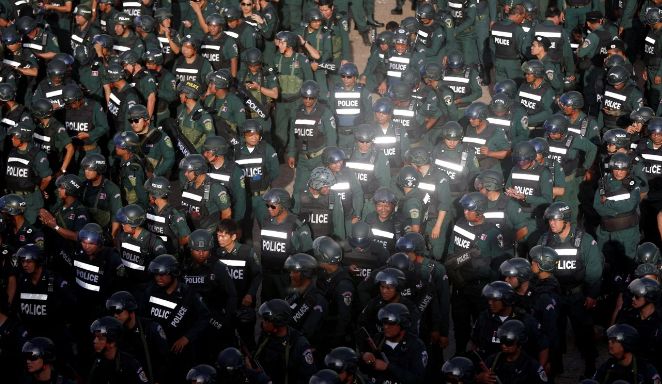
Cambodia's armed forces display riot gear and assault rifles at the Olympic Stadium ahead of a general election in Phnom Penh. /Reuters Photo
Cambodia's armed forces display riot gear and assault rifles at the Olympic Stadium ahead of a general election in Phnom Penh. /Reuters Photo
Five former CNRP officials were found guilty of obstructing people from voting and fined over a Facebook post supporting a boycott campaign on Thursday, which is said to violate article 142 of the Election Law.
“The election is a complete sham lacking any credibility. It’s a one-horse race,” said Kem Monovithya, daughter of the detained CNRP leader Kem Sokha, who was jailed in September on treason charges.
Cambodia’s Supreme Court dissolved the CNRP in November 2017 over allegations it was involved in a plot to topple the government.
The Funcinpec Party, led by Prince Norodom Ranariddh, the League for Democracy Party, led by former opposition lawmaker Khem Veasna, the Khmer National United Party, headed by former deputy prime minister Nhek Bun Chhay and other small parties will join the campaign too.
International reactions
While the CNRP has called on Cambodians to boycott the ballot in protest, the US and the EU have withdrawn financial support to the polls – which they have provided for previous elections – over concern that the vote will not be credible.
With 20 parties competing in the election, the government says its democracy is healthy.
Japan has granted about 7.5 million US dollars in aid to the NEC for the July 29 general election, while China pledged to provide 134 computers, 30 security cameras and a number of radios, printers and pieces of office furniture, according to the NEC.
CGTN Photo
CGTN Photo
Japanese Ambassador to Cambodia Hidehisa Horinouchi told the Khmer Times in July that the enhancement of the credibility of the electoral process is an essential factor to have elections reflect the will of the Cambodian people, so Japan offered help.
Chinese Foreign Ministry spokesperson Geng Shuang also said China supports the "Cambodian people's independent choice of development path in line with their national conditions."
About 306 international observers from over 40 countries will monitor Cambodia's general election on July 29 as the spokesman for the NEC said.
Besides international observers, nearly 90,000 local observers from political parties and about 80,000 others from national associations and organizations in the country are also expected to monitor the election.
The preliminary results of the general election are expected to be announced on Sunday evening, reported by Xinhua.
(With inputs from agencies)