
China
23:16, 24-Jul-2018
28-year-old guy lives in solitude to bring back 1,000-year-old letterpress printmaking
Updated
22:52, 27-Jul-2018
 ["china"]
Share







Copied
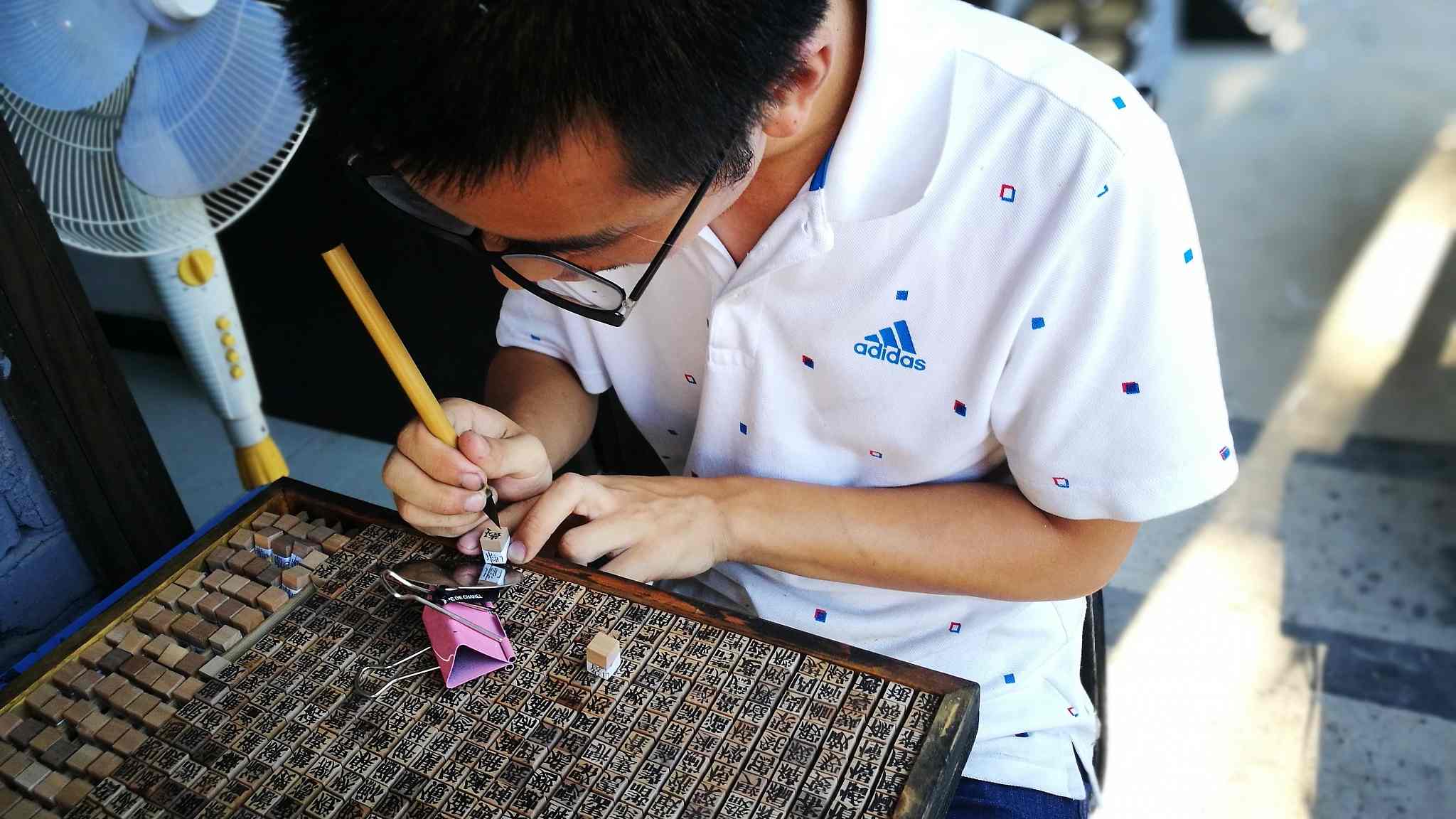
A Chinese young man has made it his mission to shed light on the vanishing practice of movable letterpress printmaking – a method which can be traced back to the Song Dynasty (960-1127). Living in solitude, he has dreamed of carving out all the existing Chinese characters on blocks of wood.

Ye Yonglai, an ambitious young pressman, works in his 500-square-meter studio. /VCG Photo
Ye Yonglai, an ambitious young pressman, works in his 500-square-meter studio. /VCG Photo
Ye Yonglai, a 28-year-old guy from Hangzhou City in southeast China’s Zhejiang Province, decided to retract himself from the routine urban life and live in a 500-square-meter studio, alone.
His mission is to revitalize the movable letterpress printmaking invented in the Song Dynasty.
The young pressman does nothing else more than writing and carving Chinese characters in traditional fonts.
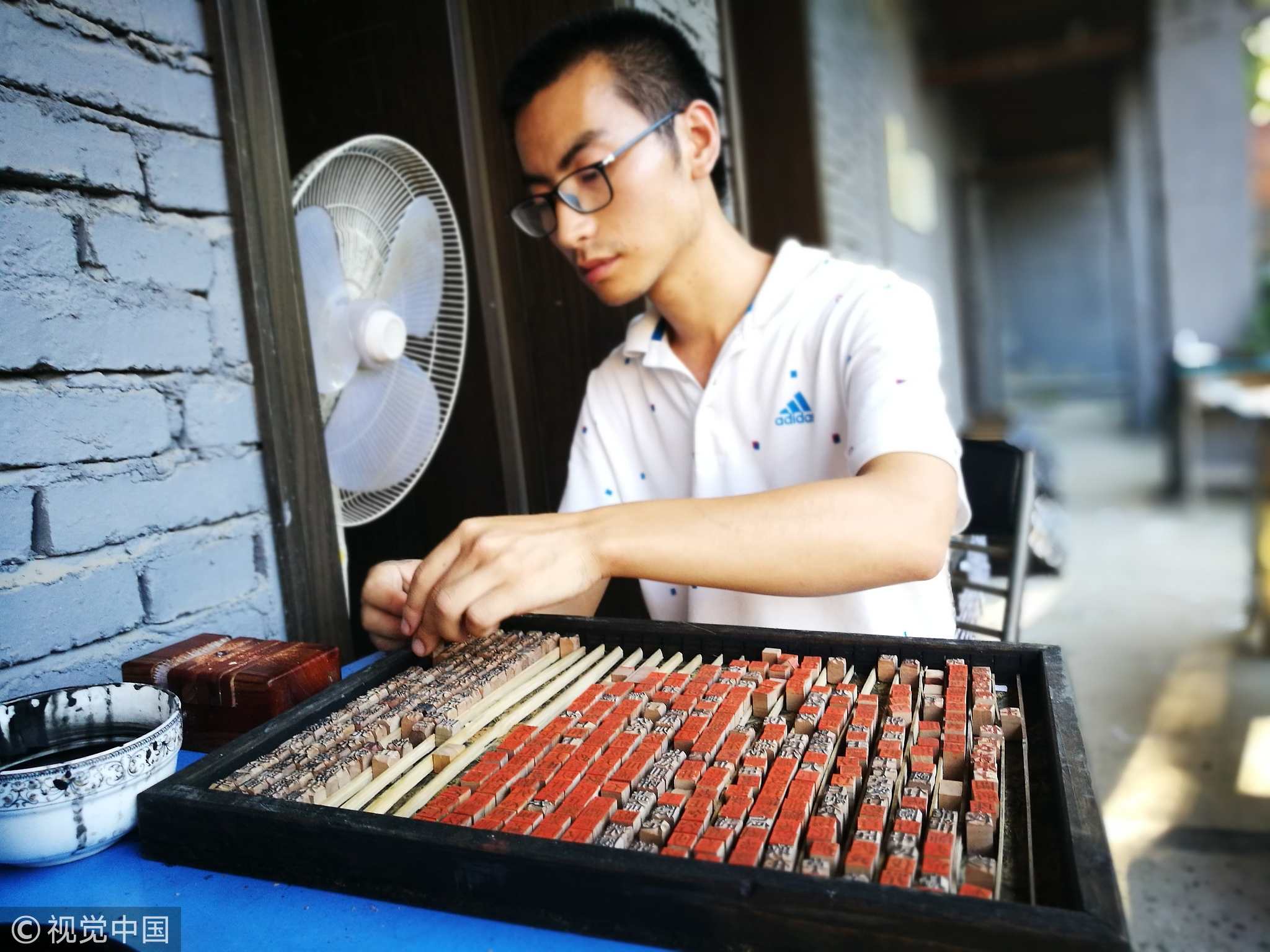
Fixing his wooden typeface. /VCG Photo
Fixing his wooden typeface. /VCG Photo
“I want to get as close as I can to the movable letterpress printmaking in the Song and Yuan Dynasties,” he told Qianjiang Evening Times.
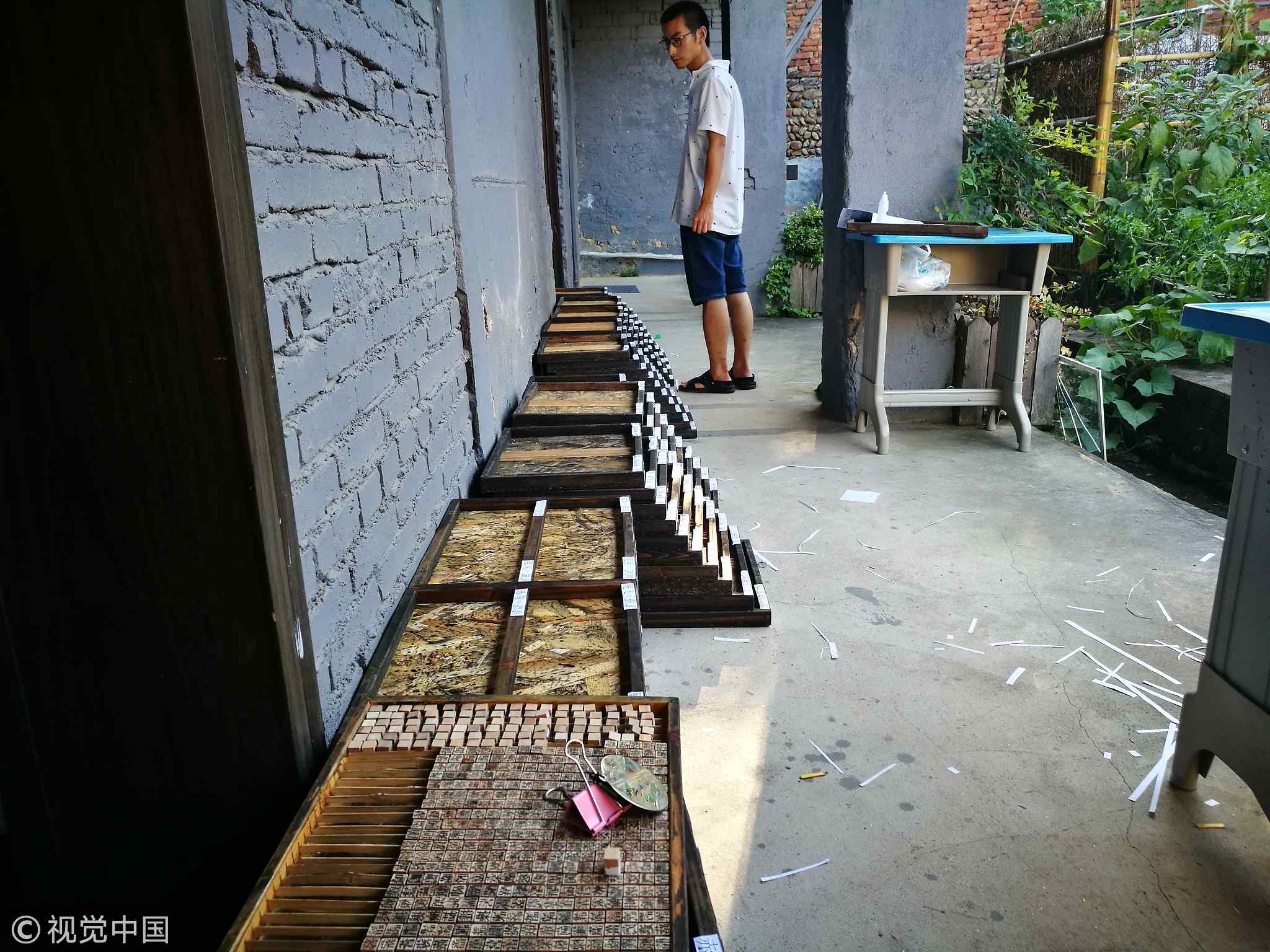
Ye has carved thousands of characters onto woodblocks. /VCG Photo
Ye has carved thousands of characters onto woodblocks. /VCG Photo
The first step is to write down the word on a block of wood. To ensure the character to be pressed correctly on paper, Ye has to write down the word flipside.
On average he writes 1,000 characters per day. After the writing is done, he begins to cut small notches on the wood. He can finish over 100 characters per day.

The work is more challenging by hands, as it's commonly processed by machines. /VCG Photo
The work is more challenging by hands, as it's commonly processed by machines. /VCG Photo
“The sound from carving the wood is the best music,” he said.
Ye lives far out from his studio in Quzhou City in western Zhejiang Province. He seldom sets foot in the town. “Nowhere is quieter than here, I don’t like loud places,” he said.
Why he chose to stay away? He doesn’t like the fast pace of an urban lifestyle. “I don’t have other hobbies besides Chinese literature and calligraphy. They’re the only things that make me feel content and fulfilled,” he added.
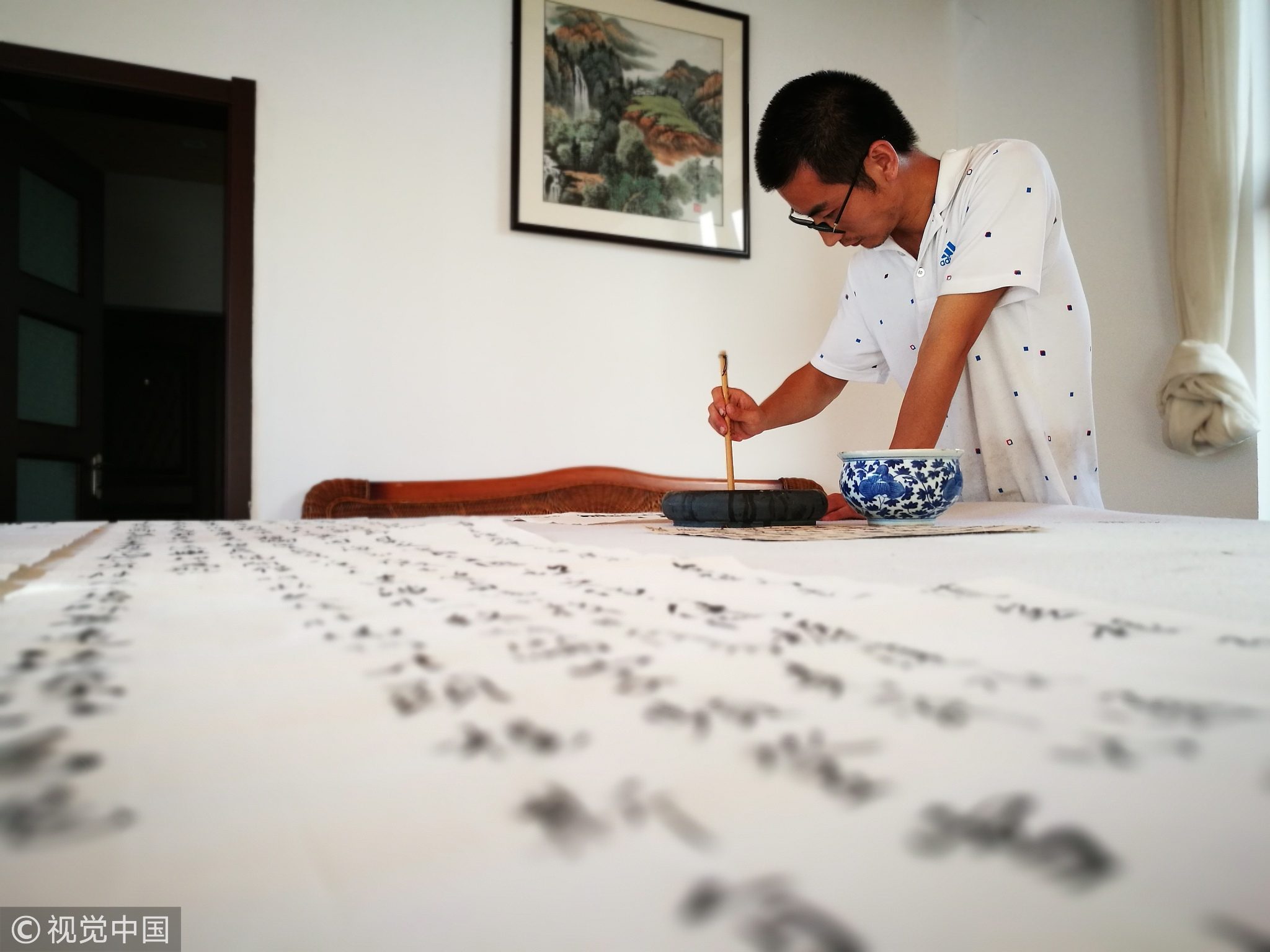
Calligraphy is another hobby. /VCG Photo
Calligraphy is another hobby. /VCG Photo
The practice of printmaking might be simple by technology, but the tradition runs deep.
Letterpress printing, also known as relief printing, is the earliest form of printed language in the modern world. Combining ink, paper, a strong push of pressure and a great deal of skill, the first words were inscribed this way thanks to the Chinese pressman and inventor Bi Sheng in the mid-11th century, which was four centuries earlier than it was likely discovered in the West, early findings suggested.