
Politics
08:38, 22-May-2018
President Rouhani says US cannot decide for Iran
 ["north america"]
Share







Copied
01:56
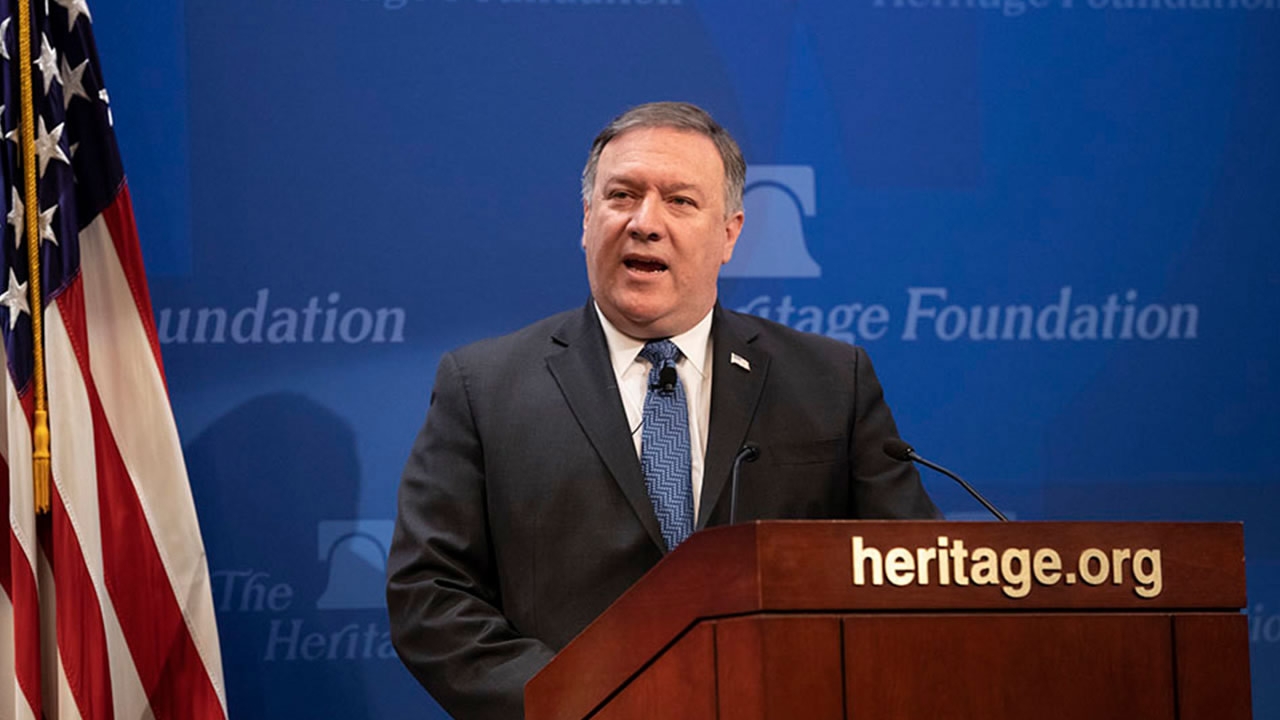
Iran’s president said on Monday that the United States could not decide for Iran after US Secretary of State Mike Pompeo demanded sweeping changes in the country’s foreign and nuclear policies.
"Who are you to decide for Iran and the world? The world today does not accept America to decide for the world, as countries are independent... that era is over... We will continue our path with the support of our nation,” Iranian news agency ILNA quoted Hassan Rouhani as saying.
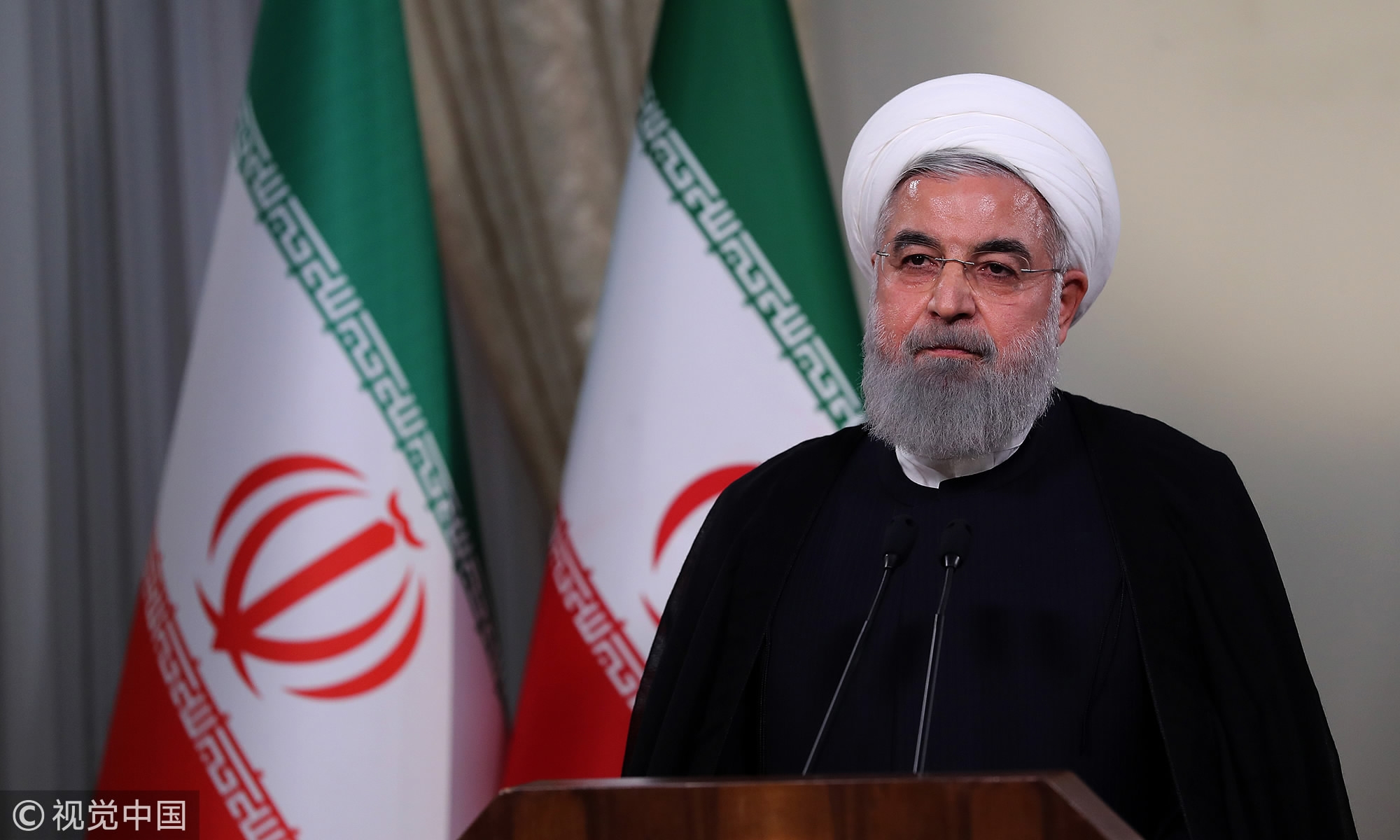
Iranian President Hassan Rouhani. /VCG Photo
Iranian President Hassan Rouhani. /VCG Photo
It was a pointed response to Pompeo's speech earlier in the day, in which he threatened the "strongest sanctions in history" against Iran unless it capitulated to a series of 12 demands regarding its regional behavior and missile program.
But Rouhani dismissed the administration of President Donald Trump as a "move 15 years backwards to the era of Bush junior and a repeat of the same statements as 2003."
"The era of such statements has evolved and the Iranian people have heard these statements hundreds of times, and no longer pays attention," he added.
Iranian Foreign Minister Javad Zarif also denounced the US approach, tweeting that Washington was repeating “the same wrong choices.”
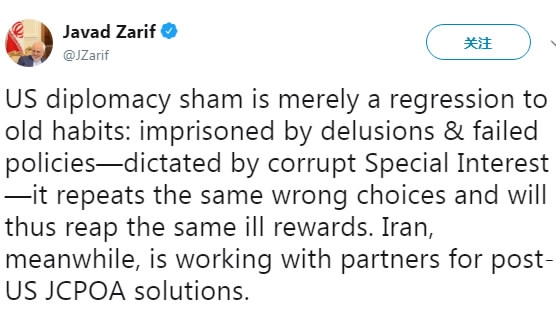
Twitter Screenshot
Twitter Screenshot
Europe worries
Pompeo's speech has stirred more worries in the EU, as European powers want to keep the Iran deal alive without the United States.
EU foreign policy chief Federica Mogherini criticized the US by saing Pompeo had failed to show how dropping the 2015 nuclear deal would make the Middle East safer, according to BBC. She said, there was "no alternative" to the agreement, and vowed that the EU would stick by it if Iran met its commitments.
German Foreign Minister Heiko Maas said he will travel to Washington to meet with Secretary of State Mike Pompeo to discuss Washington's stance on an international nuclear deal with Iran.
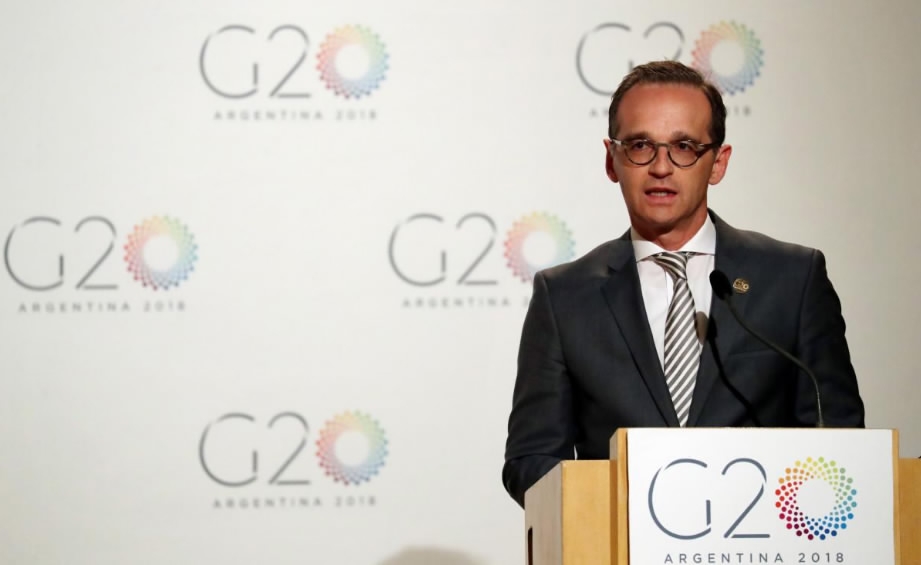
Germany's Foreign Minister Heiko Maas speaks during a news conference at the G20 Meeting of Foreign Affairs Ministers in Buenos Aires, Argentina, May 21, 2018. /Reuters Photo
Germany's Foreign Minister Heiko Maas speaks during a news conference at the G20 Meeting of Foreign Affairs Ministers in Buenos Aires, Argentina, May 21, 2018. /Reuters Photo
"From here I will actually travel to Washington to have a meeting with Secretary Pompeo, and take advantage of that meeting to talk about this," Maas said in response to a question from a journalist about the Iran deal.
Maas spoke to reporters in Buenos Aires at the end of a G20 meeting in the Argentine capital. He did not give a date for the meeting with Pompeo.
"We think that without this agreement we could run the risk that Iran could restart a nuclear program," Maas said.
UAE supports
The Iranian Foreign Ministry also denounced Pompeo's demands as "lies" aimed at diverting attention from Washington's violation of the international nuclear deal.
"Iran rejects the allegations and lies in this so-called new strategy and condemns the US Secretary of State's... open interference in its internal affairs and the unlawful threats against a United Nations member state," the ministry said in a statement.
Despite the strong objection from Iran, the Minister of State for Foreign Affairs of the UAE, Anwar Gargash, said Pompeo was taking the right approach on Iran.
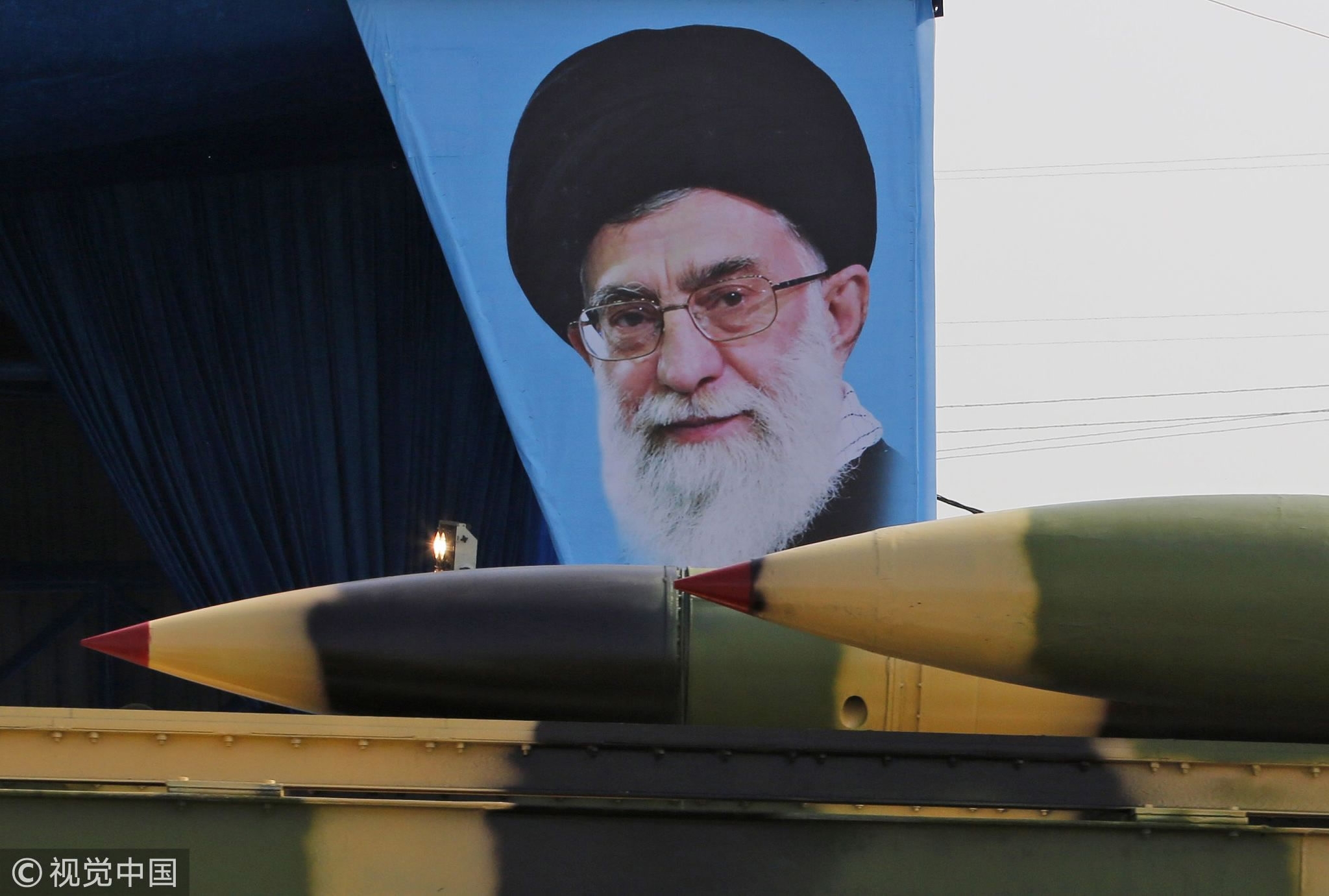
An Iranian military truck carries surface-to-air missiles past a portrait of Iran's Supreme Leader Ayatollah Ali Khamenei during a parade on the occasion of the country's annual army day, April 18, 2018, in Tehran. /VCG Photo
An Iranian military truck carries surface-to-air missiles past a portrait of Iran's Supreme Leader Ayatollah Ali Khamenei during a parade on the occasion of the country's annual army day, April 18, 2018, in Tehran. /VCG Photo
"Uniting (our) efforts is the correct path for Iran to realize the futility of its incursions and expansionism," Gargash wrote on his official Twitter account, several hours after Pompeo's speech.
A close US ally in the energy-rich Gulf, the UAE, along with Saudi Arabia and Bahrain, accuses Iran of backing armed groups across the region in a bid for domination.
"The Pompeo strategy requires wisdom and a change of the Iranian compass," Gargash added.
(With inputs from agencies)