
Opinion
15:05, 08-May-2019
The new era of British royalty
 ["china"]
Share







Copied
Editor's note: Tom Fowdy is a British political and international relations analyst and a graduate of Durham and Oxford universities. He writes on topics pertaining to China, the DPRK, the UK and the U.S. The article reflects the author's opinion, and not necessarily the views of CGTN.
Several days ago the Duke and Duchess of Sussex Harry and Meghan welcomed their firstborn son into the world. The global press was ecstatic at the announcement, not least of course in the UK itself. Although such is normal for such a huge royal occasion, the nature of the press has nevertheless been unconventional, with some outlets declaring the newborn princeling the “first interracial Royal baby in British history.”
As we eagerly wait to hear what he will be named, journalists have again been speculating on fresh angles, saying we should expect a “unique” name outside of that typically given to Royals.
In every sense, there has been an underlying recognition that the entire spectrum of Harry and Meghan's married life is “different” to the entrenched traditions of the British crown, crossing boundaries which in the past were long held taboos. These changes of course, are to be celebrated and welcomed. The British monarchy has undoubtedly received its fair share of public criticism; some have criticized it as irrelevant and out-dated.
Yet above all, what we are seeing now is the rise of a “new era” in British Royalty. To maintain its popularity and standing, the crown evermore illustrates its ability to adapt and maintain its standing in an ever-changing society. Harry and Meghan are not expected to be king and queen, yet they inject new life, belief and energy into aristocratic life.
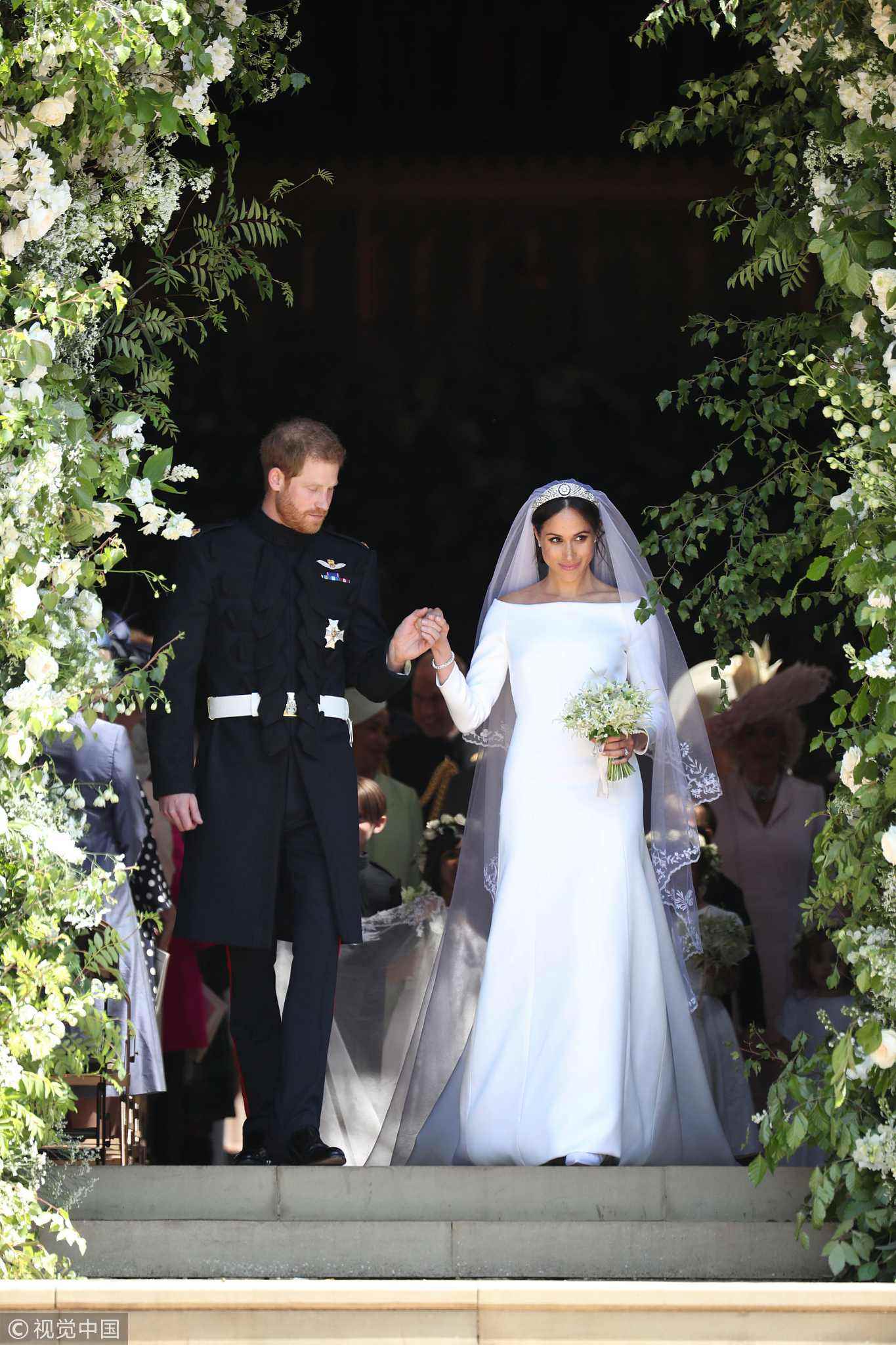
Prince Harry and Meghan Markle on their wedding at Windsor Castle, May 19, 2018. /VCG Photo
Prince Harry and Meghan Markle on their wedding at Windsor Castle, May 19, 2018. /VCG Photo
How do you maintain the survival of a hereditary monarchy and royal family system in a modern, developed and democratized country? Even though of course it does not operate in politics like an absolute monarchy, how still do the public of such a country find the belief or urge to feel such a system is relevant? Whilst of course there are its critics, this does not seem to be an issue in contemporary Britain.
A recent YouGov survey discovered that up to 70 percent of the British public support the idea of having a monarchy with only 21 percent expressing firm opposition to it (the remaining 10 percent or so being in between). As a general rule, the Royal Family continues to exist not as an anachronism, burden or source of resentment, but as a subject of great public interest, enthusiasm and popularity. But again, how?
The answer lies in one word: adaptability. The British Royal Family purposefully enacts to adapt itself to the ever-shifting trend of public opinion that it may never in practice find itself on the “wrong side of history.” It is the art of the class. If you have the seemingly luxurious lifestyle of a Royal, then your priorities are not set upon day to day human survival, but the long-term and strategic maintenance of your vast privileges against the obvious political currents which would otherwise like to take it away.
For all, socialism continues to be a meaningful force in British politics, as the above statistics note republicanism remains a marginal sentiment unable to penetrate mainstream or public consciousness. This is not a coincidence. Why? Because the Royal Family works to not only maintain lasting public and media euphoria in itself, but to be mindful of the red lines of public tolerance.
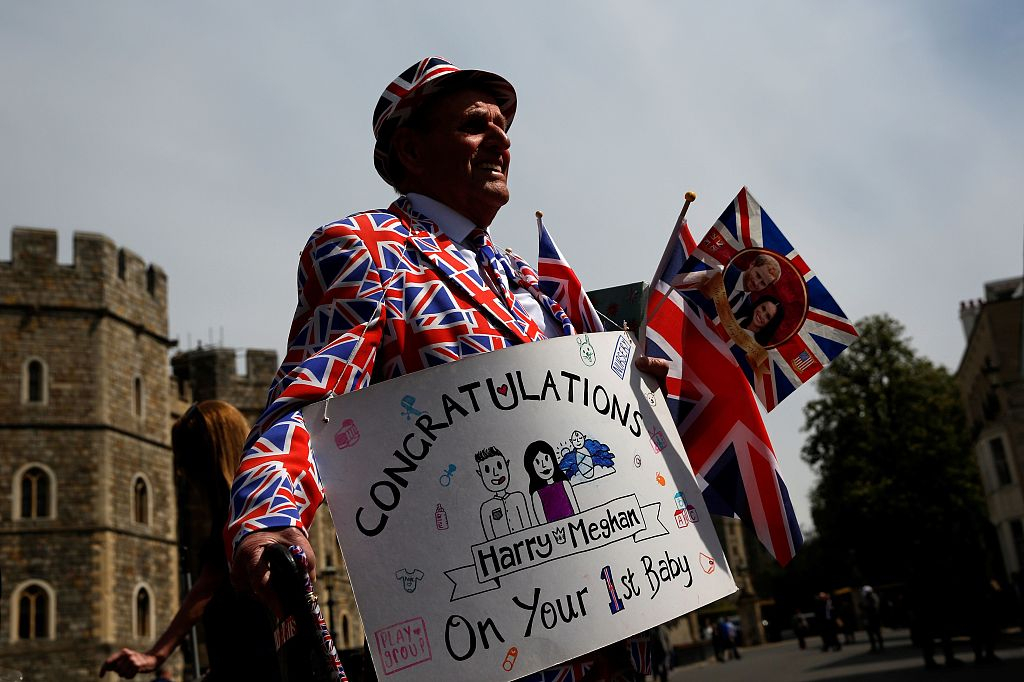
Royal watchers in Windsor after Prince Harry and Meghan had their first child, May 7, 2019. /VCG Photo
Royal watchers in Windsor after Prince Harry and Meghan had their first child, May 7, 2019. /VCG Photo
Thus, when Harry fell in love with the divorced American actress Meghan Markle, of a mixed racial heritage and no aristocratic background whatsoever, it was an act which by previous Royal Family “traditions” would have found completely intolerable.
In the 1930s, King Edward VIII was forced to abdicate for his professed love for American socialite Wallis Simpson, also divorced. Even as recent as the 1980s saw Prince Charles compelled into marrying lady Diana Spencer against his private desires, purely on the midst of family “name” constraining royal choices.
Yet today is markedly different, a changing UK and ultimately a pressing need for the Royals to constantly adapt themselves in order to remain at the pinnacle of public image and excellence allowed Harry to make a bold step and be with the woman he truly loved.
For the institution as a whole, the time necessitated a big change; a change which the Duke and Duchess of Sussex have boldly driven forward by their own initiative.
In doing so, they have injected new life, energy and of course public admiration into the institution, which of course for the family interest prolongs its longevity and keeps the critics at bay.
Thus, not only has a new royal baby been born, but a new era too.
Despite being a centuries-old, hereditary, aristocratic institution, the House of Windsor now offers to its country not an image of out of touch, privileged or malign elite few, but a paradoxical aurora of hope, light and progressive sentiment.
Nevertheless, such is the art of the Royals. That is how the UK still is and likely will remain, a constitutional monarchy.
(If you want to contribute and have specific expertise, please contact us at opinions@cgtn.com.)